5 Best Shipping Boxes for Wall Art (2026): based on specs and reviews
Best shipping boxes for wall art are the smallest corrugated box that clears the item’s height, width, and thickness plus 2–4 inches of padding, with double-wall for freight and long-distance parcel. I have seen poor sizing crack frames, dent corners, and drive up return claims. This guide shows how to match box type to framed art, mirrors, and flat decor by dimensions, thickness, and shipping method.
Quick comparison
| Product | Badge | Best for | Price | ||
|---|---|---|---|---|---|
 |
BOX USA Large Mirror Box 30”L x 3.5”W x 40”H (1-Pack),BOX USA | Our pick | 30×3.5×40 in · 65 lb capacity | $30.23
Price as of 4 Oct 2026
|
View |
 |
TUMOVO 5 Panels Shipping Container Wall Art for Living RoomTUMOVO | Pair with it | 50×24 in · 5-panel canvas art | $54.99
Price as of 4 Oct 2026
|
View |
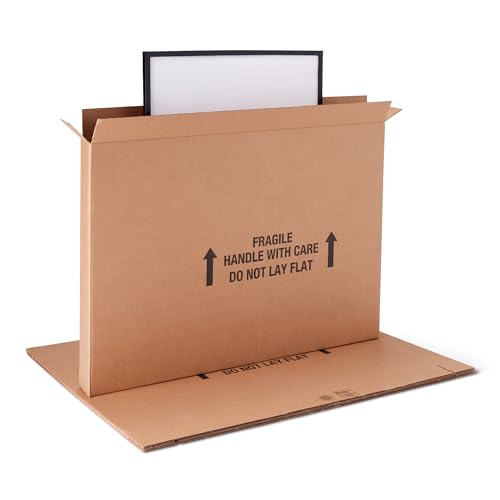 |
Amazon Basics Flat-Panel TV Moving Box for 50-inch TV,Amazon Basics | Upgrade pick | 48x4x33 in · 95 lb capacity | $30.37
Price as of 4 Oct 2026
|
View |
 |
HORLIMER 12x9x2 inches Shipping Boxes Set of 25, WhiteHORLIMER | Budget pick | 12x9x2 in · 25-pack mailers | $26.50
Price as of 4 Oct 2026
|
View |
 |
Heavy Duty Wooden Shipping Crates – Amish American-Built –Gift Crates | Also great | 15x15x15 in · Amish-built wood | $99.95
Price as of 4 Oct 2026
|
View |
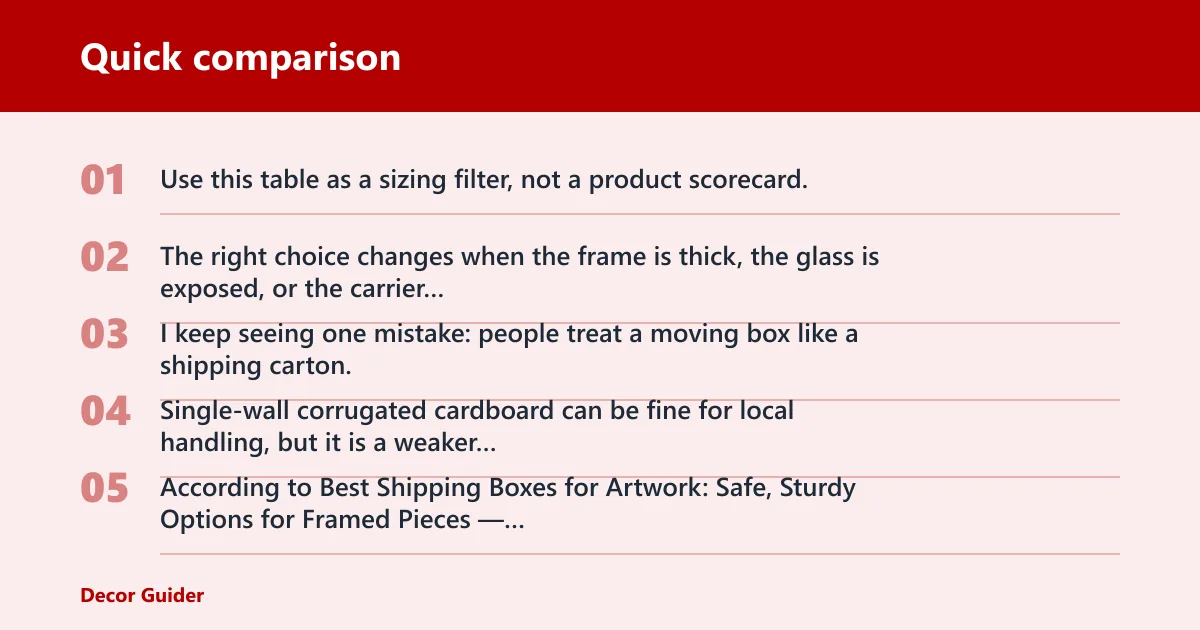
Use this table as a sizing filter, not a product scorecard. The right choice changes when the frame is thick, the glass is exposed, or the carrier method shifts from moving to parcel shipping.
I keep seeing one mistake: people treat a moving box like a shipping carton. Single-wall corrugated cardboard can be fine for local handling, but it is a weaker answer for stack pressure, long carrier routes, and tight corner clearances.
According to Best Shipping Boxes for Artwork: Safe, Sturdy Options for Framed Pieces — One recommended box size is 48 x 4 x 33 inches.
How we chose these boxes
The first filter is artwork size and thickness. A flat piece under 40 inches needs a different fit than a framed mirror up to 55 inches, and a protruding frame needs more clearance than a canvas panel.
The second filter is shipping method. Parcel shipping, freight, and local moving place different stress on corners, glass, and box walls.
The third filter is padding and handling risk. Blankets or foam matter when the frame is shallow, when the glazing can flex, or when the box needs spacer material to stop face contact.
The last filter is box geometry. Top-loading is simpler for some flat pieces, while side-loading usually makes insertion and removal easier and gives better corner control.

Amazon Basics flat-panel TV moving box: best for large flat pieces under 40 inches
This is the cleanest fit for many framed pieces that sit under 40 inches on the long side and do not have heavy frame protrusion. The 48 x 4 x 33 inches size, top-loading design, and single-wall corrugated cardboard make it practical for moving and short-haul handling.
I use it when a flat item only needs a simple shell and I can add blankets or foam as buffer material. The 48 x 4 x 33 inches format also suits large mirrors and flat-screen TVs that share the same width-and-thickness logic.
The drawback is plain: this is built for moving, not shipping. Single-wall construction is not my first choice for parcel routes, and a tight fit can stress corners if the frame is thick or the glazing sits close to the edge.
BOX USA large mirror box: best for framed art and mirrors
This box is the strongest general-purpose option in the list for framed artwork, mirrors, and TV-sized flat pieces that need more handling margin. The 30-inch length, 65 lb capacity, and adjustable four-piece layout make insertion and removal easier than a tight top-loading carton.
It is a good fit when the frame is awkward, the corners need extra clearance, or the piece needs a box that can adapt to more than one size. From specs and the way shippers use it, that flexibility is why side-loading boxes get picked first.
The drawback is that a 30-inch length still does not solve every oversize case. Very long frames, heavy glazing, or tall profiles can still push you into a reinforced shipper or crate.
Heavy Duty Wooden Shipping Crates: best for thick frames and glass
This is the upgrade path when the piece is too valuable, too heavy, or too fragile for a standard cardboard box. Wood is the right answer when the frame is thick, the glass face needs hard-sided protection, or the item cannot tolerate edge compression.
For thick art, odd protrusions, or repeated long-distance moves, a crate gives more structure than corrugated cardboard can. It also handles stacking and rougher transfer points better than a moving carton.
The drawback is cost and size discipline. A crate is harder to pack, heavier to move, and overkill for many medium pieces that only need smarter box sizing and better padding.
HORLIMER 12x9x2 inches shipping boxes: best for prints and small flat pieces
This mailer is for small flat items, not framed wall art. It is useful for prints, literature, and slim decor pieces that fit a low-profile corrugated box and do not need corner stand-off or glazing clearance.
For multi-piece packing, the low height helps keep the shipper slim and easy to stack inside a master carton. That can reduce wasted air space when you are sending several small flat items together.
The drawback is obvious for wall art: the box is too shallow for framed pieces, mirror assemblies, or anything with protruding corners. It is the wrong tool once glass, frame depth, or corner protection enters the job.
TUMOVO 5-panels shipping container wall art: best for decor, not shipping
This is wall decor, not a shipping box. It may be relevant only as a reminder that not every wall-art listing is a packing solution, and buyers should separate decor products from transit packaging right away.
For shipping decisions, it has no practical value beyond the fact that flat art still needs the right carton size, padding, and carrier method. That distinction matters when a listing title looks similar but the item itself is not a container.
The drawback is that it does not solve any packaging problem at all. It should not be mistaken for protection, and it cannot replace a box, crate, or reinforced shipper.
Which one should you buy
For art under 40 inches with a thin frame, start with the Amazon Basics flat-panel TV moving box. It is the easiest fit when the piece is shallow and the goal is fast packing with basic padding.
For framed art or mirrors with more corner risk, the BOX USA side-loading mirror box is the safer general choice. Side entry usually reduces the chance of scraping a corner during insertion, which matters more than a fancy label.
For thick, heavy, or high-value pieces, move up to the wooden crate. If the piece is fragile enough that you would worry about stacking pressure, stop trying to solve it with a standard carton.
If the item is too large for these sizes or the glass is exposed and expensive, use a reinforced shipper or crate instead of forcing a moving box. The cheapest box is not cheap once the claim starts.
What size shipping box do I need for wall art?
The right box is usually the smallest one that leaves a little room for padding around the artwork’s width, height, and thickness. For most framed pieces, that means measuring the frame face, the glass depth, and every corner projection before buying anything, then leaving 2–4 inches of space for padding.
Fit-matrix for width, thickness, and glazing
| Artwork width | Frame thickness / protrusion | Glazing type | Safest box style | Why it fits |
|---|---|---|---|---|
| Under 40 inches | Thin frame, low protrusion | No glass or acrylic | Top-loading moving box | Simple clearance, easy padding, less risk of corner squeeze |
| Under 40 inches | Moderate frame depth | Glass or acrylic | Side-loading box | Side access lowers scraping risk during insertion |
| Up to 55 inches | Thicker frame, visible corner build-out | Glass | Reinforced art box or crate | Extra wall clearance reduces pressure on corners and glazing |
| Up to 55 inches | Heavy frame or mirrored face | Mirror or framed glass | Side-loading box or crate | Better control at the corners, better handling for bulk and weight |
How to pack the fit correctly
- Measure the frame face, not just the art image.
- Measure glass depth and any protruding corner guards.
- Add space for blankets or foam before choosing the box.
- Keep the art from touching the outer wall on any side.
- Reject any box that leaves the corners pinned tight.
Are TV moving boxes good for shipping framed artwork?
Yes, when the framed piece is flat, under the size limit, and padded well. The Amazon Basics TV moving box is 48 x 4 x 33 inches, uses single-wall corrugated cardboard, and is useful for flat art, mirrors, and TVs that need a simple shipping shell for moving.
When a TV box works
It works when the frame is thin, the glazing sits safely inside the face plane, and the box can close without pressing on the corners. It is a practical moving box for short routes and controlled handling.
When it falls short
It falls short when you need shipping-grade protection, heavier stacking resistance, or more corner clearance. A moving box can be a cost saver, but it is not always shipping-certified, and that matters for carrier claims and rough transfer points.
How do I pack framed art so the corners do not get damaged?
Corner damage usually starts when the box is too tight or the load shifts inside the carton. Protect the corners first, then lock the piece in place with blankets or foam so the frame cannot tap the wall of the box during handling.
Packing sequence that reduces corner failure
- Wrap the frame face with a clean protective layer.
- Pad each corner so hard edges do not meet the carton wall.
- Add blankets or foam as spacer material around the perimeter.
- Fill voids so the art cannot slide side to side.
- Close the box only after checking that no corner is pinched.
What corner damage looks like
A crushed corner, a hairline glass crack, or a rubbed frame edge usually points to movement inside the box. If the fit is tight enough to compress the frame itself, the carton is too small for safe shipping.
What is the best box for oversized wall art or mirrors?
For oversized wall art or mirrors, the best box is usually a side-loading or reinforced option that gives more entry room and corner clearance. Once the piece moves toward the up to 55 inches range, a standard moving box becomes less forgiving.
When to skip a standard carton
Upgrade when the frame is heavy, the mirror face is large, or the corners rise above the face plane. If the item is awkward to turn into the box, it is already telling you the carton is too small.
Why mirrors need extra caution
Mirrors break from edge shock and face pressure. A box that works for a flat print may fail quickly on a mirror because the glazing cannot absorb corner impacts or stack pressure well.
Can I use a moving box to ship artwork safely?
Sometimes, but only for the right piece and the right route. A moving box can be enough for local handling or short transit if the fit is loose enough for padding, but it is not always a parcel-safe answer, especially with single-wall corrugated cardboard.
Moving box versus shipping box
A moving box is built for transport around a home or in a controlled move. A shipping box has to deal with more drop points, more stacking, and more carrier pressure, so the box style must match the route.
When the upgrade is smart
If the art is thick, glazed, fragile, or expensive, step up to a reinforced shipping solution. Dimensional weight and oversize surcharges can also change the math, because a box that is too large may cost more than the protection is worth.
What padding should go between wall art and the box walls?
Use blankets or foam as added padding and spacer material. The goal is not to crush the piece into place; it is to create a buffer that keeps the art from touching the box walls while still allowing the carton to close without pressure on the frame.
Padding that works
Blankets are useful when you need flexible fill around a frame or mirror. Foam is better when you need a clean spacer that holds shape and keeps the face from rubbing against the carton wall.
Padding that causes trouble
Loose packing paper alone usually shifts too much. Hard packing that forces the frame against the wall is worse, because a tight fit can stress corners and press on glass.
Which is better for artwork, top-loading or side-loading boxes?
Side-loading is usually better for framed art and mirrors because insertion and removal are easier, and the corners are less likely to snag. Top-loading can work for flatter pieces, but it asks the packer to lower the art straight down through the opening.
Why side-loading helps
A side-loading box gives more control when the item is long, awkward, or already padded. The 30-inch length on the BOX USA option is useful here because it gives a workable opening for large frames and mirrors without forcing a tight drop-in fit.
When top-loading is fine
Top-loading is fine for flatter, lighter pieces where the frame is small and the padding stack is simple. It is less forgiving when the art is thick or when the glazing sits close to the carton wall.
How do I choose a box for art under 40 inches?
For art under 40 inches, choose a box that clears the frame with room for padding and corner protection, then check the thickness before you buy. A medium option described for art up to 40 inches is usually the first place to start, especially when the piece is flat and not heavily glazed.
Best fit for under-40-inch pieces
Thin framed prints and light decor usually fit best in a top-loading moving box. If the corners are delicate or the frame protrudes, a side-loading box is safer because it reduces scraping while the art goes in.
What to avoid
A tight box is the mistake to avoid. If the frame has to bow or rub to enter the carton, stop and choose a larger format rather than forcing it shut.
What should I do if the artwork is too thick for a standard art box?
If the artwork is too thick for a standard art box, move up to a reinforced art box or crate with more wall clearance. Thick frames need space for corner protection and spacer material, and that extra depth is often what keeps the glass or frame from being pinched.
Fail-case checklist for upgrading the package
- The frame protrusion leaves no safe padding gap.
- The glazing touches the wall even before the box is closed.
- The piece is heavy enough that load capacity matters more than box convenience.
- The shipment will travel by parcel and face stacking or transfer pressure.
- The item is oversized enough that dimensional weight or oversize charges push the carton choice toward a crate.
- The corners already look vulnerable before packing starts.
When a crate makes more sense
A crate makes more sense when the piece has high value, brittle glass, or a frame profile that cannot sit safely inside a single-wall carton. At that point, the extra structure is cheaper than the damage risk.
Products related to this article
Sponsored / affiliate links. As an Amazon Associate I earn from qualifying purchases. I may earn additional commission from eligible campaigns.