
Best Boxes for Mirrors (2026): based on specs and reviews
Use double-wall mirror shipping boxes with a bit of clearance for framed mirrors under 30 pounds, and consider triple-wall or custom crating for oversized, heavy, or antique mirrors. Poor fit and weak cartons drive cracked glass, returns, and higher replacement freight. This guide breaks down the right box by mirror type and risk, plus how construction, clearance, and packing method change damage rates and landed cost.
This guide is part of our Shipping costs and USPS postage rates series.
Best mirror box for framed wall mirrors: our top pick
For most small sellers, a double-wall mirror box is the safest default for framed wall mirrors because it gives the best mix of edge protection, dimensional-weight control, and breakage risk. The box should leave about 2 inches of clearance on all sides, use corner protection, and hold the mirror still after void fill is added.
Why this is the safest default for most sellers
Framed mirrors often fail at the edges first. A double-wall corrugated cardboard box with a 32 ECT rating or better can offer more impact resistance than a lighter mailer, and it is a sensible starting point when the frame adds corners that can punch through the pack-out.
The protective stack matters more than one thick layer of cardboard. Use foam sheets against the face, a couple of full layers of bubble wrap, and corner protectors on the frame before the box is closed.
Where double-wall construction matters most
Double-wall construction matters most when the package will see sortation, line-haul transfer, or a long last-mile route. That is where corner blows, top-load pressure, and carton flex combine to crack the glass or bruise the frame.
For framed mirrors, the reflective surface usually survives if the face is isolated and the edges cannot shift. The carton must stop movement, not just cushion impact.
When a telescope-style box beats a one-piece carton
A telescope-style mirror box is useful when the mirror size is awkward or the frame depth varies. It lets the packer tune the length and reduce internal slack without forcing the item into a box that is too large.
One-piece cartons are faster, but they can waste space. Extra space raises the risk of shift damage and can increase dimensional weight enough to erase the savings from a cheaper carton.
According to fulfyld.com — Mirror shipment guides often recommend a double-wall corrugated box with at least 32 ECT rating.
Quick comparison
| Product | Badge | Best for | Price | ||
|---|---|---|---|---|---|
 |
BOX USA Shipping Boxes Medium 20"L x 16"W x 1"H 20-Pack –BOX USA | Pair with it | 20x16x1 in Mailers · 20-Pack | $61.89
Price as of 24 Sep 2026
|
View |
 |
TAPE LOGIC 36x24x6 Flat Corrugated Boxes, Flat, 36L x 24W xTape Logic | Our pick | 36x24x6 in Flat Boxes · 10-Pack | $83.92
Price as of 24 Sep 2026
|
View |
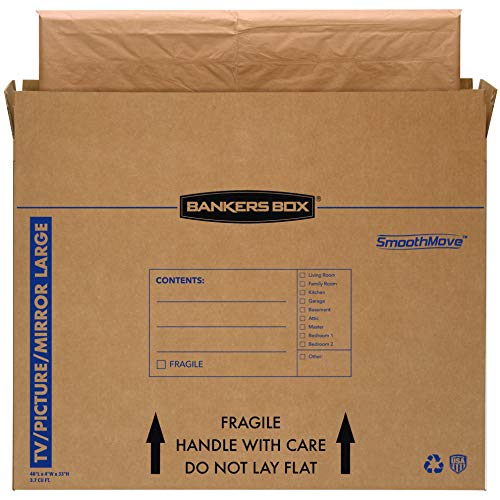 |
Bankers Box 4-Pack Large TV/Picture/Mirror Moving BoxesBankers Box | Budget pick | Large Specialty Moving Boxes · 4-Pack | $44.99
Price as of 24 Sep 2026
|
View |
 |
BOX USA Large Shipping Boxes Holds 65lbs, 18x12x12 25-PkBOX USA | Upgrade pick | 18x12x12 in Boxes · Holds 65 lbs | $47.19
Price as of 24 Sep 2026
|
View |
This is the fastest way to sort the carton by mirror type, shipping distance, and protection level. It is also the quickest way to avoid buying one generic box for every order.
The comparison below should be read with the mirror’s actual length, width, and depth in hand. A box that looks close on paper can still fail once wrap, foam, and corner protection are added.

How we chose
The selection logic here is built around four things: fit, carton strength, movement control, and shipping risk. Those four factors decide whether the shipment arrives intact or comes back as a claim.
Clearance matters because the mirror needs room for wrap and inserts, not room to rattle. Wall strength matters because fragile glass needs impact resistance. Dimensional weight matters because oversized empty space gets expensive fast. Transit distance matters because long routes punish weak pack-outs.
Mirror-box selection matrix
| Mirror type | Typical size band | Transit distance | Recommended box style | Wall strength | Clearance target | Insert type | Pack-out steps |
|---|---|---|---|---|---|---|---|
| Framed wall mirror | Small to medium, under 30 lb | Local to regional | Double-wall mirror box | At least 32 ECT | About 2 inches on all sides | Corner protectors plus 1/8-inch foam sheets | Wrap face, protect corners, add two bubble-wrap layers, void fill, shake-test, seal with H-tape |
| Unframed glass | Flat panels, scratch-sensitive | Regional to national | Corrugated mirror box or telescope-style box | Double-wall preferred | About 2 inches on all sides | Foam sheets with low-adhesive tape | Isolate both faces, avoid tape on reflective surface, add two bubble-wrap layers, fill voids tightly |
| Vanity mirror | Small framed or semi-framed units | Local to regional | Flat corrugated box sized to the mirror | Double-wall preferred | About 2 inches on all sides | Cardboard or plastic corner protectors | Pad face, protect corners, immobilize with kraft paper or air pillows, tape seams, label all sides |
| Large wall mirror | Oversized, heavy, antique, or framed | National or long-haul | Custom mirror packaging or freight crate | Double-wall minimum, heavier build preferred | About 2 inches plus load-control allowance | Rigid corner blocks and dense void fill | Use full surface wrap, strong corner protection, dense fill, outer carton or crate, carrier pre-alert if needed |
Mirror box for unframed glass: best for scratch control
Unframed glass needs scratch control more than box length. The right package keeps the surface from rubbing, the edges from knocking together, and the sheet from flexing inside the carton.
When foam sheets matter more than extra carton length
For unframed glass, 1/8-inch foam sheets are often more useful than adding more carton length. The foam keeps the glass face off the corrugated wall and limits abrasion during vibration.
Low-adhesive tape is the safer choice here because standard adhesive can leave residue or pull at coatings when the packer removes it later. Tape should hold the wrap in place, not touch the glass face directly.
How to keep the reflective surface from rubbing
Put foam sheets on both faces before the bubble wrap goes on. Then add two complete layers of bubble wrap with 3/16-inch bubbles so the surface stays isolated from the carton and from any corner insert.
Rub marks usually come from one bad habit: leaving the glass loose inside the box. If the package can slide when shaken, the wrap is not doing enough.
Why low-adhesive tape is safer here
Low-adhesive tape reduces pull on the face protection when the box is opened. That matters on coated glass, antique glass, and pieces with delicate finishes where aggressive tape can lift debris onto the viewing area.
It also makes inspection easier if a claim is needed. Clean opening matters when a seller has to show condition, packing method, and break point.
Mirror box for large wall mirrors: best for long-distance shipping
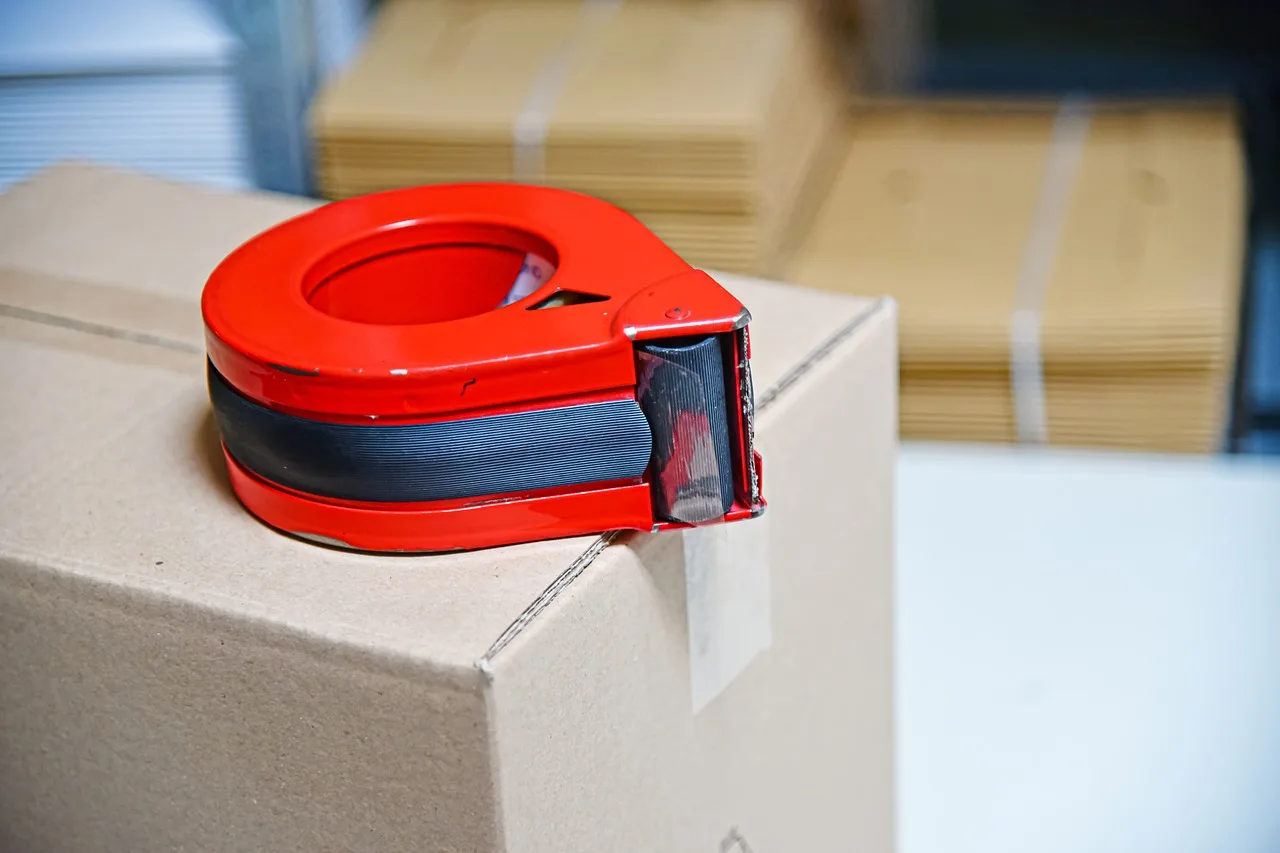
Large wall mirrors need the most discipline because the failure modes stack up fast: edge chips, corner shatter, carton flex, and shift damage. For these pieces, corner protectors are not optional and void fill must stop all movement.
Why corner protectors are non-negotiable here
Corner protectors absorb the first impact point, and on larger mirrors that is often where failure starts. A frame corner or glass edge can punch through the wrap if the corner is left bare.
Plastic or cardboard corner protectors are both useful when matched to the weight and shape of the piece. Larger mirrors usually need the firmer option, especially when the route is long.
How to size void fill so the mirror cannot shift
Void fill is not there to make the box feel full. It is there to stop the mirror from moving when the carton is tilted, dropped, or turned on its side. Packing peanuts, air pillows, or kraft paper can all work if they lock the load in place.
A simple shake-test works well: if the mirror moves, the void fill is not enough. Add more until the interior stays quiet from every angle.
When freight or a specialized art shipper is worth the spend
Once the mirror becomes oversized, heavy, or antique, the cost of a standard parcel shipment can stop making sense. Freight or a specialized art shipper can be cheaper than repeated claims and reships when the item is hard to box safely.
That is especially true when the mirror value is high enough that carrier liability limits do not cover replacement cost.
What size box should you use for a mirror?

Measure the mirror’s actual length, width, and depth first, then add room for wrap, foam, and movement control. A mirror box should leave at least 2 inches of clearance on all sides so the packing stack fits without compressing the glass.
How to measure the mirror before buying the carton
Measure the widest face dimension, the tallest face dimension, and the thickest point, including any frame lip or hardware. Do not size from the outer carton guess or the seller listing alone.
If the mirror is framed, include the frame thickness in the depth check. If it is unframed, the main concern is face size plus the space needed for protective layers.
How much clearance to add for wrap, foam, and movement control
The clearance target is about 2 inches on all sides, but that space gets used fast. Two bubble-wrap layers, foam sheets, and corner protectors all eat into the interior dimensions.
If the pack-out looks tight before void fill is added, the carton is likely too small. If the mirror can rattle, the carton is too large or the inserts are too soft.
When a custom carton is cheaper than a stock box
A custom carton is often cheaper when the stock box forces too much empty space or drives the package into a higher dimensional-weight bracket. The cheapest carton can become the most expensive shipment after one breakage or one oversize fee.
For repeat SKUs, custom mirror packaging can lower damage and packing time. Custom mirror packaging options include corrugated E-flute, B-flute, and C-flute, which give sellers more control over fit and weight.
Which one should you buy?
Choose the BOX USA double-wall-style option when you ship low volume, handle framed mirrors, and want a simple stock box that still gives real protection. Choose the Tape Logic flat corrugated box when the mirror is shallow and the fit needs to stay close to the product footprint.
Choose Bankers Box if you ship larger wall hangings and want a specialty moving box that is easy to reuse and broad enough for many frame sizes. Choose the BOX USA 18x12x12 option only when the mirror is small enough for a boxed pack-out without forcing excess void, because a general shipping box is not the same thing as a dedicated mirror carton.
For higher-value mirrors, the right choice is often not a consumer box at all. A custom carton or freight crate can be the better spend when replacement cost, claim friction, and transit distance rise at the same time.
Best shipping box for mirrors: product picks
Tape Logic 36x24x6 flat corrugated box: best for shallow mirrors
This is the strongest fit for shallow mirrors and flat framed pieces that need a wide footprint with controlled depth. Based on the spec sheet and owner feedback, it is a practical option when the mirror is shallow enough that excess headspace would only raise movement risk.
The drawback is simple: flat boxes can be too large for small mirrors, which can push you into heavy void fill and higher dimensional weight if the item is not close to the box size.
Bankers Box large TV/picture/mirror moving box: best for wall mirrors
This is the better pick for sellers moving larger wall mirrors or mixed wall hangings that need a specialty format. Based on specs and reviews, it fits broad pieces well and offers the kind of cardboard strength that helps when the frame edge is the weak point.
The drawback is that it is a moving-style solution, so it may not be the tightest fit for smaller retail mirror orders. That can mean more filler and less control over packing cost.
BOX USA medium shipping boxes 20-pack: best for over-ship packing
This works best when the mirror is paired with an outer pack-out or when you need a clean, simple carton for smaller flat pieces and accessories. The fully opening mailer format makes packing easier, and the white corrugated face is tidy for resale or presentation.
The drawback is that it is not a dedicated mirror carton. For fragile glass, it needs a careful insert strategy and is less forgiving than a purpose-built mirror box.
BOX USA 18x12x12 shipping boxes: best for small mirror orders
This is the budget-minded choice for small mirror orders where the mirror is compact and the seller wants a sturdy carton with 32-ECT strength. Based on the spec sheet and reviews, it gives solid support for properly packed shipments and stores flat.
The drawback is that a general shipping box can force awkward void fill around mirrors, which makes it less efficient than a mirror-specific carton for fragile glass.
How we chose
The best box is the one that fits the mirror without inviting movement. That means size, wall strength, and insert strategy matter more than the lowest carton price.
Distance matters too. A carton that works for local delivery can fail once it enters a longer sortation chain. For that reason, the better picks here favor double-wall construction, tight fit, and simple pack-out steps.
What packing materials are best for shipping mirrors?
The core stack is straightforward: double-wall corrugated cardboard with at least 32 ECT rating, corner protectors, two complete layers of bubble wrap with 3/16-inch bubbles, 1/8-inch foam sheets, reinforced tape, and strong void fill. Bubble wrap alone is not enough for sharp edges or frame corners.
Reinforced packing tape should be 2-inch wide and sealed with the H-tape method. Fragile labels should go on all sides with handle-with-care messaging, because the warning should be visible no matter how the carton is loaded.
Do mirrors need double-wall boxes for shipping?
For most fragile mirror shipments, yes. Double-wall boxes are the safer baseline because they hold up better against impact, pressure, and puncture than lighter cartons, especially when the mirror has corners, a frame, or a long shipping route.
Single-wall cartons are easier to crush and more likely to telegraph an outside hit into the glass. That risk is hard to justify when the replacement cost is higher than the carton savings.
How do you pack a mirror so it does not break?
Wrap the mirror in foam sheets, add two complete layers of bubble wrap, protect the corners, and place the piece in a double-wall box with about 2 inches of clearance on all sides. Then fill every void so the mirror does not move when shaken.
- Cover the face with 1/8-inch foam sheets.
- Add two full layers of 3/16-inch bubble wrap.
- Install plastic or cardboard corner protectors.
- Set the mirror in the box with 2 inches of clearance.
- Fill the voids with kraft paper, air pillows, or peanuts.
- Shake-test the carton for movement.
- Seal with 2-inch reinforced tape using the H-tape method.
- Apply fragile labels on all sides.
Should you use corner protectors when shipping mirrors?
Yes, especially for larger mirrors and framed pieces. Corners are the first place many shipments fail because impact loads concentrate there before the glass or frame can spread the force out.
Plastic corner protectors work well for more rigid protection. Cardboard protectors are a decent fit for lighter mirrors or short routes, but they must still be paired with wrap and void fill.
Is USPS, UPS, or FedEx better for shipping mirrors?
For mirrors, the better carrier depends on size, value, and handling risk. USPS is usually the weaker choice for fragile glass because its fragile handling is limited and coverage is limited to $100. UPS and FedEx are better for many parcel shipments, while freight or art shippers make more sense for larger items.
Carrier table data shows FedEx at an average damage rate of 5.2%, UPS at 6.1%, USPS at 9.8%, and freight at 3.7%. UPS also lists insurance coverage up to $50,000, which matters when the replacement value is far above a low claim cap.
How much void fill do you need in a mirror box?
Enough to stop any movement at all. The mirror should not slide, rattle, or tip inside the carton when it is shaken lightly from different sides. Packing peanuts, air pillows, or kraft paper can all work if they lock the piece in place.
Too little void fill leads to shift damage, edge chips, and corner breakage. Too much loose fill can let the item drift to one side, so the goal is firm immobilization, not just fullness.
Frequently asked questions
What is the best shipping box for mirrors?
A double-wall mirror box is the safest default for framed wall mirrors, especially when it leaves about 2 inches of clearance and is paired with corner protectors, foam sheets, and two complete layers of bubble wrap. For oversized or antique pieces, a custom crate or freight solution is usually better.
Products related to this article
Sponsored / affiliate links. As an Amazon Associate I earn from qualifying purchases. I may earn additional commission from eligible campaigns.