Can You Save Money by Using Your Own Box?
Yes, your own box can cost less with USPS when the package is light, compact, and priced mainly by actual weight rather than by a Flat Rate box. Once the box gets denser, heavier, farther away, or large enough to trigger dimensional pricing, Flat Rate can win instead. The better choice depends on the package profile and the current USPS rate table, not just the box you happen to have.
Own box vs flat rate

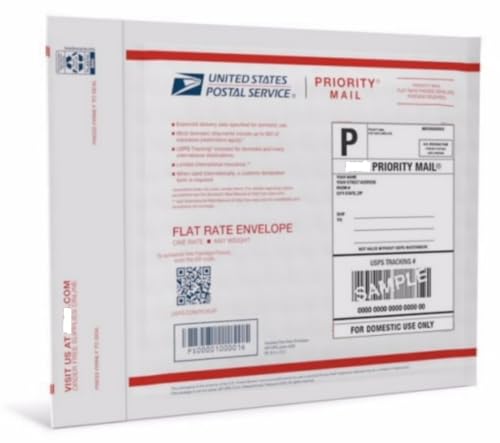

This comparison is only about USPS own-box shipping versus USPS Flat Rate. Standard Priority Mail can use your own packaging and is priced by weight, dimensions, and destination zone, while Priority Mail Flat Rate requires USPS-produced Flat Rate packaging. In other words, allowed does not always mean cheapest. See USPS’s official guidance on Priority Mail and Priority Mail Flat Rate.
| Package profile | Likely cheapest USPS option | Why |
|---|---|---|
| Very light, small parcel | USPS Ground Advantage or own-box Priority Mail | Low actual weight can keep the price down; Flat Rate usually is not needed for a small, light shipment. |
| Light but bulky parcel | Flat Rate or a smaller own box if it fits | Large dimensions can trigger dimensional pricing on own-box shipments if the package is over 1 cubic foot. |
| Dense or heavy item | Small, Medium, or Large Flat Rate box | Weight-based pricing rises with rounded pounds and distance, while Flat Rate uses a flat price for the packaging type. |
| Reused retail box | Own box only if the box is sturdy and clean | Reuse is allowed for standard Priority Mail if old labels are removed and the box still meets USPS size and weight rules. |
| Far-zone shipment | Flat Rate often becomes the better bet | Own-box Priority Mail pricing changes by zone, so long-distance parcels can cost more than a fixed-rate box. |
What the comparison covers
Use your own box when you want USPS to price the parcel by actual weight, package dimensions, and zone. Use Flat Rate when the item fits a USPS Flat Rate box and the flat price is lower than the own-box quote. Ground Advantage matters too, because a very light parcel can be cheaper there than either Priority Mail option.
When your own box is allowed
USPS says standard Priority Mail can use your own box and be priced by weight and zone. The package must still fit USPS size and weight limits, and reused boxes need to be free of old labels and markings. See USPS’s size-and-weight guidance in the USPS Shipping Restrictions page and the Priority Mail rules.
When Flat Rate packaging is required
Priority Mail Flat Rate pricing requires USPS-produced Flat Rate packaging. If you want the Flat Rate price, you need the proper USPS box or envelope. A random retail box does not qualify, even if it is close to the same size. USPS explains this directly on its Priority Mail Flat Rate page.
Cost factors that change the price

Three drivers matter first: actual weight, zone, and dimensions. Weight-based pricing can be cheaper for light shipments, but the rate climbs with rounded-up pounds and longer shipping zones. Large, light parcels can also cross into dimensional weight pricing, which can erase the savings from using your own box. USPS’s current rate structure for Priority Mail and USPS Ground Advantage reflects those variables.
Actual weight and rounded pounds
USPS weight-based pricing uses rounded-up pounds for many parcel services. That means a parcel that weighs just over an even pound is billed at the next pound. A light box can still be cheap, but the jump from one weight band to the next can change the comparison quickly.
Shipping zone and distance
USPS domestic zones range from Local through Zone 9, and the zone is part of the price for zone-based services. Longer distances usually cost more for weight-based pricing. Flat Rate is not zone-based, so a shipment to a far destination can make Flat Rate look better even when the parcel is not especially heavy. USPS explains zone pricing in its zone charts and rate tools.
Package dimensions and girth
USPS lists a 108-inch maximum combined length and girth for many Priority Mail parcels. That limit matters because a long or bulky box can run into size-based pricing pressure even when the scale weight looks low. Shape matters as much as weight. See USPS’s official Priority Mail limits.
Dimensional weight for large, light boxes
Dimensional weight applies to larger parcels, and USPS can charge based on the greater of actual weight or dimensional weight depending on the service and package characteristics. For current pricing rules, always check USPS’s live rate pages and calculator rather than relying on a fixed shortcut number. That is why a large, light box can cost more than a compact box with the same scale weight. USPS’s Postage Price Calculator reflects the current dimensional pricing rules.
Suppose you are mailing a lightweight throw pillow in a tall, airy box. The scale may look friendly, but the box shape can push the rate up if dimensional weight is higher than actual weight. A smaller box, or a Flat Rate box that fits the item well, may come out ahead.
USPS box rules to follow
USPS box rules are straightforward, but small mistakes can change the price. A sturdy box is allowed; a damaged or warped one is a risk. Old labels can confuse processing, and added tape or filler increases package weight, which can move a parcel into a higher pricing band.
Sturdy box condition
USPS says boxes should be made of rigid corrugated fiberboard or similar materials. That means the box needs enough structure to protect the contents and survive processing. A box that bows, crushes easily, or opens at the seams is not a good candidate for reuse.
Removing old labels and markings
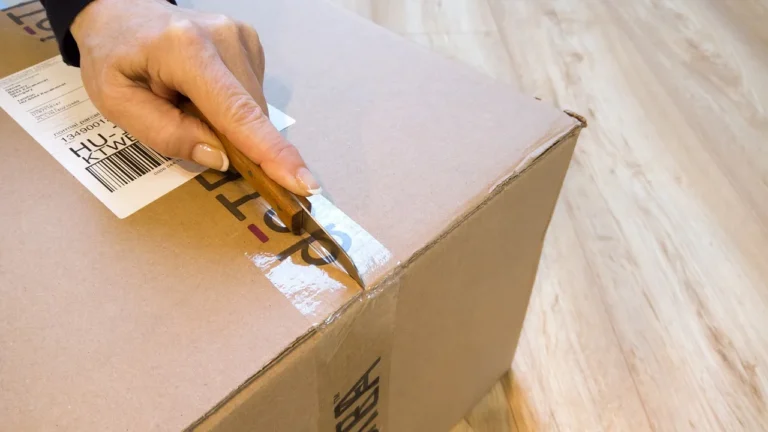
Reused boxes must have all old labels and markings fully covered or removed. Leaving a visible retail barcode, address block, or old carrier marking can create routing problems. It can also make the shipment look unprepared, which is avoidable.
Reused retail box limits
A reused retail box can work if it is clean, sturdy, and free of old shipping information. It may also save you from buying new packaging. But if the box is dented, expanded, or patched in several places, any packaging savings may disappear once you add extra tape or replacement materials.
Tape, void fill, and packaging weight
Tape, void fill, and padding all add weight. That sounds small, but weight-based USPS pricing rounds up, so a few extra ounces can matter. Overstuffed void fill can also expand the package dimensions, which is a problem for dimensional pricing and size limits.
- Measure the packed box, not the empty box.
- Check actual weight after tape and void fill are added.
- Compare the box shape against USPS size limits.
- Remove or fully cover every old label and barcode.
- Quote the shipment both ways: own box and Flat Rate.
USPS own box comparison table
This table separates what is allowed from what is likely cheapest. The best option changes by package shape, weight, and destination zone. A reused box can still lose if it triggers dimensional weight or if a Flat Rate box fits the contents better.
| Package profile | Likely cheapest USPS option | Why |
|---|---|---|
| Light and small | USPS Ground Advantage or own-box Priority Mail | Low actual weight keeps the rate down; a small parcel may not need Flat Rate pricing. |
| Light but oversized | Flat Rate or a smaller own box if it fits | Dimensional pricing can raise the own-box price when the box is over 1 cubic foot. |
| Dense or heavy | Small, Medium, or Large Flat Rate box | Weight-based pricing rises with rounded pounds and zone distance, while Flat Rate ignores zone. |
| Reused retail box | Own box only if the box is sturdy and clean | Reuse is allowed, but old markings must be removed and the box must stay within USPS size and weight limits. |
| Far-zone shipments | Flat Rate often becomes the better bet | Zone-based pricing makes long-distance own-box Priority Mail more expensive. |
When your own box saves money?

Your own box saves money when the parcel is light, compact, and well below dimensional pricing pressure. It also helps when you are shipping within a closer zone and do not need USPS-branded packaging. If the box is free or already on hand, packaging cost stays low too.
For very light items, USPS Ground Advantage can be the cheapest USPS option, especially when the package is under the current USPS ounce threshold for its service category. That matters because some shippers compare only Priority Mail and Flat Rate, then miss a cheaper service entirely. A small parcel does not owe you a Priority Mail label.
Best fit for weight-based pricing
Own-box Priority Mail works best when the item is compact enough that the scale weight is the main cost driver. If the box stays small, actual weight usually matters more than package shape. The closer the box is to the contents, the less chance there is for dimensional pricing to bite.
When the box stays under DIM weight
Keep the box as compact as possible when you can. Once a package crosses the dimensional-pricing threshold for the service being used, dimensional weight can take over if it is greater than actual weight. That is why a slightly smaller box can beat a larger one even when both contain the same item.
When the destination zone stays close
Zone matters because weight-based USPS pricing climbs with distance. A shipment moving within Local, Zone 1, or another nearby zone is more likely to favor your own box than one heading to a farther zone. Distance can erase a small packaging savings fast.
When packaging cost is low
Reusing a sturdy box can help, but only if the reuse does not require extra materials that add weight or bulk. If you need a new carton, extra tape, and a lot of void fill, the packaging cost can offset the savings you expected from choosing your own box.
When Flat Rate wins anyway?
Flat Rate wins when the parcel is dense, far away, or awkwardly shaped but still fits a USPS Flat Rate box. The rate is not tied to zone, so a shipment to a distant destination can be cheaper under Flat Rate even if the scale weight is not especially high. USPS describes these packaging options on its Priority Mail Flat Rate page.
Heavy items in a small box
Heavy, compact items are classic Flat Rate candidates. When the item fits inside a Small, Medium, or Large Flat Rate box and the weight-based quote climbs with each pound, the fixed Flat Rate price can be easier to beat than to match.
Long-distance shipments
Far-zone shipments are where Flat Rate often pulls ahead. The same box that looks affordable to a nearby zone can become much more expensive at a farther zone because USPS weight-based pricing uses shipping zone in the rate. Flat Rate removes that distance penalty.
Cases where dimensions push the price up
If your own box is bulky, the rate can rise because of dimensional pricing or because the packed size is simply awkward. In that case, a Flat Rate box may be cheaper even if the item is not very heavy. The box shape, not the item weight, is what changes the math.
Small, predictable Flat Rate box sizes
USPS offers Small, Medium, and Large Flat Rate boxes. Their value is predictability: you know the packaging type and the pricing structure before you weigh the parcel against zone-based rates. That is useful when you want a quick answer without trying to optimize every ounce.
Say your item is a 2-pound stack of books going to a far zone. A sturdy own box may still be allowed, but the zone pricing and rounded pounds can make the own-box quote climb fast. If the books fit a Medium Flat Rate box, that flat price may be the better answer.
Choose your own box if… / Choose Flat Rate if…
Use your own box when the package is light, compact, and priced mainly by actual weight rather than dimensional pricing. Use Flat Rate when the box is heavy for its size, the destination is far, or the item fits a USPS Flat Rate box and the flat price is lower than the own-box quote.
Choose your own box if…
- The parcel is light enough that rounded pounds stay low.
- The packed box stays below dimensional pricing pressure.
- The destination is close enough that zone pricing stays modest.
- You already have a sturdy box with no old labels or markings.
Choose Flat Rate if…
- The item is dense or heavy for its size.
- The shipment is going to a far zone.
- The own-box quote rises because the package is bulky.
- The item fits cleanly into Small, Medium, or Large Flat Rate packaging.
Hidden cost triggers to check first
- Dimensional weight on large, light boxes.
- Old labels, barcodes, or markings on reused boxes.
- Oversized or nonstandard package shape.
- Extra packaging weight from tape, void fill, and padding.
- Current rate-table changes for the exact service and destination.
Quick decision checklist
- Measure the packed box and check actual weight.
- See whether the box exceeds the dimensional-pricing threshold for the service being used.
- Estimate dimensional weight only if the package is large enough for it to matter.
- Compare the own-box quote with Small, Medium, and Large Flat Rate options.
- Check whether Ground Advantage is cheaper for a very light parcel.
Where to check the USPS price
Use the USPS Postage Price Calculator or the USPS Click-N-Ship postage tool to compare the own-box quote against Flat Rate before you pay. Enter the package weight, size, and destination zone, then compare the result to the Flat Rate box price that fits your shipment. Current retail and commercial rates can differ, so the live calculator is the safest way to confirm the cheapest option.
Frequently asked questions
Can you save money by using your own box instead of a flat-rate box?
Yes, sometimes. You can save money when the package is light, compact, and priced mainly by actual weight and zone rather than dimensional pricing. If the item is bulky, heavy, or traveling far, Flat Rate can be cheaper even when your own box is allowed.
When is a flat-rate box cheaper than using your own box?
Flat Rate is often cheaper when the item is dense, the route is long, or the own box becomes expensive because of dimensions. It can also win when the package fits neatly into Small, Medium, or Large Flat Rate packaging and the weight-based quote keeps climbing.
Does shipping with your own box cost less for light packages?
Often, yes. Light packages can be cheaper with your own box because USPS weight-based pricing may stay low, especially on nearby routes. But very light parcels should also be checked against Ground Advantage, since a package in the current low-ounce range may be cheaper there than either Priority Mail option.
What factors change USPS shipping cost when you use your own box?
The main factors are actual weight, rounded-up pounds, dimensions, shipping zone, and whether dimensional pricing applies. Packaging cost matters too. A sturdy reused box can save money, but extra tape, void fill, or a box that is too large can erase that savings.
Do you have to use USPS boxes for Priority Mail?
No. Standard Priority Mail can use your own box. You only need USPS-produced packaging when you want Priority Mail Flat Rate pricing. The box still has to be sturdy, within USPS size and weight limits, and free of old labels and markings. USPS explains this on its Priority Mail and Priority Mail Flat Rate pages.
When does dimensional weight make your own box more expensive?
Dimensional pricing becomes relevant when a parcel is large enough for USPS to compare size-based weight against actual weight under the current service rules. That means a large, light box can cost more than a compact box with the same scale weight. Use the USPS calculator for the exact shipment, since the current rule set and rate tables control the outcome.
Is flat-rate shipping better for heavy items?
It often is, but not always. Flat Rate helps most when the item is heavy for its size and fits inside the right box. A far destination can make Flat Rate especially attractive, while a very light item may still be cheaper under own-box Priority Mail or even Ground Advantage.
Products related to this article
Sponsored / affiliate links. As an Amazon Associate I earn from qualifying purchases. I may earn additional commission from eligible campaigns.