Moving Blankets vs Furniture Straps: Which to Use First
Use moving blankets for surface protection. Use furniture straps for load control. For anything heavy, awkward, or going inside a truck, use both. Straps stop shifting. Blankets stop scuffs. Skip one and you invite torn upholstery, chipped wood, crushed corners, and cargo that slides, tips, or breaks under braking. This guide shows when each tool is enough, when both belong in the kit, and how I use them on furniture and appliances.
| Decision factor | Moving blankets | Furniture straps | Winner |
|---|---|---|---|
| Surface protection | Cushions finishes, absorbs shock, and helps prevent scratches, nicks, wall damage, and floor damage | Does not cover or pad surfaces on its own | Moving blankets |
| Load control | Can slow rubbing, but does not stop shifting | Secures and restrains items during transport | Furniture straps |
| Risk of finish damage when used wrong | Low when fitted properly, higher if left loose and dragged | Higher if ratchet tension is too hard; can compress edges and mark finishes | Moving blankets |
| Best use case | Wood furniture, appliances, couches, chairs, glass table tops, flat screens | Truck loading, stair carries, strapped stacks, items that can tip or slide | Tie |
| Reusability | Reusable for repeated moves; some are built for heavy-duty use | Reusable if the webbing and hardware stay in good shape | Tie |
Moving blankets vs furniture straps: the core trade-off


The real choice is surface protection versus load control. Moving blankets cushion furniture and appliances. Furniture straps keep those items from moving once they are loaded or carried. Pick the wrong one and the failure is easy to predict, scratches without blankets, or shifting and impact damage without straps.
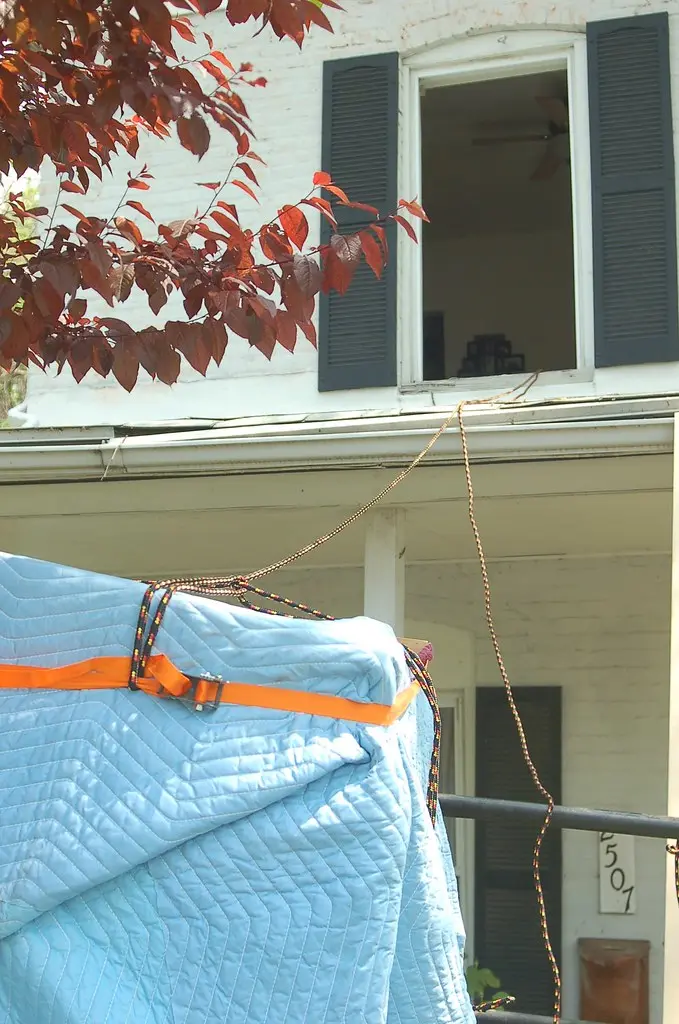
That is why I pack both for most moves. A dresser can be wrapped, then strapped to a dolly or truck wall. A sofa can be padded on the arms and frame, then held in place so it does not slide during braking.
Surface protection versus load control
Moving blankets are heavy-duty cloth coverings made of cotton, polyester, or a blend. They absorb shock and add cushioning, which is why I use them on furniture, appliances, and other large items. Some moving blankets include interior cushions for extra protection.
Furniture straps are different. They are made for restraint, not padding. Ratchet straps tighten more firmly for keeping loaded furniture from moving, while cam buckle straps allow finer manual adjustment with lower tension.
Why the wrong tool fails in a move
Blankets alone do not stop an item from sliding in a truck, tipping on a ramp, or shifting around a stair corner. Straps alone do not stop abrasion, crushed edges, or finish damage from contact with walls, door frames, or other furniture.
The failure mode matters. A tight ratchet strap can leave compression dents on a soft wood edge, while an uncovered dresser can lose finish in one short carry through a narrow hallway. Both failures show up often because each tool solves a different problem.
When both items belong in the same load
Moving truck loading almost always needs both. Padding keeps surfaces from rubbing, and restraint keeps the load from moving when the truck turns, stops, or hits a bump. That pairing also helps prevent wall damage inside the truck and floor damage at the destination.
Protective wrapping can add another layer. Stretch wrap or packing tape can secure a moving blanket, and blanket-plus-wrap combinations work well for corners and edges that need extra hold during a long carry.
Which one protects surfaces, and which one holds loads?
Moving blankets protect surfaces by cushioning contact points, while furniture straps hold items in place during transport. If the job involves scuffs, dents, or corner damage, the blanket matters more. If the job involves shifting, sliding, or tipping, the strap matters more.
Moving blankets: cushioning, abrasion control, and edge padding
Moving blankets are used to protect furniture, appliances and other large items when you move. They help prevent scratches, nicks, wall damage and floor damage. In practice, that makes them my first layer for wood furniture, glass table tops, flat screens, and any painted or finished surface.
They also hold up well over repeat use. Tarpsupply says moving blankets are thicker and better for heavy-duty protection, generally offer higher durability and cushioning, and can be reusable for hundreds of moves. That is why I reach for them when the item is costly or the finish marks easily.
Furniture straps: restraint, tension, and shift control
Furniture straps help secure and restrain items during transport. They are often paired with tie-down hardware and are measured by length and width, because the job is to hold a load, not to cover it. That makes them a better fit for truck loading, stair carries, and stacked items that must stay still.
Ratchet straps can create fairly high tension, which can help keep heavier furniture from shifting, but they may be risky on soft edges or delicate finishes. Cam buckle straps are easier to fine-tune by hand and usually apply less tension, so they are a better choice when you need control without crushing pressure.
Ratchet straps versus cam buckle straps
Ratchet straps are often best when the item needs to stay as still as possible, such as a heavy dresser in the truck or a refrigerator against a wall rail. They can damage items if overtightened, so they are not the right answer for finish-sensitive pieces that dent easily.
Cam buckle straps are gentler and easier to adjust. They still restrain the load, but with lower tension than ratchets, which makes them better for furniture transport when the goal is stability rather than hard compression.
When do moving blankets beat straps?
Moving blankets beat straps whenever the main risk is surface damage. If the item has a finish, fabric, glass, paint, or sharp corners, padding matters more than restraint for the first layer of protection. Straps can come later, but they cannot replace cushioning.
Wood furniture and finished surfaces
Dressers, nightstands, tables, and cabinets often get scraped at the corners before they ever reach the truck. A moving blanket absorbs the contact that would otherwise nick wood or chip finish. For polished or painted pieces, straps alone are the wrong tool because tension does nothing for abrasion.
On these items, the common mistake is tying a bare piece to a dolly or truck rail. That may stop motion, but it can press directly on edges and leave marks where the strap bears down.
Glass tabletops and flat screens
Glass table tops and flat screens should be wrapped before they are restrained. The blanket gives cushioning and spreads pressure across the surface, which lowers the chance of corner damage or pressure points. Straps can hold the package later, but they should not sit directly on the item.
For glass, extra edge protection matters. Corner guards, blanket folds, and a final wrap layer reduce the chance of chipping during a carry through a doorway or up a ramp.
Short in-home moves where scratches matter more than travel
For a short move inside the same house, the risk is often not long-distance vibration. It is doorway contact, floor scuffs, and wall bumps. A moving blanket is usually the better first pick because it protects during those close-quarters touches.
If the piece stays upright and is carried by hand, straps may add little value. The blanket does the real work by keeping the surface between the furniture and the obstacle.
Can furniture straps replace moving blankets during a move?
Furniture straps can replace moving blankets only when the item already has enough surface protection or the surface does not matter much. They are useful for restraint, but they do not pad contact points or prevent finish wear. For most furniture, straps alone leave too much exposed.
When restraint is enough
Straps can stand alone on rugged items such as a metal utility cart or a wrapped appliance that already has another protective layer. They also work when the piece is going a very short distance and is not likely to touch walls, floors, or other furniture.
Even then, the item should be stable enough to tolerate strap pressure. If the load has soft corners, exposed veneer, or a finish that marks easily, the blanket should come first.
When straps create compression dents or edge damage
Ratchet straps are the main risk here. Their higher tension can compress upholstery, bruise edges, and leave strap marks on soft wood if they are tightened too far. That is why they are better for load restraint than for direct contact with finished furniture.
Cam buckle straps are less aggressive, but they still do not protect the surface. A strap that holds a load correctly can still leave a mark if it rests on an unprotected corner for the entire trip.
Why straps alone are wrong for finish-sensitive items
Furniture straps do not absorb shock the way moving blankets do. If the item rubs against a truck wall, door frame, or another piece, the strap will not stop scuffs or dents. On finish-sensitive items, that is a real weakness, not a minor trade-off.
The safe rule is simple: if the surface can be damaged by friction, use a blanket first. Use the strap only after the item is padded.
Decision table: 10 common moving scenarios
Use the table below as a task-based rule. It separates surface protection from load restraint, which is the fastest way to choose correctly when packing a truck or carrying furniture through a home.
| Scenario | Use blankets, straps, or both | Failure risk if you choose wrong |
|---|---|---|
| Dresser | Both | Bare dresser edges can chip; straps alone can dent corners or rub finish |
| Sofa | Both | Unwrapped fabric can snag and soil; no straps can let it slide in the truck |
| TV | Blankets | Straps alone can press on the screen or frame; no padding can crack the panel |
| Mattress | Both | Blankets alone do not stop bending or shifting; straps alone can mark the cover |
| Glass table | Blankets | Unprotected glass can chip fast; strap pressure on an edge can break the top |
| Appliance | Both | Metal panels can scratch; without restraint the appliance can shift and strike walls |
| Staircase carry | Both | Loose items can bump walls or railings; bare surfaces can show scrapes immediately |
| Truck loading | Both | No padding leads to rub damage; no restraint leads to shifting during braking |
| Short in-home move | Blankets | Straps add little if the item is hand-carried; bare edges can still mark walls |
| Long-distance move | Both | Skipping blankets invites friction wear; skipping straps allows load movement over time |
Choose moving blankets if… / Choose furniture straps if…
Choose moving blankets if the item needs scratch, dent, or corner protection. Choose furniture straps if the item needs restraint during transport. Choose both when the load can move and the surface can be marked. That is the safest rule for most furniture, appliances, and truck loads.
Choose moving blankets if…
Use blankets first for wood furniture, glass table tops, flat screens, and finished pieces with visible edges. They are also the better pick for short in-home moves where the biggest threat is contact with walls, floors, or door jambs.
If the piece is valuable, has a sensitive surface, or will be handled more than once, the blanket usually earns its place fast. Reusable gear saves money over time when the same furniture moves again.
Choose furniture straps if…
Use straps when the item must stay in place in a truck, trailer, or on a dolly. They are the right tool for load control, especially with heavy furniture, repeated transport, or anything that can tip, slide, or bounce.
Ratchet straps fit heavier loads that need hard immobilization. Cam buckle straps fit items that need steadier restraint with less pressure on the finish.
Choose both when…
Choose both for moving truck loading, longer moves, stair carries, couches, appliances, and many mid- to large-size furniture items. Blanket first, then strap. That sequence protects the surface before you lock the load down.
This is also the right order for protective wrapping. Add stretch wrap, packing tape, or corner protection after the blanket is in place if the item needs extra hold around edges or loose folds.
How many straps or blankets do I need for one move?
The number depends on item size, weight, surface sensitivity, and how often the piece will be handled. A single small item may need one blanket and one strap, while a dresser, sofa, or appliance often needs multiple blankets and more than one restraint point to stay covered and stable.
Use coverage points, not guesswork
Think in terms of where the item may touch another surface. A blanket should cover every face that may touch a wall, floor, or another item. A strap should hold the load at points where it might shift, not across a delicate edge just because that is the easiest place to reach.
- Measure the item’s widest faces and exposed corners.
- Cover all finish-sensitive sides with blankets first.
- Add stretch wrap or packing tape only to hold the blanket in place.
- Place straps where they stop movement without crushing edges.
- Recheck after lifting, loading, or stair movement.
When one is enough
One blanket may be enough for a short in-home carry of a medium item with low shift risk. One strap may be enough for a rugged, already padded object that only needs light restraint. Once the item is heavy, awkward, or going into a truck, that is usually no longer enough.
Are moving blankets reusable for multiple moves?
Yes. Moving blankets are made for reuse, and that is part of their value. Because they are built from cotton, polyester, or a combination of the two, they are suited to repeated handling when they are stored dry and kept free of tears, loose stitching, and heavy contamination.
What shortens their life
Rips, wet storage, and constant dragging across rough concrete shorten a blanket’s useful life. Tarpsupply notes that some moving blankets are built for repeated use and can be reusable for hundreds of moves, but the real limit is how they are handled between jobs.
Furniture straps are reusable too, but only if the webbing and hardware stay in good shape. Bent hardware, worn stitching, or frayed strap material is a sign to replace them before the next move.
What is the cheapest way to protect furniture while moving?
The cheapest option is usually the one that matches the risk. For low-risk, short-distance moves, a small set of reusable moving blankets can protect several pieces without constant repurchasing. For load control, a basic set of reusable straps is cheaper than replacing damaged furniture after a shift in the truck.
Budget choices that still avoid damage
Tarpsupply says furniture pads are more affordable and better for DIY or small moves, while moving blankets are better for heavy furniture, repeated use, and professional moves. That points to a practical split: light-duty wrapping for simple moves, heavy-duty blankets for high-risk pieces, and straps only where restraint is needed.
The cheapest mistake is choosing straps instead of padding for a finish-sensitive item. One compressed edge or scratched face costs more than the right blanket would have cost on its own.
Frequently asked questions
Should I use moving blankets or furniture straps for moving furniture?
Use moving blankets for surface protection and furniture straps for load control. If the furniture is heavy, awkward, or going into a truck, use both. The blanket protects against scratches and dents, while the strap keeps the piece from shifting, tipping, or striking other items during transport.
When do I need moving blankets instead of straps?
Use moving blankets instead of straps when the main risk is scuffs, edge damage, or finish wear. Wood furniture, glass tabletops, flat screens, and painted surfaces need padding first. A strap can hold the item later, but it cannot protect a surface from friction by itself.
Do straps prevent scratches and dents on furniture?
No. Straps hold furniture in place, but they do not pad surfaces or absorb shock. Ratchet straps can even create dents or compression marks if overtightened. If scratch protection matters, wrap the furniture first with a moving blanket, then add the strap if the load still needs restraint.
What furniture should always be wrapped in moving blankets?
Any piece with a sensitive finish, fragile edge, or fragile panel should be wrapped. That includes wood furniture, couches and chairs with exposed arms or legs, glass table tops, appliances with visible panels, and flat screens. If contact damage would be costly, the blanket should be the first layer.
Products related to this article
Sponsored / affiliate links. As an Amazon Associate I earn from qualifying purchases. I may earn additional commission from eligible campaigns.