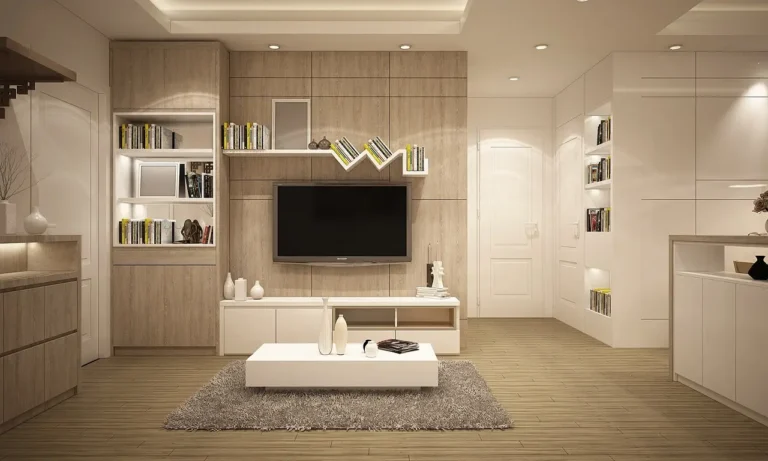
Small TV Stand vs Large TV Stand: Which Fits Best?
Choose the smallest TV stand that is at least 6 inches wider than your TV on each side, or go larger only when you need extra storage, better room balance, or more circulation around the piece. Pick too small and the TV can look top-heavy; pick too large and you crowd walkways and make the room feel off. This guide compares small TV stands versus large TV stands by room size, TV size, storage needs, and layout.
| Decision factor | Small TV Stand | Large TV Stand | Winner |
|---|---|---|---|
| TV width compatibility | Works best with smaller screens and tight placements, but can look strained under wide TVs | Supports wider screens with more visual balance and safer side clearance | Large TV Stand |
| Room width and traffic clearance | Best in compact rooms, corners, and narrow paths | Better only when the room has open wall space and clear circulation | Small TV Stand |
| Storage need | Limited surface and concealed storage | Usually has more shelves, drawers, and room for equipment | Large TV Stand |
| Future upgrade flexibility | Less flexible if the TV gets larger later | Safer for renters, movers, and future screen upgrades | Large TV Stand |
| Visual balance | Can feel clean and light in small rooms | Often looks more proportional with larger TVs and longer walls | Tie |
How to choose between a small and large TV stand


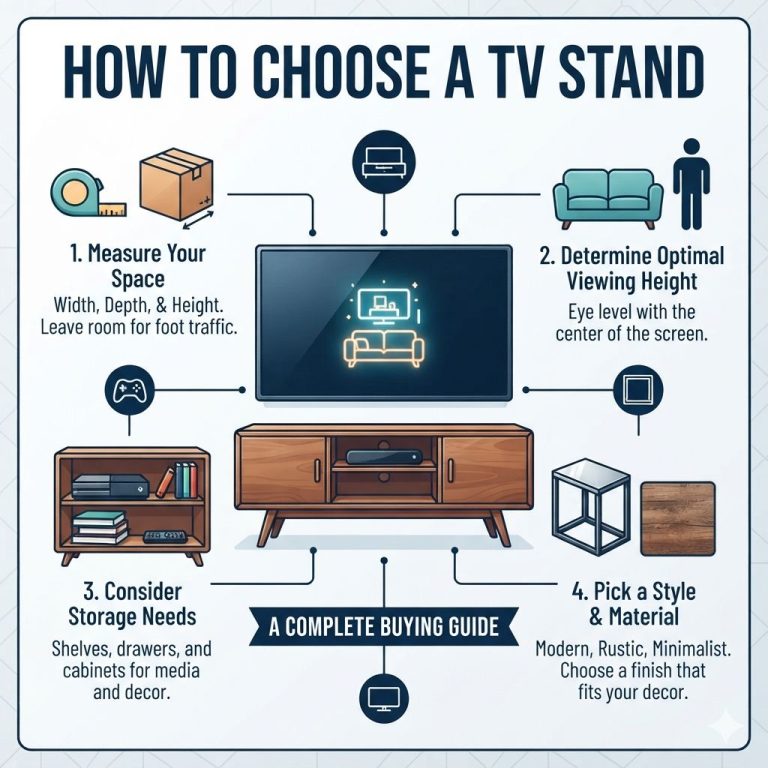
The better choice depends on three things at once: the TV width, the room width, and what else has to live around the stand. A small stand can be the right answer in a compact room, but it fails when the screen becomes wider than the base can support visually or when storage needs keep growing.
Match the stand to the room, not only the screen
A stand can be wide enough for the TV and still feel wrong if it blocks a path or crowds a chair. In a narrow room, a smaller piece usually preserves walking space and keeps the layout from feeling packed. In a larger room, a larger stand can anchor the wall and stop the TV from floating in an empty-feeling area.
Match the stand to storage needs and walkways
If the setup needs space for a cable box, game consoles, remotes, routers, and spare cords, the larger stand usually earns its footprint. If the TV area only needs a screen and one small device, a compact stand may be enough. Walkway clearance matters just as much as storage, because a stand that forces people to sidestep it every day will feel oversized fast.
When future TV upgrades change the answer
Renters, frequent movers, and anyone planning a larger TV later should think ahead. A larger stand is often the safer long-term buy when the next screen size is already on the horizon. A small stand makes sense only if the TV will stay the same size and the room has little spare width.
How wide should a TV stand be for your TV?
A TV stand should be wider than the TV for balance, with 6-12 inches of stand extending beyond the screen on each side. That gives the setup visual breathing room and reduces the look of a heavy screen sitting on a base that is too short. The right range changes with TV size, so the stand should be matched to the display before style is decided.
Recommended stand width by TV size
For a 43-50 inch TV, a 55-62 inch wide stand is the common pairing, and the minimum recommended stand width is 49-56 inches. For a 55-65 inch TV, a 67-77 inch stand fits well, with 61-71 inches as the minimum recommended width. For a 70-75 inch TV, the common pairing is 82-87 inches, with 76-81 inches as the minimum recommended width. An 80+ inch TV pairs with a 92+ inch wide stand.
Minimum safe width and overhang allowance
That side room is not decorative. It helps the setup look settled and gives a margin for the base feet, soundbar placement, or small accessories. If the stand barely matches the TV width, the result can look cramped even when it is technically usable.
How much space to leave on each side
The guide recommends extending the stand 6-12 inches beyond the TV on each side. In practical terms, the safest look is usually somewhere in that band unless the room is unusually tight. When the room is compact, the lower end of that range tends to work better, but the TV still needs clear edges and a stable base.

What size TV stand do I need for a 55-inch TV?
A 55-inch TV often works best on a stand in roughly the upper-60s to upper-70s inches wide, with a minimum width around the low-60s to low-70s. That gives the screen enough side support without forcing the room to carry extra bulk. For most homes, the middle of that range is easier to place than a stand that only barely clears the minimum.
Why 55-inch setups often favor medium-to-large stands
People buying for a 55-inch screen often want room for a streaming box, game console, or center speaker. That makes a medium or large stand more useful than a very short one. The stand can still be visually light if the design is open or raised, but the surface width should not be treated as optional.
What to avoid under a 55-inch screen
A narrow console can make the TV look like it is hanging over the edge of the room plan. It may also leave too little room for the screen feet if the TV is not wall-mounted. For a 55-inch TV, under-sizing the stand is usually a layout mistake, not a space-saving win.
When is a small TV stand the better choice?
A small TV stand is the better choice in compact rooms, narrow alcoves, and corner placements where every inch matters. It works well when the screen is modest in size, the device count is low, and the goal is to keep the room open. It becomes a poor choice when the TV grows large enough to look top-heavy or when storage starts to spill outside the stand.
Best uses for compact rooms and tight corners
Small TV stands are useful in apartments, guest rooms, and bedrooms where the TV is not the main visual anchor. They can also fit where a larger console would block a door swing or pinch a walkway. In those cases, keeping the footprint tight is worth more than adding extra empty surface.
Where open shelving can work
Open TV stands feature open shelving and a minimal design. They are a good fit when the setup needs easy access to components and the owner does not need concealed storage. The tradeoff is obvious: less hidden storage, more visible clutter, and less room for a growing stack of devices.
Failure cases: large screens on narrow stands
A small stand under a large TV can look visually awkward, especially if the screen is wide enough that the base appears lost beneath it. The problem is not only appearance. It also becomes harder to keep remotes, speakers, and media boxes organized without crowding the stand surface.
When does a large TV stand make more sense?
A large TV stand makes more sense when the room has width to spare, the TV is large, or the storage load is real. It can also be the smarter buy for people who move often and do not want to replace furniture every time the screen changes. The extra footprint pays off only when it improves layout, storage, or future use.
More storage for boxes, consoles, and remotes
Large TV stands usually give more shelf space, more closed storage, and more room to hide cords and accessories. Media cabinets are built for enclosed storage and cable management, which makes them a strong choice for households with several components. Entertainment consoles combine mixed open and closed storage, so they can balance access with tidier storage.
Better proportion in wider rooms
A larger stand can visually settle a long wall better than a short piece that feels like a placeholder. It gives the TV a broader base and helps the entire setup read as one planned unit. In big rooms, that proportion is often worth more than the saved floor space from a smaller stand.
When extra length helps future-proof the setup
If the current TV may be replaced with a larger one, buying the larger stand now can prevent a second purchase later. That matters for renters and movers who prefer furniture that can survive changes in apartment size and screen size. The extra length is wasted only when it blocks circulation or sits mostly empty forever.
What height should a TV stand be for comfortable viewing?
The ideal stand height supports seated viewing without forcing the eyes upward for long periods. For a 55-65 inch TV, the ideal stand height range is 22-26 inches. Lower stands usually create a more relaxed eye line, while taller media cabinets can work if the screen still lands near seated eye level.
How screen size changes the eye-line
Larger TVs tend to pull the visual focus higher, so the stand height matters more as screen size grows. A tall stand can push the center of the image above a comfortable line, especially in a sofa-based living room. For most living spaces, keeping the TV lower is easier on the neck.
Low stands versus taller media cabinets
Low stands tend to look lighter and can help a room feel open. Taller media cabinets add storage, but they should be chosen carefully because the extra height can change the viewing angle. The right height is the one that supports the screen without making the seated viewer crane upward.
Choose the right stand style for the space
Stand style changes how well a size choice works. Corner TV stands use a triangular design for space efficiency and are best when the TV must fit into a corner. Floating TV stands are wall-mounted and space-saving, while open TV stands keep the look simple and accessible. Entertainment consoles work well when the room needs both length and storage.
Corner TV stand
A corner TV stand is the best answer when the room plan depends on using a corner instead of a flat wall. Its triangular shape saves floor area and can keep traffic moving around the room. This style is usually the first option to consider in small rooms where a standard wide console would dominate the wall.
Media cabinet
A media cabinet is the better pick when enclosed storage matters more than an airy look. Doors help hide components, dust, and cable clutter. It is often worth the extra size in family rooms and shared spaces where multiple devices need a home.
Open TV stand
An open TV stand works best when access matters and the equipment list is short. It has a lighter visual footprint and can make a room feel less crowded. The downside is that visible cords and gear need to stay neat, or the stand starts to look busier than intended.
Entertainment console
An entertainment console suits larger TVs and rooms that need both display surface and serious storage. Mixed open and closed compartments let the user hide some items while keeping daily-use gear close at hand. When the room can support the width, this is often the most practical large-stand format.
Decision matrix: small vs large TV stands by scenario
This matrix compares the two sizes across the five factors that matter most in real rooms. The best choice changes when one factor becomes more important than the others, so the winner is not always the same. A compact room with a small TV tends to favor the smaller stand; a larger room with more gear tends to favor the larger one.
| Scenario | Small TV Stand | Large TV Stand | Winner |
|---|---|---|---|
| 43-50 inch TV in a compact apartment living room | Fits well if the stand still clears the TV width and leaves walkway space | Can feel too large unless storage needs are high | Small TV Stand |
| 55-65 inch TV with game consoles and a soundbar | Often too tight for gear and cable routing | Better match for width, storage, and balance | Large TV Stand |
| Small room with a corner placement | Works if the footprint stays compact | Usually crowds the room and blocks movement | Small TV Stand |
| Wide family room with future TV upgrade planned | May need replacing soon | More room for a larger screen later | Large TV Stand |
| Minimal setup with one streaming device | Enough if the stand width is still safe | Extra footprint may be wasted | Small TV Stand |
Small TV stand wins when space is the limiting factor
In small rooms, width and traffic clearance matter more than extra storage. A compact stand keeps the room usable and can still look balanced when the TV is modest in size. That is why the smaller option wins the apartment, corner, and minimal-setup scenarios.
Large TV stand wins when the setup has to do more work
As soon as the room needs storage, future flexibility, or support for a larger screen, the larger stand starts to pull ahead. It holds gear better, fits bigger screens more naturally, and avoids the awkward look of a display sitting on a base that is too short. That extra size becomes value when it solves a real problem.
Verdict
Choose a small TV stand if the room is tight, the TV is modest, and you want to preserve walking space. Choose a large TV stand if the TV is 55 inches or larger, you need storage for components, or you want room for a future screen upgrade. The better buy is the one that fits the room plan without forcing a compromise in circulation.
Frequently asked questions
Is a small TV stand or large TV stand better for my room?
The better choice depends on room width, traffic paths, and how much storage the setup needs. A small TV stand is usually better for compact rooms and corners. A large TV stand is better when the room can absorb the footprint and the furniture has to support more gear or a bigger screen later.
When is a large TV stand too big for a small room?
A large TV stand is too big when it interrupts walkways, blocks cabinet doors, or leaves the room feeling crowded. It can also overpower a small screen and make the wall look heavier than it needs to be. In compact rooms, preserving clear circulation usually matters more than adding storage.
Does a bigger TV stand improve storage and stability?
Yes, a bigger TV stand usually gives more storage and more room for components, which helps with cable management and daily organization. It can also provide a broader base that feels more settled under a larger TV. The gain is worthwhile only if the extra footprint does not disrupt the room.
Can a small TV stand hold a large TV safely?
Sometimes it can, but safety and visual balance are different issues. If the TV base fits securely and the stand is sturdy enough, the setup may be physically usable. Even then, a small stand can still look awkward under a large screen, and it may leave too little room for equipment or side clearance.
Products related to this article
Sponsored / affiliate links. As an Amazon Associate I earn from qualifying purchases. I may earn additional commission from eligible campaigns.