Corner TV Stand vs Wall Mounted TV Shelf: Which Fits
Pick a corner TV stand if you need storage, moveability, or a room that refuses a clean wall layout; pick a wall mounted TV shelf only when the wall is solid and the cable path is already mapped. Pick the wrong one and you get blocked walkways, cords in sight, or repairs you have to pay for twice. This guide compares floor space, storage, installation, cable handling, and renter risk.
| Decision factor | Corner TV Stand | Wall Mounted TV Shelf | Winner |
|---|---|---|---|
| Room fit | Works well in corners and odd layouts; can leave the main wall open | Best when there is a solid wall span with clear stud placement | Corner TV Stand |
| Storage load | Usually handles consoles, remotes, streaming boxes, and decor with less crowding | Good for a light setup; shelf depth can limit gear and storage bins | Corner TV Stand |
| Installation effort | Assembly plus placement; no wall drilling for the furniture itself | Usually involves drilling, stud finding, leveling, anchors, and the needed mount hardware. | Corner TV Stand |
| Rental flexibility | Easy to move and easier to remove without wall repair | Leaves holes, anchor marks, and possible landlord issues | Corner TV Stand |
| Safety for children and pets | Can be strong with anti-tip kits, but still sits on the floor | Removes floor tipping, but depends on wall strength and load rating | Tie |
| Cable handling | Often easier to hide cords behind furniture and along the baseboard | Cleaner when in-wall routing is possible; surface routing can still show | Wall Mounted TV Shelf |
Corner TV stand vs wall mounted TV shelf: the core trade-off


The real choice is floor footprint versus wall commitment. A corner TV stand uses a dead corner and gives you storage, movement, and an easy exit; a wall mounted TV shelf opens the floor, but only works cleanly when the wall structure, cable route, and mounting points are already set.
Quick verdict by room type and lifestyle
Corner TV Stand is the safer default for renters, families, and anyone with consoles, soundbars, or several boxes under the TV. Wall Mounted TV Shelf makes sense when the room is very tight, the wall is solid, and the installation plan is already clear.
Belleze says a TV stand is good when you need storage for devices, that TV stands are perfect for renters, and that stand installation is easy. Wall mounts may suit very limited floor space, but wall mounting requires drilling holes in the wall and can be more complex when mobility is low.
How room shape and traffic flow change the winner
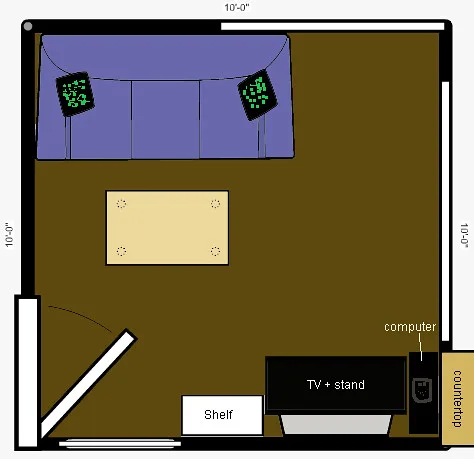
Room shape decides more than style does. A corner TV stand often fits awkward living rooms, short walls, and off-center fireplaces because it turns a problem zone into a viewing area without blocking the main walking line.
Corner placement in tight living rooms
When the room is narrow, corner placement can keep the screen visible without pushing the sofa too close to a walkway. The stand sits diagonally, so the room feels less chopped up than when a shelf is centered on a wall that already carries a door or window.
When an off-center wall is the better wall for a shelf
A wall mounted TV shelf works best when there is a clear, open wall with studs in the right place and the TV can sit at a comfortable viewing height. If the room already has a long blank wall and the traffic path stays outside the TV zone, the shelf can be the cleaner fit.
Clearance near doors, windows, and walk paths
Measure the gap before you buy. If a TV cabinet blocks a door swing, a vent, or the main route to a hallway, the smaller piece can still be the wrong piece; a shelf may solve that, but only if the wall depth leaves room for the TV and gear without crowding the seating area.

Which option holds more real storage?
A corner TV stand usually wins storage because it is furniture first. It can often hold a game console, streaming box, router, remotes, and sometimes a soundbar, with room left for books or decor, while a wall mounted shelf is often limited by shelf depth and the weight it can safely carry.
Device count matters more than appearance
If the setup includes a console, a second console, a streaming box, and a soundbar, storage becomes a layout issue, not a nice extra. A shallow wall shelf may hold one or two small devices, but it can get crowded fast once power bricks and ventilation space are included.
Shelf depth, cabinet space, and decor storage
Corner TV stand designs usually offer open shelves or cabinets with enough depth for media boxes and spare controllers. That matters when the user wants to hide clutter, store discs, or keep decor on the same unit without stacking items on the floor.
When a wall shelf becomes too shallow
A wall mounted TV shelf starts to fail the moment devices overhang the edge, cords hang under the shelf, or the soundbar has nowhere to sit without covering the screen edge. If the shelf depth is only enough for a single streaming box, the room may still need a second storage unit elsewhere.
Can a wall mounted TV shelf handle your TV and gear?
Yes, but only if the wall, studs, anchors, bracket, and shelf depth all match the load. A wall mounted TV shelf can hold a TV and a few accessories, yet it becomes limited fast when the screen is large, the gear stack is heavy, or the wall type is not ideal.
Weight limit, studs, anchors, and VESA bracket checks
The bracket has to match the TV’s VESA pattern, and the wall attachment has to land in solid framing or use anchors rated for the load. Plaster, brick, and no-stud walls all change the plan, and a shelf that looks fine visually can still be wrong if the fasteners do not suit the wall type.
TV size, screen width, and viewing height
TV size is not only about diagonal inches. Screen width, set weight, and mounting height all matter; a large screen on a wall shelf can sit too high, too low, or too far from the seating line if the wall layout was not planned around eye level.
When a corner TV stand fits large TVs better
A corner TV stand often handles large TVs more comfortably when the wall is weak, the room is off-square, or the screen would overpower the wall shelf setup. The furniture footprint may be larger, but it gives more support options and more room for a wide base and devices below the screen.
What is easier to install: a corner TV stand or a wall mounted TV shelf?
A corner TV stand is often easier for many people because it usually means assembly and placement, not drilling into the wall. A wall mounted TV shelf typically involves stud finding, leveling, drilling, and hardware checks, which can add time, tools, and some renter risk.
Drilling, stud finding, leveling, and assembly time
Stand assembly is usually a furniture job. Wall mounting is a wall job. If the bracket lands off-level by even a little, the TV can look crooked or pull awkwardly on the mount, so the prep work matters more than the final tightening.
Plaster, brick, and no-stud wall failure cases
Brick and plaster can be mountable, but they change the fastener choice and raise the chance of errors if the installer guesses. A no-stud wall is the biggest warning sign; if the wall cannot take the load where the TV needs to sit, the shelf stops being a simple option.
Repair holes, move-out issues, and landlord rules
For renters, wall holes and patching can become part of the cost. Belleze says TV stands are perfect for renters, and that is not an accident: a floor unit can move out cleanly, while a shelf may leave repair work, deposits at risk, or a rule violation if the lease limits wall changes.
How to handle cables, power, and visible cords
Both setups need planning, but a wall mounted TV shelf is less forgiving. If outlets sit too far away or the cable path was not mapped first, cords become the first thing people notice. A corner stand hides more of that mess behind furniture and along the baseboard.
Cord covers, power access, and outlet location
Surface cord covers can help either setup, especially when the outlet is off to one side. The cleanest result comes from placing the TV near the power source, because long exposed cords are harder to hide than short ones and tend to cross traffic paths.
In-wall routing versus surface routing
In-wall routing gives the cleaner finish, but it also adds labor and is not always allowed in rentals. Surface routing is simpler and usually cheaper, yet it can still look busy if the TV, shelf, game console, and soundbar each need separate power and data cables.
Where cable clutter usually shows up
With a wall shelf, clutter usually shows below the unit because all the cables drop from the screen area at once. With a corner stand, clutter usually shows behind the cabinet or at the side where the power strip sits, which is easier to disguise with a furniture panel or basket.
Which option is safer for kids and pets?
Safety depends on the load path. A corner TV stand can be safer when it has anti-tip hardware and the TV sits low and stable, but it still needs proper anchoring. A wall mounted shelf removes floor tipping, yet it depends on wall anchors, studs, and a mount that matches the TV’s load.
Anti-tip kits, wall anchors, and load ratings
Belleze says a TV stand can include anti-tip kits, and that matters because children climbing or pets jumping can shift a tall cabinet. Wall mounts may offer strong safety when installed correctly, but that safety depends on correct hardware choice, not just the idea of putting the TV on the wall.
Tipping risk versus wall pull-out risk
A floor unit risks tipping if it is overloaded or left unsecured. A wall shelf risks pull-out failure if the anchors are wrong for the wall type or the studs were missed. The safer option is the one that matches the house construction and gets the load transfer right.
When a low corner stand is the safer pick
A low corner stand is often the better pick when the screen should sit below climbing range and the room has enough floor space for a stable base. It is also easier to place where toys, pet beds, and traffic do not crowd the front edge of the furniture.
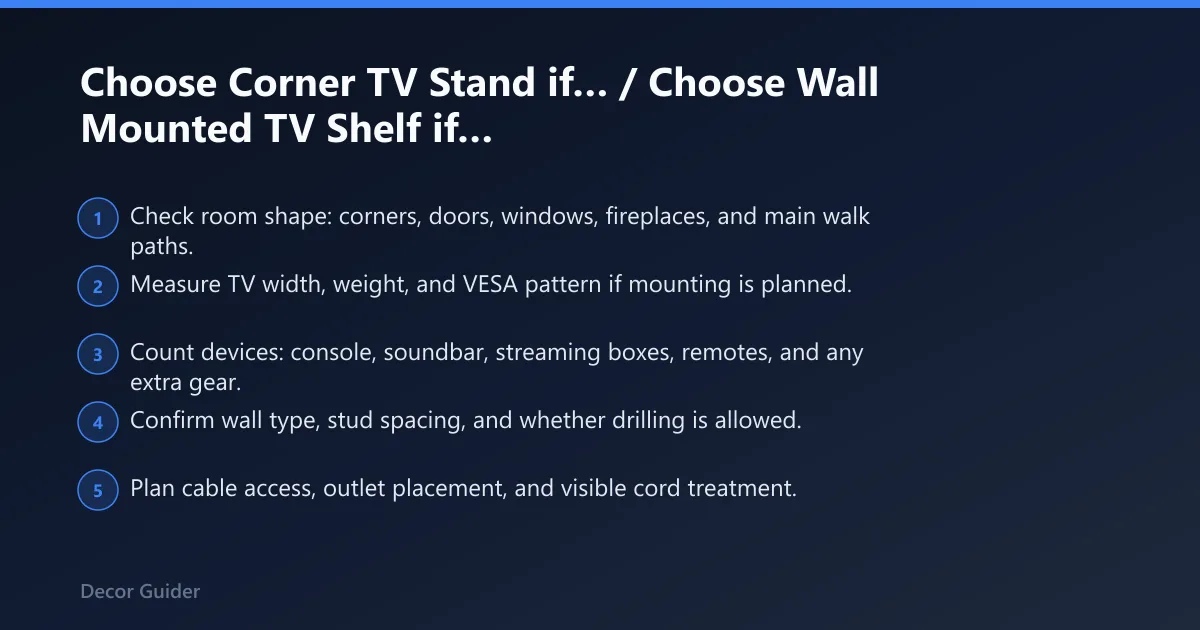
Choose Corner TV Stand if… / Choose Wall Mounted TV Shelf if…
Choose a Corner TV Stand if you need storage, want to move furniture later, rent the home, or have a room that works better with corner placement. Choose a Wall Mounted TV Shelf if the wall is solid, the TV matches the bracket, and you already have a clean cable route and a light gear load.
Use this decision checklist
- Check room shape: corners, doors, windows, fireplaces, and main walk paths.
- Measure TV width, weight, and VESA pattern if mounting is planned.
- Count devices: console, soundbar, streaming boxes, remotes, and any extra gear.
- Confirm wall type, stud spacing, and whether drilling is allowed.
- Plan cable access, outlet placement, and visible cord treatment.
- Decide whether kids, pets, or frequent moves make floor stability or wall fastening more important.
Fit matrix by scenario
| Scenario | Corner TV Stand score | Wall Mounted TV Shelf score | Clear winner |
|---|---|---|---|
| Awkward corner, off-center fireplace, or narrow living room | 5/5 | 2/5 | Corner TV Stand |
| Very limited floor space with a solid wall and planned cable route | 3/5 | 5/5 | Wall Mounted TV Shelf |
| Console, soundbar, streaming box, and remote storage | 5/5 | 2/5 | Corner TV Stand |
| Rental with no-drill or move-out concerns | 5/5 | 1/5 | Corner TV Stand |
| Wall already open, studs confirmed, cable path solved | 3/5 | 5/5 | Wall Mounted TV Shelf |
| Frequent upgrades, furniture moves, or layout changes | 5/5 | 2/5 | Corner TV Stand |
When a TV stand with a mount is the better middle option
Choose a TV stand with a mount when you want the storage of a cabinet and the screen height control of a bracket. It is a smart middle ground for renters who can accept furniture assembly but do not want wall drilling, especially when the TV is large and the room needs both order and flexibility.
Frequently asked questions
Is a corner TV stand better than a wall mounted TV shelf?
Yes, when storage, flexibility, or rental rules matter more than a wall-fixed setup. A corner TV stand usually handles more devices and is easier to move, while a wall mounted TV shelf works best only after the wall type, stud layout, and cable route are already solved.
Which saves more space in a small living room, a corner TV stand or wall shelf?
A wall shelf often saves more floor space in a very tight room, but only if the wall can take the load and the shelf depth is enough for the TV and gear. A corner TV stand can still fit better when the room shape is awkward and the corner would otherwise go unused.
Can a wall mounted TV shelf hold a soundbar and game consoles?
Sometimes, but the shelf depth, weight limit, and wall attachment have to match the gear. A soundbar may fit on the shelf or just below it, yet multiple consoles can crowd the setup fast and create cable and ventilation problems if the shelf is too shallow.
Is a corner TV stand better for renters than a wall mounted shelf?
Usually yes. Belleze says TV stands are perfect for renters, and that lines up with practical reality: a corner TV stand avoids drilled holes, landlord approval issues, and repair work at move-out. A wall mounted shelf can still work in some rentals, but only with permission and solid wall support.
How do you hide cables with a wall mounted TV shelf?
Use cord covers for surface runs, keep the shelf close to an outlet, and plan the cable path before drilling. In-wall routing gives the cleanest result, but it adds labor and may not be allowed in a rental or on a wall that cannot be altered safely.
Products related to this article
Sponsored / affiliate links. As an Amazon Associate I earn from qualifying purchases. I may earn additional commission from eligible campaigns.