Mid-Century TV Stand vs Farmhouse TV Stand: Which Fits
Choose a mid-century TV stand if you want a room that feels lighter, with visible legs and cleaner lines; choose farmhouse if you need more hidden storage and simpler cord cover-up. Pick the wrong one, and the room starts to feel heavier than it should, while cords, remotes, and game gear spread out fast. This guide compares both styles on look, storage, cable handling, room fit, and daily use.
| Decision factor | Mid-Century TV Stand | Farmhouse TV Stand | Winner |
|---|---|---|---|
| Visual lightness | Low profile, warm wood tones, visible legs, cleaner front details | Heavier framing, barn doors, more visual mass | Mid-Century TV Stand |
| Hidden storage | Often mixed storage with open shelves and closed sections | Enclosed cabinets, sliding barn doors, drawers are common | Farmhouse TV Stand |
| Cable concealment | Good when rear cutouts are present, but fronts often leave more visible gear | Better at hiding cords and devices behind doors and in cabinets | Farmhouse TV Stand |
| Small-space fit | Usually easier to place without crowding the room | Can feel bulky in tight walkways and compact layouts | Mid-Century TV Stand |
| Kid/pet practicality | Less enclosure, so gear stays more visible and more reachable | Better for hiding remotes, consoles, and breakables behind doors | Farmhouse TV Stand |
| Device accessibility | Faster to reach consoles, streaming boxes, and soundbar controls | Can slow access if barn doors must be opened first | Mid-Century TV Stand |
Mid-century TV stand vs farmhouse TV stand: the real trade-off


Mid-century favors a lighter look and cleaner details. Farmhouse favors covered storage and better clutter control. That changes how the room reads, how often doors get opened, and whether daily device use feels easy or fussy.
Why that trade-off matters in real homes
If a family swaps game consoles, charges controllers, or keeps a soundbar and streaming box in constant use, access matters as much as looks. If the goal is to hide toys, controllers, and cable piles, closed storage matters more than open display.
A TV stand holds a screen, yes. It also affects walking space, device reach, cord exposure, and how much visual noise sits under the TV every day.
According to 8 Best Entertainment Centers (October 2026) Honest Reviews — The OKD stand supports TVs up to 75 inches.
Which looks better in a modern living room: a mid-century TV stand or a farmhouse TV stand?
Mid-century usually looks better in a modern living room because its low profile, warm wood tones, and cleaner fronts read lighter. Farmhouse can work too, but barn doors and heavier framing usually make the furniture feel more dominant in the room.
Mid-century cues
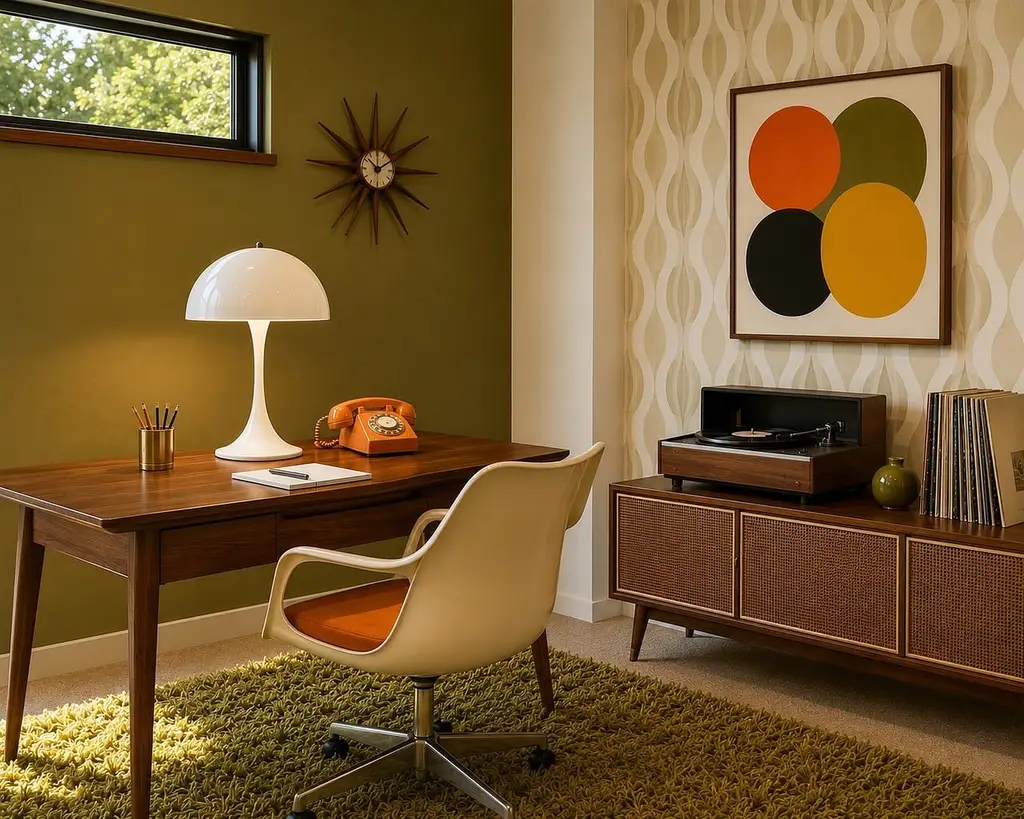
Clean lines, fluted or slatted doors, and visible legs keep the stand from feeling blocky. That style often fits Scandinavian and modern rooms because it uses the same restraint: less bulk, fewer visual breaks, and a simpler silhouette.
Farmhouse cues
Barn doors, sliding doors, and rustic wood finishes make farmhouse stands feel more grounded and traditional. In a modern room, that can help when the TV area needs more presence, but it can also pull attention away from lighter seating and slimmer case pieces.
How each style reads in common rooms
In Scandinavian spaces, mid-century is the easier fit. In transitional rooms, either can work if the rest of the furniture already mixes clean lines with some texture. In a pure farmhouse room, the farmhouse stand usually feels more consistent, while mid-century works better as the one lighter piece in the mix.

Which TV stand works better for storage and cable control?
Farmhouse usually wins for storage and cable control because it uses more enclosed cabinets, drawers, and sliding doors. Mid-century can still handle cords well, but it tends to leave more equipment in view unless the design has hidden rear cutouts and closed compartments.
Open shelves versus closed cabinets and drawers
Open shelves are easier for daily access, but they make clutter obvious. Closed cabinets and drawers are better when the goal is to hide controllers, manuals, extra remotes, and spare charging cables without building a visible stack on the shelf.
Cable holes, rear cutouts, and cord concealment
Both styles need rear access to keep cords under control. The difference is that farmhouse units often hide the cables after they enter the cabinet, while mid-century units may still leave more equipment visible, especially if the stand uses open legs or slatted fronts.
When barn doors help, and when they slow you down
Barn doors are useful when the TV area must look neat between uses. They are less useful when consoles get swapped often, since the doors become one more step before you can reach power buttons, cartridge slots, or streaming boxes.
One practical example is a farmhouse stand that uses sliding barn doors and includes multiple shelves plus two drawers. That layout handles clutter well, but it also means more door movement during daily use.
Which TV stand style is better for a 65-inch or 75-inch TV?
Either style can work for a 65-inch or 75-inch TV, but width clearance and top-panel capacity matter more than the style label. A mid-century stand often feels safer in a smaller room, while a farmhouse stand may work better when the TV area needs a wider base and more enclosed storage.
Width clearance and top-panel support for 65-inch TVs
A 65-inch TV usually looks balanced when the stand extends beyond the screen edges and leaves space for speakers or decor. The LINSY HOME farmhouse stand supports a 65 inch TV, which shows that farmhouse designs can fit that size comfortably when the cabinet width and top panel are sized right.
When a 75-inch TV needs a wider base
A 75-inch TV puts more pressure on the stand’s visual scale. The OKD stand supports TVs up to 75 inches and is 70 inches wide, which is the kind of proportion that helps a larger screen feel anchored rather than perched on a narrow base.
The AMERLIFE fireplace stand supports TVs up to 73 inches, while the OneBlis fireplace stand supports TVs up to 80 inches. Those specs are a clear reminder that the TV size claim and the actual cabinet width are not the same thing; both need to fit together.
Depth, stability, and soundbar placement
Depth matters when a soundbar sits in front of the screen or when gaming gear needs airflow. Lower-profile mid-century stands often keep the room visually open, but farmhouse cabinets can offer more interior room for power strips, consoles, and overflow accessories.
Side-by-side decision matrix
This matrix turns the style choice into buyer needs, not just looks. The scores are practical shorthand for how the styles usually behave in real rooms.
| Buyer need | Mid-Century TV Stand | Farmhouse TV Stand | Winner |
|---|---|---|---|
| Visual lightness | 5 | 3 | Mid-Century TV Stand |
| Hidden storage | 3 | 5 | Farmhouse TV Stand |
| Cable concealment | 3 | 5 | Farmhouse TV Stand |
| Small-space fit | 5 | 3 | Mid-Century TV Stand |
| Kid/pet practicality | 3 | 5 | Farmhouse TV Stand |
| Device accessibility | 5 | 3 | Mid-Century TV Stand |
Living room recommendation
For a standard living room, mid-century wins when the sofa faces the TV from close range and the room already has enough storage elsewhere. Farmhouse wins when the TV wall also needs to hide baskets, remotes, and set-top boxes that would otherwise sit in the open.
Small apartment recommendation
Small apartments usually favor mid-century because visible legs and a lower profile keep the room from feeling packed. If the apartment also doubles as a storage challenge, a compact farmhouse unit can work, but only if the walkway stays clear after doors open.
Family room recommendation
Family rooms often favor farmhouse because they collect clutter fast. Closed storage is useful when the stand must handle school items, controllers, charging cables, and the occasional toy that gets dropped in front of the TV.
Media-heavy setup recommendation
Media-heavy setups usually favor mid-century if devices change often. Frequent HDMI swaps, console access, and soundbar adjustments are easier when the front of the unit is less enclosed.
Choose Mid-Century TV Stand if… / Choose Farmhouse TV Stand if…
Choose mid-century if you want airy lines, easier small-space fit, and less visual bulk. Choose farmhouse if you need more enclosed storage, easier clutter hiding, and a more traditional look. In mixed-decor homes, use one style element as an accent instead of making the entire room speak one way.
Choose mid-century if…
Choose mid-century if the room already feels full and you want the TV zone to recede instead of dominate. It is also the better pick if the stand must support frequent device swapping, a soundbar with easy front access, or a layout where visible legs help keep the floor plane open.
Choose farmhouse if…
Choose farmhouse if the real problem is visual clutter, not access. It works better when consoles, remotes, and power strips need to disappear behind doors, and when the room can handle a heavier cabinet profile without crowding walkways.
How do mid-century and farmhouse TV stands compare for assembly difficulty?
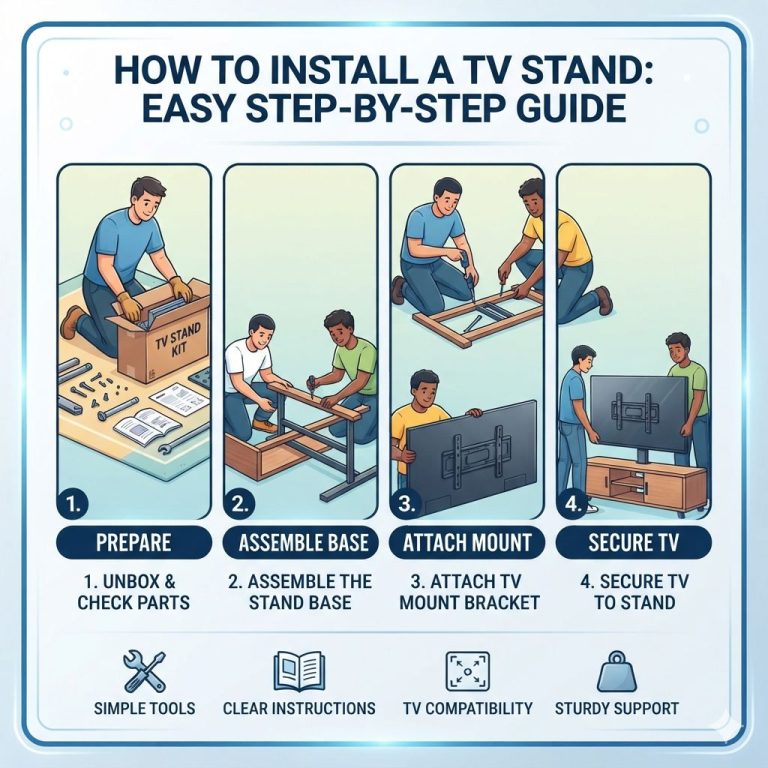
Assembly difficulty depends more on the hardware and part count than on the style alone, but farmhouse units usually ask more from the buyer because of doors, tracks, and enclosed storage. Mid-century builds often feel simpler because the structure is more open, though that can vary by model and part labeling.
Assembly time, labelled parts, and two-person lift risk
Large TV stands are awkward to move even before assembly starts. The OKD stand weighs 86 pounds, which is enough to justify a two-person lift for positioning and flipping the unit safely.
Labelled parts save time on either style. When the stand includes doors and multiple compartments, the hardware count rises and alignment matters more, especially if the doors need to close evenly.
Soft-close hinges, sliding barn doors, and hardware durability
Are soft-close doors common on mid-century TV stands? Not always, but they do appear on better-built versions. The OKD stand uses soft-close doors, which is a good sign that the design is trying to keep the front cleaner without slamming hardware.
Farmhouse stands often use sliding barn doors, and that means the track system matters as much as the door style. Sliding doors are convenient, but they can become annoying if the hardware feels loose or if the track picks up dust and debris.
Dust, cleaning, and long-term upkeep
Mid-century fluted or slatted fronts collect dust in the grooves, so they need more careful wiping. Farmhouse stands trade that for hardware maintenance: tracks, hinges, and door alignment need attention over time, especially in busy family rooms where the doors get used a lot.
Frequently asked questions
Is a mid-century TV stand better for small spaces than a farmhouse TV stand?
Yes, in most small spaces. Mid-century stands usually have a lower profile and less visual bulk, so they are easier to place without crowding walkways. Farmhouse stands can fit, but the enclosed cabinet look often feels heavier in tight rooms.
Does a farmhouse TV stand usually offer more storage than a mid-century TV stand?
Usually yes. Farmhouse designs commonly use closed cabinets, drawers, and sliding doors, which give more places to hide clutter. Mid-century stands may still store a lot, but they often split storage between open shelves and smaller enclosed sections.
Are soft-close doors common on mid-century TV stands?
They are not guaranteed, but they do appear on better mid-century pieces. Soft-close doors are more about build quality than style. The OKD stand uses soft-close doors, which shows that a mid-century design can still include smoother, quieter hardware.
Do farmhouse TV stands with barn doors block access to consoles and remotes?
They can. Barn doors are excellent for hiding clutter, but they add a step before you reach the equipment. If the console gets used daily, that extra motion can feel annoying; if the goal is to hide gear most of the time, the trade-off is often worth it.
Which style hides cables better: mid-century or farmhouse?
Farmhouse usually hides cables better because the doors and enclosed cabinets cover more of the equipment after the cords pass through rear cutouts. Mid-century can still manage cords well, but more of the device area tends to stay visible unless the design is especially enclosed.
Products related to this article
Sponsored / affiliate links. As an Amazon Associate I earn from qualifying purchases. I may earn additional commission from eligible campaigns.
 Acovy 40 Inch Floating Shelves, 12" Deep Floating Shelf Wall Mounted, 40" Wall Shelves, Rustic Deep Bookshelf, Extra Deeper & Thicker Display Shelves for Bedroom, Living Room, Oak, Set of 2
 Acovy 24 Inch Floating Shelves, 12" Deep Floating Shelf Wall Mounted, 24" Wall Shelves, Rustic Deep Bookshelf, Extra Deeper & Thicker Display Shelves for Bedroom, Living Room, Brown, Set of 2