3 Best Cabinet Bumpers for Quiet Closing (2026): we compared
For quiet cabinet closing, I usually pick 1/8-inch to 1/4-inch adhesive silicone bumpers for most face-frame doors. I usually move to 3/8-inch pads when the gap is wider or the stop needs to feel firmer. Use the wrong thickness, and the door still bangs, sits out of line, or leaves a gap that beats up hinges and cabinet edges. This guide shows, in plain terms, how to match bumper type, shape, and thickness to cabinet style, clearance, and the noise level you want.
The best all-around pick here is CHUNZEXI’s clear 1/4-inch round rubber pads, because that size can leave room for small landing errors, the clear finish stays discreet, and the round profile fits many cabinet landings without drawing the eye.
Quick comparison
| Product | Badge | Best for | Price | ||
|---|---|---|---|---|---|
 |
120 Pack Small 3/8" Felt Cabinet Bumpers, Door Felt PadsHilltop Products | Budget pick | 120 pack 3/8" small felt pads | $5.49
Price as of 28 Sep 2026
|
View |
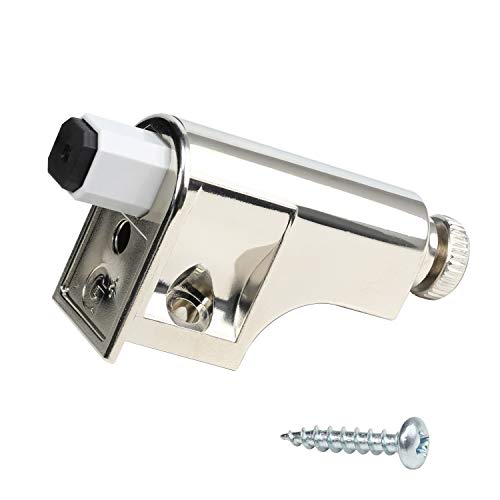 |
5 Pack Rok Soft Close Cabinet Door Dampers, Polished NickelRok | Upgrade pick | 5-pack polished nickel soft-close dampers | $15.49
Price as of 28 Sep 2026
|
View |
 |
CHUNZEXI 200 PCS Clear Cabinet Door Bumpers, 1/4 Inch RoundCHUNZEXI | Also great | 200 clear silicone round bumper pads | $5.99
Price as of 28 Sep 2026
|
View |
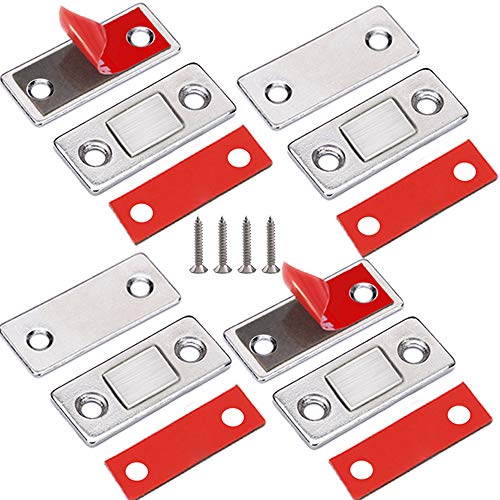 |
Cabinet Magnetic Catch Jiayi 4 Pack Ultra Thin Cabinet DoorJiayi | Also great | 4-pack ultra-thin magnetic cabinet catches | $6.29
Price as of 28 Sep 2026
|
View |
 |
ZURYNIX 50 PCS Cabinet Door Bumper, Premium Long Strip DoorZURYNIX | Budget pick | 50 pack long strip door silencers | $4.69
Price as of 28 Sep 2026
|
View |
Read this comparison by cabinet type first, then by gap and noise goal. I have seen a pad that looks softer on paper fail on the door because the hinge clearance was tight or the door hit off-center.
How we chose
We compared the listed bumpers on four practical points: clearance fit, landing accuracy, material safety on finished cabinets, and how well the adhesive profile suits common kitchen surfaces. The aim was not brand prestige. It was matching the pad to the way cabinet doors actually close in real kitchens.
- Thickness matched to hinge clearance, especially on tight European and knife hinges.
- Diameter matched to landing error, because larger pads forgive slight misalignment.
- Material chosen for finish safety: non-marring, non-staining, and low risk on paint.
- Adhesive behavior on melamine, laminate, painted cabinets, and glossy surfaces.
CHUNZEXI clear 1/4-inch bumpers: best for most quiet-closing jobs
This is the safest starting point for homeowners who want quieter closing without changing the hinge system. The clear silicone look stays low-visibility on painted doors, and the 1/4-inch round format gives a bit of forgiveness when the door does not land exactly centered.
Based on the spec sheet and owner feedback, the main draw is simple: it softens contact, cuts the snap at closing, and works across many kitchen and bath doors. The drawback is the same thing that makes it versatile. On very tight hinge clearances, 1/4 inch can be too much, so it is not the first choice for knife hinges or some inset doors.
ZURYNIX strip silencers: best for long contact edges
This pick fits doors that need a longer contact line instead of a single point pad. The strip format helps on narrow gaps and can spread impact over more of the landing edge, which is useful when the door face tends to tap the frame in more than one spot.
The honest tradeoff is fit sensitivity. Strip products can look neat, but if the cabinet surface is uneven or the door lands off-center, the strip may miss the hit point you expected. That can leave part of the impact unmanaged.
Hilltop Products felt pads: best for very light-duty finish protection
This is a budget-friendly option when the goal is more about keeping wood and painted surfaces from scuffing than about making a hard-close door quiet. The 3/8-inch felt size is common, and the 120-pack format makes sense for large homes with many low-load doors and drawers.
The drawback is performance under repeated impact. Felt cushions well at first, but it compresses faster and wears out sooner than molded polyurethane or rubber. For a busy kitchen, felt is usually a stopgap, not the final answer.
Jiayi magnetic catch: best when the door also needs stronger closure
This is not a bumper in the usual sense. It fits better when the problem is a door that will not stay shut cleanly, rather than a door that simply needs quieter contact. The magnetic force can help hold lightweight cabinet doors and closet fronts closed with less bounce-back.
The drawback is that magnetic closure does not replace impact damping. If the cabinet door already lands hard, a catch may keep it closed but still leave the closing sound unchanged. It is a closure aid, not the same thing as a quiet-close pad.
Rok soft-close dampers: best for a hinge-system upgrade
This is the right move when pads are not enough. Soft-close dampers change the closing action itself, so they matter more on heavy doors, busy kitchens, and any cabinet that gets slammed often. The concealed-hinge-friendly format makes sense for homeowners willing to add hardware instead of just stick-on pads.
The drawback is complexity. Soft-close dampers take more steps to install, and they are not the same as a simple bumper. If the cabinet only needs a small sound reduction, this is more hardware than many homeowners want.
How clear polyurethane bumpers compare with black and white
Clear bumpers are usually the safest visual choice on finished cabinets, but they are not always the best performer. Black and white versions can disappear better on dark or painted doors, while clear can catch light on glossy surfaces or show dust at the edges.
Why clear works well on painted and stained doors
Clear polyurethane or silicone pads keep the cabinet face from looking dotted with hardware. On stained wood, they often read as less visual clutter. On white painted doors, a clear pad can still be noticeable at close range, but it avoids a hard contrast line.
Where clear pads still show
High-gloss lacquer, glossy laminate, and glass-front cabinets can reflect the pad edge more than expected. On those surfaces, the adhesive base and the pad edge both matter. A neat install matters more than the color choice alone.
Thicker dome bumpers: best for louder doors and heavier impact
Thicker pads make sense when the door hits hard, the door is heavy, or the cabinet has a little extra space between door and frame. A 5/32-inch to 1/4-inch bumper can absorb more impact than a flatter pad, but that extra height can also create fit problems if the hinge clearance is already tight.
When 5/32 inch to 1/4 inch makes sense
These sizes fit best on face-frame cabinets with decent landing room, or on refaced cabinets where the door face sits a little proud of the old opening. They also help when the landing point is slightly off-center, because the larger body of the pad gives the door a better chance to hit the cushion cleanly.
The tradeoff with door fit and clearance
Thicker pads can hold the door open just enough to create a visible gap. On inset doors, that gap may read as crooked. On overlay doors, it can change the visual reveal line. If the door already rides close to a hinge cup or arm, extra thickness can become a problem fast.
Thin bumpers for European hinges: best for tight clearance
When the hinge hardware leaves little room, thin bumpers are the right call. A 1/8-inch bumper is often a safer starting point for European and knife hinge setups, because a pad around that size is more likely to fit without pushing the door out of plane or causing a bind at close.
Why 1/8 inch matters on knife hinges
Knife hinges and some concealed hinges leave very little usable space at the closing edge. A thin bumper reduces contact shock without asking for extra clearance that the cabinet does not have. The standard cabinet bumper listed at 3/8 inch diameter and 1/8 inch thick is the kind of size that usually makes sense in this category.
When a larger diameter helps
Larger diameter helps when the door does not land perfectly every time. A 1/2-inch pad can catch a slightly drifting door better than a tiny pad, especially on older cabinets, refaced boxes, or doors that have shifted over time. The tradeoff is visible size.
Common fit failures on overlay and inset doors
Overlay doors can hide a little extra pad thickness until they no longer close flush. Inset doors are less forgiving; the bumper can show up as a gap or keep the door from seating fully. That is why thickness needs to be matched to the hinge, not guessed from the door style alone.
Cabinet bumper selection table: match size to door type and noise goal
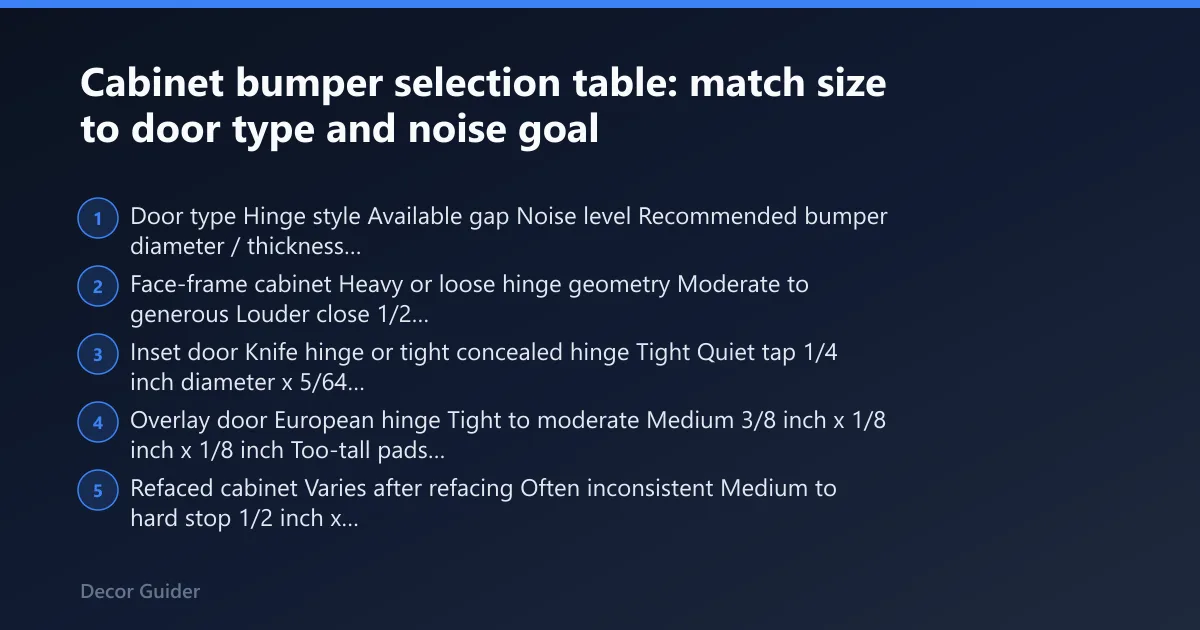
| Door type | Hinge style | Available gap | Noise level | Recommended bumper diameter / thickness | Failure-case note |
|---|---|---|---|---|---|
| Face-frame cabinet | Standard concealed or surface hinge | Moderate | Light to medium tap | 3/8 inch x 1/8 inch | Works well if the door lands square; off-center landings may need 1/2 inch diameter. |
| Face-frame cabinet | Heavy or loose hinge geometry | Moderate to generous | Louder close | 1/2 inch x 5/32 inch or 1/4 inch | Too much thickness can leave the door proud of the frame. |
| Inset door | Knife hinge or tight concealed hinge | Tight | Quiet tap | 1/4 inch diameter x 5/64 inch to 1/8 inch thick | Paint buildup and weak surface prep can stop full closure. |
| Overlay door | European hinge | Tight to moderate | Medium | 3/8 inch x 1/8 inch | Too-tall pads can keep the overlay from settling flat. |
| Refaced cabinet | Varies after refacing | Often inconsistent | Medium to hard stop | 1/2 inch x 9/64 inch or 3/8 inch x 5/32 inch | Refacing changes the impact point; test placement before committing. |
| Older face-frame cabinet | Any hinge with some wear | Variable | Hard slam | 3/8 inch x 7/32 inch only if clearance allows | High build can correct impact, but it can also create visible gap wear. |
The standard cabinet bumper is listed at 3/8 inch diameter and 1/8 inch thick, and it comes in clear, black, or white. The thin quiet-close bumper is listed at 1/2 inch diameter and 5/32 inch thick, while the large flat-top bumper is listed at 1/2 inch diameter and 9/64 inch thick. A builder’s choice bumper is listed at 3/8 inch diameter and 5/32 inch thick, and the smallest invisible bumper is listed at 1/4 inch diameter and 5/64 inch thick.
Which one should you buy?
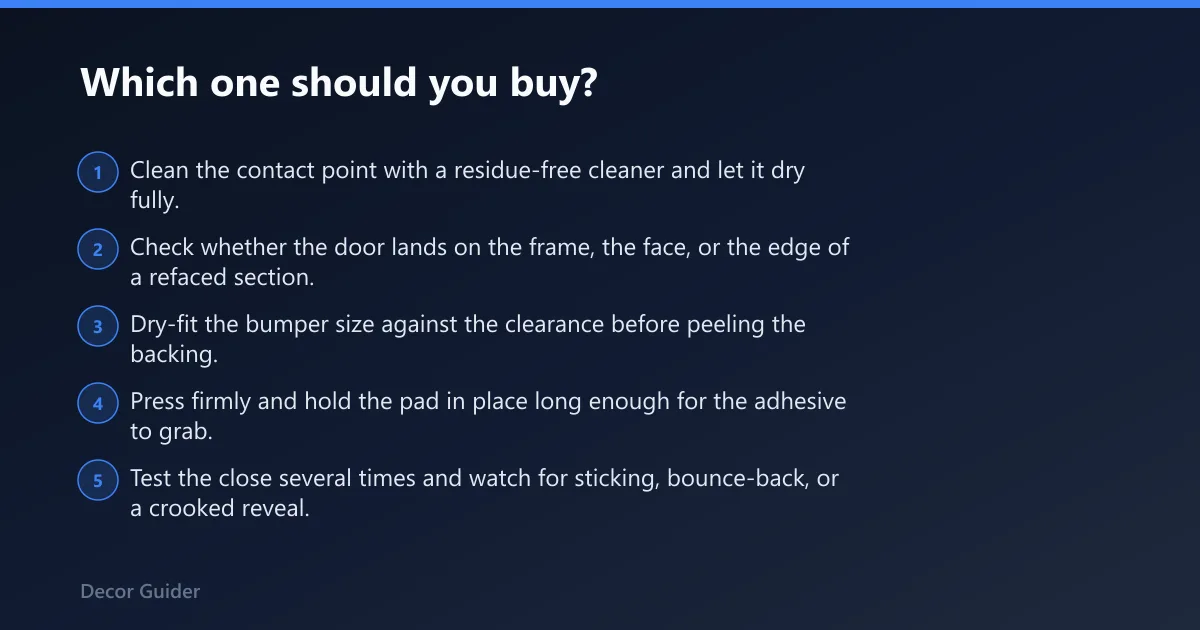
Buy by cabinet type and noise goal first, then by looks. If you want the simplest answer for most kitchens, choose clear 1/4-inch pads for standard doors. If the cabinet is tight at the hinge, step down to 1/8 inch. If the door slams hard and there is space to spare, move up to 5/32 inch or 1/4 inch.
When bumpers are enough
Bumpers are enough when the door already closes correctly and only the impact sound needs softening. They are also enough when the goal is finish protection on painted, stained, melamine, or laminate cabinets. A good adhesive pad can quiet the close without changing the hinge hardware.
When soft-close hinges are the better upgrade
If the door slams no matter what bumper size is used, if the cabinet is heavy, or if the hinge is already worn, bumpers may be too small a fix. Soft-close hinges or damper hardware are the better answer when the closing motion itself needs control, not just the final contact point.
Surface prep and install checklist
- Clean the contact point with a residue-free cleaner and let it dry fully.
- Check whether the door lands on the frame, the face, or the edge of a refaced section.
- Dry-fit the bumper size against the clearance before peeling the backing.
- Press firmly and hold the pad in place long enough for the adhesive to grab.
- Test the close several times and watch for sticking, bounce-back, or a crooked reveal.
Failure cases to watch
Adhesive creep is common on glossy laminate, dusty paint, or soft finishes that were not fully cured. Paint incompatibility can happen when a pad is removed later and lifts a fresh finish. Off-center landing means the door hits the edge of the pad instead of the center, which shortens pad life and keeps the close noisy.
Will cabinet bumpers stick to painted cabinets or laminate?
Yes, but only if the surface is clean, dry, and fully cured. Self-stick adhesive can hold well on melamine, laminate, finished wood, and many painted cabinets, but glossy surfaces need better prep. A fresh paint job is the biggest risk area because the finish may still be soft.
Where self-stick adhesive holds best
Adhesive-backed bumpers tend to do best on hard-finished wood, stable laminate, and melamine with no wax or oily residue. The aggressive peel-and-stick bond described on some polyurethane bumpers is useful, but only after the surface has been cleaned and allowed to dry.
Where adhesion fails first
Edges that get oil, heat, or repeated wiping can let go first. On glossy laminate, the pad may stay put but still slide a little if the surface was dusty at install. On freshly painted cabinets, the paint itself may fail before the adhesive does.
What are the best cabinet door bumpers for quiet closing?
The best cabinet door bumpers for quiet closing are soft-durometer polyurethane or rubber bumpers with the right thickness for the hinge gap. For most face-frame cabinets, a 1/8-inch to 1/4-inch adhesive pad is the best starting point. Tight hinges need thinner pads, and louder doors need thicker ones only if the clearance allows it.
Material differences that matter
Polyurethane bumpers are a strong choice because they are non-staining, non-marring, and usually made without plasticizers that can bleed into finishes. Rubber can also absorb impact well, but not every rubber pad is finish-safe. The molded polyurethane path is usually the cleaner bet for cabinets with painted or stained faces.
Shape matters more than many buyers expect
Quiet-close bumper profiles include water-drop, pyramid, and flat-top dome shapes. Water-drop shapes can spread impact gently. Pyramid shapes give a firmer stop in less space. Flat-top domes feel more balanced when the door hits square and you want sound dispersion without a hard rebound.
How many cabinet bumpers do I need for a kitchen?
Most kitchens need more bumpers than first-time buyers expect, because almost every door and many drawers want at least one pair. A small kitchen may need a few dozen. A full kitchen with bath vanities, pantry fronts, and utility cabinets can use well over that, especially if you want spares for future replacements.
Simple planning rule
Count every door pair that closes onto a frame or adjacent face, then add extras for drawers and problem doors. If you are buying in bulk, the per-bumper cost usually drops, which is why case packs and 120-count sets make sense for whole-house projects.
Can cabinet bumpers stop cabinet doors from slamming?
They can reduce slamming, but they do not always stop it completely. A bumper absorbs the last bit of impact. If the door is heavy, misaligned, or pulled shut hard, a pad can soften the blow without fixing the motion that caused the slam in the first place.
When it is not enough
If the door rebounds, bounces open, or slams every time, the cabinet likely needs hinge adjustment or a soft-close upgrade. In those cases, a bumper is only part of the fix. It will help, but it will not change the underlying closing force.
Which bumper shape is best when cabinet clearance is tight?
When clearance is tight, a low-profile dome or thin water-drop bumper is usually the safest choice. The goal is to reduce impact without stealing closing space. A thin pad with a small footprint is less likely to interfere with inset doors, knife hinges, or a narrow reveal.
Shape choices by fit problem
Use a flat-top dome when you want simple contact and a clean stop. Use a pyramid profile when the door needs a firmer feel in a shallow gap. Use a water-drop shape when the cabinet landing is slightly uneven and you want a softer, more forgiving contact point.
Frequently asked questions
How thick should cabinet door bumpers be?
Choose thickness by clearance, not guesswork. A 1/8-inch bumper fits many standard cabinets and tight hinge cases. A 5/32-inch or 1/4-inch pad makes sense when you need more impact absorption or a harder stop. Too much thickness can hold the door proud of the frame.
Do clear cabinet bumpers work better than black or white ones?
Clear bumpers are usually less visible, but they do not close better simply because they are clear. Black or white can blend better on dark, painted, or bright cabinet faces. The better choice is the one that fits the finish and stays discreet after repeated use.
What is the difference between cabinet bumpers and soft-close hinges?
Cabinet bumpers cushion the last part of the close. Soft-close hinges control the motion itself. If you only need to soften impact, bumpers are simpler and cheaper. If the door slams hard every time, soft-close hinges are the better fix because they change the closing action.
Products related to this article
Sponsored / affiliate links. As an Amazon Associate I earn from qualifying purchases. I may earn additional commission from eligible campaigns.