Best Cabinet Latches for Child Safety: based on specs and reviews
The best cabinet door latches for child safety are the ones matched to your cabinet build: adhesive latches can suit flat, clean cabinet interiors for renters, and screw-mount magnetic latches may be a better fit for doors that flex or get daily use. Skip the fit check and latches peel, pop open, or leave under-sink cleaners within reach. This guide compares latch types by cabinet style, mounting method, and likely failure points so you can pick the right one the first time.
Quick comparison
| Product | Badge | Best for | Price | ||
|---|---|---|---|---|---|
![[12-Pack] Invisible Baby Proofing Cabinet Locks - No Drill Child Safety Drawer Latches - Adhesive Childproof Latch for C](https://m.media-amazon.com/images/I/31eZCkmpTfL._SL500_.jpg) |
[12-Pack] Invisible Baby Proofing Cabinet Locks – No DrillSuniry | Our pick | 12-pack invisible locks, no-drill adhesive, keyless | $9.99
Price as of 30 Sep 2026
|
View |
 |
5 Pack Child Proof Refrigerator Lock, QYESWHSR Fridge LocksQYESWHSR | Budget pick | 5-pack refrigerator locks with sticky adhesive pads | $9.99
Price as of 30 Sep 2026
|
View |
 |
Safety 1st Double Door Baby-Proofing Cabinet Lock 2 Pack,Safety 1st | Also great | Double door locks for cabinets with handles | $4.79
Price as of 30 Sep 2026
|
View |
 |
Toddleroo by North States – Sliding Door & Window Lock forToddleroo by North States | Pair with it | Sliding door lock for glass or wood doors | $8.29
Price as of 30 Sep 2026
|
View |
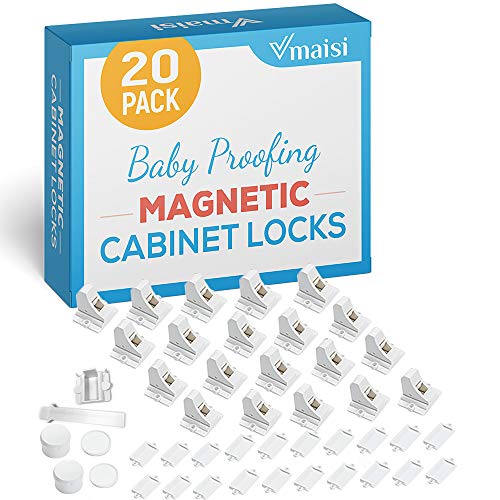 |
Vmaisi 20 Pack Magnetic Cabinet Locks Baby Proofing and 2vmaisi | Upgrade pick | 20 magnetic locks with two keys, invisible | $39.99
Price as of 30 Sep 2026
|
View |
The fastest way to narrow the field is to start with the cabinet, not the latch. Door material, handle spacing, and the amount of daily use decide whether you need hidden magnetic hardware, a visible strap, or a drill-free adhesive lock.
Most failures come from a bad match, not from childproofing itself.
How we chose
We compared latch types by cabinet fit, installation tolerance, adult access speed, and likely failure modes after real use. The useful questions were simple: will it stick, will it align, will it open with one hand, and will it still hold after weeks of kitchen traffic?
We also separated permanent installs from rental-friendly installs. That matters more than branding.
Cabinet fit and door material
Solid wood, MDF, laminate, face-frame cabinets, and frameless boxes all behave differently. Adhesive strength, screw depth, and latch placement change with each one.
Installation tolerance and tools
Some latches forgive a slightly crooked install. Magnetic and sliding designs usually do not, especially when the alignment gap is tight.
Adult access speed
A latch that slows adults down becomes a daily nuisance. One-handed opening matters when a caregiver is holding a child or carrying cookware.
Failure modes after real use
We looked for the problems that show up later: adhesive lift, sagging straps, misaligned catches, and weak closing tension. Those are the patterns that send parents back to the hardware store.
Suniry invisible baby proofing cabinet locks: best for renters on flat interiors
Suniry’s adhesive invisible locks suit renters who need no-drill childproofing on smooth cabinet interiors. The keyless design is convenient for adults, and the hidden mounting keeps the outside of the cabinet clear.
This type fits best on clean, flat wood or laminate doors with enough interior surface for the adhesive pad to bond. The honest drawback is the same one that affects most adhesive systems: grease, dust, texture, or moisture can weaken hold over time, especially near sinks or cooktops.
Based on the spec sheet and common owner feedback, this style is strongest when the cabinet face is flat and the door is used often enough to justify a hidden latch but not so rough that alignment becomes difficult.
QYESWHSR fridge lock: best for refrigerator and appliance doors
The QYESWHSR fridge lock is a targeted adhesive option for refrigerator doors, RV fridges, and other appliance doors that need simple access control. It is a practical choice when the main risk is a toddler opening a cold-storage door rather than a standard base cabinet.
Its strength is focus: it is designed around appliance use and includes sticky pads for setup without tools. The drawback is also clear. Appliance surfaces often collect condensation and fingerprints, so adhesion depends on prep and on how often the door is wiped down.
For kitchen childproofing, it is more specialized than a general cabinet latch, which makes it useful in the right spot and less versatile elsewhere.
Safety 1st double door baby-proofing cabinet lock: best for handled cabinets
Safety 1st’s double-door lock is the classic choice for cabinets with knobs or pulls that sit within the listed spacing range. It is tool-free, quick to fit, and easy to remove when children outgrow the need for it.
It works best when the handle geometry is predictable. The drawback is visibility and fit sensitivity: if the handles are too far apart, oddly shaped, or too close to the door edge, the strap can sit awkwardly or fail to tension properly.
That makes it better for straightforward base cabinets than for decorative doors with unusual hardware.
Toddleroo sliding door and window lock: best for sliding panels and some closets
Toddleroo’s sliding lock is aimed at sliding glass doors, windows, closets, and other moving panels rather than ordinary hinged kitchen cabinets. It uses adhesive mounting and works when the problem is a track or panel that a child can slide open.
The main advantage is speed. It is fast to place and avoids drilling, which suits temporary childproofing jobs. The drawback is that it is not a universal cabinet answer, and adhesive performance still depends on a clean, flat bonding surface.
Use it where the door motion matches the product. Do not force it into a cabinet role it was not built for.
Vmaisi magnetic cabinet locks: best for permanent kitchen installs
Vmaisi magnetic cabinet locks are the strongest fit for permanent installs on wood, laminate, and some metal doors. The lock stays hidden inside the cabinet, and the magnetic key gives adults one-handed access from the outside.
This is the best overall pick because it aims to reduce two common childproofing failures: visible hardware that children may learn to defeat, and adhesive systems that can lose grip. The honest drawback is installation precision. Magnetic latches often need careful alignment, and a template or alignment tool can save a lot of frustration.
They suit households that want a cleaner look and can tolerate a more exact install. They are especially sensible on cabinets that get opened daily.
What are the best cabinet door latches for child safety?
The best cabinet door latches are the ones that fit the cabinet construction and the way the kitchen is used. For permanent installs, magnetic cabinet latches are often a strong choice on wood or laminate doors. For renters, flat adhesive latches are the easiest no-drill option, while strap locks work well for quick, visible protection on handled cabinets.
That said, “best” changes with the door. Shaker frames, under-sink plumbing, and handle spacing can matter more than the latch category itself.
Are adhesive cabinet latches safe and reliable?
Adhesive cabinet latches are safe and reliable when the surface is smooth, clean, dry, and low in grease. They are popular for renters because they install without tools and can be removed later, but they are more likely to fail on textured laminate, dirty wood grain, or damp cabinet interiors.
Reliability drops fast when prep is rushed. Rubbing alcohol, full drying time, and pressure during installation make a real difference.
How do I install childproof cabinet latches without drilling?
Use adhesive latches or strap-style locks, and start with measuring tape, rubbing alcohol, and an alignment guide if the latch needs one. Clean the surface, let it dry fully, mark the placement, then press the latch in place exactly where it will close without strain.
For adhesive models, do not load the cabinet right away if the instructions call for cure time. For strap systems, confirm the handle spacing before sticking anything down.
Which cabinet latches work best on shaker cabinets?
Shaker cabinets may need magnetic or sliding latches because the raised rail and recessed panel can complicate adhesive placement. The frame creates uneven contact zones, so a flat adhesive pad may sit partly on a ridge and partly in a recessed area, which weakens hold.
When using any latch on a shaker door, place it where the inner surface is most even. Misalignment is the common failure, not the lock itself.
What is the difference between magnetic and strap cabinet latches?
Magnetic latches are concealed and use a matching magnetic key for opening, which makes them cleaner-looking and harder for toddlers to spot. Strap latches are visible on the outside and span handles or knobs, so they are usually faster to install and easier to understand at a glance.
Magnetic systems suit permanent installs and hidden protection. Strap systems suit quick, temporary childproofing on cabinets with the right handle spacing.
How many cabinet latches do I need for a kitchen?
Count every cabinet and drawer that stores hazards, then prioritize the ones a child can reach first. In most kitchens, that means base cabinets, cleaning supply cabinets, and drawers near the floor. High shelves may not need locks if they are truly out of reach.
Under-sink cabinets and low drawers usually need protection before pantry doors do. Buy enough for the high-risk zones first, then add more if needed.
Can toddlers open magnetic cabinet latches?
Most toddlers cannot open a correctly installed magnetic cabinet latch, but a poor install changes that quickly. Weak alignment, the wrong key storage, or a latch placed too close to the door edge can make it easier to defeat or easier for adults to forget how it opens.
Store the magnetic key somewhere adults can reach fast but children cannot. A hidden system is only useful if the key does not become the weak point.
How do I choose a cabinet latch for under-sink cabinets?
Choose a latch that keeps cleaning products and detergents secure while still allowing fast adult access in an emergency. Under-sink cabinets often have plumbing that limits placement, and moisture can weaken adhesives, so screw-in or magnetic options often hold up better than simple stick-on locks.
Leave room for the pipes before buying. A latch that blocks access for adults during a spill is the wrong latch, even if it keeps a toddler out.
Strap latches: best for quick temporary childproofing
Strap latches are the fastest way to block many handled cabinets when the goal is short-term childproofing. They are visible, easy to install, and useful when you need an answer right away without drilling.
They work best on cabinet handles or knobs with the right spacing and shape. The drawback is clear: they are less discreet than hidden systems, and they can get in the way during daily kitchen use when adults need repeated access.
For families that want a temporary fix, they make sense. For a cleaner long-term install, magnetic hardware usually wins.
Hook-and-loop or sliding latches: best for stronger hold on fixed doors
Hook-and-loop or sliding latches are useful when you want more holding strength than a simple adhesive tab can provide. These mechanical systems often need screws or careful placement, and that makes them better for fixed doors than for surfaces you may want to remove later.
The drawback is adult speed. If they are placed poorly, they can be hard to open quickly, and sliding styles can sag or bind if the alignment is off by even a little.
They are a stronger option, but only when the door geometry is predictable.
Cabinet construction checklist
This is the part most buying guides skip. The latch choice changes with the cabinet body, the door material, and the hardware already on the front. A latch that works on a flat laminate slab may fail on a thin MDF door or a shaker rail.
| Cabinet type | Best latch type | Common failure mode |
|---|---|---|
| Flat wood door | Magnetic or adhesive | Misalignment or weak key placement |
| Laminate cabinet | Magnetic or high-quality adhesive | Adhesive lift on greasy or textured areas |
| MDF door | Screw-in magnetic or sliding | Poor screw grip in thin material |
| Shaker cabinet | Magnetic or sliding | Latch lands on rail, not flat field |
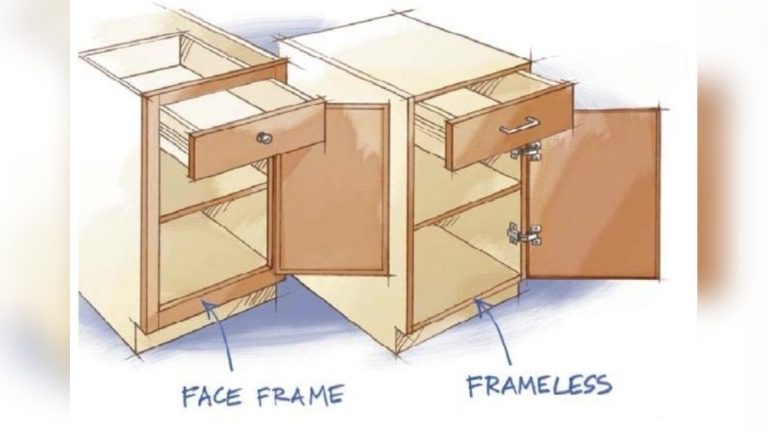
| Face-frame cabinet | Magnetic or strap | Frame lip blocks flush placement |
| Frameless cabinet | Adhesive or magnetic | Wrong depth leaves the catch exposed |
| Under-sink cabinet | Magnetic or screw-in | Moisture weakens adhesive and plumbing blocks position |
| High-use drawer | Magnetic or sliding | Wear from repeated opening loosens the latch |
Cabinet handle spacing and door material matter more than most buyers expect
Handle spacing is the difference between a strap lock that fits and one that flops loose. Measure center to center, then compare that distance to the latch range. Knobs and pulls do not behave the same way, and handle clearance affects closing tension.
Door material changes the mounting choice. Solid wood takes screws better, MDF can strip if hardware is forced, laminate is better for clean adhesive bonding, and thin doors may limit screw depth. Face-frame and frameless cabinets also change where the latch can sit without binding.
Which one should you buy
Choose a magnetic cabinet latch if you want the best long-term answer for wood or laminate kitchen cabinets, especially on doors that are opened daily. Choose an adhesive latch if you rent and your cabinet interiors are flat, clean, and dry. Choose a strap latch when you need the fastest temporary fix on handled doors.
For shaker cabinets, magnetic or sliding styles usually fit better than adhesive models. For under-sink cabinets, prioritize a latch that still works when moisture, plumbing, and emergency access all matter at once.
For high-use drawers, favor the latch that tolerates repeated opening without sagging or losing alignment. That usually points back to magnetic or mechanical locking systems rather than light adhesive-only options.
Products related to this article
Sponsored / affiliate links. As an Amazon Associate I earn from qualifying purchases. I may earn additional commission from eligible campaigns.