5 Best Cabinet Shelf Pins for Adjustable Storage (2026): we compared
The best cabinet shelf pins are the largest pins your cabinet holes and shelf supports can take, which is often about 1/4-inch for many cabinets; for worn holes and heavier loads, steel pins with a shoulder are often a better choice. Wrong pins let shelves wobble, sag, or crack the side panels. I use that rule first, then I check shelf weight, bore size, and cabinet wear. This guide shows how to match pin type, size, material, and load to kitchen cabinets, pantries, and utility storage.
Quick comparison
| Product | Badge | Best for | Price | ||
|---|---|---|---|---|---|
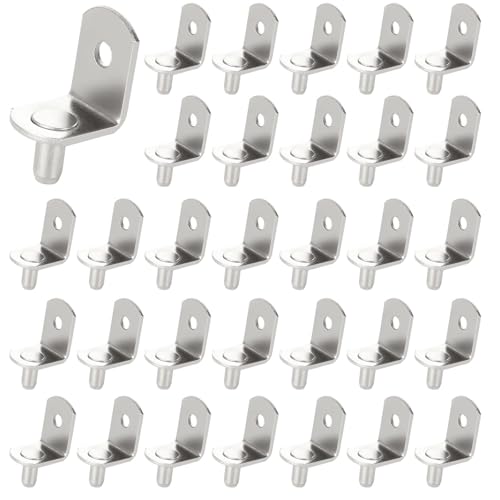 |
WOPPLXY 100 Pcs 5mm Shelf Pins, Shelf Support Pegs, CabinetWOPPLXY | Our pick | 5mm L-shaped pins with rubber sleeves, 100 pcs | $16.99
Price as of 1 Oct 2026
|
View |
 |
uxcell 20Pcs 8mm x 16mm Dowel Pins, 304 Stainless Steeluxcell | Budget pick | 8mm x 16mm 304 stainless cylindrical dowels | $8.89
Price as of 1 Oct 2026
|
View |
 |
1/4 Inch Shelf Support Pegs 6mm Cabinet Shelf Pins –NORACLAN | Upgrade pick | 1/4 inch L-shaped pegs with screw hole | $8.99
Price as of 1 Oct 2026
|
View |
 |
NIMA PARTS Shelf Support Pegs – Cabinet Shelf pins 3 mm,NIMA PARTS | Also great | 3 mm pins with anti-slip tip, 20 pcs | $8.99
Price as of 1 Oct 2026
|
View |
 |
20-Pack 5mm Cabinet Shelf Pins, Heavy Duty Steel AdjustableKUHEITAER | Pair with it | 5mm heavy duty alloy steel shelf pegs | $9.99
Price as of 1 Oct 2026
|
View |
The fastest way to choose is by bore fit first, then by load and cabinet condition. A pin that fits the wrong hole size is the one that fails early, even if the rating looks strong on paper. I start with the hole, because that is where most bad choices begin.
According to Shelf Pins for Cabinets: Best Picks for 2026 – knobs.co — Locking or threaded pins are rated similarly to standard pins, around 35-40 lbs.
How we chose
The comparison below is built around fit, load, and real cabinet conditions. A pin can look strong and still be the wrong call if the bore is worn, the shelf is wide, or the cabinet is a factory-drilled 32mm system.
Hole compatibility and bore accuracy
We prioritized 5mm, 1/4-inch, and mixed North American bores, because those are the sizes that decide whether a shelf sits level or rocks. A pin sized for the wrong bore can crack cabinet-grade particleboard around the hole.
Load rating and shelf use
We separated light-duty, standard kitchen, pantry, and heavier shelf-support needs. Plates, canned goods, and small appliances ask more of the pin than decorative storage does.
Cabinet condition
Fresh bores, worn factory holes, and chipped particleboard need different support styles. A friction-fit pin may be fine in a clean bore, while older cabinets often need locking or threaded support.
Use case fit
Closed kitchen cabinets, pantry shelves, open shelving, and garage cabinets do not need the same finish, grip, or load reserve. Visible shelves also make finish match matter, not just strength.

Standard steel shelf pins: best for most kitchen cabinets
Standard steel shelf pins are the default choice for most kitchen cabinets because they fit common factory bores and handle everyday dish and pantry loads without fuss. Based on the spec sheet and owner feedback, they are the practical answer when the cabinet is in decent shape and the shelf span is ordinary.
They make sense for plates, bowls, spices, and light pantry bins. Standard steel pins rated to 35 lbs cover most kitchen use, and 5mm nickel-plated pins are the safe default for cabinets built after the 1990s.
The drawback is simple: they are not a cure for sloppy holes. If the bore is worn or the particleboard is chipped, a standard friction-fit pin can still rock.
Locking and threaded shelf pins: best for loose or worn holes
Locking and threaded shelf pins are for cabinets where repeated bumps, widened holes, or a shelf that shifts during use have become the problem. They stop the tilt-and-slide that happens when a shelf gets bumped repeatedly, and they are rated similarly to standard pins, around 35-40 lbs.
They are a strong pick for older kitchen cabinets, busy pantry shelves, and any shelf that gets moved often. The screw hole lets the shelf lock down more securely than a plain friction-fit pin, which helps when the cabinet bore has lost some bite.
The drawback is that they ask for a more exact setup. If the hole pattern is already damaged badly, a threaded pin can still be the wrong fix, because the cabinet wall itself may need repair before it will hold reliably.
Spoon-style shelf supports: best for wider shelves and heavier loads
Spoon-style supports are the better pick when shelf sag is the bigger concern than simple peg retention. Spoon-style supports are rated to 50 lbs for glass shelves or pantry loads, and that extra support surface helps spread weight on broader shelves.
These are worth it for wider pantry shelves, glass shelves, and shelves carrying stacked cans or heavier dishware. On larger spans, the wider support can do a better job of controlling flex than a small friction pin.
The drawback is bulk and fit discipline. They are not the first choice for small, plain cabinet bores, and they make less sense when the cabinet only needs a simple replacement peg.
Plastic sleeve pins: best for light-duty storage only
Plastic sleeve pins belong in light-duty spots, not in loaded kitchen shelves. Plastic sleeve pins run under 15 lbs of load rating, so they are best for lightweight organizers, spare dishes, or decorative items rather than pantry weight.
They can make sense in dry, low-stress cabinets where the shelf rarely moves and the load stays light. The included sleeves can help when the bore needs a little cushion, and the L-shaped style adds some positional stability.
The drawback is the obvious one: they are a poor choice for plates, canned goods, or small appliances. In a kitchen or pantry, that load range is simply too low.
What size shelf pins do I need for my cabinets?
The right size is the one that matches your existing bore exactly, with 5mm and 1/4-inch not interchangeable. Most cabinet boxes built since the 1990s use a factory-drilled hole pattern spaced 32mm on-center, but North American cabinets often mix 5mm and 1/4-inch bores depending on the maker.
5mm versus 1/4-inch: why they are not interchangeable
A 5mm pin in a 1/4-inch hole can sit loose and let the shelf rock. A shelf pin that’s even 0.3mm undersized will sit loose and let the shelf rock. That tiny gap matters more than many buyers expect, especially in particleboard cabinets.
How to confirm 6.35mm bores and 32mm factory spacing
Use a caliper for bore size, then check the spacing against the 32mm pattern if the cabinet is a factory-drilled system. If the cabinet looks modern but the holes vary, it may be a mixed or modified box rather than a standard run.
When a caliper, drill bit, or jig is the right measuring tool
A caliper is best for measuring an existing hole, a drill bit is useful as a quick gauge, and a jig is the right tool if you are adding new holes. For new drilling, keep the 32mm pattern in mind and use a jig so both sides stay aligned.
Quick picks
Use the bore size first, then match the pin to the shelf weight and cabinet condition. If the cabinet is visible, finish matters too, because bare hardware stands out in open storage.
- Best for most kitchen cabinets: standard steel friction-fit pins in the exact bore size.
- Best for worn holes: locking or threaded pins that resist tilt and slide.
- Best for wider pantry shelves: spoon-style supports when sag control matters more than low profile.
- Best for light-duty storage: plastic sleeve pins only when the load stays very light.
Shelf-pin decision table and failure checklist
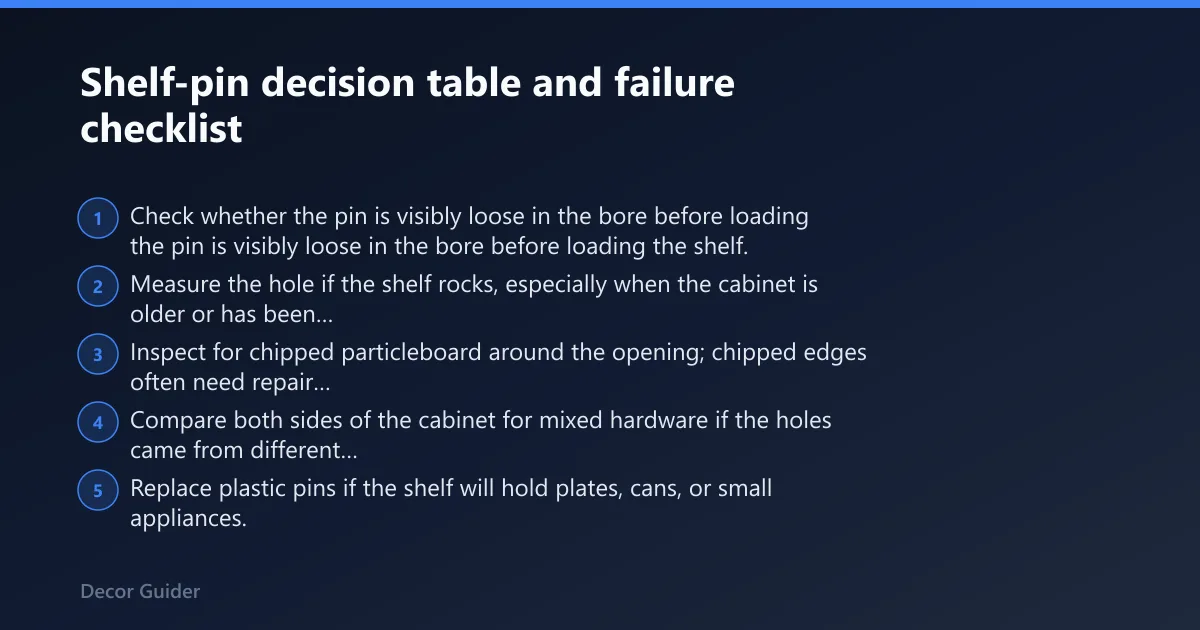
This table maps hole size, load range, shelf material, and cabinet location to the safest pin type. It is the part most buyers skip, and it is usually the part that prevents a second trip to the hardware aisle.
| Hole size | Load range | Shelf material | Cabinet location | Safest pin type | Fit risk |
|---|---|---|---|---|---|
| 5mm | Up to 35 lbs | Plywood or solid shelf | Closed kitchen cabinet | Standard steel friction-fit | Low if bore is clean |
| 1/4-inch | Up to 35 lbs | Particleboard or laminate shelf | Kitchen cabinet | Standard steel friction-fit | Medium if the hole is worn |
| 5mm or 1/4-inch | 35-40 lbs | Particleboard shelf with frequent use | Pantry pull-out or busy cabinet | Locking or threaded pin | Medium if installed in damaged holes |
| 5mm | 50 lbs | Glass or wider shelf | Pantry shelf | Spoon-style support | Low if shelf span is appropriate |
| Mixed or worn bore | Under 15 lbs | Light shelf or organizer | Open shelving with low load | Plastic sleeve pin | High if used for dishes or cans |
Failure-case checklist for loose, oversized, and chipped holes
- Check whether the pin is visibly loose in the bore before loading the shelf.
- Measure the hole if the shelf rocks, especially when the cabinet is older or has been reconfigured.
- Inspect for chipped particleboard around the opening; chipped edges often need repair before any pin will hold well.
- Compare both sides of the cabinet for mixed hardware if the holes came from different replacement parts.
- Replace plastic pins if the shelf will hold plates, cans, or small appliances.
- Use locking or threaded pins when repeated bumping causes tilt or slide.
Which one should you buy
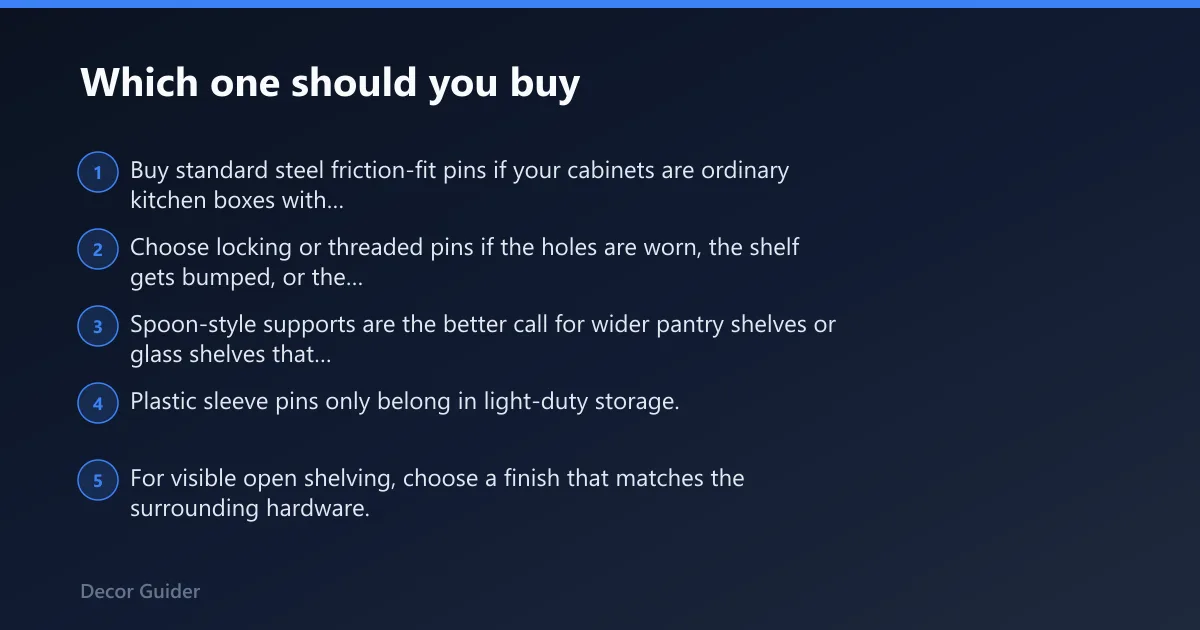
Buy standard steel friction-fit pins if your cabinets are ordinary kitchen boxes with clean bores and daily-use loads. Choose locking or threaded pins if the holes are worn, the shelf gets bumped, or the cabinet is older and less precise. Spoon-style supports are the better call for wider pantry shelves or glass shelves that need more load spread. Plastic sleeve pins only belong in light-duty storage.
For visible open shelving, choose a finish that matches the surrounding hardware. Brushed nickel blends into most modern kitchens, matte black works when the rest of the room is already dark hardware, and polished brass matters when the cabinet face is part of the room’s visual plan rather than a hidden utility area.
Best choice for standard kitchen cabinets
Pick standard steel 5mm pins if the cabinet is post-1990s and the bores are clean. For many homes, that is the most reliable and least fussy answer.
Best choice for pantry shelves
Pick spoon-style supports if the shelf is carrying heavier pantry loads or spans a wider opening. If the shelf is only holding light boxes, standard steel is still enough.
Best choice for open shelving where finish matters
Choose a finished decorative pin that matches the surrounding hardware, especially in brushed nickel, matte black, or polished brass. In open storage, the pin is visible enough to affect the overall look.
Best choice for garage or utility cabinets
Use standard steel or locking pins depending on hole condition. In garage cabinets, the bigger issue is usually wear, dust, and repeated movement rather than appearance.
Best choice for worn or damaged holes
Choose locking or threaded pins if the bore is enlarged but still structurally sound. If the hole is chipped or the particleboard is breaking away, repair the cabinet wall first or the replacement pin will not last.
Frequently asked questions
Are 5mm shelf pins better than 1/4-inch shelf pins?
Neither is better in the abstract. The better pin is the one that fits the cabinet’s actual hole size with minimal play. 5mm nickel-plated pins are the safe default for cabinets built after the 1990s, but 1/4-inch still fits many older North American cabinets correctly.
How much weight can cabinet shelf pins hold?
Load depends on the pin style, shelf span, and shelf material, not just the metal. Standard steel pins rated to 35 lbs cover most kitchen use, spoon-style supports are rated to 50 lbs for glass shelves or pantry loads, and plastic sleeve pins run under 15 lbs of load rating.
What are locking shelf pins used for?
Locking or threaded shelf pins are used when a shelf keeps shifting, tilting, or sliding after repeated bumps. They are most useful in older cabinets with worn holes or in busy pantry spaces where shelves get adjusted often. They do not replace a damaged cabinet wall, though.
Can I use plastic shelf pins for kitchen cabinets?
Only for very light-duty storage. Plastic sleeve pins are under 15 lbs of load rating, so they are a poor choice for plates, canned goods, and small appliances. They can work for lightweight items or decorative storage, but not for a normal loaded kitchen shelf.
How do I measure cabinet shelf pin holes correctly?
Use a caliper to measure the bore, then confirm whether the cabinet is a 5mm or 1/4-inch system. A drill bit can act as a quick check, but a jig is the right tool if you are drilling new holes. Keep the 32mm on-center pattern if you are building or replacing a factory-style setup.
What shelf pins work best for pantry shelves?
For pantry shelves, standard steel pins are fine for light to moderate loads, but spoon-style supports are better when the shelf is carrying heavier boxes, jars, or glass shelves. If the shelf gets bumped a lot, locking or threaded pins help keep it from creeping out of level.
Do shelf pin finishes matter inside cabinets?
They do when the shelves are visible. In closed cabinets, finish is mostly secondary to fit and load. In open shelving or glass-front storage, brushed nickel, matte black, or polished brass can make mismatched hardware obvious, so finish consistency matters more than many buyers expect.
Products related to this article
Sponsored / affiliate links. As an Amazon Associate I earn from qualifying purchases. I may earn additional commission from eligible campaigns.