5 Best Corner Organizers for Small Kitchens (2026): we compared
The best corner cabinet organizer for a small kitchen depends on the cabinet type: a blind-corner pull-out for blind corners with a roughly 19- to 24-inch opening, a lazy Susan for standard corner cabinets, and swing-out hardware for heavier pots. Pick the wrong one and you pay for hardware that hits doors, blocks plumbing, or sags under weight. I size these by cabinet layout, required clearance, and load capacity before I buy.
Quick comparison
| Product | Badge | Best for | Price | ||
|---|---|---|---|---|---|
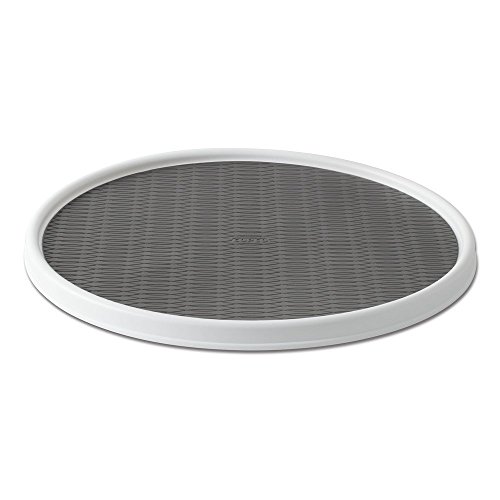 |
Copco 18 Inch Lazy Susan Turntable Organizer – NonslipCopco | Our pick | 18 inch · non-slip rimmed turntable | $17.57
Price as of 5 Oct 2026
|
View |
 |
LAMU 2 Pack Lazy Susan Organizer 9 inch Lazy SusanLAMU | Budget pick | 9 inch · clear acrylic · 2 pack | $9.99
Price as of 5 Oct 2026
|
View |
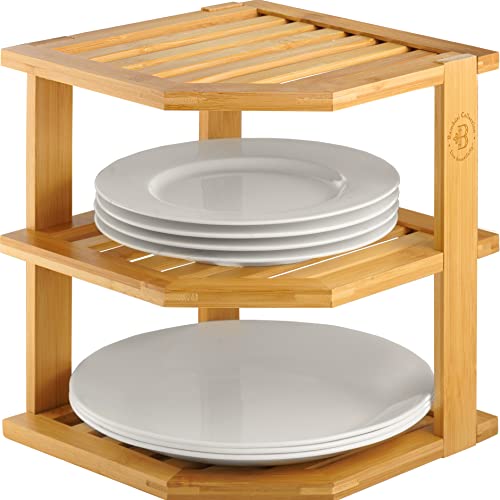 |
Bambüsi 3-Tier Corner Shelf, Kitchen Cabinet Organizer,Bambüsi | Also great | 3-tier · 10 inch · bamboo rack | $22.99
Price as of 5 Oct 2026
|
View |
 |
Wall Mount Kitchen Storage Basket, White Plastic Pull-outIpetboom | Pair with it | Pull-out · white · wall-mount basket | $26.15
Price as of 5 Oct 2026
|
View |
 |
3-Tier Corner Shelf Counter and Cabinet Organizer – SteelSIBAO | Our pick | $24.99
Price as of 7 Oct 2026
|
View |
Sort by cabinet geometry first. That is where most buyers miss the mark, because the right organizer for an L-shaped corner can fail in a blind corner or in a base cabinet with a mixer tucked inside.
The page covers 9 best kitchen corner cabinet organizers for small kitchens, but the real decision is simpler: match the mechanism to the opening width, then check the load rating and install space.
According to 9 Best Kitchen Corner Cabinet Organizers for Small Kitchens — That blind corner organizer is listed for a 36-inch width blind cabinet.
How we chose
Cabinet compatibility came first. I checked cabinet type, minimum opening width, door swing clearance, side-wall clearance, and cabinet height before anything else.
Load rating came next, along with whether the organizer fits cookware, dry goods, or a heavy appliance. Hardware quality, soft-close options, and rust resistance were the other filters.
I also weighed installation effort. In a small kitchen, the right buy improves access without eating more usable space than it returns.
Best blind corner pull-out: blind corner cabinet organizer
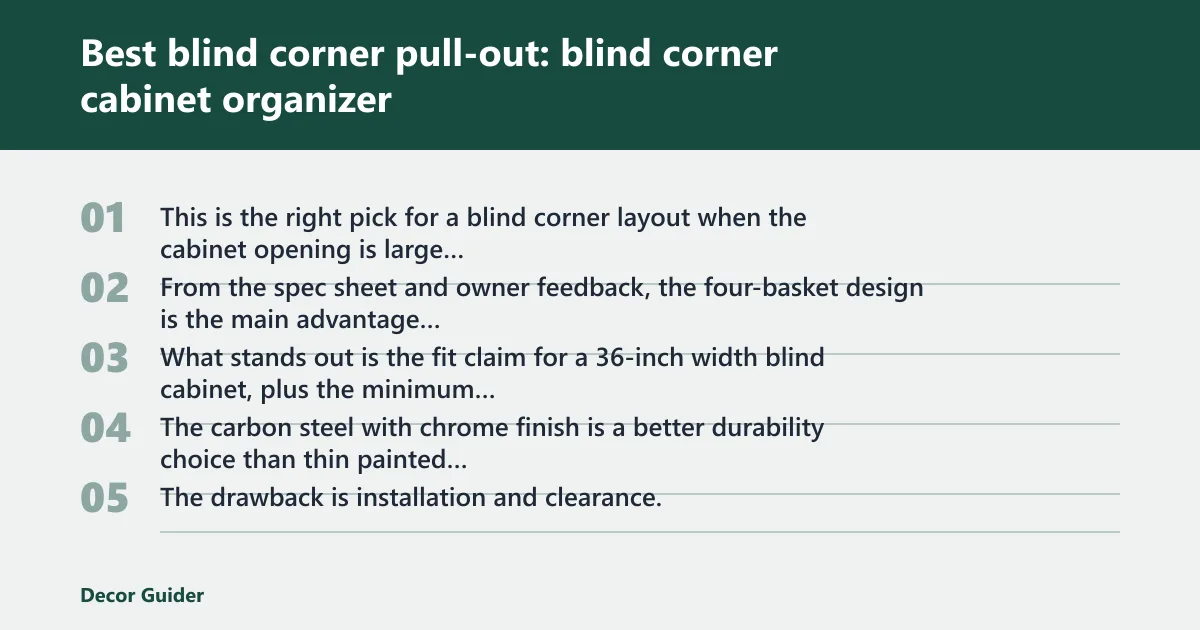
This is the right pick for a blind corner layout when the cabinet opening is large enough and the user wants full access to hard-to-reach storage. From the spec sheet and owner feedback, the four-basket design is the main advantage here, especially for tall bottles, pantry overflow, and mixed dry goods.
What stands out is the fit claim for a 36-inch width blind cabinet, plus the minimum cabinet opening of 15.7 inches. The carbon steel with chrome finish is a better durability choice than thin painted wire, and the stated 33 lbs per basket and 132 lbs total make it a serious storage option for a small kitchen that still needs to hold weight.
The drawback is installation and clearance. A blind-corner pull-out can be the wrong choice if the opening is too narrow, the side wall steals travel space, or the cabinet has plumbing that blocks the track system. It is also more hardware than a simple shelf swap.
Best use case
Use this when a blind corner is dead space and the goal is to turn it into reachable storage without crawling into the cabinet.
Minimum opening width and clearance
The minimum cabinet opening of 15.7 inches is a hard starting point, not a suggestion. Measure the clear opening after accounting for door hinges, face-frame thickness, and anything mounted inside the cabinet.
Weight capacity and shelf count
With 33 lbs per basket and 132 lbs total, it suits canned goods, pantry items, and some heavier cookware. It is still not my first choice for a stand mixer or another top-heavy appliance.
When it is the wrong choice
Skip it if the opening is tight, the side wall leaves too little travel room, or you want a faster install. In those cases, a rotating option or a simpler pull-out tray can be the safer buy.
Best for standard corners: lazy Susan corner organizer
This is the better fit for a standard L-shaped or diagonal corner cabinet where rotating shelves can bring items forward without a full pull-out system. For small kitchens, the main advantage is simple access to jars, spices, and dry goods that would otherwise sit in the back and get forgotten.
The recommended 28-inch model uses high-impact polystyrene polymer, and each shelf holds up to 26 lbs. The inner height adjusts from 26 to 31 inches, which gives it more flexibility than fixed-height trays when cabinet interiors vary.
The drawback is that a lazy Susan is not the answer for every corner. In a blind corner, it can leave a difficult back section untouched, and in a cabinet with odd plumbing or a narrow opening, rotation may solve less than expected.
Best use case
Choose this for a standard corner cabinet when the priority is visibility and quick reach, not maximum structural capacity.
Diameter and shelf style
A 28-inch size is a practical fit for many corner cabinets, but diameter still has to match the cabinet footprint. Shelf style matters too, because rimmed shelves keep small items from sliding when the unit turns.
Center pole or pivot mechanism
Check whether the organizer relies on a center pole or a pivot assembly. A stable pivot usually feels better under load, while a loose post can waste the benefit of the rotating design.
Load limits and access tradeoffs
At 26 lbs per shelf, it is best for pantry items, bowls, and lightweight cookware. It improves access well, but it does not give the same heavy-load confidence as carbon-steel pull-outs.
Best for blind corners with partial swing: half-moon lazy Susan
A half-moon lazy Susan is the middle ground when a blind corner needs better access but a full pull-out is too much hardware or too much install effort. This swing-out, pivot-style design works well when the front door can carry or clear the moving shelf system.
The advantage is visibility. Items move out toward the opening instead of staying buried, which makes small jars and everyday storage easier to see. The tradeoff is fit sensitivity; door-mounted or frame-mounted hardware needs enough space to swing without striking a hinge, pull, or adjacent cabinet side.
This is a strong choice when a blind corner has usable width but the owner wants less mechanical complexity than a full track-based organizer. It is weaker when the cabinet opening is tight or the door swing leaves almost no tolerance.
Best use case
Use it in a blind corner where the cabinet opening is workable but a full pull-out track would be too involved.
Door-mounted or frame-mounted hardware
Door-mounted versions move with the door, while frame-mounted versions depend more on the cabinet box. Either way, fit depends on hinge placement and the clearance available in the swing path.
Visibility and access gain
The half-moon shape improves what you can see at once. That matters in a small kitchen, where lost items are often the real problem, not just the storage volume.
Fit limits in tight openings
It can fail in narrow openings or cabinets with bulky hinges. If the door barely clears the face frame now, a swing-out unit may solve one access problem and create another.
Best for heavy appliances: mixer/appliance lift for base cabinets
A mixer or appliance lift is the right answer when the corner cabinet must store a stand mixer, food processor, or other heavy small appliance that is awkward to lift by hand. Instead of searching shelves, the mechanism brings the appliance up and out of the cabinet at counter height.
Its best use case is weight management, not pure organization. For small kitchens, that matters because a heavy appliance on a shelf can waste lower storage space and still be hard to reach. A lift moves the load with far less strain.
The main drawback is cabinet fit. Base cabinet height compatibility is critical, and the lift mechanism needs room to travel without colliding with shelves, plumbing, or the cabinet frame. This is not a universal corner fix; it is a purpose-built appliance solution.
Best use case
Choose this for a heavy appliance that gets used often enough to deserve easy access, but not so often that it needs permanent counter space.
Cabinet height compatibility
Check the interior height before ordering. A lift that is too tall for the cabinet will either bind or steal the travel space needed to raise the appliance smoothly.
Lifting mechanism and load rating
The mechanism should move straight and support the appliance without wobble. For a mixer, the important measure is total load support plus stability at full extension, not just the peak lift number.
When a lift beats shelf storage
A lift wins when the appliance is heavy, bulky, and used enough to justify faster access. Shelf storage wins when the item is light and you need the cabinet for mixed storage instead.
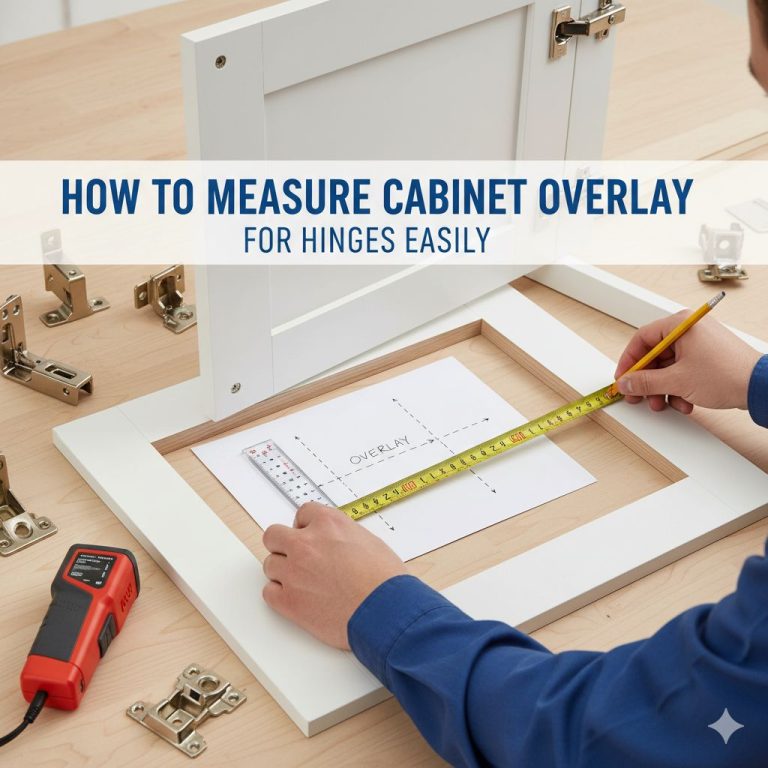
Cabinet-compatibility checklist
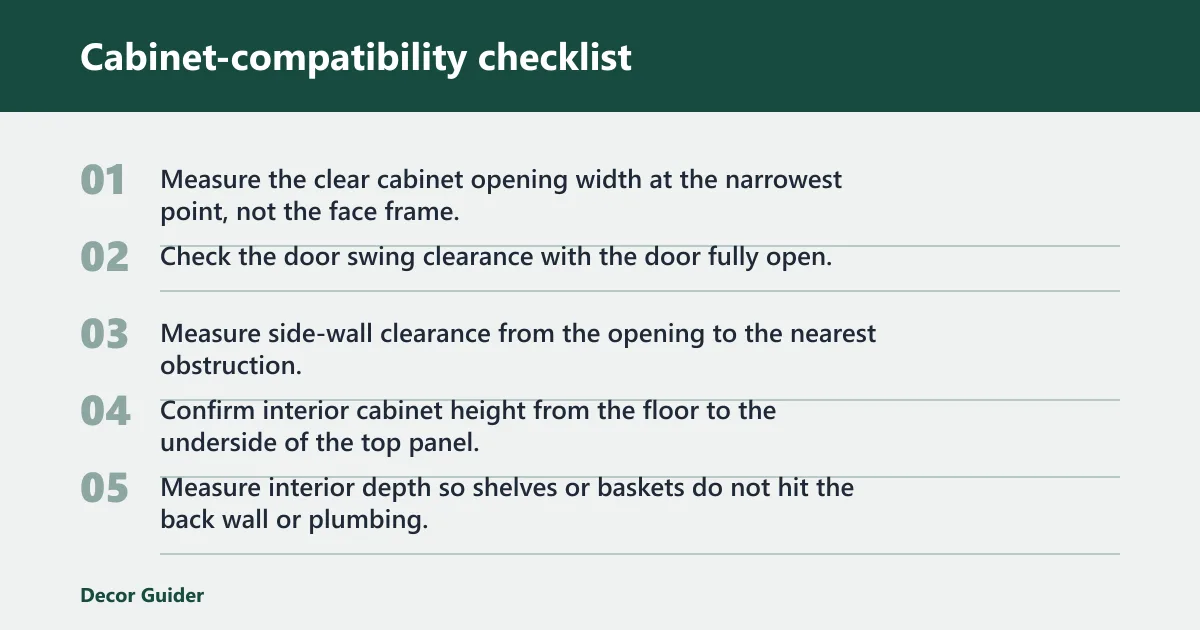
Before buying any organizer, measure the cabinet in the same order every time. This keeps the decision tied to fit, not marketing. It also prevents the most common failure: buying a well-made unit that simply cannot move inside the cabinet.
- Measure the clear cabinet opening width at the narrowest point, not the face frame.
- Check the door swing clearance with the door fully open.
- Measure side-wall clearance from the opening to the nearest obstruction.
- Confirm interior cabinet height from the floor to the underside of the top panel.
- Measure interior depth so shelves or baskets do not hit the back wall or plumbing.
- Match the organizer’s shelf or basket load rating to the heaviest item you plan to store.
| What to measure | How to measure it | Minimum requirement to check | Why it matters |
|---|---|---|---|
| Cabinet opening width | Measure the narrowest clear gap inside the opening, edge to edge | At least the organizer’s stated minimum opening width | Determines whether the frame, track, or shelf system can enter the cabinet |
| Door swing clearance | Open the door fully and measure the travel space it needs | Enough space for the organizer to move without striking the door | Prevents binding, scraping, and partial extension |
| Side-wall clearance | Measure from opening to the adjacent wall or cabinet side | Clear room for rails, pivots, or rotating shelves | Tracks and swing-outs need room to travel |
| Cabinet height | Measure floor to underside of the top panel inside the cabinet | Enough height for shelf tiers or lift travel | Controls whether tiers stack properly and whether appliance lifts fit |
| Interior depth | Measure from front opening to back wall | Enough depth for baskets, posts, or pivot arms | Prevents interference with plumbing and wiring |
Which one should you buy?
If you have a blind corner, buy a blind corner cabinet organizer when the opening is wide enough and the cabinet can take a track system. If the door swing is tight or the side wall is cramped, a half-moon swing-out may be the safer fit.
If you have a standard L-shaped or diagonal corner, the lazy Susan is usually the cleanest answer because it gives quick access with less install effort. It is especially useful for jars, snacks, and other items that need to stay visible.
If you store cast iron or a stand mixer, prioritize load-bearing hardware. A mixer/appliance lift is the right call for heavy appliances, while a carbon-steel pull-out is better for dense pantry storage and cookware.
If you want the simplest budget buy, go for a compact rotating shelf or a basic tray system before moving into more complex hardware. For many small kitchens, less mechanism means fewer clearance surprises and a lower chance of ordering the wrong size.
How do I choose between a lazy Susan and a blind corner pull-out?
Choose a lazy Susan for a standard corner cabinet where rotation gives easy reach, and choose a blind corner pull-out when the dead space sits behind a front cabinet run. The pull-out usually gives better access, but it needs more exact clearance and a more careful install.
The deciding factor is geometry. If the cabinet opens into a true corner, rotation works well. If one section disappears behind another cabinet wall, the pull-out solves the reach problem better than spinning shelves.
What size corner cabinet organizer fits my cabinet opening?
The right size is the one that fits the narrowest clear opening and still leaves room for the mechanism to move. For blind-corner pull-outs, the minimum opening width and side-wall clearance matter as much as the labeled size. For lazy Susans, shelf diameter and cabinet height matter more.
Do not measure only the front width. Measure the opening after hardware, hinges, and frames are accounted for, then confirm the organizer’s stated minimum dimensions against that number.
Are corner cabinet pull-outs worth the installation effort?
Yes, when the cabinet currently wastes a lot of usable space and the items stored there are used often enough to justify the install. They are less worth it when the cabinet is shallow, crowded by plumbing, or only stores light extras that can live elsewhere.
The value is access, not novelty. A pull-out is worth the effort when it turns a hard-to-reach area into daily-use storage without reducing the cabinet’s usable load too much.
Which organizer works best for a blind corner cabinet?
A blind corner cabinet is usually best served by a blind corner pull-out because it reaches storage that a rotating shelf cannot fully expose. A half-moon lazy Susan is the fallback when you want easier visibility and a simpler mechanism, but the cabinet shape still has to allow the swing.
If the opening is narrow or the side wall is tight, the pull-out may still fail to fit. In that case, the right answer is not forcing a blind-corner system into a bad opening.
What is the best budget-friendly corner cabinet organizer for small spaces?
The best budget-friendly option is usually a simple lazy Susan or compact corner shelf, because it gives a meaningful access gain without the hardware cost of a track system. For very small kitchens, a low-cost rotating shelf often makes the most sense for spices, sauces, and snack storage.
Budget should not override fit. A cheap organizer that does not match the cabinet opening is wasted money, even if the sticker price looks good.
How much weight can corner cabinet organizers hold?
Weight capacity depends on the organizer type, the number of shelves or baskets, and the hardware quality. For this roundup, the blind corner unit lists 33 lbs per basket and 132 lbs total, while the lazy Susan shelf lists up to 26 lbs per shelf. Those figures are useful only if the load is evenly placed.
Heavy cast iron and appliances need more than a decent number on paper. They need stable support, secure mounting, and a cabinet structure that will not twist under repeated use.
What should I measure before ordering a corner cabinet organizer?
Measure the opening width, door swing clearance, side-wall clearance, cabinet height, and interior depth. Those five dimensions decide whether the organizer fits at all and whether it can move without binding. If one of them is off, the product can fail even if the cabinet seems large enough.
Also note what will sit inside the organizer. Jars and boxes are forgiving. Heavy pans, cast iron, and appliances need a stronger load rating and more careful clearance planning.
Frequently asked questions
What is the best corner cabinet organizer for a small kitchen?
The best option depends on the cabinet type, but for most small kitchens a lazy Susan is the easiest fit for standard corners, while a blind corner pull-out is better when the cabinet hides storage behind a front run. The right answer is the one that matches the opening width and the load you plan to store.
How do I choose between a lazy Susan and a blind corner pull-out?
Use a lazy Susan for a true corner cabinet with room to rotate shelves, and use a blind corner pull-out when the cabinet has hidden space that rotation cannot reach well. The pull-out usually gives better access, but it needs more exact measurements and more install patience.
What size corner cabinet organizer fits my cabinet opening?
Start with the narrowest clear opening, then compare that number with the organizer’s minimum opening width. For blind corner systems, cabinet depth and side-wall clearance matter too. A unit can be technically the right size and still fail if the swing path is too tight.
Are corner cabinet pull-outs worth the installation effort?
They are worth it when the cabinet is hard to use now and the stored items are used often enough to justify a more complex install. If the cabinet is shallow or obstructed by plumbing, the gain may be too small for the effort. Fit and access should decide, not just the hardware type.
How much weight can corner cabinet organizers hold?
It varies by design. The blind corner organizer in this guide lists 33 lbs per basket and 132 lbs total, while the lazy Susan shelf lists up to 26 lbs per shelf. For heavy cookware or appliances, check both the per-shelf limit and the total load, then leave a margin for safety.
What should I measure before ordering a corner cabinet organizer?
Measure the cabinet opening width, door swing clearance, side-wall clearance, cabinet height, and interior depth. Those are the measurements that determine fit in the real cabinet, not the catalog image. If you skip them, the most common result is a product that cannot move properly once installed.
Products related to this article
Sponsored / affiliate links. As an Amazon Associate I earn from qualifying purchases. I may earn additional commission from eligible campaigns.