Cabinet Repair Cost
Cabinet repair usually makes sense when damage is isolated to one hinge, door, drawer front, or small section; refacing fits when the cabinet boxes are sound but the visible surfaces are tired; and replacement is the right call when boxes are swollen, soft, or out of square. Current cost guides put repair at roughly $383 to $577 per cabinet from Homewyse, refacing at about $100 to $455 per linear foot from DrCabinet, and full replacement often at $8,000 to $20,000+ for a full kitchen, depending on size and finish level (Homewyse, DrCabinet, Angi).
Typical cost range
Cabinet repair is usually the lowest-cost option when the problem is local and the cabinet box is still structurally sound. For a single cabinet or door, current estimates commonly land around $383 to $577 per cabinet from Homewyse, while DrCabinet reports many repairs between $200 and $490, with minor fixes often lower and major structural work much higher (Homewyse, DrCabinet).
What repair includes
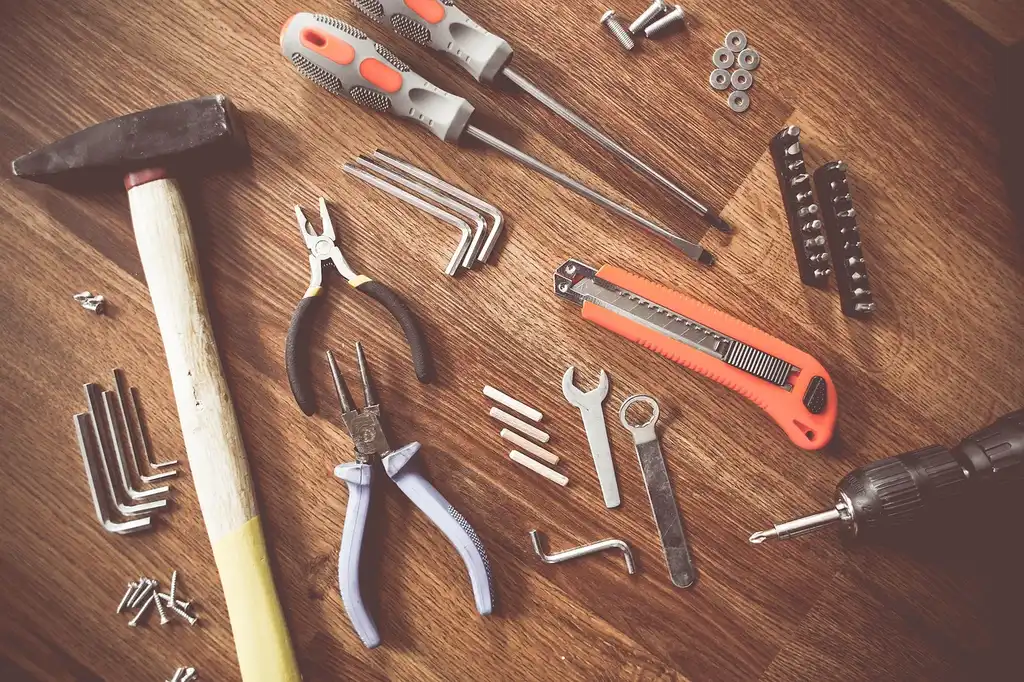
Repair usually covers hinge tightening, hinge replacement, screw-hole repair, drawer-front replacement, shelf reinforcement, wood filler and sanding, and reattachment of loose face frames. In practice, the labor matters more than the parts: Homewyse’s repair pricing includes only modest hardware cost, while the real expense often comes from diagnosis, alignment, and finishing work (Homewyse).
- Check whether the hinge screws are stripped or just loose.
- Confirm the door still closes squarely after adjustment.
- Look for soft spots near the sink, dishwasher, or toe kick.
- Inspect the cabinet box for cracks, swelling, or delamination.
Minor vs major repair scope
Minor repairs usually stay in the low hundreds when the cabinet is sound and the issue is cosmetic or hardware-related. Major repairs rise quickly when the box must be stabilized, re-built, or partially replaced. DrCabinet notes that labor commonly runs about $50 to $100 per hour, which is why a small hardware issue can stay inexpensive while structural work can move into the $500 to $1,000+ range (DrCabinet).
How material type changes repair difficulty
Solid wood is typically easier to repair than laminate or particleboard. Solid wood accepts fasteners, filler, and patching better, while laminate can chip and particleboard can crumble once screws loosen. Veneer sits in the middle: it can be repaired, but the surface layer is thin and often reveals substrate damage sooner than solid wood.
That difference changes both cost and risk. A simple hinge reset on solid wood may stay cheap, but the same-looking problem on particleboard may require reinforcement, new anchor points, or panel replacement that pushes the job toward refacing or full replacement.
Common cabinet failures and likely fixes
The fastest way to price cabinet work is by failure type. Loose hinges, cracked doors, worn drawer fronts, peeling veneer, sagging shelves, and water damage each point to a different repair path. The key decision is whether the cabinet box still holds square and whether the damage is cosmetic or structural.
Loose hinges and worn hardware
Loose hinges, stripped screw holes, soft-close failures, and worn catches are usually the least expensive cabinet issues to fix. A contractor may tighten the hinge, replace the hardware, or reset the mounting point. These jobs usually stay in the repair category unless the door frame or cabinet face is also damaged.
Drawer-front and door damage
Cracked drawer fronts, split rails, and broken stiles often need part replacement rather than patching. If matching profiles are still available, the fix can stay local. If the cabinet style is discontinued, the replacement may need to be custom built, which raises both material and labor cost.
Chips, scratches, and veneer failure
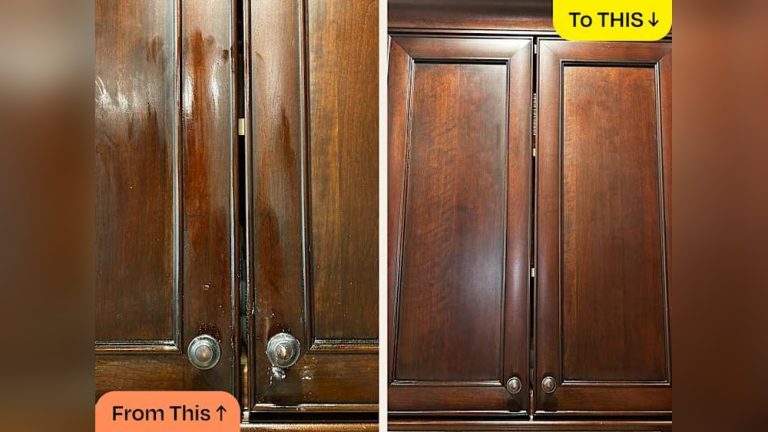
Small chips and scratches can usually be filled, sanded, and touched up. Veneer failure is more complicated. If the veneer lifts in a small area, repair may still be practical. If the peeling is widespread or the substrate is exposed, refacing usually becomes a better long-term choice than repeated spot repairs.
Warping, sagging shelves, and water damage
Warping and sagging shelves signal that the cabinet is no longer carrying load evenly. Water damage near a sink base is especially important because it can affect the bottom, sides, and toe kick at the same time. Once the cabinet no longer holds screws or stays square, repair costs often rise faster than the value of the fix.
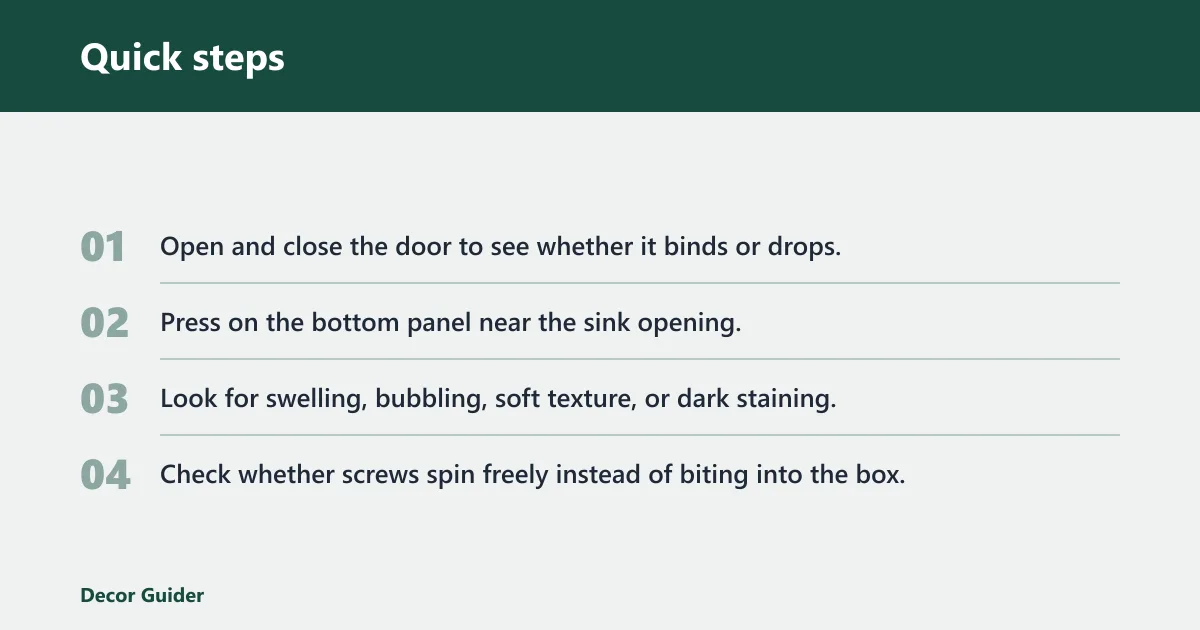
- Open and close the door to see whether it binds or drops.
- Press on the bottom panel near the sink opening.
- Look for swelling, bubbling, soft texture, or dark staining.
- Check whether screws spin freely instead of biting into the box.
If a sink base has swollen particleboard at the bottom and the door no longer lines up, a hinge adjustment will not solve the underlying failure. In that situation, structural replacement of the base cabinet is often the better call even if the rest of the kitchen still looks acceptable.
When does repair stop making sense?
Repair stops making sense when the cabinet box is failing, the damage is widespread, or the labor needed to stabilize the cabinet approaches the cost of replacing it. If the cabinet still holds its shape and only the hardware, door, or finish is damaged, repair can still be the lowest-cost option.
Cabinet-box integrity check
A sound cabinet box should be square, dry, and able to hold screws. Test whether the frame flexes, whether the door swings without rubbing, and whether fasteners stay tight. If the structure wobbles, swells, or repeatedly strips screws, the repair value drops sharply.
Structural damage thresholds
Structural failure usually means broken side panels, delaminated particleboard, major water swelling, or shelves that no longer sit level after repair. Once more than one panel is compromised, the quote often reflects rebuild labor rather than a simple fix. That is the point where replacement usually becomes the better spend.
Signs replacement is the better call
Replacement is usually the better choice when several cabinets fail at once, the finish is worn across the whole kitchen, or the boxes are too weak for new doors to sit properly. If the layout also needs to change, replacement may be the only path that solves both damage and function.
When refacing still works
Refacing still works when the boxes are sound but the doors, drawer fronts, and exposed ends look dated. It sits between repair and replacement: better than patching visual wear, but far less disruptive than tearing out a kitchen that still has good boxes and a workable layout.
Cabinet repair cost decision table
Use this table as a proof-first guide. The threshold is not just the number of broken parts; it is whether the cabinet box still passes a basic integrity check and whether the repair budget is staying meaningfully below refacing or replacement.
| Damage type | Inspection threshold | Likely fix | Typical cost bucket | When repair stops making sense | Better next step |
|---|---|---|---|---|---|
| Loose hinge or stripped screw hole | 1 cabinet, no swelling, door still aligns after adjustment | Reset hinge, fill hole, replace hardware | $150–$300 | Mounting area is soft, split, or repeatedly strips | Repair |
| Single chipped door or drawer front | 1 front, finish damage only, matching profile available | Patch, sand, repaint, or replace front panel | $200–$490 | Several fronts are damaged or the style cannot be matched | Repair or refacing |
| Peeling veneer on one face | Small isolated lift, substrate still firm | Re-glue, patch, or replace visible face | $262–$320 | Peeling covers multiple doors or end panels | Refacing |
| Sagging shelf | One shelf only, supports still hold fasteners | Reinforce or replace shelf supports | $200–$600 | Side panels no longer hold screws or the box racks | Replacement |
| Warped door or panel | Box still square, warp is isolated to the door/panel | Replace door or panel, adjust hardware | $383–$577 per cabinet | Warping returns after adjustment or traces back to moisture damage | Replacement |
| Water-damaged sink base | Bottom panel swollen, screws loose, or box no longer square | Partial rebuild or full base replacement | $500–$1000+ | Bottom, sides, and fastener points are swollen or crumbling | Replacement |
Budget break point: if the repair quote is below about 25% to 35% of the cost of refacing or replacement and the cabinet box passes the integrity check, repair usually wins. If the quote rises above that band because multiple panels, fasteners, or structural parts are failing, refacing or replacement becomes more logical.
How much does cabinet refacing cost?
Cabinet refacing usually costs less than replacement when the boxes are still solid and the goal is a new look without changing the layout. The same source reports refacing at $100 to $455 per linear foot, with an average around $275 per linear foot, which means the final total depends heavily on kitchen size and cabinet run length (DrCabinet).
Cost per linear foot
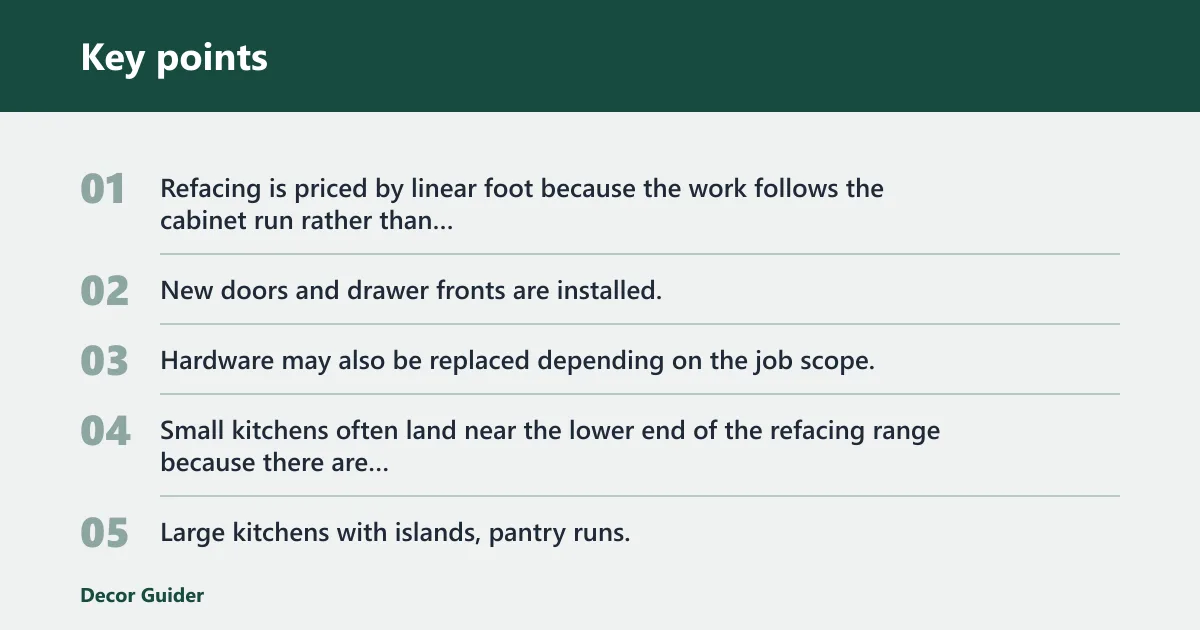
Refacing is priced by linear foot because the work follows the cabinet run rather than only the number of broken parts. New doors and drawer fronts are installed, and the visible cabinet boxes are covered with new veneer or matching material. Hardware may also be replaced depending on the job scope.
Small, medium, and large kitchen ranges
Small kitchens often land near the lower end of the refacing range because there are fewer doors and less visible box surface. Medium kitchens usually sit in the middle. Large kitchens with islands, pantry runs, and many end panels can move toward the high end quickly, even if the boxes themselves are in good condition.
Refacing is strongest when the boxes are sound, the doors are dated, and the layout still works. It is weaker when the cabinet bottoms are swollen, the boxes are warped, or the fasteners are pulling out, because new surfaces do not solve weak structure.
Refacing versus painting cabinets
Painting cabinets is usually the lower-cost option when the boxes and doors are structurally fine and the main goal is a color change. Refacing costs more because it replaces doors, drawer fronts, and visible exterior surfaces. Painting keeps the existing parts in place; refacing changes the parts most people see and touch every day.
If the doors are solid but dated and the boxes are fine, painting can be the best budget move. If the finish is peeling, the style feels outdated, and the goal is a cleaner reset, refacing often provides a better long-term result without the cost of full replacement. See the related cabinet refacing vs cabinet repainting comparison for where painting fits relative to refacing.
How much does cabinet replacement cost?
Cabinet replacement costs the most because it includes removal, new materials, installation, and often additional finish work. For many kitchens, replacement becomes the right option only when the boxes are too damaged for repair or the layout and style need a full reset. Full-kitchen replacement commonly lands in the $8,000 to $20,000+ range, with higher totals for larger kitchens and upgraded cabinet lines (Angi).
Full-kitchen replacement ranges
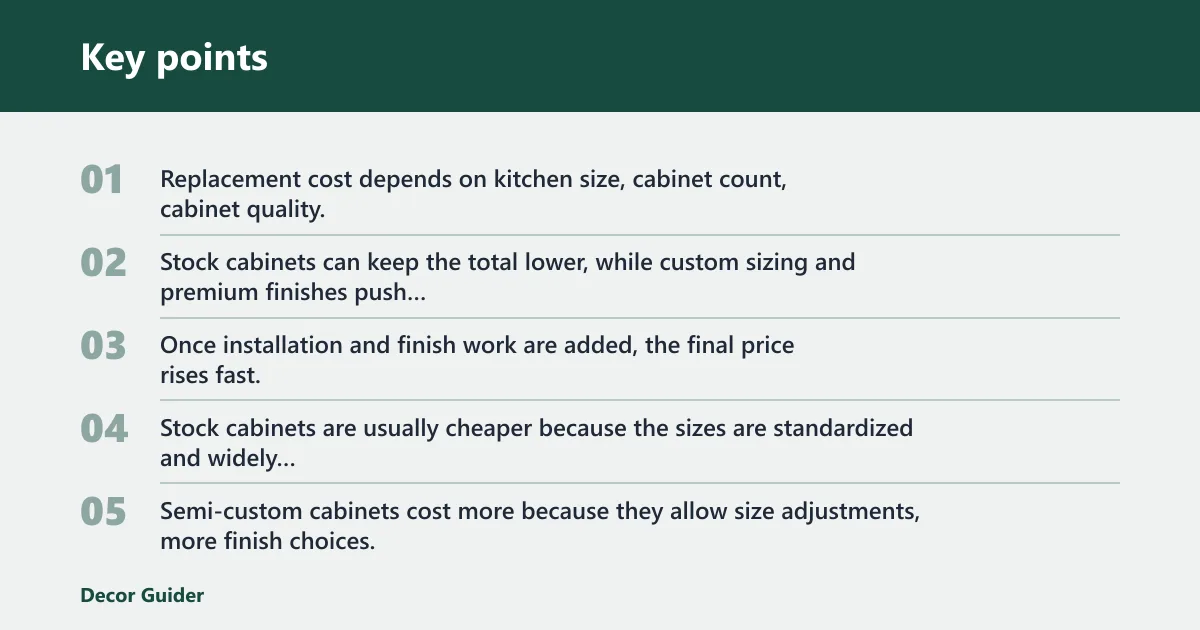
Replacement cost depends on kitchen size, cabinet count, cabinet quality, and whether the job includes demolition and haul-away. Stock cabinets can keep the total lower, while custom sizing and premium finishes push the total up quickly. Once installation and finish work are added, the final price rises fast.
Stock versus semi-custom pricing
Stock cabinets are usually cheaper because the sizes are standardized and widely available. Semi-custom cabinets cost more because they allow size adjustments, more finish choices, and greater design flexibility. The more the job departs from stock sizing, the more the price moves toward semi-custom or custom territory.
How replacement compares with repair and refacing
Repair is the best fit for one or two damaged parts. Refacing is the middle path when the boxes are good but the look is worn. Replacement is the highest-cost option and makes the most sense when boxes are failing, the kitchen needs a new layout, or the damage is too widespread to patch efficiently.
Where labor and materials push costs up
Labor rates matter because cabinet work is detail-heavy and time-consuming. The same source puts cabinet labor around $50 to $100 per hour, and Homewyse notes that costs rise with premium materials and higher-demand professionals. General contractor supervision can add roughly 13% to 22% on top of the base project cost (DrCabinet, Homewyse).
That means two quotes for the same cabinet issue can differ for clear reasons. One may include more labor hours, a higher finish level, or supervision. Another may leave out trim work, hardware upgrades, or disposal, which makes the bottom line look lower even if the scope is not truly comparable.
Frequently asked questions
How much does cabinet replacement cost: cabinet replacement often falls?
Cabinet replacement often falls in the $8,000 to $20,000+ range for a full kitchen, depending on kitchen size, cabinet count, and finish level. Stock cabinets usually cost less than semi-custom or custom options, while removal, installation, and finishing can raise the total beyond the cabinet price alone.
How much to replace cabinets
How much to replace cabinets depends on whether the job covers one run, a base cabinet section, or the full kitchen. Stock cabinets cost less than semi-custom options, and labor adds a meaningful share of the bill. If several boxes are damaged, replacement can be more practical than repeated repairs.
How much to replace kitchen cabinets
How much to replace kitchen cabinets is driven by layout, cabinet quality, and the scope of demolition and installation. Small kitchens can cost far less than large ones, but the total rises quickly once haul-away and finish work are included. Costs increase further when the job moves beyond stock sizing.
How much does replacing kitchen cabinets cost?
How much does replacing kitchen cabinets cost usually depends on whether the project uses stock, semi-custom, or custom cabinets. A replacement quote should separate cabinet materials from labor and finish work. If the boxes are failing across the kitchen, replacement often makes more sense than trying to patch every section.
Cost of painting cabinets vs replacing
Painting cabinets is usually cheaper than replacing them because the existing boxes and hardware structure stay in place. It works best when the doors and boxes are sound and the main goal is a new color. Replacement is the better option when the cabinet structure is weak or the layout needs to change.
Cabinet refacing vs replacing cost
Cabinet refacing vs replacing cost often comes down to whether the box is worth keeping. Refacing costs less because it preserves the cabinet framework and replaces the doors, drawer fronts, and visible faces. Replacement costs more, but it solves damaged boxes, layout problems, and worn cabinetry at the same time.
What does cabinet repair cost per cabinet?
What does cabinet repair cost per cabinet depends on the failure. Simple hardware fixes stay lower, while structural repairs or water damage can move the number higher (Homewyse, DrCabinet).
Is it cheaper to repair or replace cabinets?
It is usually cheaper to repair cabinets when the damage is localized and the box is still sound. Replacement becomes the better value when multiple cabinets fail, the structure is weak, or repairs would cost close to a new installation. If the boxes are solid, refacing may sit between the two.
Compare quotes from multiple contractors, since location, material choice, and labor intensity can move the total in either direction. A lower repair quote can still be the best choice if the cabinet box is stable. A higher quote may be justified if the job includes structural work, premium materials, or supervision fees.
Products related to this article
Sponsored / affiliate links. As an Amazon Associate I earn from qualifying purchases. I may earn additional commission from eligible campaigns.