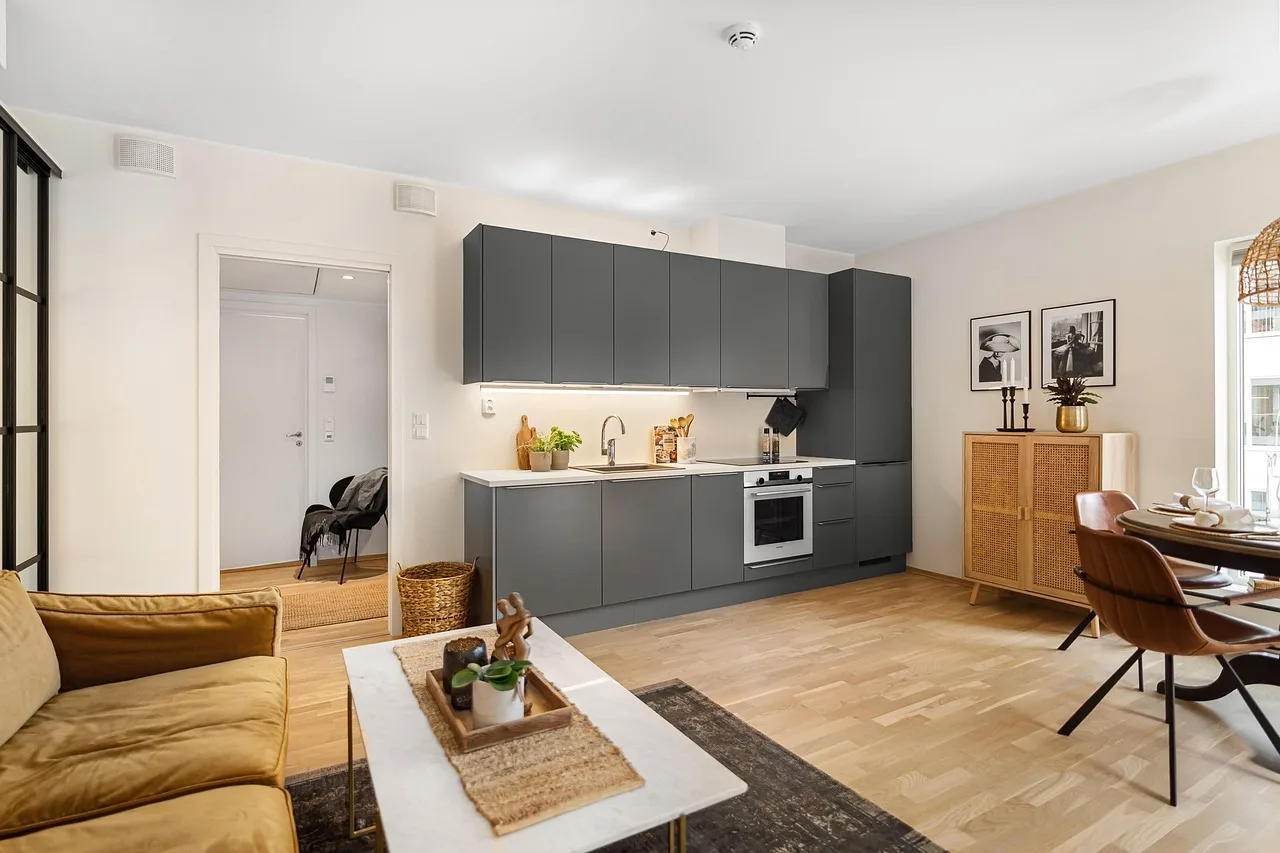
How Much Does Cabinet Repainting Cost?
Cabinet repainting usually costs roughly $3,000 to $8,000 for an average kitchen, and more complex layouts, repairs, and sprayed finishes can push it higher. Those ranges align with national cost guides from Angi, HomeAdvisor, and Fixr. If you skip a detailed quote, you can pay for hidden prep, door removal, or touch-up work that should have been priced up front.
The line items in this guide were derived from how cabinet painters and remodelers typically build estimates: front count, box count, prep condition, repair need, coating system, and hardware handling. That is the same structure used in many contractor quotes and consumer pricing guides, including Angi, HomeAdvisor, Fixr, and Remodeling.hw.net, plus local examples where contractors quote by linear foot or project scope rather than by room alone.
Typical cost range
Professional cabinet repainting is often reported in the roughly $2,000 to $6,500 range, with many kitchens landing between about $3,000 and $8,000 once prep, labor, and finish quality are included. Angi and HomeAdvisor both describe similar national spread, while Fixr and Remodeling.hw.net note that larger, more detailed kitchens can run above that band depending on scope and finish choice. A practical quote may also be built from $30 to $70 per linear foot, $70 to $125 per door, and $30 to $110 per drawer front, depending on condition and finish type.
Typical pricing bands
For budgeting, the broad range matters less than the line items behind it. A small kitchen with fewer fronts and easier access may stay near the low end, while a larger kitchen with peeling finish, heavy grease, or a sprayed enamel system can move well above the midpoint. NKBA planning guidance also emphasizes that kitchen scope changes quickly once cabinet count, access, and finish complexity rise.
DIY versus professional cost
DIY cabinet painting materials are estimated at $200 to $600, but that figure does not buy time, skill, or a spray setup. Professional work costs more because it usually includes cleaning, sanding, priming, masking, repairs, coating selection, and finish control that reduce peeling and bleed-through risk. Sherwin-Williams and Benjamin Moore system guidance both stress that cabinet coatings perform best only when prep, primer, and cure time are followed carefully.
What a repainting quote includes
A solid repainting quote should spell out prep, coating, masking, and hardware handling before the first door comes off. If a proposal only names a paint total, it may leave out adhesion work, spot repairs, or removal and reinstall labor that affects the final price. Ask for each line item in writing so you can compare bids apples to apples and spot whether the contractor is pricing a spray-grade system or just a cosmetic touch-up.
Cleaning, sanding, and priming
Most repainting jobs include degreasing, sanding, and primer because cabinet surfaces carry cooking residue and old finish buildup. Those steps matter most on kitchen bases near the range and sink, where contamination and moisture can hurt adhesion. Sherwin-Williams and Benjamin Moore cabinet product systems both call for deglossing or sanding, stain-blocking or bonding primers where needed, and full cure before normal use.
Minor repairs and masking
Small dents, loose veneer, chipped edges, and nail holes usually fall into the repair bucket. Craine’s process description includes precision masking of adjacent surfaces in the base price, along with careful prep work for adhesion and durability. That is a useful benchmark because it shows how a quote can bundle careful protection work instead of charging for it as a surprise add-on later.
Sprayed versus hand-applied finish
Sprayed finishes often cost more because the process takes more setup and cleanup, but they usually produce a smoother look on flat and shaker-style doors. Hand-applied finishes can work well on simpler projects, though brush marks and roller texture may be more visible depending on the coating and cabinet profile. In most market guides, sprayed systems cost more precisely because the labor and containment demands are higher.
Cabinet repainting quote decoder
This quote decoder shows the six parts homeowners should see in an estimate. Use the following checklist to see whether a price includes the real work, not only the visible coat of paint. For a simple kitchen, the low column should look plausible; for a heavily used or damaged kitchen, the high column is often the more realistic planning number.
| Line item | What it covers | What makes it cheaper or more expensive | Sanity-check note |
|---|---|---|---|
| Doors and drawer fronts | Removal, prep, coating, and reinstall of visible front pieces | Fewer fronts cost less; lots of drawers, raised panels, or detailed profiles cost more | Low: simple layout. Typical: most standard kitchens. High: many fronts or detailed profiles. |
| Boxes | Fixed cabinet frames, end panels, and exposed face frames | Open layouts and hard-to-reach corners raise labor; plain boxes lower it | Low: basic straight run. Typical: standard U or L shape. High: many ends and tight corners. |
| Prep level | Degreasing, sanding, dust control, masking, and primer | Heavy grease, failing finish, bleed-through risk, or prior peeling increase cost | Low: clean, sound finish. Typical: normal prep. High: sticky buildup or failing coating. |
| Repairs | Minor filler work, loose joints, veneer fixes, chip repair, and spot patching | More damage, water swelling, or broken hardware holes raise labor and material use | Low: light touch-up. Typical: small wear. High: several damaged doors or edges. |
| Coating system | Primer plus topcoat, with urethane, alkyd, or hybrid enamel options | Higher-durability systems and sprayed application usually cost more than basic brushed systems | Low: basic finish. Typical: durable enamel. High: premium chip-resistant system. |
| Hardware removal and reinstall | Taking off knobs, pulls, hinges, and putting them back after finishing | Complex hinge setups, soft-close hardware, or damaged fasteners increase labor | Low: simple pulls. Typical: full removal and reinstall. High: many special hinges or stripped screws. |
| Kitchen size | Low estimate | Typical estimate | High estimate |
|---|---|---|---|
| Small kitchen | $2,000 to $3,200 | $3,200 to $4,500 | $4,500 to $6,000 |
| Medium kitchen | $3,500 to $5,000 | $5,000 to $6,800 | $6,800 to $9,000 |
| Large kitchen | $5,500 to $7,500 | $7,500 to $9,500 | $9,500 to $12,000+ |
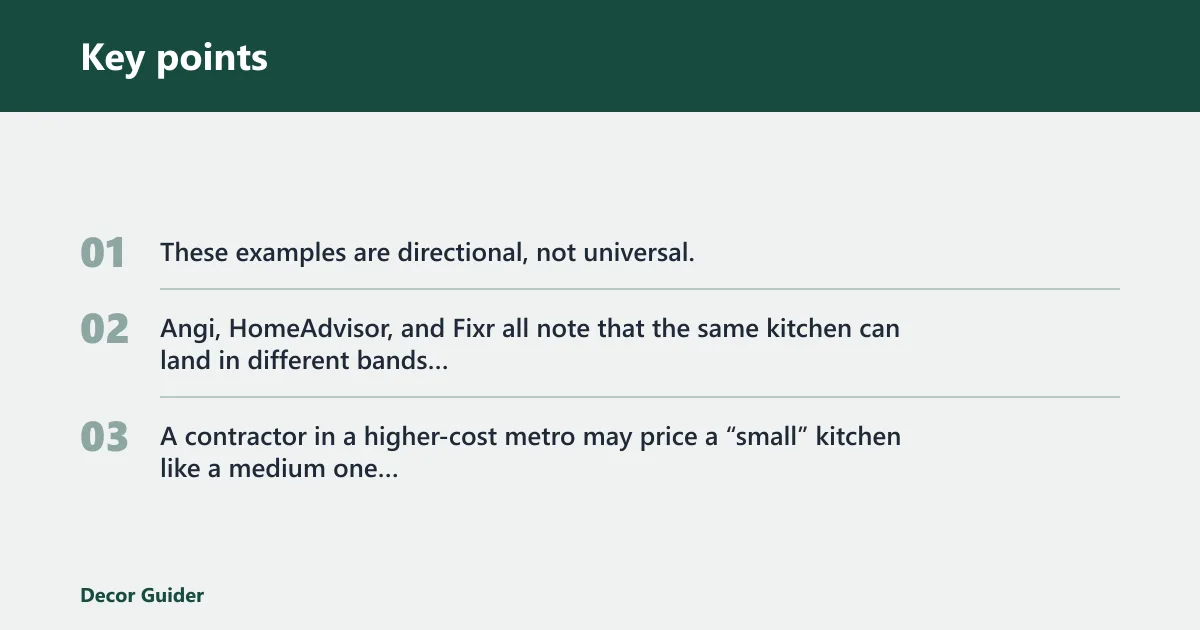
These examples are directional, not universal. Angi, HomeAdvisor, and Fixr all note that the same kitchen can land in different bands depending on finish quality, labor market, and prep condition. A contractor in a higher-cost metro may price a “small” kitchen like a medium one elsewhere.
What makes cabinet repainting cost more?
Cabinet repainting costs more when the job needs more labor, more prep, or tighter finish control. Cabinet count matters, but so do grease buildup, damaged surfaces, old peeling paint, and awkward hardware. Those conditions can move a quote from a simple repaint into a repair-heavy project, which is exactly why price comparisons should include condition notes and not just a bottom-line number.
Cabinet size and door count
Kitchen size and the number of doors and drawer fronts are the easiest price drivers to understand. A small kitchen often has fewer fronts and fewer square feet of finish, while a large kitchen has more doors, more edge work, and more time spent on masking and reassembly. Brackens Painting lists a small kitchen as 70 to 100 square feet, a medium kitchen as 100 to 200 square feet, and a large kitchen as more than 200 square feet. That kind of square-foot framing helps explain why door count, not just room size, drives the estimate.
Grease, damage, and failed finish
Heavy grease means more degreasing and more sanding before primer can bond. Prior peeling, stained bleed-through, or soft old paint can force extra prep or a different coating choice. That is where a low quote often turns into a change order. Remodeling.hw.net and manufacturer system guidance both point to prep failures as a major reason cabinet finishes do not last.
Hardware and access complexity
Some kitchens are slow simply because the doors are awkward to remove or the hinges are old and brittle. Tight pantry corners, crown trim, appliance panels, and island ends also increase masking and finish time. Picture a 12-door kitchen with oily upper cabinets near a range hood; the quote will usually rise because the prep, not the paint, is doing the heavy lifting.
How cabinet material changes the price
Cabinet material affects both prep method and finish risk. Wood cabinets are usually the best repaint candidates. Laminate and thermofoil can be painted in some cases, but they need stricter prep and may be poor choices if the existing surface is failing or heat-damaged. Material also affects the primer choice, which is why a good quote should name the system instead of saying only “paint cabinets.”
Hardwood cabinets
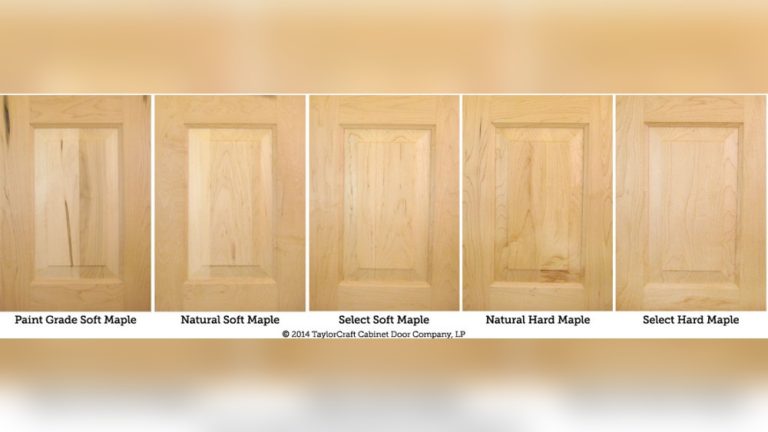
Hardwood species such as maple, hickory, and cherry can take repainting well when the finish is sound. Refinishing hardwood cabinets starts at $140 per linear foot in Southeast Wisconsin, and that Craine project typically totals $5,000 to $7,000. The included finish is a single solid color on cabinet bases and doors, with precision masking and careful prep included in the base price. Because this is a local example, treat it as a market snapshot rather than a national benchmark.
Laminate cabinets
Laminate cabinets need adhesion-friendly prep, not standard wood prep. The surface is slick, so sanding alone may not be enough. If the laminate is peeling, swollen, or delaminating at the edges, repainting is often a weak value because the coating may fail again. In that case, the quote should clearly explain whether the contractor is using a bonding primer system and what warranty applies.
Thermofoil cabinets
Thermofoil can be a poor repaint candidate when the film has lifted from heat or moisture. The problem is not only appearance; adhesion can be unreliable on damaged foil. If the surface is separating, refacing or replacement often makes more sense than paying for a finish that may not stay put. That is also where some local pros will refuse to quote paint-only work because the substrate has already failed.
Is repainting cheaper than refacing or replacing?
Yes, repainting is usually cheaper than refacing or replacing, but it is not always the better buy. Repainting works best when the cabinet boxes are solid and the layout still fits the room. If the doors are fine but the frames are worn, refacing may deliver a bigger visual change for the money. If the boxes are sound, repainting is the budget-friendly middle path; if the structure is failing, the cheaper cosmetic fix can become false economy.
Cabinet refacing cost comparison
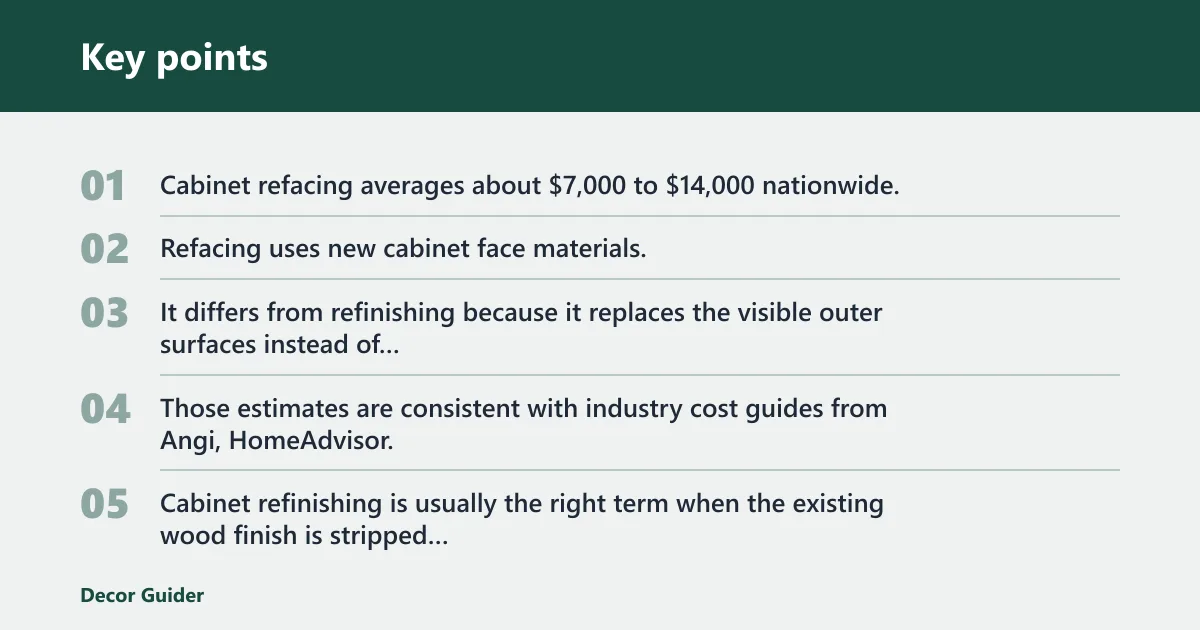
Cabinet refacing averages about $7,000 to $14,000 nationwide, with a typical range of $4,500 to $20,000 and about $100 to $250 per linear foot. Refacing uses new cabinet face materials, usually new veneer or laminate on the boxes plus new doors and drawer fronts. It differs from refinishing because it replaces the visible outer surfaces instead of repainting or stripping the existing ones, and it differs from replacement because the cabinet boxes stay in place. Those estimates are consistent with industry cost guides from Angi, HomeAdvisor, and Fixr, though location and material selection can shift the total significantly.
Cabinet refinishing cost comparison
Cabinet refinishing is usually the right term when the existing wood finish is stripped and restained, not painted. Labor often makes up a large share of the total because stripping, sanding, and stain control take time. Material compatibility matters; wood species and prior coatings affect whether the cabinet can be safely restained at all. In practice, refinishing is a different scope from repainting, not a cheaper version of it.
When replacement makes more sense
Replacement starts to win when the boxes are warped, water-damaged, or badly out of date in layout. If the cabinet structure is failing, a fresh paint job only hides a deeper problem. A common first-timer mistake is to repaint cabinets with swollen particleboard bottoms and expect a lasting result; the finish may look better, but the structure still fails. NKBA planning guidance and contractor experience both support the same threshold: once layout, storage, or carcass integrity is the problem, replacement can be the better long-term spend.
| When repainting stops making sense | What you’re seeing | Better option |
|---|---|---|
| Structural damage | Swollen particleboard, warped boxes, loose cabinet frames | Replace the cabinets or major damaged sections |
| Substrate failure | Laminate or thermofoil peeling, bubbling, or separating from heat/moisture | Refacing or replacement |
| Repeat finish failure | Prior paint is peeling again even after prep, or bleed-through keeps returning | Refinish only if wood is sound; otherwise replace |
| Layout mismatch | The cabinet plan no longer works for storage, traffic flow, or appliance fit | Replacement with a new layout |
| Total scope creep | Repair, prep, and door count push the quote near refacing or replacement | Compare all three bids side by side |
How much should cabinet painting cost for your kitchen?
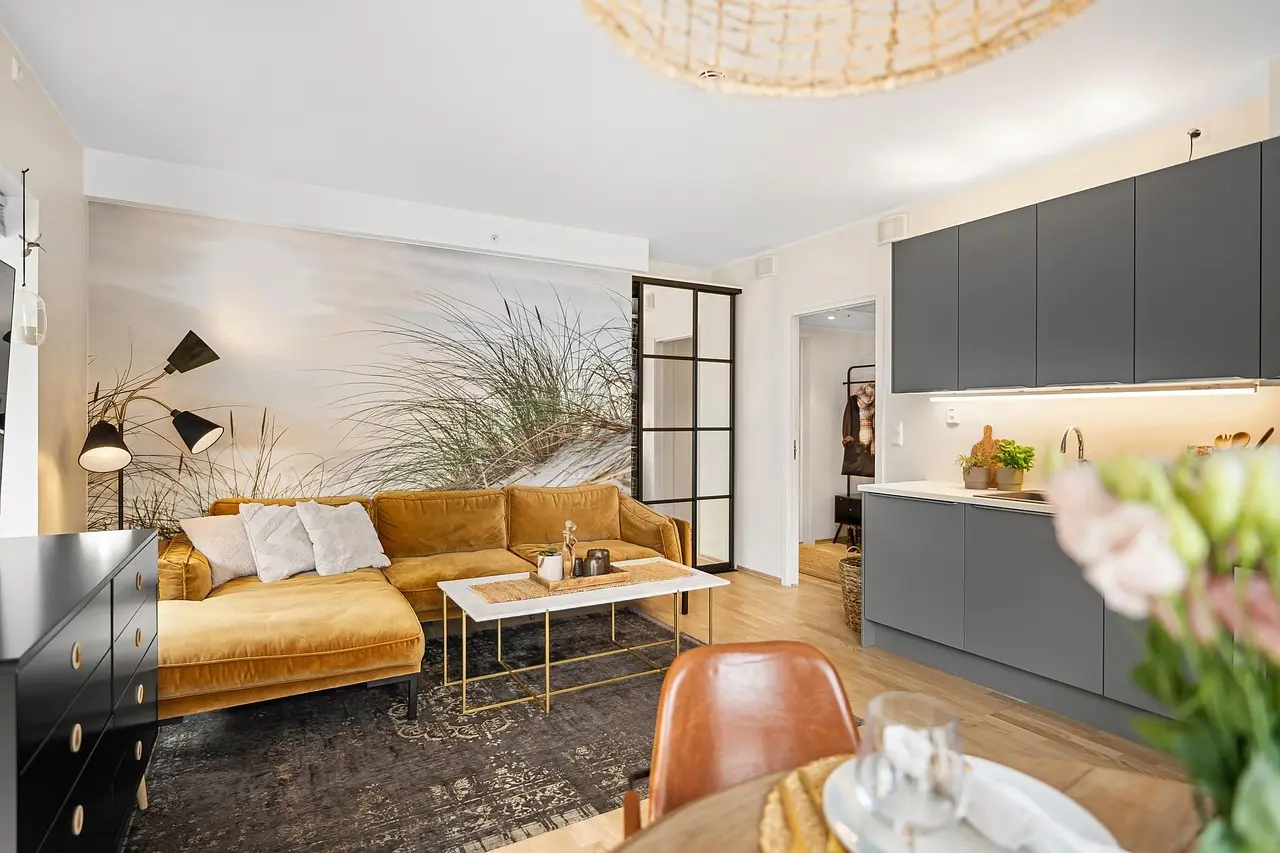
A fair cabinet painting price depends on size, front count, condition, and finish method. For a small kitchen, the total may stay near the lower end if the boxes are sound and the finish is sprayed or hand-applied with minimal repair. Medium and large kitchens rise quickly once prep, masking, and hardware work increase. If you are collecting bids, ask each contractor to price the same scope so you can compare actual value, not just a headline number.
Small kitchen estimate
A small kitchen usually lands closer to the low end of the professional range, especially if the cabinet faces are simple and there is little repair work. Brackens Painting’s size guide places a small kitchen at 70 to 100 square feet, which often means fewer doors, less masking, and a lower total than a larger room. Local quotes can still move higher if the doors are heavily profiled or the finish is failing.
Medium kitchen estimate
A medium kitchen often sits near the center of the typical range because it has enough fronts to raise labor but not enough to require a full-scope rebuild. If the old finish is stable and the hardware is straightforward, the quote should mostly reflect prep, coating, and reassembly rather than correction work. This is the range where most homeowners see the clearest difference between a bare-bones bid and a well-documented pro bid.
Large kitchen estimate
A large kitchen usually costs more because every added door and drawer front multiplies prep and finish time. More square footage also means more masking and a greater chance of repair surprises. If the layout includes an island, pantry wall, and appliance panels, the quote should reflect that added labor clearly. National guides from Angi, HomeAdvisor, and Fixr all show larger kitchens trending toward the upper end of the range or beyond.
- Count every door and drawer front.
- Check whether grease, peeling, or water damage is present.
- Ask whether the quote includes sanding, priming, masking, and hardware removal.
- Confirm the finish system and whether it will be sprayed or hand-applied.
- Compare repainting, refacing, and replacement based on cabinet condition, not only price.
Suppose a 14-door kitchen has clean maple cabinets, no peeling, and standard hardware. That project should quote lower than a similar kitchen with old laminate boxes, because the prep is simpler and the adhesion risk is lower. The same comparison is true in most markets: better substrate condition almost always reduces labor.
A common first-timer mistake is to assume every quote includes sanding, priming, and a durable topcoat when comparing cabinet repainting costs. A low bid that skips proper primer or masking can look fine on day one, then chip near knobs, peel at edges, or show bleed-through where grease or stain was not fully sealed. Manufacturer system guidance from Sherwin-Williams and Benjamin Moore is consistent on this point: the coating system matters, not just the color.
Frequently asked questions
How much does cabinet painting cost?
Per-linear-foot pricing often lands around $30 to $70, while per-door and per-drawer-front pricing can shift the final total upward fast. Angi, HomeAdvisor, and Fixr all show similar national pricing bands.
How much should cabinet painting cost?
A fair cabinet painting quote should match the number of fronts, the amount of prep, and the finish system being used. If the price seems too low, check whether sanding, priming, masking, repairs, and hardware reinstall are included. Those items usually explain most of the spread between quotes. A quote that excludes them is not truly comparable.
What is the cost of repainting kitchen cabinets?
Kitchen cabinet repainting usually costs $3,000 to $8,000 for an average project, though smaller jobs can fall below that and complex projects can go higher. Condition matters as much as size. Heavy grease, peeling finish, or complicated hinges often push the estimate above a simple repaint. That is why contractors often ask for photos before pricing.
How much does cabinet refinishing cost?
Cabinet refinishing cost depends on whether the work is a strip-and-restain job on compatible wood. Labor is a large part of the price because stripping and restaining take time. This is a local contractor example, so use it as a geography-specific reference rather than a nationwide rule.
How much does cabinet refacing cost compared to replacing?
It is usually less than full replacement because the boxes stay in place. Replacement costs more when the structure, layout, or storage plan needs to change. That comparison is echoed across HomeAdvisor, Fixr, and broader remodeling cost references.
How much does cabinet refacing cost for a small kitchen?
A small kitchen generally falls toward the lower end of refacing estimates because fewer doors and shorter runs mean less material and labor. The exact total depends on the number of fronts, the face materials chosen, and whether the boxes need repairs before the new veneer or laminate goes on. A local quote is still the best way to confirm the final number.
Products related to this article
Sponsored / affiliate links. As an Amazon Associate I earn from qualifying purchases. I may earn additional commission from eligible campaigns.