Cabinet Refacing vs Cabinet Repainting: Which Fits?
Choose cabinet refacing when the boxes are sound but doors, drawer fronts, or style need a major reset; choose repainting or refinishing when the finish is salvageable and you can live with some upkeep; replace cabinets when moisture, warping, or a bad layout make repair a poor bet. Bad choices can mean peeling paint, visible wear, or paying twice. This guide compares refacing, repainting, refinishing, and replacement by cabinet condition, budget horizon, and failure risk.
This guide is part of our Kitchen cabinets: styles, materials and installation series.
| Decision factor | Cabinet Refacing | Cabinet Repainting | Winner |
|---|---|---|---|
| Cabinet box condition | Requires sound boxes; new doors and visible surfaces go over the old structure. | Requires sound boxes; paint only performs well on stable, clean surfaces. | Tie |
| Style change | Major change. New doors, drawer fronts, and often veneer or laminate alter the look. | Minor-to-moderate change. The door profile stays the same. | Cabinet Refacing |
| Upfront cost | About $4,000–$9,000 for average kitchen sizes. | About $1,000–$3,500 in one comparison. | Cabinet Repainting |
| Durability | Often described as lasting 15-20 years with proper care. | Often described as lasting 3-5 years in normal use. | Cabinet Refacing |
| Timeline and disruption | Typically 3-5 business days; layout stays the same. | Usually faster, but prep and cure time still affect access. | Cabinet Repainting |
| Failure risk in worn cabinets | Bad fit for swollen, delaminated, or weak boxes. | Also a poor choice if the substrate is failing or joints are weak. | Tie |
Cabinet refacing vs cabinet repainting: the core trade-off


Cabinet refacing changes the visible parts of the cabinets while keeping the boxes and layout in place. Cabinet repainting keeps the same doors and frames, then uses cleaning, sanding, primer, and cabinet-grade paint to refresh the finish. The better choice depends less on price alone and more on box condition, the size of the style change you want, and how long the result must hold up.
What changes with refacing
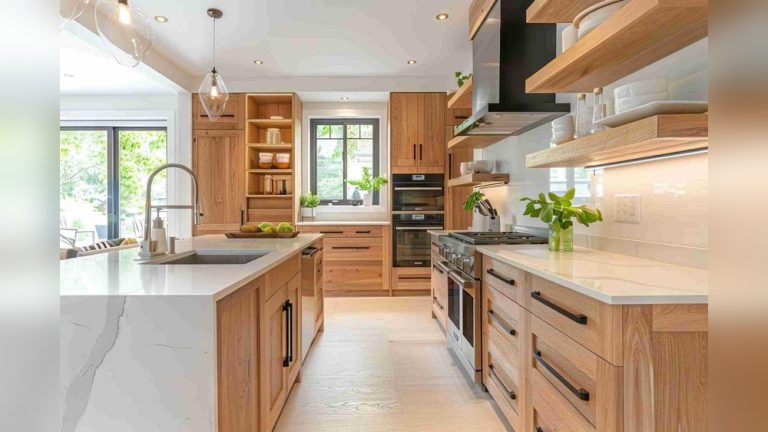
Refacing replaces doors, drawer fronts, and the visible cabinet surfaces, usually with new facing materials or new doors. It keeps the existing layout and does not call for plumbing or electrical changes, which makes it a fit when the kitchen works but the face of it feels dated.
What changes with repainting
Repainting keeps the current doors and drawer fronts, so the existing door profile stays the same. The process depends on solid prep, a primer that bonds well, and multiple coats of cabinet-grade paint. It is the lower-cost route, but it usually needs touch-ups sooner than refacing.
Where refinishing fits in
Refinishing sits between paint and refacing. It strips or updates the existing finish, may use stain or paint, and works for wood cabinets, engineered wood, and MDF when the structure is still good. It is more of a cosmetic reset than a structural change.
📊 Cabinet refacing can use premium materials such as 3D laminate and wood veneer. Source: Cabinet Refacing vs. Refinishing: A Complete Comparison Guide.
How to inspect cabinet boxes before you choose
Cabinet boxes must be structurally sound for refacing or painting. If the boxes swell, separate, or lose their shape, any new finish or new door set is likely to fail early. A quick inspection should focus on moisture damage, joint strength, and whether the cabinet carcasses can still carry weight without movement.
Signs the boxes are sound
Open each door and look at the inside corners, the sink base, and the underside near plumbing. Solid boxes feel rigid, sit square, and hold hinges without sagging. Minor cosmetic wear is fine; stable construction is what matters.
Red flags that point to replacement
Swollen MDF, delamination, soft spots, warped sides, and failing box joints are warning signs. Water damage near the sink, crumbling edge banding, or screw holes that no longer hold hardware also point away from refacing and repainting. When the box is failing, a new finish only hides a deeper problem.
Why door and drawer condition matters
Doors and drawer fronts carry most of the visual load in both methods. If they are cracked, badly warped, or badly out of square, repainting may not correct the look, and refacing may still leave weak geometry behind. In that case, replacement can be the cleaner fix.
Cabinet refacing vs cabinet painting: side-by-side comparison
Refacing wins when you want a bigger visual reset and a longer service life. Painting wins when the boxes and doors are still usable and you need the lowest upfront spend. Both preserve the layout, but they differ in how much material they replace, how much prep they require, and how long they typically stay presentable in a busy kitchen.
Upfront cost and hidden costs
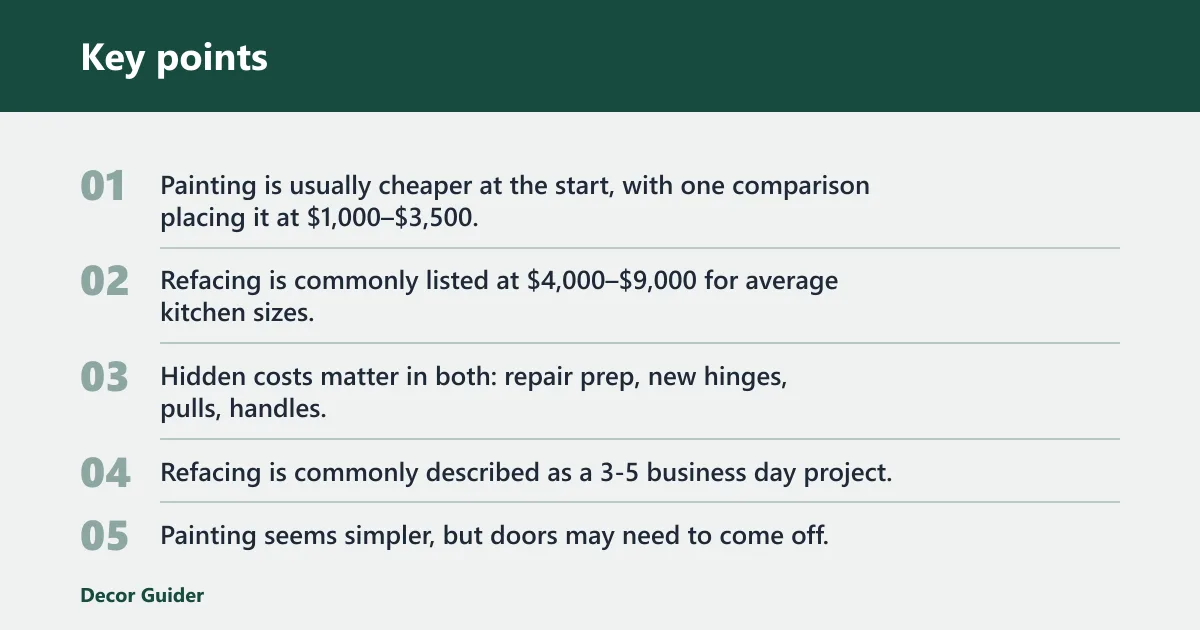
Painting is usually cheaper at the start, with one comparison placing it at $1,000–$3,500. Refacing is commonly listed at $4,000–$9,000 for average kitchen sizes. Hidden costs matter in both: repair prep, new hinges, pulls, handles, and extra time for cure or downtime can shift the real total.
Timeline and household disruption
Refacing is commonly described as a 3-5 business day project, while painting can stretch based on prep and drying. Painting seems simpler, but doors may need to come off, surfaces need cleaning and sanding, and each coat needs time to cure. If you need cabinets back in use fast, timing can matter as much as price.
Durability, wear, and touch-ups
Refacing is often described as lasting 15-20 years with proper care. Painting is often described as lasting 3-5 years in normal use. In a high-traffic kitchen, paint tends to show wear sooner at corners, handles, and sink edges, while refacing resists that kind of surface wear better.
Style change and finish options
Refacing can use premium materials such as 3D laminate and wood veneer, which changes the look more fully. Painting keeps the same door style, so it updates color more than profile. If you want shaker to stay shaker, paint works; if you want the fronts to feel new, refacing goes farther.
Cabinet refacing vs cabinet refinishing: when refinishing makes sense
Refinishing makes sense when the cabinet structure is good and the existing finish can be stripped or updated without replacing the doors. It is a narrower option than refacing and a more material-focused option than paint. For wood, engineered wood, and MDF cabinets, it can extend life without changing the layout or front profile much.
Best cabinet materials for refinishing
Refinishing is most practical on cabinets that still accept a new finish cleanly. Wood often gives the most flexibility, but engineered wood and MDF can also work when the base material is stable and not swollen. If the surface is lifting or damaged through the top layer, the method loses value fast.
When stain works better than paint
Stain works better when the goal is to keep a wood look rather than cover it. If the grain is appealing and the wood is in good shape, refinishing can preserve that look while refreshing color. Paint is the better path when the surface has mixed materials, visible repairs, or a finish that will not take stain evenly.
When refinishing is too limited
Refinishing does not change door style or cabinet layout. It will not fix weak boxes, warped parts, or a workflow problem. If the cabinets need a new profile or the existing finish is too damaged to strip cleanly, refacing or replacement is the better choice.
Does cabinet refacing last longer than painting?
Yes. Refacing usually lasts longer than painting because it replaces the most worn visible parts instead of coating over them. Veneer, laminate, and new doors give you a new wear layer, while painted cabinets still depend on the old substrate, careful prep, and cure time for long-term adhesion.
How veneer, laminate, and new doors affect lifespan
Premium materials such as 3D laminate and wood veneer hold up better than a simple topcoat in kitchens with frequent use. New doors and drawer fronts also remove many of the scuffs, chips, and failures that start at the handles and edges. That is why refacing often stays attractive longer.
How prep and cure time affect painted finishes
Paint needs cleaning, sanding, primer, and multiple coats to bond well. Even then, cure time affects durability, so cabinets can look finished before the finish has fully hardened. If the kitchen sees heavy use, that curing window is one of the weak points.
What high-use kitchens need most
Busy kitchens need a finish that resists impact, frequent wiping, and repeated opening and closing. If cabinets around a sink, trash pullout, or prep zone already show wear, refacing or replacement is usually safer than another paint cycle. Paint can still work, but the margin for error is smaller.
Choose refacing if the boxes are sound; choose repainting if you need the lowest upfront cost
Choose cabinet refacing if the boxes are sound and you want a longer-lasting visual reset without changing the layout. Choose cabinet repainting if the cabinets are stable, the style is acceptable, and the main goal is to spend less now. Choose replacement when the boxes are damaged, the layout fails the room, or you need major workflow changes.
Choose cabinet refacing if…
Choose refacing if the cabinet boxes are square and solid, the layout works, and you want new doors, drawer fronts, and a more finished look. It is a good fit when you need better hardware alignment or a stronger resale presentation and can accept a midrange project cost and a few days of disruption.
Choose cabinet repainting if…
Choose repainting if the boxes and doors are in good shape, you are fine keeping the same door profile, and you want the lowest upfront cost. It is also the better short-term option when you need a visual refresh before a move, sale, or lease renewal and can live with more maintenance later.
Choose cabinet replacement if…
Choose replacement if you find swelling, delamination, weak joints, or a layout that blocks daily use. It is also the right path if plumbing, electrical, or storage needs require changes that refacing and repainting cannot solve. Spending on a new finish makes little sense when the structure is already failing.
Decision matrix: choose paint, refacing, refinishing, or replacement
Use this matrix to turn cabinet condition into a practical choice. Score each category, then match the result to the method that fits the most boxes. This is faster than comparing prices alone, because a cheap finish is a bad value if the cabinets are already near failure.
| Factor | Low score: points to painting | Mid score: points to refinishing or refacing | High score: points to replacement |
|---|---|---|---|
| Cabinet box condition | Boxes are rigid, dry, and square. | Boxes are sound, but doors or finish are outdated. | Swelling, delamination, weak joints, or water damage. |
| Door style and visible wear | Door profile is fine; only color feels dated. | Fronts are dated but still function; new fronts would help. | Doors are warped, broken, or badly out of square. |
| Usage intensity | Low use, light cooking, careful household traffic. | Moderate use with some wear at handles and edges. | Heavy daily use with repeated chips, scrapes, or moisture exposure. |
| Budget horizon | You need the lowest upfront spend and a short-term refresh. | You want a longer service life and can pay more now. | You plan to stay long term and need a structural fix. |
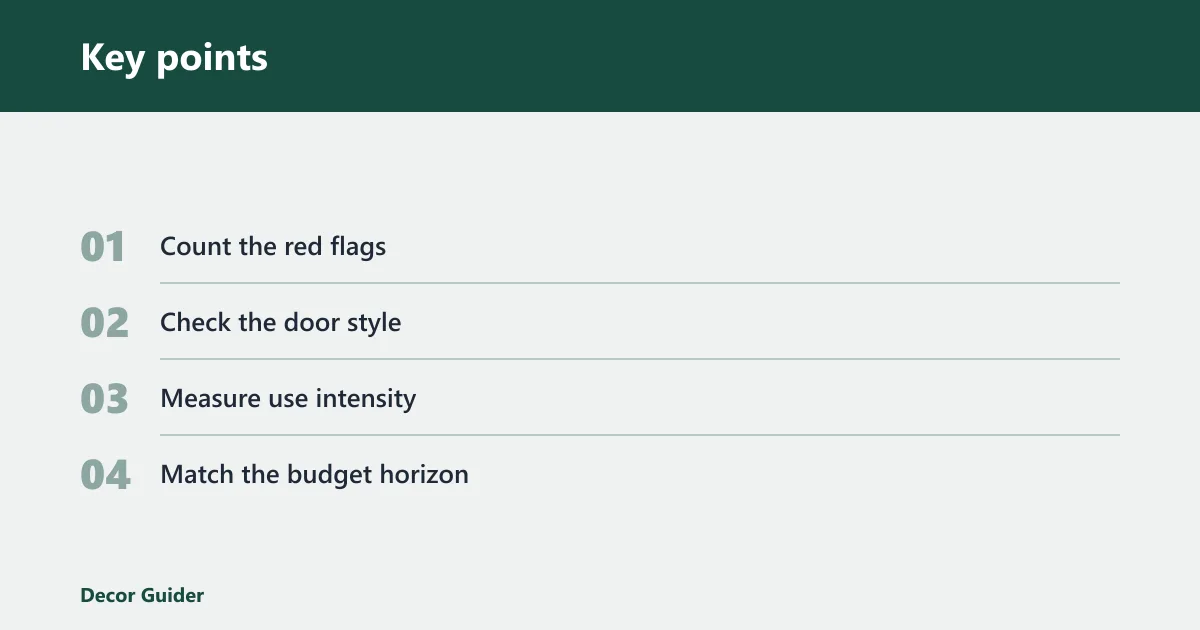
- Count the red flags. If you see swelling, delamination, or weak joints, move straight toward replacement.
- Check the door style. If the boxes are good but the fronts look tired, refacing is often the cleaner fix.
- Measure use intensity. A low-use kitchen can tolerate paint better than a busy family kitchen.
- Match the budget horizon. Short hold periods favor paint; longer holds favor refacing or replacement.
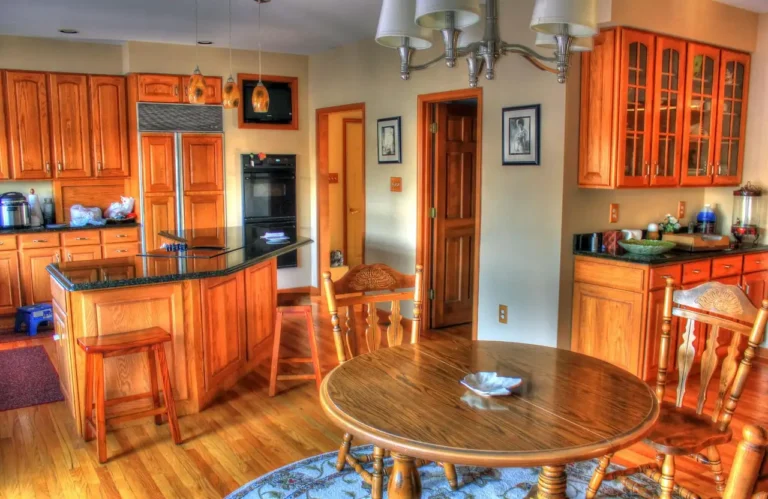
Say your 12-foot galley kitchen has solid plywood boxes, but the oak raised-panel doors feel dated and the hinges sag a little. Refacing with new fronts and updated hardware is the stronger value than paint, because the structure can support a longer-lived visual reset.
Suppose a small rental kitchen has flat doors with minor scratches, no water damage, and a move-out planned in two years. Paint may be enough, because the goal is a clean, presentable finish without paying for new fronts that the next owner may change anyway.
Is cabinet refacing a good idea for selling, flipping, or renting?
Yes, if the cabinet boxes are sound and the goal is to improve appearance without changing the layout. For a short hold period, paint may be enough; for stronger resale presentation, refacing may be a better choice; for damaged boxes or a bad layout, replacement may be the most practical fix. Match the method to the time you have left.
Homeowners selling within 1-3 years
For a planned sale, focus on visible condition and buyer perception. If the cabinets are stable, refacing can help a dated kitchen read as updated without the cost of a full remodel. If the sale is very near and the fronts are still decent, paint may be the cleaner budget move.
Flippers
Flippers need a method that balances speed, finish quality, and cost control. Paint works when boxes and doors are in good shape and the market does not demand a full kitchen reset. Refacing makes sense when the kitchen looks tired enough that a plain repaint will not carry the listing photos.
Renters and landlords
Renters usually need reversible or low-commitment fixes, so painting or simple refinishing is more realistic than refacing. Landlords should choose the option that cuts downtime and future maintenance risk. If cabinets are failing, replacement may save repeated repair calls.
Busy families
Busy families put more stress on edges, hinges, and touch surfaces. That makes refacing more appealing than paint when the budget allows, because the front faces and hardware can be updated together. If the cabinets are already compromised, replacement is safer than trying to stretch a weak system.
Frequently asked questions
cabinet refacing vs cabinet painting
Cabinet refacing replaces doors, drawer fronts, and visible surfaces while keeping the boxes and layout. Cabinet painting keeps the same doors and frames and adds primer and cabinet-grade paint. Refacing costs more and usually lasts longer; painting costs less and works best when the structure is already in good shape.
cabinet refacing vs cabinet refinishing
Cabinet refinishing updates the existing finish, often with stain or paint, and is best when the cabinets still have solid structure. Refacing replaces the visible front parts and can change the look more fully. If the boxes are sound but the finish is tired, refinishing may be enough; if the fronts are dated, refacing goes farther.
cabinet refacing vs painting
Refacing is the better choice when you want a deeper style change and longer service life. Painting is the better choice when the cabinet boxes are stable and your main goal is to spend less now. Both keep the layout, so neither fixes a bad room plan or damaged structure.
cabinet refacing vs refinishing
Refinishing is narrower and more finish-focused. It works for wood cabinets, engineered wood, and MDF when the cabinet body is still good, while refacing replaces the visible faces and gives a bigger visual shift. Choose refinishing for a sound cabinet with a salvageable finish; choose refacing when the style needs more than a color change.
cabinet refacing vs new cabinets
New cabinets are the right choice when the box structure is failing, the layout needs to change, or the room has plumbing or electrical constraints that call for a new plan. Refacing keeps the existing layout and uses the old boxes, so it is a renovation choice, not a structural reset. Full replacement is listed at $12,000–$35,000.
is it cheaper to paint cabinets or reface them
Painting is cheaper upfront. One comparison places painting at $1,000–$3,500, while refacing is listed at $4,000–$9,000 for average kitchen sizes. The lower price is not the full story, though: if the cabinets need a longer-lived update, refacing can be the better value over time.
does cabinet refacing last
Yes, cabinet refacing can last 15-20 years with proper care. Its lifespan depends on the condition of the boxes, the quality of the veneer or laminate, and how hard the kitchen gets used. If the structure is weak before the project starts, the finish life shortens too.
is cabinet refacing a good idea
Cabinet refacing is a good idea when the boxes are sound, the layout still works, and you want a stronger visual reset than paint can give. It is less suitable when the cabinets are swollen, delaminated, or poorly built, because no new face layer can fix a failing structure.
Products related to this article
Sponsored / affiliate links. As an Amazon Associate I earn from qualifying purchases. I may earn additional commission from eligible campaigns.