Shaker Cabinets vs Raised Panel Cabinets: How to Choose
Choose Shaker cabinets if your kitchen is small, bright, budget-conscious, or you want easier cleaning; choose raised panel cabinets if you want a more formal look and have the light, space, and upkeep tolerance for deeper profiles. Picking the wrong door style can make a room feel darker, cost more to maintain, and hurt resale fit. This guide compares room size, light, budget, cleaning habits, and resale goals, then gives a decision matrix for choosing between them.
Shaker cabinets vs raised panel cabinets: the real trade-off
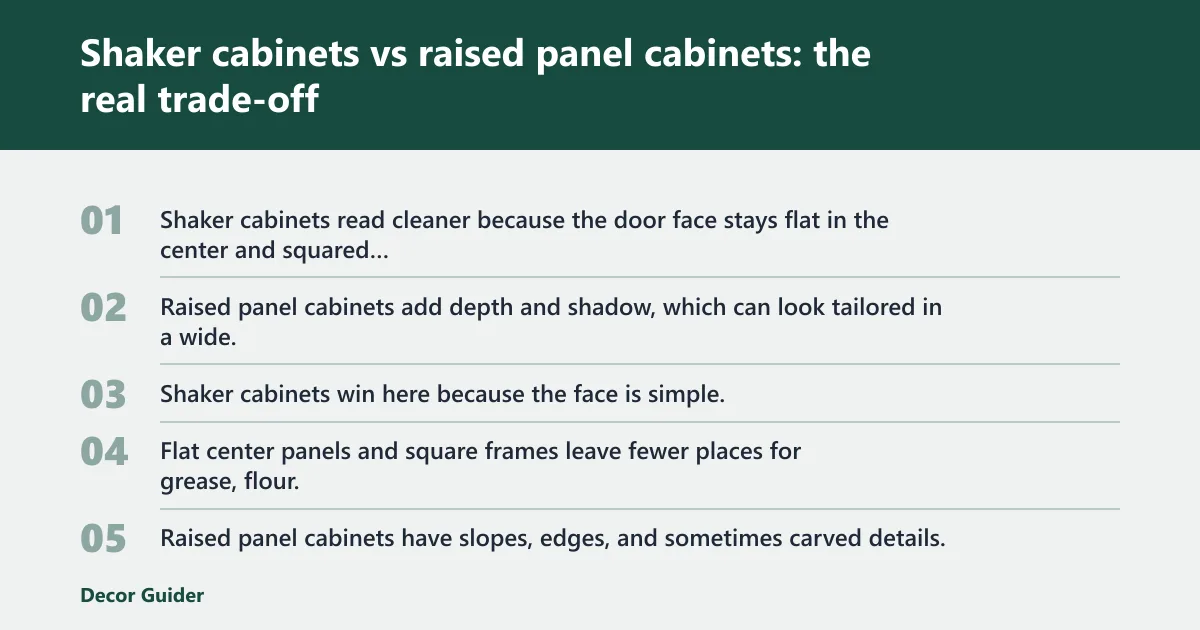
Shaker cabinets read cleaner because the door face stays flat in the center and squared off at the frame. Raised panel cabinets add depth and shadow, which can look tailored in a wide, well-lit kitchen but feel heavier in a tight or dim one.
| Decision factor | Shaker Cabinets | Raised Panel Cabinets | Winner |
|---|---|---|---|
| Cleanup time | Fewer grooves, faster wipe-down | Profiles and curves take more detail cleaning | Shaker Cabinets |
| Visual weight | Lighter, flatter, less busy | Deeper shadow lines, more formal and heavier | Shaker Cabinets |
| Budget | Usually 15-25% less than raised panel cabinets | Usually higher due to more shaping and detailing | Shaker Cabinets |
| Historic fit | Works, but reads simpler and more restrained | Matches traditional spaces and older-style details more easily | Raised Panel Cabinets |
| Resale appeal | Broad appeal, especially in modern and transitional homes | Strong in traditional homes, but narrower buyer fit | Shaker Cabinets |
Cleanup time
Shaker cabinets win here because the face is simple. Flat center panels and square frames leave fewer places for grease, flour, and dust to collect.
Raised panel cabinets have slopes, edges, and sometimes carved details, so they need a cloth plus a soft brush for corners and profiles. In a busy kitchen, that difference adds up fast.
Visual weight
Shaker doors usually feel lighter in the room. That matters in small kitchens, low ceilings, and spaces with limited daylight.
Raised panel doors add shadow and depth. In a large, bright kitchen, that can feel refined; in a compact one, it can feel busy or heavy.
Budget
Shaker cabinets are usually the lower-cost choice. The shape is simpler, and cabinet quotes usually reflect that simpler build.
Raised panel cabinets tend to cost more because the center and edge treatment take more work. That gap matters most when the budget is tight and the cabinet run is long.
Historic fit
Raised panel doors fit traditional homes more naturally, especially when the kitchen already has ornate trim, antique-style hardware, or formal millwork. The added depth sits well beside those details.
Shaker cabinets have historical roots too, created by the Shaker religious group in the 1700s, but they read more restrained today. They fit older homes best when the rest of the room is kept simple.
Resale appeal
Shaker cabinets usually have broader buyer appeal because they sit comfortably between modern and traditional. That is why they often work in a wider range of listing photos and buyer expectations.
Raised panel cabinets can help in a traditional home where buyers expect a more formal kitchen. In the wrong house style, though, they can narrow the audience.
📊 Shaker cabinet doors have a simple 5-piece design. Source: Shaker Cabinets Vs Raised Panel Cabinets: Totally Comparasion.
What are shaker cabinet doors?
Shaker cabinet doors are a simple 5-piece design with a square frame, a flat center panel, and no carvings or curves. The style dates to the 1700s, and the clean geometry is why it still works in modern, farmhouse, and transitional kitchens.
Why the square frame feels simpler
The frame lines are straight, so the eye reads the cabinet face quickly. That makes the wall of cabinets feel calmer, especially when the room already has patterned tile, strong veining, or busy appliances.
Where shaker fits best
Shaker works well with frameless cabinets when a modern look is the goal, and it also fits framed cabinets without looking fussy. It is the safer choice when the room needs to feel open, clean, and easy to maintain.
What are raised panel cabinet doors?
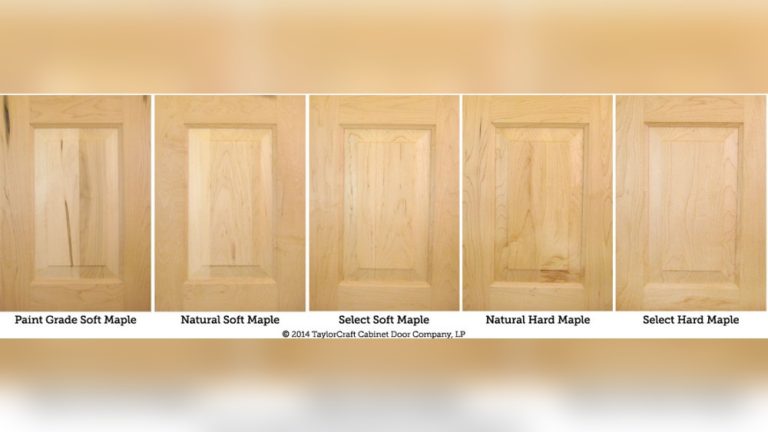
Raised panel cabinet doors are also 5-piece doors, but the center panel pushes outward and the edges slope up like a picture frame. Many versions also include carved details, which gives the door a more traditional or formal appearance.
How the profile changes the look
The outward center panel creates more depth and shadow. That extra dimension is useful when the kitchen has tall ceilings, generous light, or other classic details that can support a more decorative door face.
When raised panel suits best
Raised panel cabinets pair naturally with framed cabinet construction, which already leans traditional. They also show wood grain well in stain, so the door can become a stronger visual feature instead of disappearing into the background.
Are shaker cabinets easier to clean than raised panel cabinets?
Yes. Shaker cabinets are usually easier to clean because the surface is flatter and has fewer grooves to trap dust or grease. Raised panel cabinets need more attention around curves, edges, and carved spots where buildup settles.
How to clean each style well
Use a soft cloth for daily wipe-downs on shaker doors, and a soft brush for the recessed edges on raised panel doors. On either style, a mild cleaner and quick drying matter more than aggressive scrubbing.
Which looks better in your kitchen size and light?
Room size, ceiling height, and natural light change the answer more than most people expect. Shaker cabinets usually suit smaller kitchens or dim rooms because they look lighter, while raised panel cabinets can feel too heavy unless the room has enough space and daylight.
When shaker can feel too plain
In a large kitchen with very little trim, flat shaker doors can look underdressed. That is especially true if the finish is flat and the hardware is minimal, because the cabinet front may disappear too much.
When raised panel can feel too busy
In a compact kitchen with low ceilings, raised panel cabinets can stack up visual detail fast. The result is a room that feels tighter than it is, especially when the door profile competes with backsplash tile or countertop movement.
Materials and finishes that change the result
Material choice often matters as much as the door profile. Solid wood, plywood, MDF, and particleboard all behave differently with humidity, impact, and paint adhesion, so the same cabinet style can age very differently depending on what it is built from.
Material basics
Solid wood brings the best repairability and strong long-term feel, but it moves with humidity more than manmade sheet goods. Plywood is a strong middle ground for cabinet boxes and can support both styles well.
MDF can be a smart painted-door choice because it stays stable and takes paint smoothly, but it should be protected from water exposure. Particleboard is the weakest option for moisture resistance and edge durability, so it is the first material to avoid in sinks, dishwashers, or damp climates.
Finish choices
Paint suits shaker especially well because the plain geometry reads clean. It also hides less grain movement than stain, which keeps the door looking calm.
Stain often suits raised panel cabinets better because the carved or sloped center shows wood grain more clearly. Veneer works when a stable core needs a wood look, while laminate and thermofoil fit practical, lower-maintenance kitchens if the edges are protected from heat and moisture.
Which is cheaper and which has better resale value?
Shaker cabinets are often cheaper, and the article’s cost estimate here seems to assume they may come in roughly a little less than raised panel cabinets. That gap comes from simpler shaping and less detailed door work, not from a universal material difference.
Why the price gap exists
Labor and milling drive the difference more than the basic cabinet box. A raised panel door asks for more shaping, and that usually shows up in the final price even before finish upgrades are added.
Resale logic by home type
Shaker cabinets tend to have broader buyer appeal because they fit many homes without feeling trendy. Raised panel can still help resale in a traditional home, where buyers often expect a more formal kitchen and may pay closer attention to style match.
Decision matrix: shaker vs raised panel by homeowner type

Use this scorecard as a practical filter, not as a style contest. Higher numbers mean a better fit for that factor, with 5 being the strongest fit.
| Homeowner scenario | Cleanup time | Visual weight | Budget | Historic fit | Resale appeal | Recommended choice |
|---|---|---|---|---|---|---|
| Busy family kitchen | Shaker 5 / Raised 2 | Shaker 4 / Raised 2 | Shaker 4 / Raised 3 | Shaker 3 / Raised 3 | Shaker 4 / Raised 3 | Shaker Cabinets |
| House flip | Shaker 5 / Raised 2 | Shaker 4 / Raised 3 | Shaker 5 / Raised 3 | Shaker 3 / Raised 2 | Shaker 5 / Raised 3 | Shaker Cabinets |
| Historic home | Shaker 4 / Raised 3 | Shaker 3 / Raised 4 | Shaker 3 / Raised 3 | Shaker 3 / Raised 5 | Shaker 3 / Raised 4 | Raised Panel Cabinets |
| Budget remodel | Shaker 5 / Raised 2 | Shaker 4 / Raised 3 | Shaker 5 / Raised 2 | Shaker 3 / Raised 3 | Shaker 4 / Raised 3 | Shaker Cabinets |
How to read the matrix
Families and flippers usually gain more from shaker cabinets because cleanup and broad appeal matter more than ornament. Historic homes often benefit from raised panel because the door language matches older trim, heavier millwork, and traditional hardware.
Budget remodels almost always favor shaker because the lower door cost leaves room for better hinges, drawers, or a stronger countertop. That trade is practical, not purely aesthetic.
Choose Shaker Cabinets if… / Choose Raised Panel Cabinets if…
Choose shaker cabinets if your kitchen is small, has limited daylight, needs easier daily cleaning, or has a tight budget. Choose raised panel cabinets if the kitchen is large, bright, and built around traditional details that can support more depth and ornament.
Choose Shaker Cabinets if…
- You want a cleaner, simpler cabinet face.
- You expect frequent wipe-downs from cooking, kids, or pets.
- Your kitchen has low ceilings, narrow aisles, or weak natural light.
- You want a lower-cost door with broader resale fit in modern and transitional homes.
Choose Raised Panel Cabinets if…
- You want a more formal or traditional kitchen.
- Your room has enough light to support deeper profiles.
- You like stained wood grain and carved or sloped detailing.
- Your home already has classic trim, chandeliers, or antique-style hardware.
Frequently asked questions
What is the difference between shaker cabinets and raised panel cabinets?
Shaker cabinets have a simple 5-piece design with a square frame and flat center panel. Raised panel cabinets also have 5 pieces, but the center panel pushes outward and the edges slope up, which gives the door more depth and a more traditional look.
Are shaker cabinets easier to clean than raised panel cabinets?
Yes. In many cases, Shaker cabinets are easier to clean because their faces are flatter and have fewer grooves. Raised panel cabinets can collect more dust and grease in curves, slopes, and carved details, so they may need a bit more careful wiping with a cloth or soft brush.
Which cabinet style is cheaper, shaker or raised panel?
Shaker cabinets are usually cheaper. A common pricing assumption puts them at 15-25% less than raised panel cabinets, mainly because the door shape is simpler and takes less shaping. Final cost still depends on material, finish, and cabinet maker.
Do shaker cabinets look more modern than raised panel cabinets?
Usually, yes. Shaker cabinets read cleaner and more modern because the profile is simpler and more squared off. Raised panel cabinets read more traditional or formal because the center panel has more depth and often includes carved or sloped edges.
Which style has better resale value?
Shaker cabinets usually have broader resale appeal because they fit many kitchen styles and do not lock the room into one era. Raised panel cabinets can still support resale in traditional homes, but they are more style-specific and may suit fewer buyers.
How do I decide between shaker and raised panel cabinets?
Start with the room, not the catalog photo. If the kitchen is small, dim, busy, or heavily used, shaker usually fits better. If the space is larger, more formal, and tied to older architectural details, raised panel often feels more natural and more appropriate.
Products related to this article
Sponsored / affiliate links. As an Amazon Associate I earn from qualifying purchases. I may earn additional commission from eligible campaigns.