Kitchen Cabinet Drawer Problems
Start by identifying the symptom: sticky drawers usually need cleaning or alignment, sagging or crooked drawers often need screw tightening or a broken slide check, and replacement should be your last step. Ignore it, and you can strip screws, crack the cabinet box, or jam the drawer shut. This guide breaks down kitchen cabinet drawer problems by failure mode, hardware type, and the repair point where replacement makes more sense than repair.
What you’ll need


- Phillips and flathead screwdrivers
- Drill/driver with assorted bits
- Measuring tape
- Square or straightedge
- Wood glue and wood putty
- Replacement screws in more than one length
- Ammonia-based cleaner for metal tracks
- Wax or silicone lubricant for wood tracks
- Light lubricant made for slide hardware
- Replacement drawer slide set that matches the drawer depth and clearance
- Soft cloths and a vacuum with a narrow nozzle
- Magnetic latch or spring latch, if doors pop open
- Drawer mat or liner
How do you fix a sticky kitchen drawer?
Start with the slide type, then clean the moving surfaces before you replace anything. Metal slides usually need cleaning and light lubrication; wood tracks usually need a light sanding and a wax or silicone finish. If the drawer still binds after that, the hardware may be worn or bent.
Check the slide type first
Look under and beside the drawer box. Side-mount slides are commonly mounted on the cabinet walls, bottom-mount slides run under the drawer, and center-style guides use one track under the center of the drawer. Drawer tracks are one of the first cabinet parts to break and are often the trickiest to repair.
Clean and lubricate the right surface
Vacuum out dust and debris, then wipe the contact points. Mechanical drawer tracks should be cleaned with ammonia and lightly lubricated. Sticky wood tracks should be lightly sanded, then lubricated with wax or silicone. Uneven wear can leave sawdust, which signals drawer track problems.
Decide when wear means replacement
If the slide has a bend, cracked housing, missing bearings, or a screw hole that will not hold, repair time is over. If a track screw will not hold, a slightly larger screw may create a tighter fit. Use that only when the surrounding material is still sound.
Why is your kitchen drawer crooked?
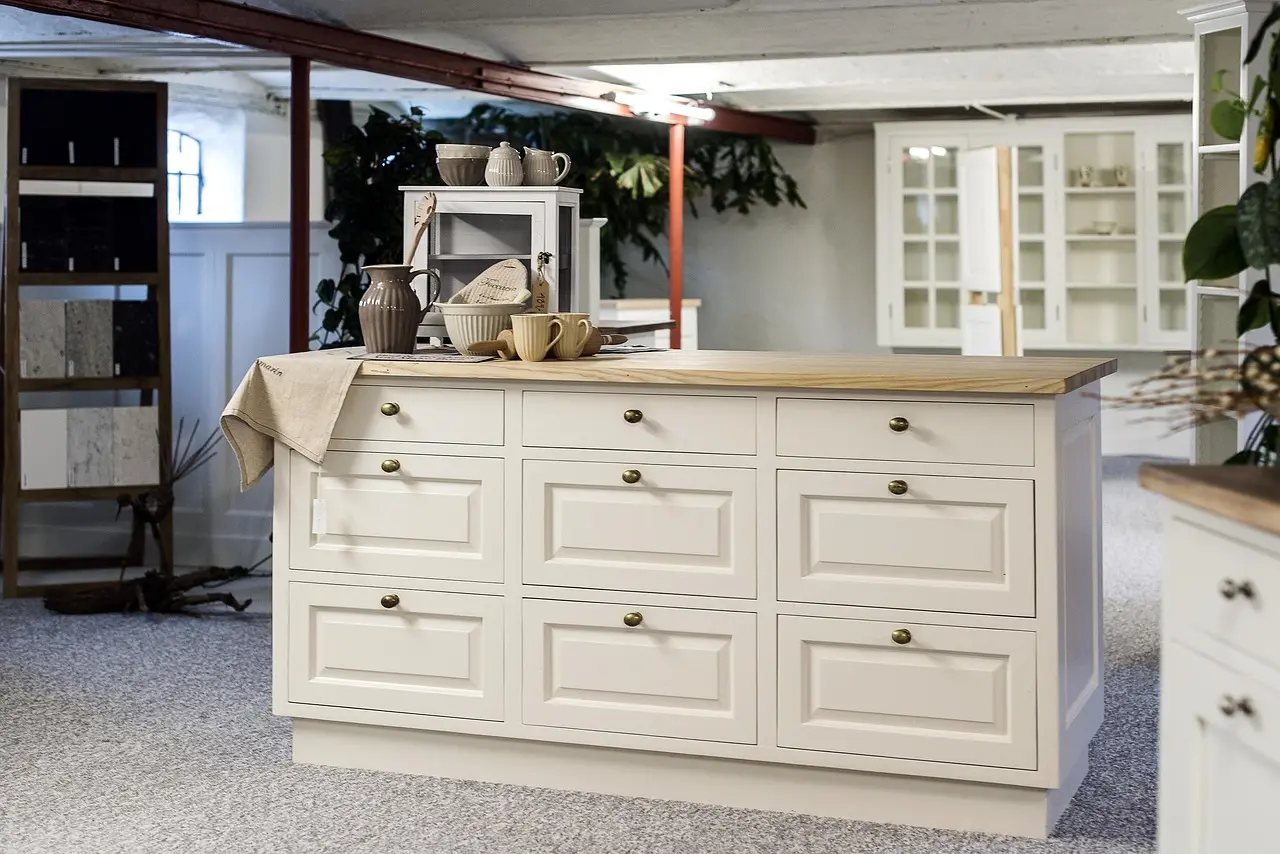
A crooked drawer often points to a bent slide, loose fasteners, or a box or cabinet that is out of square. Do not treat the tilt as proof that the slide failed. Check the whole opening first, because a sagging box or racked cabinet can make a good slide look bad.
Look for a bent slide or loose fasteners
Pull the drawer partway out and compare both sides. If one side runs ahead of the other, tighten every mounting screw on the slide, face frame, and cabinet wall. Use a square to check the cabinet opening; a gap that changes from top to bottom usually means the cabinet is out of square.
Check for a sagging drawer box
Inspect the drawer bottom, corners, and front joint. A sagging box can drag the rear edge downward and create a crooked look even when the slide is fine. If the bottom panel flexes, the drawer may need glue, clamps, or a stronger bottom panel before the slide will line up correctly.
Rule out cabinet racking
Picture a 24-inch drawer that looks low on the left and tight on the right. If both slides are straight but the opening is not, adjust the cabinet mounting or shim the slide until the drawer runs true. If the cabinet face is badly racked, slide replacement alone will not fix the angle.
Why won’t your kitchen drawer close completely?
Incomplete closure usually comes from stop position, interference, or closing hardware. Check the back of the slide first, then look for drawer contents or a liner that blocks travel. If the drawer still pops short of the cabinet face, the stop, latch, or self-closing mechanism may be worn.
Inspect the back of the slide
Pull the drawer out fully and look for a bent rear bracket, missing stop tab, or a slide that is installed too far forward. Full-extension systems should let you see and reach everything without digging around, but only if the slide reaches the correct stop point and both sides match.
Check for interior interference
Remove the drawer contents and test again. A thick liner, warped drawer box, or a tall organizer can block the last inch of travel. Drawer organizers such as cutlery inserts, knife trays, adjustable dividers, and plate holders can help, but only if they fit the drawer depth and height.
Test the latch or self-closing hardware
If the drawer has a closing catch, inspect it for wear or misalignment. Magnetic latches are common and inexpensive for keeping doors closed, and spring latches can serve the same job on some cabinets. If the latch is weak or misaligned, replace it before changing the slide.
Fix the drawer
Use this sequence when the drawer needs a full repair instead of a quick clean. The order matters: remove the drawer safely, correct the hardware, then recheck alignment before you reinstall it under load.
-
Remove the drawer safely.
Open it fully and find the release levers or stop tabs on the slide. Support the weight with both hands, especially on full-extension drawers, because the extended box can drop suddenly once the stops disengage. -
Inspect the hardware path.
Check the slide, screws, and cabinet wall for bends, split wood, or stripped holes. Match the hardware type to the failure: side-mount, bottom-mount, or center-style guide. Do not mix part styles unless the replacement set is made for that cabinet. -
Repair the mounting points.
Fill widened screw holes with wood putty where needed, then let it set before driving new screws. If the old screw will not bite, move up slightly in screw size so the head seats tightly without splitting the wood. -
Replace only the failed part.
Use replacement drawer hardware that matches the drawer depth, side clearance, load rating, and screw size. If the track is bent or broken, replacement is usually the right move; forcing it back into shape can throw the drawer off again. -
Reinstall and test travel.
Slide the drawer back in, close it slowly, and check for even movement from front to back. If it binds, stop and recheck alignment before loading it again. A heavy full-extension drawer should glide without lifting one side.
Kitchen drawer failure decision table
This table separates symptom from root cause so you can choose the right fix first. Start with the fast test, then move to repair or replacement only if the symptom stays after cleaning, tightening, or re-aiming the hardware.
| Problem | Likely cause | Fast test | Parts needed | Replace-vs-repair threshold |
|---|---|---|---|---|
| Sticky drawer | Dirty slide or wood track | Pull the drawer halfway and feel for drag | Cleaner, cloth, lubricant | Repair if cleaning and lubrication restore smooth travel; replace if the track is bent |
| Sawdust in track | Uneven wear on wood or metal contact points | Inspect the bottom and rails for dust buildup | Vacuum, cleaner, lubricant | Repair if wear is light; replace if the groove is deeply worn |
| Drawer sits low on one side | Loose slide screws or sagging box | Check both slide lines with a square | Screws, wood putty, glue | Repair if fasteners or joints are the issue; replace if the slide rail is bent |
| Drawer looks crooked in the opening | Cabinet out of square or slide misaligned | Measure the diagonals of the opening | Shim material, screws | Repair if the cabinet can be realigned; replace only if the slide is damaged |
| Drawer will not close fully | Stop tab, back bracket, or interference | Remove contents and retest closure | Latch, stop, liner trim | Repair if the stop or obstruction is the cause; replace if the closing hardware is broken |
| Drawer pops open | Weak latch or poor catch alignment | Push firmly and watch the catch | Magnetic latch or spring latch | Repair if only the latch is weak; replace if the slide cannot hold position |
| Noisy movement | Dry rollers, debris, or worn bearings | Listen for grinding during a slow pull | Cleaner, lubricant, replacement slide | Repair if noise drops after cleaning; replace if the rollers chatter or skip |
| Loose handle or pull | Widened screw holes | Move the handle by hand and check for wobble | Longer screws, wood putty | Repair if the face material is still solid; replace if the drawer front is split |
| Heavy drawer drops on removal | Full-extension slide released without support | Open fully and check for release tabs | None, unless hardware is damaged | Repair if the slide is sound; replace if the release or stop is broken |
| Drawer box rattle | Loose joints or worn bottom panel | Press the corners and bottom by hand | Glue, clamps, fasteners | Repair if joints are loose; replace the box if the structure is split or warped |
Common mistakes
People often replace slides before checking for dirt, loose screws, or cabinet racking. That wastes time and can hide the real fault. Another common mistake is using the wrong lubricant: dusty or gummy mechanisms can get worse if they are coated too heavily.
Do not force a heavy full-extension drawer back into place without supporting it. Do not ignore screw holes that have widened, because the new screws will loosen again. And do not assume a crooked drawer always means a bad slide; the cabinet may be out of square.
How do you replace a kitchen cabinet drawer?
Measure the drawer depth, side clearance, and screw spacing before buying parts. Match the replacement hardware to the existing cabinet style, then transfer the front and reinstall with the correct screws. If the old track is bent or broken, replacing the whole slide set is usually cleaner than patching it.
How do you fix cabinet drawers that keep opening?
Check whether the door or drawer catch is weak, dirty, or out of line. A magnetic latch or spring latch is a low-cost fix when the closing force is the problem. If the hardware is intact, the cabinet may be leaning or the catch may need a slight adjustment.
How do you fix sliding kitchen cabinet drawers?
Identify the hardware first, then clean and lubricate the correct running surface. Metal slides take ammonia cleaning and light lubrication; wood tracks take light sanding followed by wax or silicone. If travel is still rough after that, inspect for bent rails or failed bearings.
Frequently asked questions
Why is my kitchen drawer crooked?
A crooked drawer usually means one side of the slide is loose, bent, or mounted out of line. If the hardware is straight, check the cabinet opening for square and the drawer box for sag. A crooked look can come from the cabinet, not just the slide.
How do you remove a kitchen cabinet drawer?
Open the drawer fully, release the side levers or lift the stop tabs, and pull straight out while supporting the weight. If the drawer is full-extension and large, keep one hand under the front edge. Set it down flat so the slide does not twist or bend.
How do you repair a cabinet drawer?
Start with the failure mode: sticky, crooked, sagging, or open-until-bounce. Tighten fasteners, clean the track, and repair widened screw holes with wood putty before replacing parts. If the drawer box is split or the slide is bent, replacement is the more reliable path.
How do you fix a kitchen drawer?
Use the symptom to choose the fix instead of treating every drawer issue the same way. Tighten loose screws, clear debris, align the slide, and check the cabinet opening for square. Replace only when the track is bent, the box is damaged, or the hardware no longer holds its setting.
Products related to this article
Sponsored / affiliate links. As an Amazon Associate I earn from qualifying purchases. I may earn additional commission from eligible campaigns.
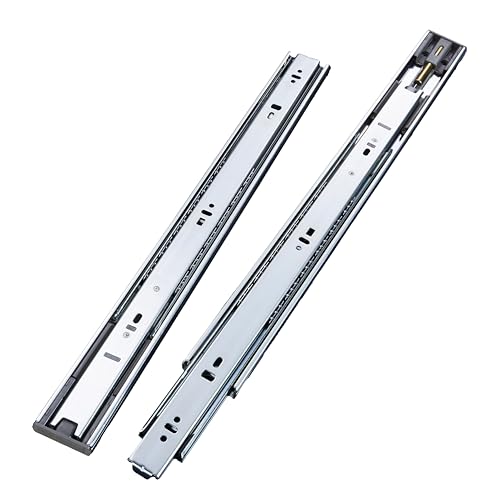 CGS Platinum 20 inch Soft Close Cabinet Drawer Slides 10-Pairs Full Extension Ultra Thick 1.2mm Stainless Steel Ball Bearing for 100K Cycle Performance 100 LB Capacity with Pro Grade Screws
 22 inch Soft Close Drawer Slides 4 Pairs Ball Bearing Full Extension Cabinet Drawer Slides 3 fold, Side Mount, 100 LB Capacity Heavy Duty Drawer Slide 22"