Cabinet Hardware Cost
Cabinet hardware often costs about $2 to $20 per knob or pull and about $1.50 to $10 per hinge, while installation may add roughly $40 to $90 per hour or about $40 to $180 per door for more detailed work. Skip the labor line, and a modest hardware buy can become a much larger final bill. This guide breaks down parts pricing, installation costs, and the cabinet details that quietly change both. (Home Depot, Lowe’s, Angi, CabinetParts)
Separate material and labor costs for clear budgeting


Budget planning works best when you split parts from labor. Pulls, knobs, hinges, and soft-close upgrades belong on the material side; drilling, fitting, alignment, and cleanup belong on the labor side. That split makes DIY and pro pricing easier to compare because you are not mixing different costs. (Home Depot, Lowe’s, Angi)
A national installation total often lands between about $200 and $1,600, but that range only makes sense after you match it to cabinet count, hardware tier, and style. The same kitchen can stay near the low end with basic hardware and simple spacing, or move far higher with premium finishes, hidden hinges, and extra adjustment time. (Angi, Thumbtack, Home Depot)
For budgeting, use three assumptions: small kitchens have fewer openings and faster installs; medium kitchens usually need more hinge sets and more alignment time; large kitchens add both part count and labor hours. Regional pricing can still move the bill by roughly 15% to 35% for similar projects, with labor often higher in some Northeastern metro areas and material or delivery costs often higher in some West Coast markets. (Angi, Thumbtack, Home Depot, Lowe’s)
How much do pulls, knobs, and hinges cost?

Pulls, knobs, and hinges do not cost the same, and they do not behave the same in a budget. Pulls often cost more than knobs, hinges add a separate line item, and soft-close versions raise the hinge total further. Most retailers and manufacturers also sell drill templates for about $10 to $25, which is a small add-on compared with rework from misplaced holes. (Home Depot, Lowe’s, CabinetParts, Home Depot installation guides)
Pulls
Cabinet pulls usually cost more than knobs because they use more material and often cover a longer span. Common finish choices include brushed nickel, matte black, polished chrome, and stainless steel. Budget pulls can sit near the low end of the per-piece range, mid-range pulls usually cost more for better plating or heavier bodies, and premium pulls can reach the top of the typical piece range. (Home Depot, Lowe’s, CabinetParts)
- Budget tier: about $0.50 to $2 per piece.
- Mid-range tier: about $2 to $5 per piece.
- Premium tier: about $5 to $20 per piece.
Drawers usually take pulls, while doors often take knobs or smaller pulls. Long drawer fronts and appliance panels may need two pulls, which raises the part count and the drill time. For most kitchens, the practical budget number is closer to the mid-range band unless you choose decorative or oversized designs. (Home Depot, Lowe’s, CabinetParts)
Knobs
Knobs usually cost less than pulls, and they are common on doors because they need one mounting point instead of two. Material tier matters here too. Zinc and basic steel sit lower, while solid brass or heavier decorative designs cost more. If you want the simplest way to cut hardware spend, knobs on doors often do that without changing the room’s basic function. (Home Depot, Lowe’s, CabinetParts)
- Budget tier: about $0.50 to $1.50 per piece.
- Mid-range tier: about $1.50 to $4 per piece.
- Premium tier: about $4 to $20 per piece.
Hinges
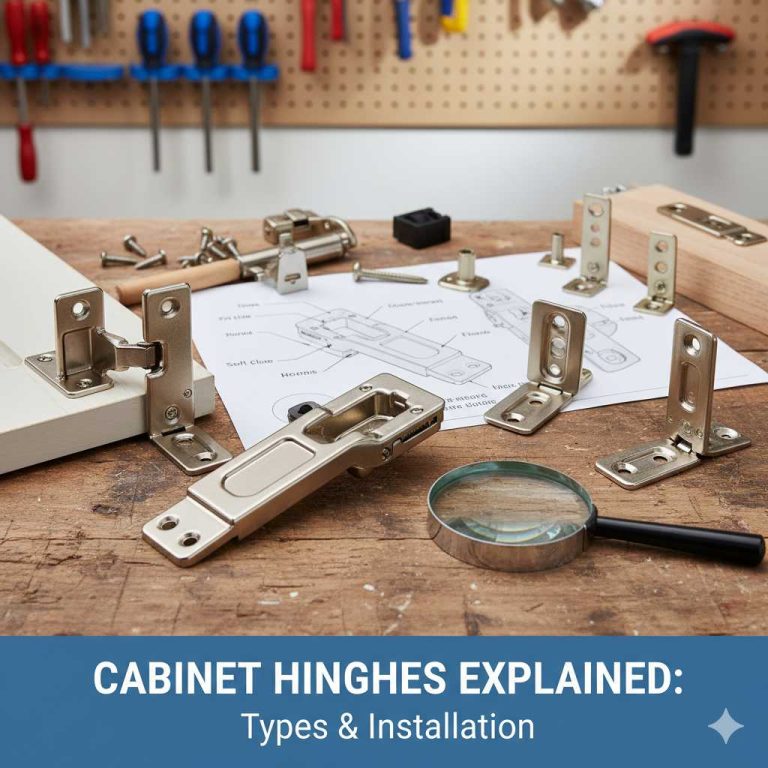
Standard hinges are a separate purchase from pulls and knobs. Most cabinet doors use two hinges per door, though taller or heavier doors may use three or more, so the count scales quickly. A kitchen with 20 cabinet doors requires 40 hinges, which is why hinge pricing matters more than many homeowners expect. Standard overlay and concealed hinges are commonly sold in broad price bands, while premium soft-close models rise with finish, adjustability, and brand. (CabinetParts, Home Depot, Lowe’s)
- Standard hinge: usually about $1.50 to $5 per hinge.
- Soft-close hinge: often adds about $2 to $5 per hinge above a standard hinge.
Hidden cup hinges are common for frameless cabinets. Exposed hinges are more common on face-frame cabinets. The hinge style changes both the look and the install method, which is why the hinge line should stay separate from the pull or knob line. (CabinetParts, Home Depot installation guides)
What does a cabinet hardware budget worksheet look like?
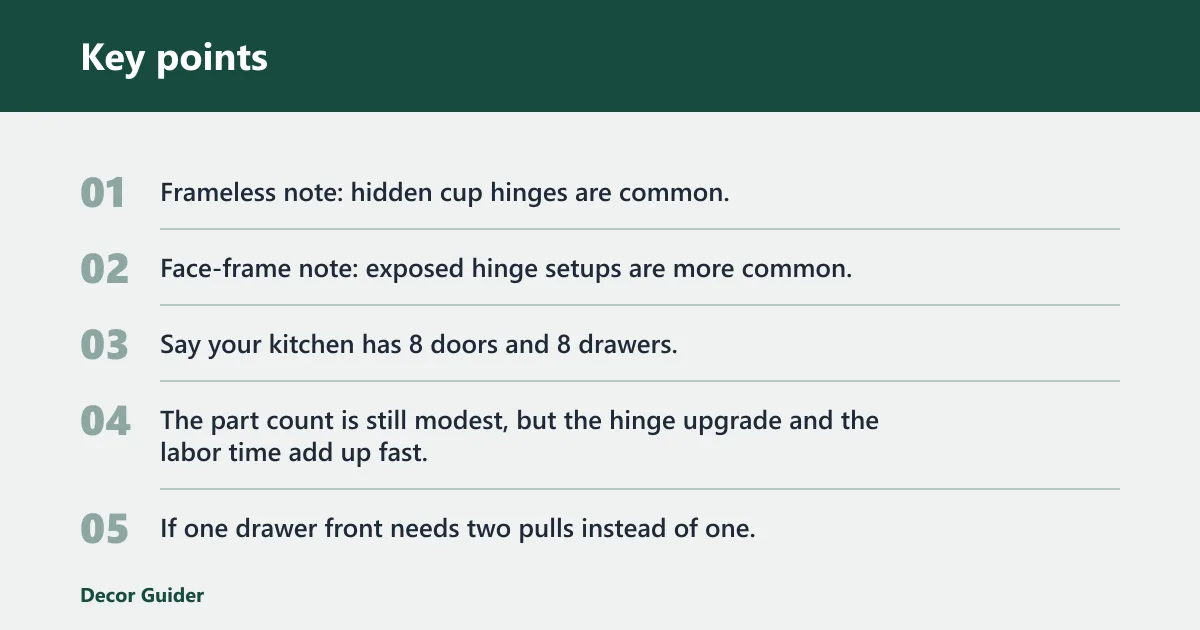
This worksheet separates five rows: pulls, knobs, hinges, labor, and adjustment or contingency. It uses simple kitchen assumptions so you can see how the bill changes with size and with DIY versus professional installation. It also shows where frameless and face-frame notes belong, since those details affect labor and hardware choice. (Home Depot, Lowe’s, Angi, Thumbtack)
| Line item | Small kitchen | Medium kitchen | Large kitchen | DIY vs pro | Frameless vs face-frame note |
|---|---|---|---|---|---|
| Assumption | 5 doors, 5 drawers, 10 openings, 10 hinges | 8 doors, 8 drawers, 16 openings, 16 hinges | 12 doors, 10 drawers, 22 openings, 24 hinges | DIY assumes careful measuring and no removal/rework labor; pro assumes full install and adjustment | Frameless usually needs hidden cup hinges and tighter alignment; face-frame often needs more fit checks around the frame |
| Pulls | DIY: 5 × $2 = $10; Pro: 5 × $5 = $25 | DIY: 8 × $2 = $16; Pro: 8 × $5 = $40 | DIY: 10 × $2 = $20; Pro: 10 × $5 = $50 | DIY usually buys at the lower retail band; pro pricing often reflects mid-range retail or bundled supply markup | Hardware price is similar either way, but frameless layouts often need more precise spacing on the cabinet box |
| Knobs | DIY: 5 × $0.50 = $2.50; Pro: 5 × $3 = $15 | DIY: 8 × $0.50 = $4; Pro: 8 × $3 = $24 | DIY: 12 × $0.50 = $6; Pro: 12 × $3 = $36 | DIY is cheapest when spacing stays consistent; pro pricing often includes layout and finish matching | Face-frame cabinets can add drilling and clearance checks where the frame meets the door edge |
| Hinges | Standard: 10 × $1.50 = $15; Soft-close: 10 × $4.50 = $45 | Standard: 16 × $1.50 = $24; Soft-close: 16 × $4.50 = $72 | Standard: 24 × $1.50 = $36; Soft-close: 24 × $4.50 = $108 | DIY hinge installs can stay low only if holes already match; pro hinge installs often include adjustment time | Frameless typically uses concealed cup hinges; face-frame layouts may need a different hinge plate and more alignment work |
| Labor | DIY: $0; Pro: 2–4 hours × $40–$90 = $80–$360 | DIY: $0; Pro: 3–6 hours × $40–$90 = $120–$540 | DIY: $0; Pro: 6–12 hours × $40–$90 = $240–$1,080 | DIY labor is zero in cash terms but may still require tools and templates; pro labor is usually the largest variable | Frameless often needs more exact hinge alignment; face-frame often adds fit and clearance time around the frame |
| Adjustment or contingency | DIY: $10–$25; Pro: $25–$60 | DIY: $15–$35; Pro: $40–$90 | DIY: $20–$50; Pro: $60–$150 | DIY contingency covers templates, bit wear, and extra screws; pro contingency covers minor rework and travel | Frameless projects usually need tighter tolerances; face-frame projects can need more correction if existing holes do not match |
| Total with standard hinges | DIY: $37.50–$52.50; Pro: $135–$445 | DIY: $59–$79; Pro: $207–$766 | DIY: $82–$142; Pro: $376–$1,424 | DIY is lowest when you already own tools and hardware is bought at budget pricing | Frameless can push pro totals higher because alignment tolerances are tighter; face-frame may add smaller but more frequent fitting steps |
| Total with soft-close hinges | DIY: $57.50–$72.50; Pro: $175–$485 | DIY: $91–$111; Pro: $271–$830 | DIY: $130–$190; Pro: $496–$1,604 | Soft-close adds the hinge premium to either DIY or pro totals; the labor difference comes from install complexity, not the soft-close mechanism alone | Frameless soft-close systems often demand more precise setup; face-frame soft-close can require additional plate and clearance checks |
Frameless note: hidden cup hinges are common, and alignment matters more because the door sits on the cabinet box itself.
Face-frame note: exposed hinge setups are more common, and the frame can add steps when drilling and fitting the door.
Say your kitchen has 8 doors and 8 drawers, and you choose pro installation with soft-close hinges. The part count is still modest, but the hinge upgrade and the labor time add up fast. If one drawer front needs two pulls instead of one, the material line and the drilling time both rise. (Home Depot, Lowe’s, Angi)
What changes the installation bill?
Installation cost changes with time, access, and rework. Hourly rates usually fall in the $40 to $90 range, while some installers quote per door or per opening. Labor also rises when a cabinet needs hinge adjustment, old fastener holes need filling, or the new hardware does not match the old spacing. (Angi, Thumbtack, Home Depot)
Hourly rates versus per-opening pricing
Hourly pricing works best when the layout is simple and the installer can move quickly. Per-opening pricing can be easier to budget when you already know the door and drawer count. Current cost estimates put labor at $40 to $180 per door, which shows how much the final bill can change when the job needs more than a basic swap. (Angi, Thumbtack)
Alignment, re-drilling, and fastener replacement
Hidden costs often come from the work around the hardware, not the hardware itself. If old holes do not match the new pull spacing, the installer may need to re-drill. If cabinet doors sag or rub, extra adjustment time goes on the bill. Worn screws, stripped anchors, and damaged fasteners can also require replacement. (Home Depot, Lowe’s, Home Depot installation guides)
Time by kitchen size
A simple 10-door kitchen with basic pulls may take 2 to 4 hours. A complex layout with premium components could extend to 6 to 12 hours. More openings mean more layout checks, more drilling, and more chance that one off-center hole forces a correction on the next door or drawer front. (Angi, Thumbtack)
Does cabinet style change the price?
Cabinet style changes the hardware bill because it changes the hinge type, the amount of fitting, and the risk of correction. Frameless cabinets usually rely on hidden cup hinges and tighter alignment. Face-frame cabinets often use exposed hinges and can take different drilling and fit steps. That difference shows up in labor more than in pull or knob pricing. (CabinetParts, Home Depot installation guides)
Frameless cabinets
Frameless cabinets usually make the hardware look cleaner, but they can demand more precise hinge placement. Hidden cup hinges are common here. If the doors are not aligned well, the gaps show quickly, which can add adjustment time and a small contingency charge. (CabinetParts, Home Depot installation guides)
Face-frame cabinets
Face-frame cabinets often use exposed hinge setups. The frame can make the install less direct because the hinge must clear the frame and sit correctly on the door edge. That can raise labor slightly, especially when the cabinet box is older or the existing holes do not match the new hardware. (CabinetParts, Home Depot installation guides)
Is soft-close hardware worth the extra cost?
Soft-close hardware usually makes sense when you want quieter doors and less slam impact, and it adds a clear cost to the hinge line item. Because soft-close hinges add $2 to $5 per hinge, the upgrade is easiest to justify when the kitchen has many doors or when noise control matters more than the lowest possible price. (CabinetParts, Home Depot, Lowe’s)
What the upgrade changes
Soft-close does one job well: it slows the last part of the swing so the door shuts quietly. That can reduce wear from repeated slams, and it often feels like a more finished install. The trade-off is cost, since every door uses two hinges and the upgrade applies to each one. (CabinetParts, CabinetParts product listings)
When it makes the most sense
Mid-range and above is where soft-close most often appears. It can be a smart add-on for family kitchens, rentals where wear matters, or any layout with wide doors that tend to swing hard. If the budget is tight, keep it off lower-use cabinets first and reserve it for the most active doors. (Home Depot, Lowe’s, Angi)
How can you keep cabinet hardware costs down?
The cheapest way to control cabinet hardware cost is to reduce rework. A drill template costs far less than fixing misaligned holes, and it helps both DIY and pro installs keep spacing consistent. Mixing knobs on doors and pulls on drawers can also cut material cost without changing the basic cabinet function. (Home Depot, Lowe’s, Home Depot installation guides)
- Use a drill template before any hole is made.
- Keep the same finish across the room when possible.
- Choose knobs for doors if the look fits the room.
- Check whether any drawer needs two pulls before buying parts.
- Ask for a written labor quote that separates removals, drilling, and adjustments.
Picture a small galley kitchen with older face-frame cabinets and mismatched hole spacing. A template and a little extra adjustment time can keep the job on budget. Skip both, and a low-cost hardware buy can turn into a repair-heavy install with extra fasteners and re-drilling. (Angi, Home Depot, Lowe’s)
Frequently asked questions
How much does it cost to have cabinet hardware installed?
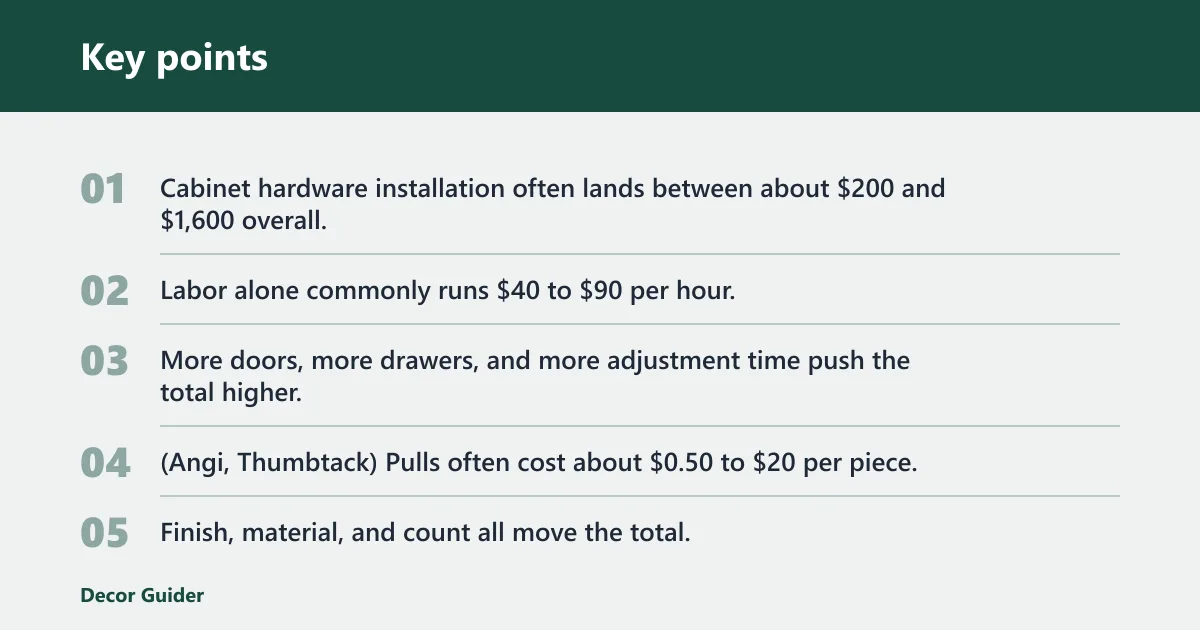
Cabinet hardware installation often lands between about $200 and $1,600 overall, depending on cabinet count, hardware tier, and cabinet style. Labor alone commonly runs $40 to $90 per hour, and some jobs are quoted at $40 to $180 per door. More doors, more drawers, and more adjustment time push the total higher. (Angi, Thumbtack)
How much does cabinet hardware cost?
Pulls often cost about $0.50 to $20 per piece, knobs about $0.50 to $20 per piece, standard hinges about $1.50 to $5 each, and soft-close hinges add about $2 to $5 per hinge above that. Finish, material, and count all move the total. (Home Depot, Lowe’s, CabinetParts)
How much should cabinet hardware cost?
A practical budget starts with the opening count, then adds a labor allowance and a small adjustment buffer. For many kitchens, the hardware buy itself is much smaller than the install bill. If you want a simple target, price pulls or knobs per opening, add two hinges per door, then reserve money for fitting and alignment. (Home Depot, Lowe’s, Angi)
How much does kitchen cabinet hardware cost?
Kitchen cabinet hardware cost usually means the combined price of pulls or knobs, hinges, and any soft-close upgrade. A kitchen with 20 cabinet doors requires 40 hinges, so the hinge line can grow fast. Add labor separately, because install costs change with layout complexity and how much re-drilling the job needs. (CabinetParts, Angi, Thumbtack)
What affects cabinet hardware installation cost
Three things change the bill most often: the number of openings, the cabinet style, and the amount of adjustment work. The same source rates vary by region, with the Northeast often higher and the West Coast often showing higher delivery and material costs. Old holes, worn fasteners, and hidden hinge setups also add time. (Angi, Thumbtack, Home Depot, Lowe’s)
How much do cabinet pulls and knobs cost per piece?
Pulls and knobs can sit anywhere from budget to premium pricing, with most pieces falling into a modest per-item range unless you choose decorative or heavy metal designs. Pulls usually cost more than knobs because they use more material and often cover more length. Finish and material are the main price drivers. (Home Depot, Lowe’s, CabinetParts)
What does cabinet hardware installation include?
Cabinet hardware installation usually includes removal of old hardware, measurement, drilling, mounting, alignment, and final adjustment. If the new spacing does not match the old holes, re-drilling may be needed. Worn screws or damaged fasteners can also require replacement, which is why a contingency line helps keep the budget realistic. (Home Depot, Lowe’s, Home Depot installation guides)
Products related to this article
Sponsored / affiliate links. As an Amazon Associate I earn from qualifying purchases. I may earn additional commission from eligible campaigns.