Cabinet Door Replacement Cost
Cabinet door replacement cost usually runs roughly $30 to $250 per door, depending on opening size, material tier, finish, hinge choice, and labor complexity. Measure the cabinet opening first, then compare replacement with repair or refacing. Bad sizing or finish matching can waste money fast. This guide shows how to estimate from the opening, what changes the bill, and when repair, door-only replacement, or refacing is the better buy.
Cabinet door replacement cost at a glance


For budgeting, treat cabinet door replacement as a door-and-hardware job, not a full cabinet overhaul. A practical planning range for a standard kitchen is usually built from the opening count first, then adjusted for material tier, finish, hinge type, and install complexity. That is a clearer model than relying on a single national average.
Some online calculators cite project totals, while others list per-door figures that can appear inconsistent if they mix doors, drawer fronts, labor, and hardware differently. For this guide, the ranges below are normalized into a single text-based estimator so the assumptions are visible and the numbers are easier to compare.
What counts as a door-only project
A true door-only project covers removing the old doors, measuring the openings, locating or fabricating hinge points, mounting the new doors, and adjusting them so gaps are even. It does not include new cabinet boxes. It also does not mean every opening is priced the same, because base, wall, tall, and drawer fronts often differ in size and hardware.
Drawer fronts are often counted separately because they may need a different proportion, different drilling pattern, or a different finish match. A 12-door kitchen can often become a 12-door-plus-drawer-front order once every visible front is counted.
Door cost estimator table
Use the cabinet opening first, then add the door’s material, surface finish, hinge hardware, and the amount of fitting the opening needs. The table below is a planning tool, not a quote. Assumptions: standard face-frame cabinets, one new door per opening, no box replacement, and no major finish repair unless noted. The low range assumes stock sizing and straightforward installation; the typical range assumes minor fitting and adjustment; the high range assumes custom sizing, upgraded finish, and more labor.
| Opening type | Material and finish | Hardware and labor complexity | Low per-door | Typical per-door | High per-door | Typical project total |
|---|---|---|---|---|---|---|
| Wall door | Stock MDF, painted | Standard hinges, straightforward replacement | $30 | $55 | $90 | $600 to $1,100 for 10 to 12 doors |
| Base door | Stock thermofoil or veneer, factory finish | Standard hinges, minor alignment | $45 | $80 | $130 | $800 to $1,800 for 10 to 15 doors |
| Drawer front | Semi-custom MDF or veneer, painted or stained | Extra measuring, careful reveal matching | $60 | $110 | $180 | $180 to $900 for 3 to 8 fronts |
| Tall pantry door | Semi-custom solid wood, stain or clear coat | More hinge points, higher alignment time | $110 | $175 | $280 | $220 to $1,120 for 2 to 4 doors |
| Oversized or custom opening | Custom solid wood, special finish | Nonstandard boring, tighter tolerances | $180 | $275 | $450 | $550 to $2,250 for 3 to 6 doors |
To use the estimator, start with the opening size and door count, then move through four price layers: material tier, finish, hinge choice, and labor complexity. A stock MDF painted door with standard hinges will stay near the low end. A custom solid wood door with soft-close hardware and difficult alignment moves toward the high end.
Cabinet door replacement cost checklist
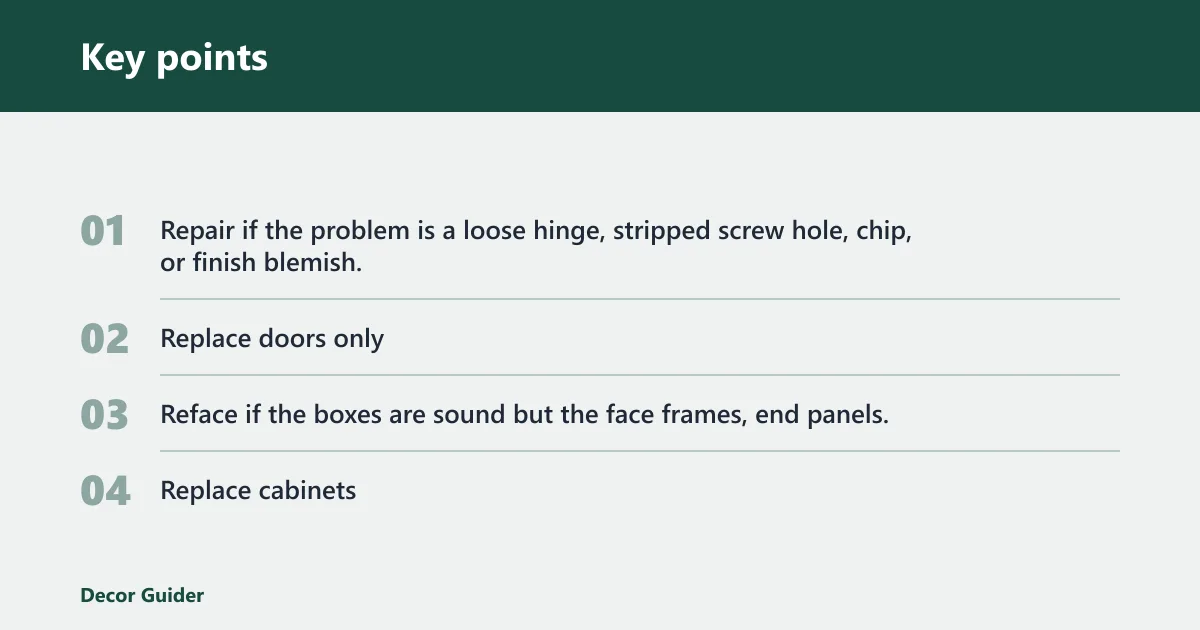
- Repair if the problem is a loose hinge, stripped screw hole, chip, or finish blemish.
- Replace doors only if the cabinet boxes are square, the layout still works, and the visible fronts are the main problem.
- Reface if the boxes are sound but the face frames, end panels, and visible surfaces need a broader visual reset.
- Replace cabinets if the boxes are warped, swollen, badly out of square, or too damaged to support new doors cleanly.
For a broader visual update, see cabinet refacing. If the problem is hardware rather than the door itself, compare hinge replacement and soft-close hardware. If the issue is damage to the frame or door itself, review cabinet repair first.
What drives the price of replacement?
Stock doors cost less than custom doors, but the price difference is not just about the slab itself. Material choice, opening size, finish, hinge drilling, and how many doors need matching all change the final bill. For a 10 to 20 door kitchen, total cost often lands in a wide range because labor and finish matching can vary as much as the door material itself.
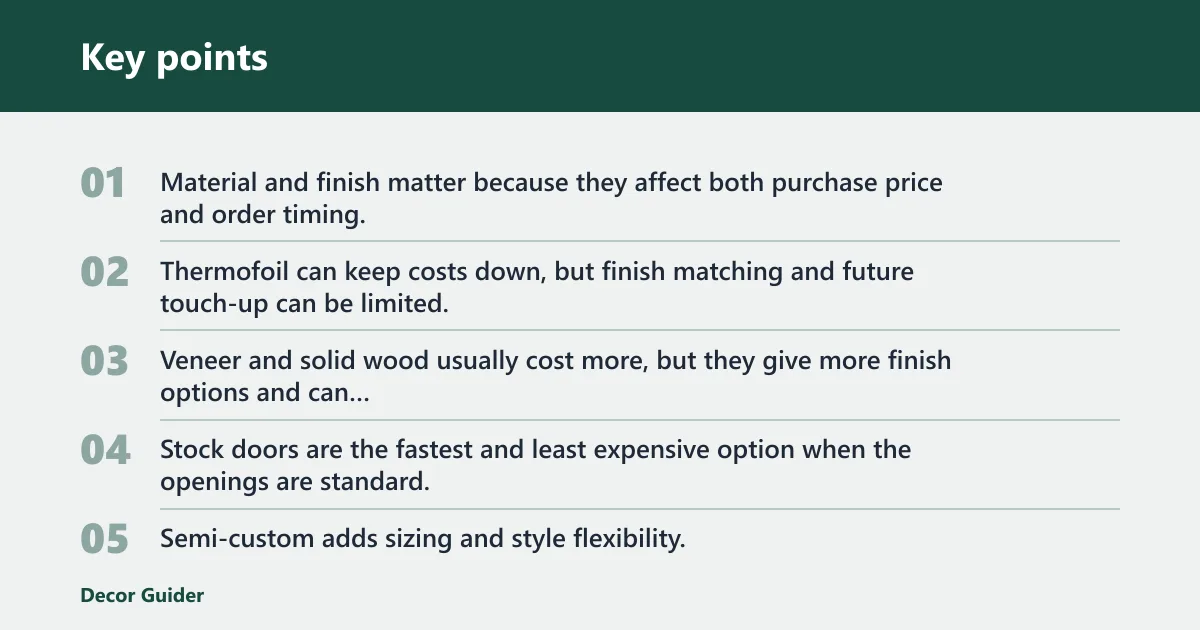
Material and finish matter because they affect both purchase price and order timing. MDF is often used for painted doors. Thermofoil can keep costs down, but finish matching and future touch-up can be limited. Veneer and solid wood usually cost more, but they give more finish options and can better fit older kitchens that need a closer visual match.
Stock, semi-custom, and custom doors
Stock doors are the fastest and least expensive option when the openings are standard. Semi-custom adds sizing and style flexibility, which helps when the cabinet line is older or the overlay is unusual. Custom doors fit unusual openings, but they carry tighter ordering tolerances, higher material cost, and longer lead time.
That lead time matters if the old doors are already off the hinges. A custom order can leave a kitchen in partial use longer than a stock replacement. If the boxes are sound and the layout is standard, stock or semi-custom is usually the better value.
MDF, thermofoil, veneer, and solid wood
MDF is a common paint-grade option for straight, simple profiles. Thermofoil works best when you want a consistent factory look and the supplier offers the exact color and profile. Veneer can suit stain jobs where you need a wood look without solid-wood pricing. Solid wood is the most flexible for stain and clear coat, but it is also more sensitive to movement if the room conditions swing.
Door and hardware combinations vary by installer and supplier, so the safest approach is to compare the quote against the opening itself rather than against a single advertised material price. A door that fits the opening cleanly is more valuable than a cheaper door that needs repeated correction.
Paint, stain, clear coat, and lead time
Paint usually adds prep time because the surface needs filling, sanding, and a finish that hides seams. Stain and clear coat demand better material consistency and often cost more on hardwood or veneer doors. A finish that has to match surrounding cabinets can add sorting time, sample approval, and more labor if the new door must blend with an aged set.
Lead time rises when the finish is custom or when the supplier has to bore hinge cups to an exact pattern. If the doors are painted after delivery, the labor cost can rise even when the slab price stays low.
How much does labor add?
Labor often makes the biggest difference between a quick swap and a frustrating one. Measured jobs commonly include removal, opening verification, hinge location, installation, and final adjustment. The more the opening is out of square or the hinge pattern is nonstandard, the more labor turns a simple door swap into a custom fitting task.
Removal and measurement
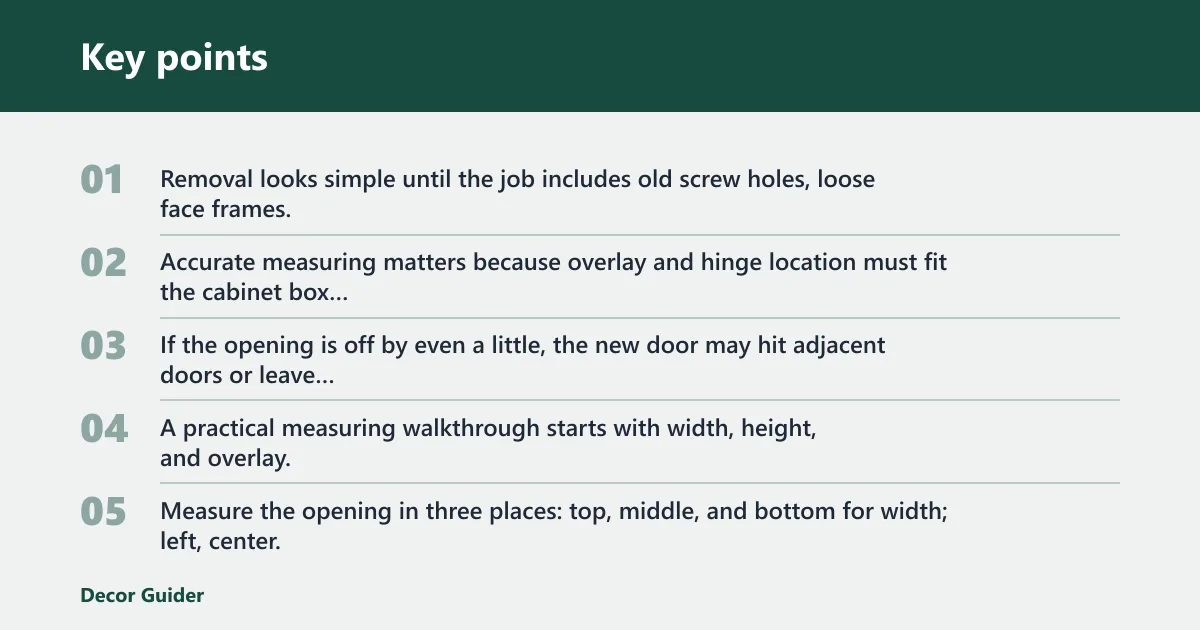
Removal looks simple until the job includes old screw holes, loose face frames, or doors that no longer match the opening. Accurate measuring matters because overlay and hinge location must fit the cabinet box and the frame style. If the opening is off by even a little, the new door may hit adjacent doors or leave uneven reveals.
A practical measuring walkthrough starts with width, height, and overlay. Measure the opening in three places: top, middle, and bottom for width; left, center, and right for height. Use the smallest consistent number if the cabinet is not perfectly square, then confirm the reveal you want. For a full-overlay door, the front should cover most of the face frame; for inset-style or partial-overlay work, the reveal becomes part of the measurement, not an afterthought.
Example: if a 12-inch opening measures 11-7/8 inches at the top and 11-13/16 inches at the bottom, the cabinet is slightly out of square. A replacement door can still work, but the fitter will need to account for that difference before drilling or hanging. That is why an opening-first measurement is more reliable than ordering by cabinet width alone.
Hinge mounting and alignment
Fully adjustable hinges make final alignment easier, but they do not remove the labor. The installer still needs to mount the hinge cups, line up the screw pattern, and fine-tune each door so gaps stay even across the run. If the old hinge boring does not match the new doors, the labor climbs.
Soft-close hinges add another adjustment layer. They help with everyday use, but they also add hardware cost and can add time if the weight and swing of the door need a different setting.
Hourly rates versus per-door pricing
Per-door pricing is common when the job is uniform and the openings are standard. Hourly pricing shows up more often when there is repair work, frame adjustment, or custom drilling. The more the project needs fitting, the more the final bill depends on labor hours instead of a simple door count.
What hardware costs should you budget for?
Hardware is easy to undercount. Hinges, pulls, knobs, and soft-close parts may look small on a quote, but they can change both the look and the labor. Budget hardware separately so the quote does not hide a major part of the project in the install line.
Fully adjustable hinges
Fully adjustable hinges help the installer tune the reveal after the door is on the cabinet. That flexibility is useful on older boxes, where nothing lines up perfectly. The tradeoff is that higher-end hinges cost more than basic hardware, and extra adjustment time can show up in labor.
Soft-close upgrades
Soft-close hinges or add-on dampers are worth budgeting separately. They are common on kitchen upgrades because they reduce slam noise and improve the feel of the door, but they are not free. If you want matching hardware across a whole kitchen, the soft-close choice should be made before ordering so every hinge bore and screw pattern matches.
Pulls, knobs, and mixed hardware sets
Pulls and knobs are often priced per piece, then multiplied by the number of doors and drawers. Mixed hardware sets can create a cleaner layout, but they also add ordering decisions. Use one finish family across the kitchen unless the design plan clearly calls for contrast.
When does cabinet condition change the answer?
Sound boxes justify door-only replacement. If the cabinet box is square, the face frame is intact, and the overlay is compatible, you can usually replace the doors without turning the project into a much larger job. Once the box is warped, damaged, or badly out of square, the value of replacement drops because fitting time rises fast.
Sound boxes and frame fit
A stable cabinet box gives you the best odds of a clean door swap. Good frame fit means the new doors can be aligned without major carpentry. If the existing hinges already sit in a usable pattern and the box edges are straight, door-only replacement often keeps the job economical.
Warping, damage, and out-of-square openings
Warped frames, stripped hinge screw holes, or damaged face frames increase labor and may force repairs before the new door can go on. Nonstandard hinge boring can also push the project into custom work. Those are the warning signs that a low door quote can turn into a much larger install bill.
A common installer failure point is assuming the old opening is square because the old door appears to fit. In practice, the original door may have been shimmed, trimmed, or adjusted over time. Measuring the cabinet opening directly is the safer way to avoid a mismatch.
Should I replace cabinet doors or reface the cabinets?
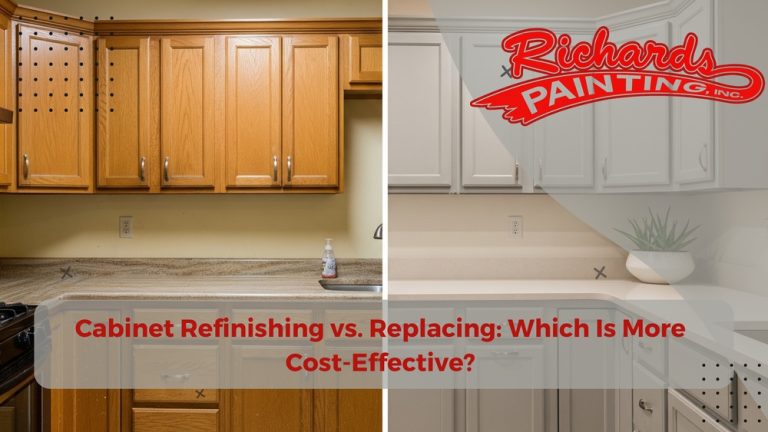
Choose door replacement when the cabinet boxes are solid and you only need new fronts, better hardware, or a finish update. Choose refacing when the boxes are still usable but the visible surfaces need a broader update than doors alone can solve. Choose full replacement when the boxes are too damaged, too misaligned, or too outdated to justify more fitting work.
Best-value thresholds by cabinet condition
If the boxes are sound and the style change is modest, door-only replacement usually gives the strongest value. If the cabinet faces, end panels, and toe kicks no longer match the kitchen, refacing may be the better scope because it treats the visible system as one job. If repeated repairs are needed around hinges or frames, new cabinets may cost less in the long run.
When refacing makes more sense
Refacing is useful when the cabinet structure is fine but the visible surfaces are tired, mismatched, or damaged. It often makes sense when you want a broader visual change without replacing boxes. It also helps when the old doors are not the only problem and you need the fronts, edges, and finish to line up as a single package.
When full replacement is the better call
Full replacement becomes more sensible when the boxes are swollen, broken, or no longer square enough to accept new doors cleanly. It also makes sense if the current layout no longer fits the room or if the face frame damage is extensive enough that repeated repair would cost more than starting over.
Extra costs to add to your budget
Delivery, haul-away, sales tax, and local labor can all shift the total. Location matters even when the door count is the same. Before you approve a quote, confirm whether the estimate includes disposal, tax, finish work, hinge upgrades, and any cabinet repair needed to support the new doors.
Delivery and haul-away
Door delivery fees can apply if the doors are oversized, custom-finished, or shipped from a specialty supplier. Old door haul-away is another possible extra, especially when the installer is also carrying out the disposal. These are small line items compared with the doors themselves, but they still affect the final invoice.
Sales tax and permit exclusions
Sales tax can apply to materials, hardware, or both, depending on how the invoice is written. Simple replacement work usually does not require a permit or inspection, because no structural work is involved. If the project includes cabinet reconfiguration, ask for that separately so the tax and permit assumptions stay clear.
Frequently asked questions
How much does cabinet door replacement cost?
Cabinet door replacement usually lands in a broad per-door range because size, finish, and hardware matter as much as the door itself. A stock painted door can stay near the low end, while custom wood doors with upgraded hardware and fitting land much higher. The safest estimate starts with the opening count.
How much for cabinet door replacement?
For a typical kitchen, the total depends on how many openings need new fronts and how much matching work is required. A small, standard job may stay relatively modest, while a larger kitchen with custom doors, soft-close hinges, and finish matching can rise quickly. Use per-door pricing plus labor, not a single flat number.
Is it worth replacing kitchen cabinet doors?
It is worth replacing kitchen cabinet doors when the boxes are solid, the layout still works, and the old fronts are dated or damaged. If the frames are square and the hinge pattern is usable, door-only replacement is often a better value than full cabinet replacement. If boxes are failing, the value drops.
How much does it cost to fix a cabinet door?
Repair can cost less than replacement when the problem is a loose hinge, a stripped screw hole, or a finish touch-up. Once a door is warped, broken, or mismatched to the opening, repair may not be the best buy. The more fitting or refinishing needed, the closer the cost gets to replacement.
What affects the price of replacing cabinet doors?
Material, finish, opening size, door count, and labor complexity are the main price drivers. Stock doors cost less than custom doors. Soft-close hinges and matching pulls add hardware cost. Out-of-square boxes, damaged face frames, and nonstandard hinge boring increase labor because the installer has to correct more than the door itself.
Sources
- Homewyse, cabinet door replacement and related cost calculator pages
- Current Cost, cabinet door material, labor, and project cost ranges
- Manufacturer and installer guidance for overlay measurement, hinge boring, and soft-close hardware
Products related to this article
Sponsored / affiliate links. As an Amazon Associate I earn from qualifying purchases. I may earn additional commission from eligible campaigns.