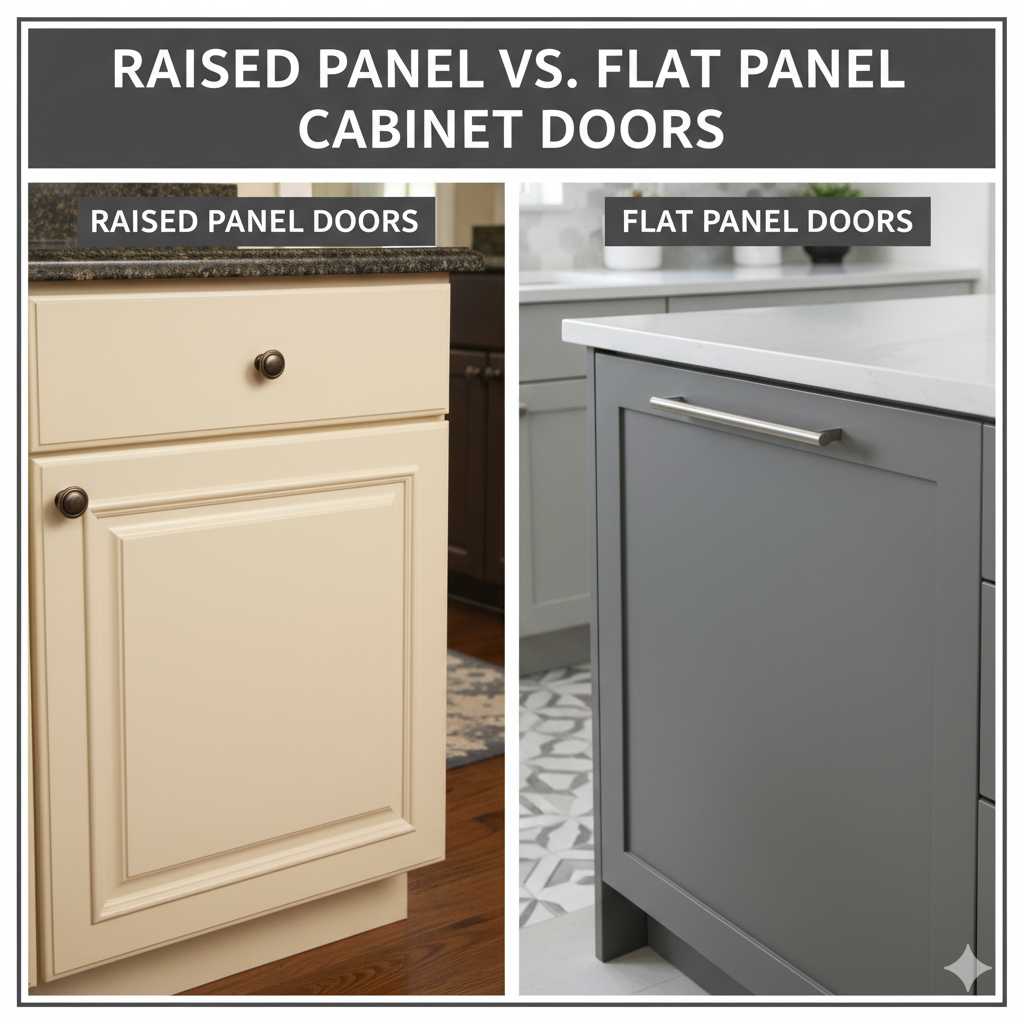
Raised Panel Vs Flat Panel Cabinet Doors: Best Choice
Finding the right cabinet doors can feel overwhelming. You want your kitchen to look great. But you also need it to last.

ONESTOCK
ONESTOCK Raised Panel Wall Cabinet - Ready…
- DIMENSIONS: Width 30" | Height 30" | Depth 12", and includes Two Raised Panel Style Doors, and Two Adjustable Shelves for efficien…
- SOLID WOOD & PLYWOOD CONSTRUCTION – Solid wood cabinet structure with Grade-A plywood components for strength and long-term use
- READY-TO-ASSEMBLE CABINET – With integrated finger pulls this cabinet eliminates the need for additional cabinet hardware. Ships f…
As an Amazon Associate I earn from qualifying purchases.
Two popular styles are raised panel and flat panel doors. They look quite different. They also have different pros and cons.
This guide will help you pick the best one for your home. We will break it all down simply.
Raised panel cabinet doors offer a classic, traditional look with depth and dimension. Flat panel doors provide a sleek, modern, minimalist aesthetic. The best choice depends on your kitchen’s overall style, your budget, and how much wear and tear the cabinets will endure.
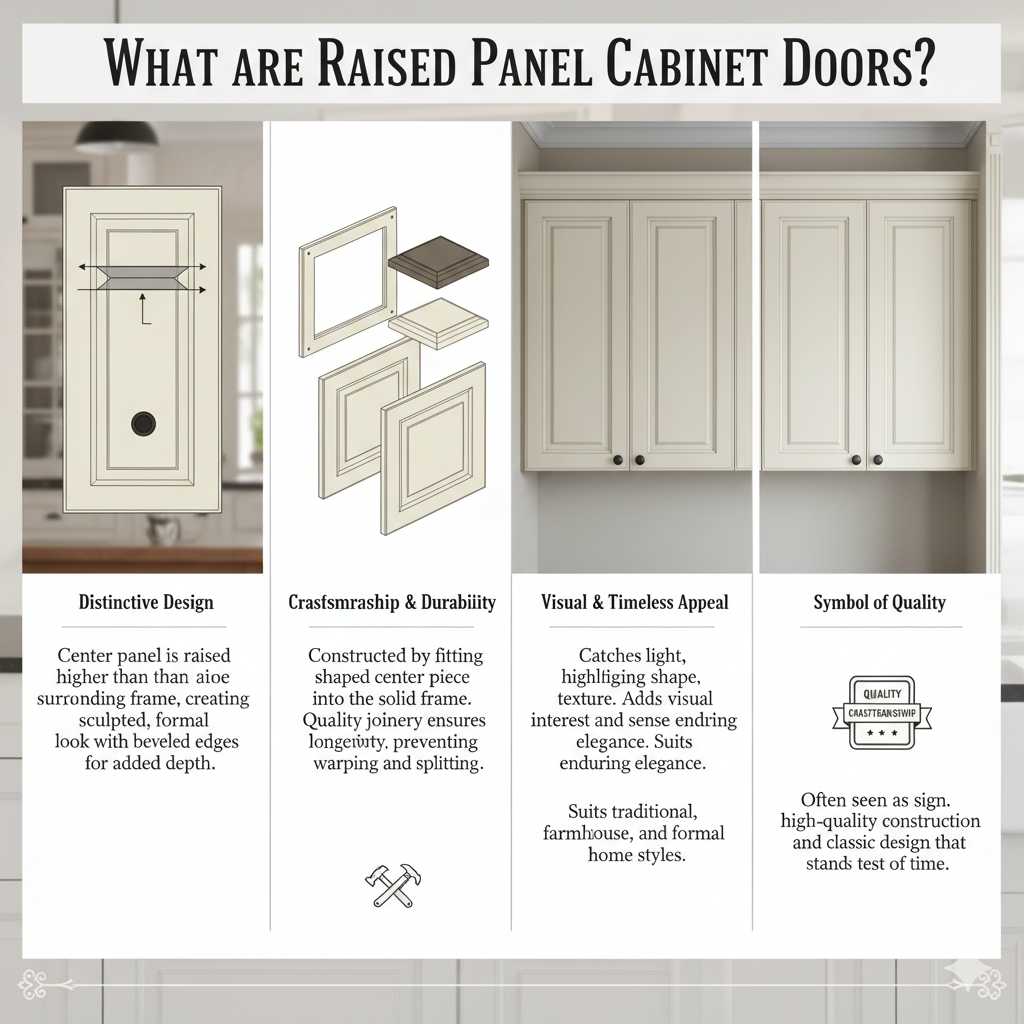
What Are Raised Panel Cabinet Doors?
Raised panel cabinet doors have a center panel. This panel is raised higher than the surrounding frame. It creates a sculpted look.
Think of it like a picture frame with a thicker picture inside. The edges of the center panel are often beveled. This adds more detail and depth.
This style is very common. It has been around for a long time. It gives cabinets a formal and elegant feel.
Many people see it as a sign of quality craftsmanship.
The construction of raised panel doors is a bit more involved. First, a frame is built. Then, a separate center piece is cut.
This piece is shaped to be higher. It is then fitted into the frame. The joinery between the frame and the panel is important.
Good joinery means the door will last longer. It prevents warping and splitting over time. The more detailed the profile and shaping, the more traditional the look.
Simple beveled edges keep it somewhat classic but still clean.
The visual effect of a raised panel is significant. It catches the light differently. This highlights the door’s shape and detail.
It adds texture and visual interest to your kitchen walls. This can make a plain kitchen feel much more special. It is a style that stands the test of time.
It works well in many home designs. From farmhouses to more formal homes, it fits.
What Are Flat Panel Cabinet Doors?
Flat panel cabinet doors, also called Shaker style or slab doors, are much simpler. They have a flat center panel. This panel is set within a simple frame.
There is no raised or carved detail on the center part. The frame is usually a few inches wide. The overall look is very clean and smooth.
This style is very popular today. It fits perfectly with modern and minimalist kitchens. It can also work in transitional or even some contemporary farmhouse designs.
The construction of flat panel doors is generally simpler. A frame is built. A flat piece of wood or other material is then fitted into it.
There are fewer intricate steps. This can sometimes mean they are easier to produce. This simplicity is their main appeal.
They offer a smooth surface. This makes them easy to clean. They don’t have nooks and crannies for dirt to get stuck in.
This is a big plus for busy kitchens.
The modern appeal of flat panel doors is undeniable. They provide a clean backdrop. This lets other kitchen elements shine.
Think of countertops, backsplashes, or lighting. The flat surface creates a sense of spaciousness. It makes smaller kitchens feel bigger.
It offers a sleek finish. This is what many homeowners look for now. It is a versatile style.
It can be painted or stained. It adapts to many color schemes.
Personal Experience: My First Kitchen Renovation Woes
I remember my first kitchen renovation. I was so excited. I wanted everything to be perfect.
I saw these beautiful, detailed raised panel cabinets in a magazine. They looked so fancy and timeless. I imagined my kitchen feeling like a professional chef’s dream.
My contractor gently explained the cost. He also talked about how much more they would cost to maintain. I admit, I wasn’t really listening.
I was too focused on the glossy pictures. I pictured myself hosting elegant dinner parties.
Then, a few years later, I decided to update my laundry room. I had limited space and a tighter budget. I chose simple, flat panel cabinets.
They were way more affordable. And wow, were they easy to clean! I spilled detergent, I wiped it clean in seconds.
No scrubbing around fancy edges. It was a revelation. I had spent so much more on the kitchen for a look I loved, but the practical side was harder.
The laundry room cabinets were basic, but they served their purpose so well. It made me rethink my priorities. Sometimes, simple is truly better.
Especially when life gets messy.
Raised Panel vs. Flat Panel: Key Differences at a Glance
Style:
- Raised Panel: Traditional, formal, detailed, elegant.
- Flat Panel: Modern, minimalist, sleek, simple.
Construction:
- Raised Panel: More complex, multi-piece with raised center.
- Flat Panel: Simpler, flat center panel within a frame.
Visual Appeal:
- Raised Panel: Adds depth, shadow, and texture.
- Flat Panel: Smooth, clean lines, creates a sense of space.
Cleaning:
- Raised Panel: Can trap dust and grime in crevices.
- Flat Panel: Easy to wipe down, smooth surfaces.
What’s the Style Impact?
The style choice is huge. Raised panel doors bring a sense of tradition and warmth. They are perfect for homes that lean classic.
Think of country kitchens, Victorian homes, or colonial styles. They have a timeless charm. They make a kitchen feel established and rich.
Even in a slightly more modern setting, they can add a touch of elegance. They pair well with ornate hardware. They also look great with detailed moldings and trim.
Flat panel doors offer a clean slate. They are the go-to for contemporary and minimalist homes. They blend seamlessly with modern appliances.
They let your other design choices stand out. Think of a bold backsplash or striking countertops. Flat panels won’t compete.
They can also bridge styles. In a transitional kitchen, they offer a clean counterpoint to warmer wood tones or textured backsplashes. They are incredibly versatile.
They can be painted any color. This allows for endless customization.
Consider your existing home. If your house has a lot of architectural detail, raised panels might fit right in. If your home is more streamlined, flat panels will likely feel more natural.
It’s about creating a cohesive look. You don’t want your cabinets to feel out of place. The goal is for everything to work together.
This includes the cabinets, flooring, paint, and furniture.
Myth vs. Reality: Cabinet Door Styles
Myth
Raised panel doors are always expensive.
Reality
While often more complex, simple raised panel designs in less costly woods can be competitive. Costs vary by material and maker.
Myth
Flat panel doors look cheap or basic.
Reality
Flat panel doors offer a clean, sophisticated look. High-quality materials and finishes elevate them. They are a staple in high-end modern design.
Budgetary Considerations: Cost Differences
Generally, raised panel cabinet doors can be more expensive. This is due to their more complex construction. It takes more labor and skill to create the raised center and detailed edges.
The materials used can also vary widely. Solid hardwood is common for both. But the intricate work on raised panels often adds to the price.
If you are looking at custom designs with elaborate profiles, expect higher costs. This is true for both styles, but the complexity of raised panels pushes it further.
Flat panel doors, especially Shaker style, often have a more straightforward price point. Their simpler design means less complex manufacturing. This can translate to lower costs.
However, the material still matters. A sleek, modern flat panel made from a high-end veneer or exotic wood will cost more than a basic wood composite. Even simple slab doors can be quite pricey if they are made with premium materials or have a very specialized finish, like a high-gloss lacquer.
When comparing prices, look at the total cost. This includes the doors themselves and any associated hardware. It also includes installation.
Sometimes, a slightly more expensive door might be easier to install. This could save you money in labor. Always get detailed quotes.
Understand what is included. Don’t just compare the sticker price of the doors alone. Think about the long-term value too.
A slightly more expensive but more durable door might save money over time.
Cost Breakdown: What to Expect
| Factor | Raised Panel Doors | Flat Panel Doors |
|---|---|---|
| Construction Complexity | Higher; intricate joinery and shaping. | Lower; simpler frame and flat insert. |
| Labor Costs | Often higher due to detailed work. | Often lower due to simpler assembly. |
| Material Options | Solid wood, veneers; detail is key. | Solid wood, veneers, MDF, laminates; finish is key. |
| Typical Price Range (per door, basic) | $$ – $$$ | $ – $$ |
Note: Prices are estimates and vary widely based on material, size, and manufacturer.
Durability and Maintenance: What to Expect
When it comes to durability, both styles can be very strong. The material is often more important than the style itself. Solid hardwood doors, for example, are very durable in either style.
However, the design of raised panel doors can present some challenges. The nooks and crannies around the raised center panel can be places where dirt, grease, and grime build up. This means more cleaning is needed.
You might need special brushes or tools to get into those tight spots.
Over time, these areas can look dingy. This can detract from the door’s beauty. Also, if the joinery isn’t perfect, the raised panel could be more prone to shifting or cracking with extreme temperature changes.
This is less common with high-quality construction. But it’s something to consider, especially in homes with fluctuating humidity or very dry air.
Flat panel doors generally win for ease of maintenance. Their smooth, uninterrupted surfaces are a breeze to clean. A simple wipe with a damp cloth usually does the trick.
This makes them ideal for busy households. They are especially good in kitchens where cooking splatters are common. Or in homes with small children or pets.
The lack of intricate details means less to trap dirt. This keeps them looking cleaner for longer with less effort. They are less likely to show wear in crevices.
Maintenance Quick Scan
Raised Panel
Pros: Can be very durable if well-made.
Cons: More difficult to clean. Dust and grease can accumulate in crevices.
Frequency: Regular wiping; occasional deeper cleaning with specialized tools.
Flat Panel
Pros: Very easy to clean. Smooth surface. Less prone to showing wear in crevices.
Cons: Surface scratches can be more visible on smooth finishes.
Frequency: Quick daily wipes; deep cleaning is less frequent.
Material Matters: Wood, MDF, and More
The material your cabinet doors are made from is a big deal. For both raised and flat panel styles, you’ll see several options. Solid wood is a classic choice.
Woods like maple, cherry, oak, and birch are common. Each has a different grain pattern, color, and hardness. Maple is smooth and takes paint well.
Oak has a strong, distinct grain. Cherry darkens with age. Solid wood offers beauty and can be very durable, but it can also be more expensive and is sensitive to humidity.
Medium-Density Fiberboard (MDF) is another popular material. Especially for painted cabinets. MDF is a composite wood product.
It’s made from wood fibers mixed with resin. It’s very stable and doesn’t warp or crack easily. It provides a perfectly smooth surface for paint.
This makes it ideal for achieving a flawless finish. It’s often used for the center panel in both styles. Or the entire door can be made of MDF.
Veneers are also used. A thin layer of real wood is glued over a core material like MDF or particleboard. This can give the look of solid wood at a lower cost.
High-quality veneers can be very convincing. Laminates are another option. They are durable, affordable, and come in many colors and patterns.
They offer a very consistent look. For flat panel doors, a high-gloss laminate can look very modern. For raised panel doors, you might see veneers or solid wood for the best detail.
When choosing, think about your budget and desired look. Solid wood is premium. MDF is great for painted finishes.
Veneers and laminates offer budget-friendly alternatives. The quality of the manufacturing process is also key. A well-made MDF door can outperform a poorly made solid wood door.
Always ask about the materials and construction methods used.
Material Spotlight
Solid Wood: The classic choice. Offers natural beauty, durability, and can be refinished. Prices vary by wood type.
MDF: Excellent for painted cabinets. Stable, smooth, and affordable. Less ideal for stained finishes where wood grain is desired.
Veneers: A thin layer of real wood over a core. Provides the look of solid wood at a lower cost. Quality varies.
Laminates: Durable and budget-friendly. Wide range of colors and finishes. Great for modern, high-traffic areas.
Real-World Context: Kitchens, Bathrooms, and Beyond
Cabinet doors are not just for kitchens. They are found in bathrooms, laundry rooms, garages, and even living room built-ins. The context where they are used can influence your choice.
In a bathroom, humidity is a big factor. Materials that resist moisture are important. MDF or engineered woods with good sealing are often good choices.
Raised panel doors might be less practical here. Their crevices could trap moisture or get damaged by splashes. Flat panel doors are usually easier to clean and maintain in a bathroom.
Laundry rooms are high-use areas. Spills and splashes are common. Durability and ease of cleaning are paramount.
Flat panel doors are often preferred here for their practicality. They can withstand more wear and tear without showing it as much. Think about the types of products stored in these cabinets too.
If you have harsh cleaning chemicals, you want a surface that won’t be damaged. Laminates or sealed MDF are often good bets.
For built-in shelving or media centers in living rooms, the aesthetic might be more important. Here, both raised and flat panel doors can work beautifully. Raised panels can add a touch of formality.
Flat panels can provide a clean, modern look. Consider the overall style of the room. If it’s a formal living room, raised panels might fit.
If it’s a more casual, contemporary space, flat panels would be a better fit.
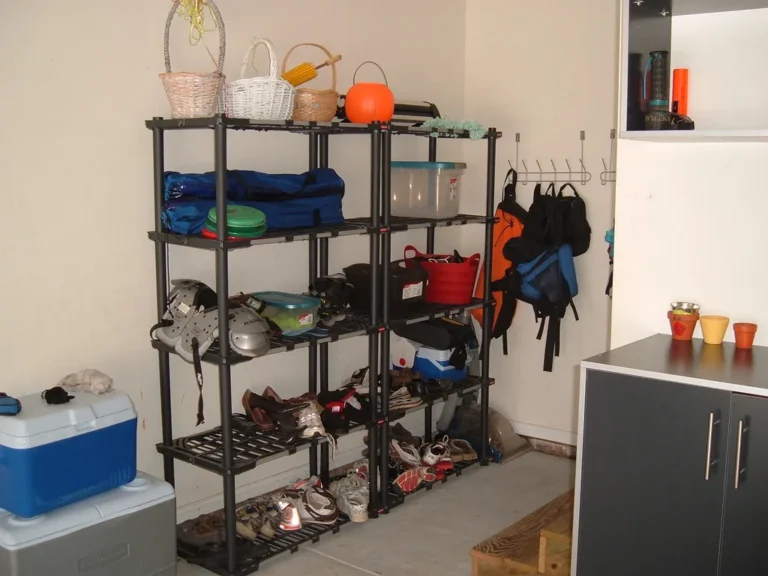
Garage cabinets are all about utility. Durability and resistance to dust and moisture are key. Simple, robust flat panel doors are often the best choice.
They can be made from materials that are easy to wipe down. They won’t get ruined by the occasional splash. The focus here is on function over high style.
So, a simpler, tougher door makes sense.
Cabinet Door Use Cases
Kitchens: High traffic, need for both style and durability. Both styles work, but flat panels are easier to clean. Raised panels offer more traditional charm.
Bathrooms: Moisture and humidity are key. Easy-to-clean surfaces are essential. Flat panels often preferred.
Laundry Rooms: High usage, potential for spills. Durability and easy maintenance are priorities. Flat panels are practical.
Living Rooms/Built-ins: Aesthetic is often primary. Both styles can work, depending on the room’s decor. Raised panels for formal, flat panels for modern.
Garages: Focus on utility, durability, and resistance to elements. Simple flat panel designs are usually best.
What This Means for Your Kitchen Design
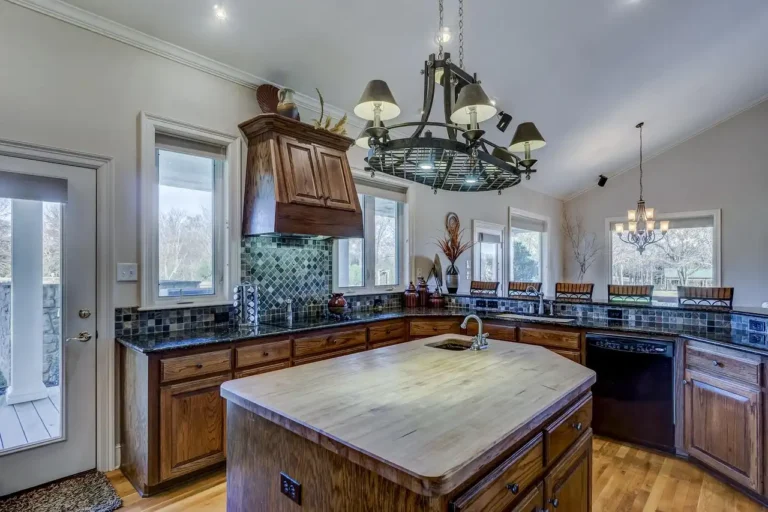
Choosing between raised and flat panel doors directly impacts your kitchen’s overall feel. Raised panel doors offer a sense of tradition. They can make a kitchen feel more grounded and established.
They are excellent for creating a warm, inviting atmosphere. If you love vintage charm or classic decor, this is likely your path. They pair well with granite countertops, subway tile backsplashes, and vintage-inspired hardware.
Flat panel doors lean towards modern and minimalist aesthetics. They create a clean, uncluttered look. This can make a kitchen feel more open and airy.
They are perfect for homeowners who prefer clean lines. They allow for bold accent pieces. Think of a colorful island, a striking light fixture, or a unique cabinet pull.
They are also excellent for smaller kitchens. They help maximize the sense of space.
Consider the other elements in your kitchen. What is the style of your countertops? Your flooring?
Your appliances? Your cabinet hardware? The doors should complement these items.
For example, if you have very intricate countertops, very detailed raised panel doors might be too much. Conversely, very sleek, minimalist hardware might look out of place on ornate raised panel doors. Aim for balance and harmony.
Think about how you use your kitchen. If it’s a place for lively family dinners and lots of cooking, ease of cleaning might be a top priority. This would lean towards flat panel doors.
If your kitchen is more of a showpiece and you entertain formally, the elegance of raised panels might be more appealing. Your choice should reflect your lifestyle.
Style Pairing Ideas
Raised Panel Doors:
- Hardware: Brushed nickel knobs, oil-rubbed bronze pulls, antique brass handles.
- Countertops: Granite, marble, quartz with subtle veining.
- Backsplashes: Subway tile, tumbled stone, decorative ceramic.
- Flooring: Hardwood, stone tile, classic checkered patterns.
Flat Panel Doors:
- Hardware: Sleek bar pulls, minimalist knobs in chrome, matte black, or brushed stainless steel.
- Countertops: Solid surface quartz, concrete, butcher block.
- Backsplashes: Large format tiles, glass tiles, geometric patterns.
- Flooring: Large format tile, polished concrete, sleek wood planks.
When Is It Normal, and When Should You Worry?
For raised panel doors, normal wear and tear includes minor scuffs or a slight dulling of the finish in high-traffic areas. It’s also normal for the wood to expand and contract slightly with humidity changes. This might cause very subtle shifts.
Worry if you see significant gaps in the frame or panel. This could indicate poor joinery or material issues. Also, keep an eye out for deep scratches or gouges.
These are harder to fix on detailed doors. If grease and grime build up heavily in the crevices, that’s a sign it needs more diligent cleaning, not a defect.
For flat panel doors, normal signs of use might include light surface scratches or a dulling of the finish. If the door is painted, minor chips are possible over time. Worry if you see peeling paint that isn’t due to damage.
For wood or veneer doors, significant warping or cracking is a concern. This could point to the material or manufacturing quality. For laminate doors, bubbling or delamination of the laminate layer is a problem.
In both cases, if you notice doors that don’t close properly, or hinges that are loose, address it. This is usually a simple adjustment. But if the door itself is warped, it might be a sign of a bigger issue.
With any cabinet door, check for loose joints or separations. This is especially important for raised panel doors where multiple pieces come together. If you see this, it might be time to consult a professional.
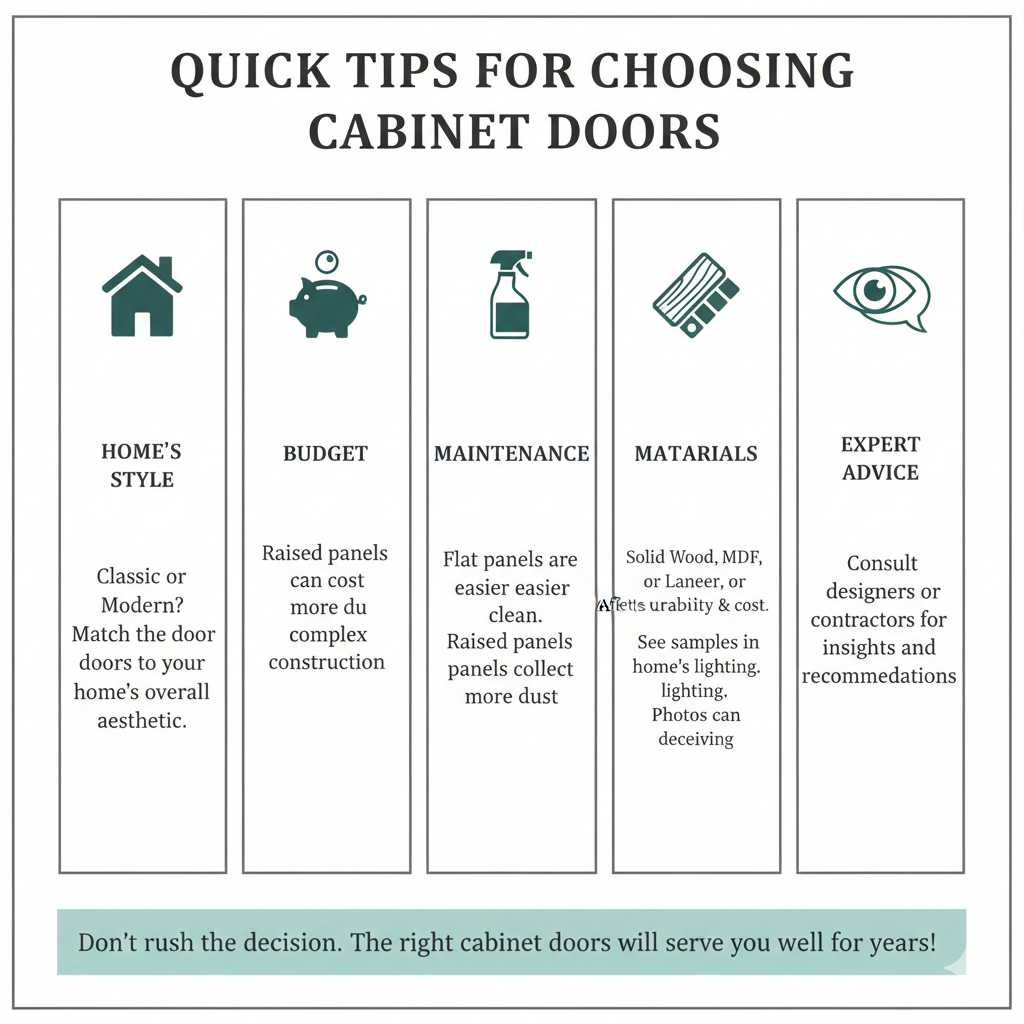
Quick Tips for Choosing
Here are some easy steps to help you decide:
- Look at your home’s style. Does it lean classic or modern?
- Consider your budget. Raised panels can cost more.
- Think about maintenance. How much time do you want to spend cleaning? Flat panels are easier.
- Check the materials. Solid wood, MDF, veneer, or laminate?
- See samples. Look at the doors in your home’s lighting.
- Get opinions. Talk to designers or contractors.
- Prioritize function. Where will the cabinets be used?
Don’t rush the decision. Take your time to explore your options. The right cabinet doors will serve you well for years.
Frequently Asked Questions
Are raised panel doors more durable than flat panel doors?
Durability depends more on the material and construction quality than the style itself. Both can be very durable. Solid wood is strong in either style.
However, the detailed edges of raised panel doors can be more susceptible to chipping or damage if not cared for. Flat panel doors are generally easier to maintain, which can indirectly contribute to their long-term appearance.
Can I paint raised panel cabinet doors?
Yes, you can paint raised panel cabinet doors. They often look beautiful when painted. The most common issue is ensuring the paint gets into all the crevices.
Using a good primer and a quality paint specifically made for cabinets is recommended. Many people choose a different color for the frame and the raised panel for added visual interest.
Are flat panel doors outdated?
No, flat panel doors are far from outdated. They are a staple in modern and minimalist kitchen design. Styles like Shaker, which are a type of flat panel, are incredibly popular and have been for years.
Their clean lines ensure they remain relevant in contemporary interiors. Their simplicity makes them versatile.
Which style is better for a farmhouse kitchen?
For a farmhouse kitchen, both styles can work, but raised panel doors often lend themselves more to a traditional farmhouse look. The detail and depth of raised panels fit well with rustic and classic elements. However, a clean, simple Shaker-style (flat panel) door is also very popular in modern farmhouse designs.
It depends on how traditional or modern you want your farmhouse to be.
What is the difference between Shaker and flat panel doors?
Shaker doors are a specific type of flat panel door. They feature a simple, flat center panel surrounded by a clean, five-piece frame. The term “flat panel” is a broader category.
It simply describes doors with a flat center. So, all Shaker doors are flat panel doors, but not all flat panel doors are Shaker style. Shaker is known for its understated elegance and simplicity.
Can I mix and match cabinet door styles in my kitchen?
Mixing cabinet door styles is generally not recommended for a cohesive look. It can make a kitchen appear cluttered or inconsistent. However, in very specific design scenarios, a professional designer might use different styles strategically, like for a focal point island.
For most homeowners, sticking to one style for all main cabinets provides the best result.
Conclusion
Choosing between raised and flat panel cabinet doors is a big decision. It affects your kitchen’s style, your budget, and how easy it is to maintain. Raised panels offer classic charm and detail.
Flat panels provide sleek, modern simplicity. Consider your home’s design, your lifestyle, and your cleaning habits. Both have their place.
Make the choice that feels right for you and your home.
Related pick: Check today's price on Amazon
Products related to this article
Sponsored / affiliate links. As an Amazon Associate I earn from qualifying purchases. I may earn additional commission from eligible campaigns.