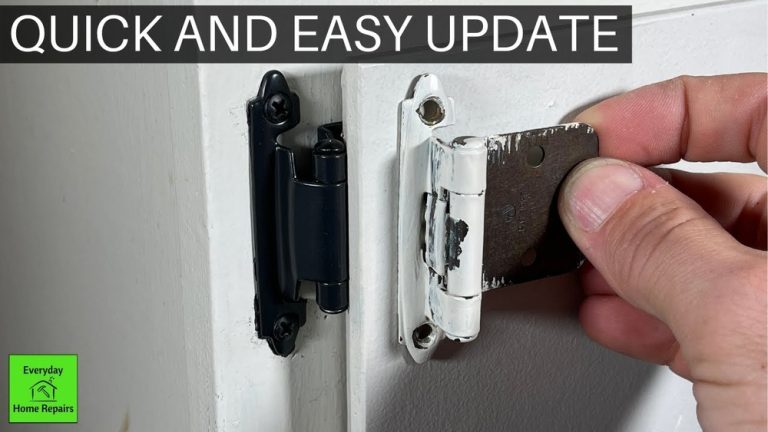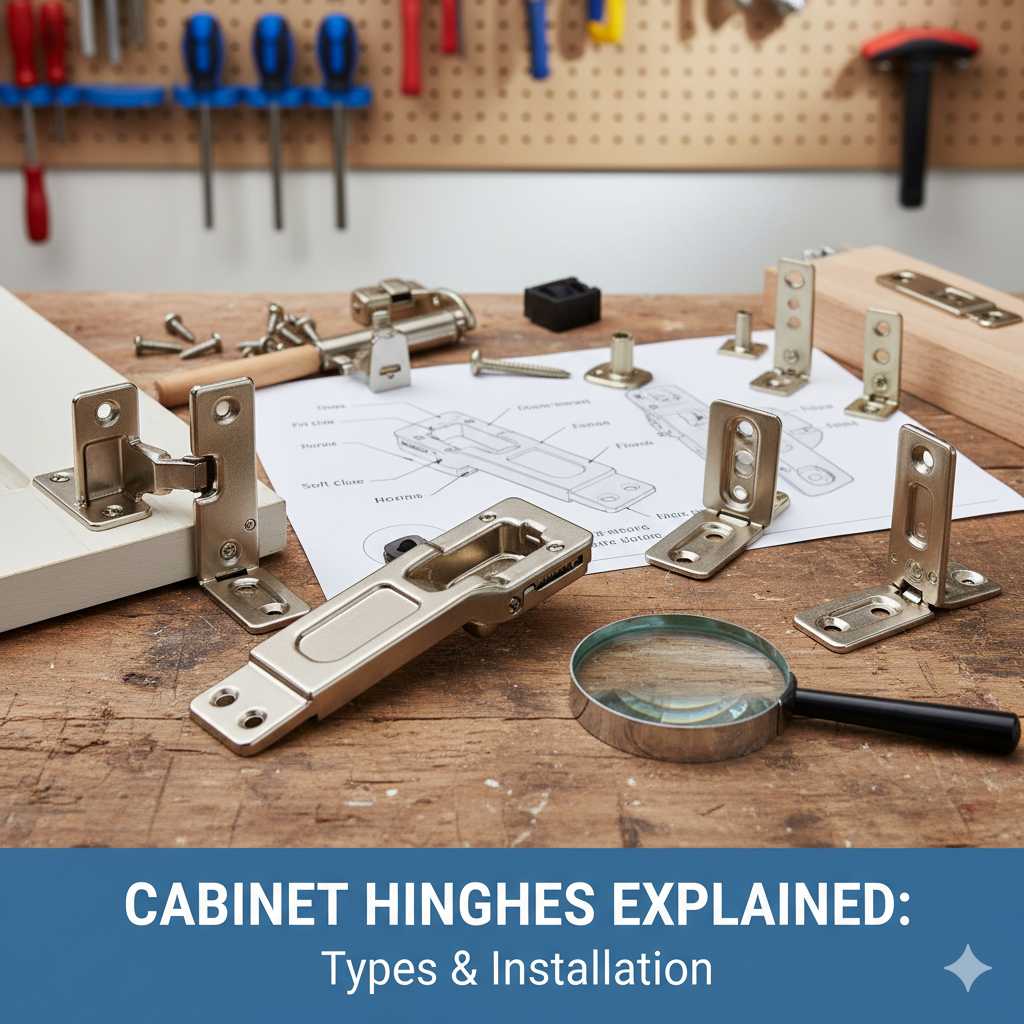
Cabinet Hinges Explained: Different Types You Should Know
It’s a common thing. You’re looking at new kitchen cabinets or maybe just trying to fix a door that won’t close right. Then you see them: cabinet hinges. They can seem like a small detail. But these little metal pieces do a big job. They hold your doors on. They let them open and close smoothly. Knowing about them helps you pick the right ones. It also helps you fix small issues yourself. This guide will walk you through the different types. We’ll keep it simple so you can feel confident.
Cabinet hinges are mechanical devices that attach cabinet doors to the cabinet frame. They allow doors to swing open and closed. Different types of hinges suit different cabinet styles and mounting needs. Understanding these types helps in choosing the best fit for your project.
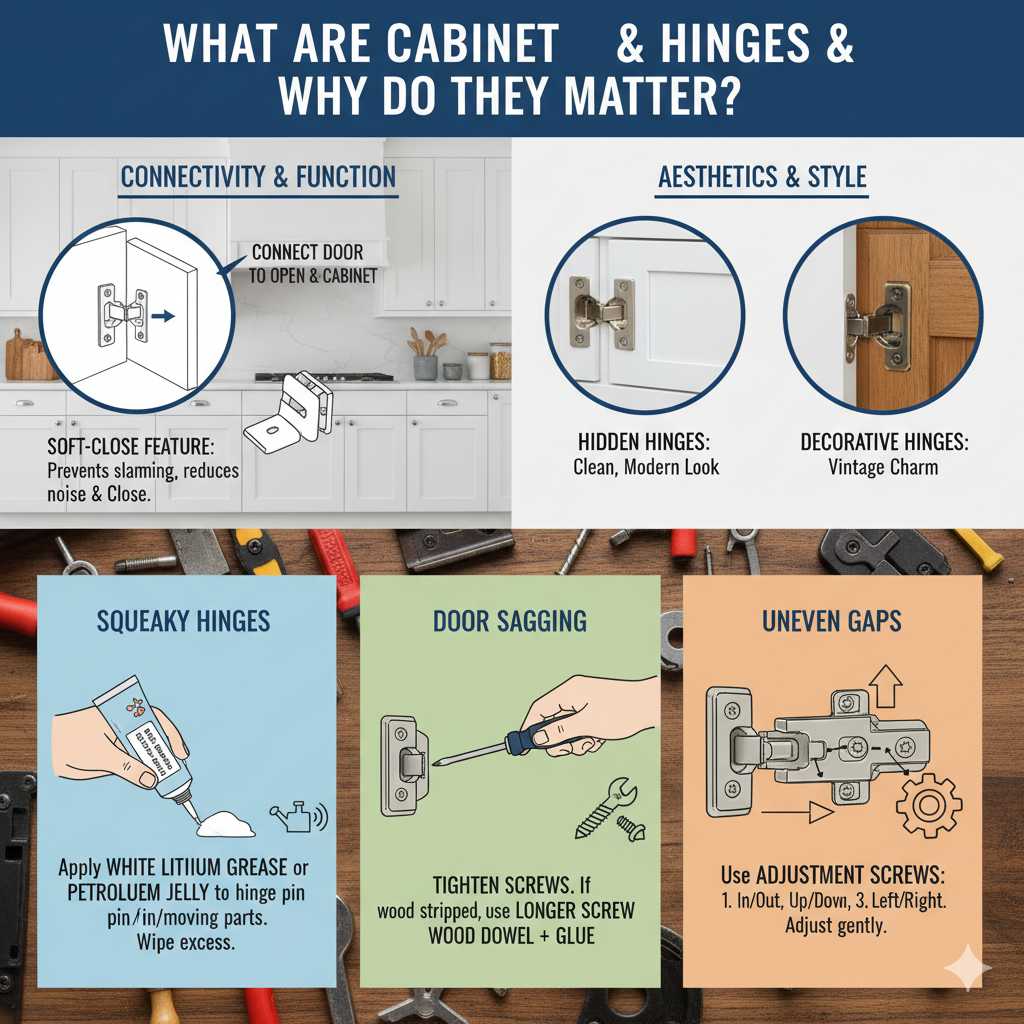
What Are Cabinet Hinges and Why Do They Matter?
Think about your kitchen cabinets. Or maybe the doors on your bathroom vanity. They all have hinges. These are the parts that connect the door to the cabinet box. Without them, the door would just fall off.
Hinges are more than just connectors. They affect how a door looks and feels. Some hinges are hidden. They give cabinets a clean, modern look. Others are decorative. They can add a vintage charm. The right hinge also helps a door close softly. It stops that loud bang. This is often called “soft-close.” It’s a feature many people love.
Different Types of Cabinet Hinges
There are many kinds of cabinet hinges. They are designed for different looks and functions. Let’s break down the most common ones. We’ll talk about what makes each one special.
Overlay Hinges
Overlay hinges are very popular. They are used when the cabinet door sits on top of the cabinet frame. This means the door “overlays” the frame.
There are two main kinds of overlay hinges:
Full Overlay: These doors cover almost the entire cabinet frame. They give a very clean, modern look. You see less of the frame. This is great for minimalist designs.
Partial Overlay (or Half Overlay): These doors cover about half of the cabinet frame. You can still see some of the frame. This is a common style for many kitchens.
Overlay hinges are usually easier to install. They often have screws that let you adjust the door’s position. This helps you get the gaps between doors just right.
Inset Hinges
Inset hinges are different. With these, the cabinet door sits inside the cabinet frame. It’s like the door is set into the frame. This gives a very flush and polished look.
Inset doors fit snugly. They often have a classic or traditional feel. Because the door sits inside, installation can be trickier. You need precise measurements. The hinges are usually visible when the door is open.
European Hinges (also called Concealed or Euro Hinges)
These are super popular today. European hinges are hidden from view when the cabinet door is closed. This gives cabinets a very sleek and modern appearance.
The main part of the hinge is inside the cabinet. It connects to a mounting plate on the frame. The door then clips or screws onto this.
European hinges have a lot of adjustability. You can usually move the door up, down, left, right, and even in or out. This makes getting a perfect fit easy. They are common on frameless cabinets. They are also used on framed cabinets for a hidden look. Many also come with soft-close mechanisms built-in.
Surface Mount Hinges
These are like overlay hinges but often simpler. Surface mount hinges attach directly to the surface of the cabinet frame and the door. You don’t need to cut or recess them.
They are often used on utility cabinets or older styles of furniture. They are usually very strong and easy to install. However, they are typically visible when the door is closed. Some can have a rustic or vintage look.
Bullet Hinges
Bullet hinges are small and round. They look like little cylinders or bullets. They are installed into holes drilled into the edge of the cabinet door and the cabinet frame.
These hinges are often used for doors that need to be removed easily. They can also be used when you want a very minimal look. They are usually strong but don’t offer much adjustment.
Soss Hinges (also called Invisible Hinges)
Soss hinges are designed to be completely invisible when the door is closed. They are mortised (cut into) both the door and the frame.
These are often used for specialty doors. This could be a secret pantry door or a panel that needs to blend in. They require very precise installation. They are not usually found on standard kitchen or bathroom cabinets.
Barrel Hinges
Barrel hinges are similar to bullet hinges. They are cylindrical. They are mortised into the door and the frame.
They offer a clean look because they are hidden when the door is closed. They are often used on custom furniture or cabinets where a hidden hinge is desired, but a Soss hinge might be too complex.
Double Acting Hinges (or Swing-Clear Hinges)
These hinges allow a door to swing in both directions. Think of saloon doors. They swing open and then swing back to close.
Double acting hinges are not common for standard cabinets. They are more for doors that need to open both ways, like some commercial settings or unique home designs.
Specialty Hinges
There are many other hinges for specific needs.
Appliance Hinges: These are made for large appliance doors like refrigerators or dishwashers. They need to be very strong.
Bi-fold Hinges: Used for doors that fold in half, like on a pantry or closet.
Glass Door Hinges: Designed to hold glass doors. They often have special clamps.
A Real-Life Hinge Hiccup
I remember one time I was helping a friend update her kitchen. She picked out these beautiful, sleek cabinet doors. They were a full overlay style. We were so excited to get them on. We bought what we thought were the right hinges. They looked like standard overlay hinges.
We started screwing them in. Everything seemed fine at first. But when we tried to close the doors, they didn’t line up. One door was higher than the other. Another one stuck out too far. We spent hours trying to adjust them. We were getting so frustrated. The gaps between the doors were all uneven.
It turned out we had the wrong type of overlay hinge. We needed a specific kind designed for the thicker doors she chose. The cheap ones we bought didn’t have enough “play” for the adjustments. We had to take them all off. We went back to the store and got the correct ones. The new ones had more adjustment screws. We were able to get the doors perfectly aligned. It was such a relief! That experience taught me how important it is to get the exact hinge for your cabinet door and style.
Quick Look at Hinge Styles
Here’s a simple way to compare some common hinge types.
Hinge Style Comparison
- Full Overlay: Door covers almost all the frame.
Look: Modern, clean.
Installation: Easier adjustment. - Partial Overlay: Door covers about half the frame.
Look: Traditional, common.
Installation: Straightforward. - Inset: Door sits inside the frame.
Look: Flush, elegant.
Installation: Requires precision. - European (Concealed): Hidden when door is closed.
Look: Very modern, sleek.
Installation: Precise but adjustable.
What to Consider When Choosing Cabinet Hinges
Picking hinges isn’t just about looks. You need to think about a few things.
Cabinet Construction
First, what kind of cabinet do you have?
Framed Cabinets: These have a visible frame around the opening. Overlay hinges are common here.
Frameless Cabinets (European Style): These don’t have a frame. The doors attach directly to the sides of the cabinet box. European hinges are standard for these.
Door Type
Overlay Doors: These sit on the outside of the frame. You’ll use overlay or European hinges.
Inset Doors: These sit inside the frame. You’ll need inset hinges.
Aesthetics
Do you want your hinges to be seen or hidden?
Visible Hinges: Some people like the look of decorative hinges. They can add character.
Hidden Hinges: For a clean, modern look, you’ll want concealed hinges like European or Soss hinges.
Functionality
Do you need special features?
Soft-Close: This is a big one for many people. It stops doors from slamming. Most European hinges offer this.
Adjustability: Do you want to easily tweak the door alignment? European hinges are great for this.
Load Capacity: How heavy are your doors? Make sure the hinges can handle the weight.
Budget
Hinges vary in price. Simple surface mount hinges are often cheaper. European hinges with soft-close can cost more. Decide what you want to spend.
How Hinges Work: The Basics
At their heart, most cabinet hinges work on a simple pivot. A pin or a series of interlocking parts allows one piece to rotate relative to another.
For example, an overlay hinge has two arms. One arm attaches to the cabinet frame. The other attaches to the door. When the door opens, the arms pivot. This allows the door to swing away from the cabinet.
European hinges are a bit more complex. They have a cup that fits into a hole drilled in the door. This cup part is connected to an arm that attaches to the cabinet. The mechanism allows for a wide range of motion. It also provides the soft-close action. A small damper cylinder is usually part of this mechanism. It controls the speed of the door as it closes.
Real-World Cabinet Hinge Scenarios
Let’s imagine some common situations where hinge choice matters.
Scenario 1: The Modern Kitchen Makeover
Your client wants a super sleek, minimalist kitchen. They prefer frameless cabinets. The doors will cover the entire cabinet box.
Hinge Type: European (concealed) hinges are the best choice.
Why: They are hidden. They offer a clean look. They allow for precise door alignment. Look for ones with integrated soft-close.
Considerations: Ensure you get the correct overlay percentage for the doors. Check the mounting plate type for frameless cabinets.
Scenario 2: The Farmhouse Refresh
You’re updating an old farmhouse kitchen. You’re keeping the framed cabinets. You like the classic look. You want hinges that add a bit of character.
Hinge Type: Exposed, decorative hinges. This could be strap hinges or T-hinges.
Why: These are meant to be seen. They complement the farmhouse style. They are often available in finishes like black or oil-rubbed bronze.
Considerations: Make sure they are suitable for the weight of your doors. Check the overlay type (full or partial) that matches your existing door placement.
Scenario 3: The Bathroom Vanity Upgrade
You’re installing a new vanity. You want a clean, updated look. The vanity is a framed cabinet.
Hinge Type: Concealed European hinges.
Why: Even on framed cabinets, European hinges give a clean look. They hide the hardware. The adjustability is great for getting doors perfectly level. Soft-close is a bonus for a quiet bathroom.
Considerations: You’ll need hinges designed for framed cabinets. They have a different arm than those for frameless.
What This Means for Your Home
Understanding hinge types helps you in a few ways.
When It’s Normal
It’s normal for cabinet doors to have some slight wiggle room.
It’s normal for hinges to need occasional tightening.
It’s normal for new doors to need minor adjustments after installation.
It’s normal for soft-close mechanisms to require a gentle push to engage.
When to Worry (or Get Help)
If a door hangs crookedly and won’t adjust.
If a hinge squeaks loudly every time you open or close the door.
If a door is very hard to open or close.
If you see rust or significant corrosion on the hinge.
If a hinge feels loose or wobbly on the cabinet.
If the door is hitting the cabinet frame when it shouldn’t.
Simple Checks You Can Do
1. Tighten Screws: Open the cabinet door. Look at the screws holding the hinge to the door and the cabinet. Are any loose? Gently tighten them with a screwdriver. Don’t overtighten.
2. Check for Obstructions: Make sure nothing is blocking the door’s path. Sometimes a small item can get lodged.
3. Look at Alignment: Are the doors even with each other? Are the gaps consistent? This tells you if adjustment is needed. Most European hinges have adjustment screws. You can often turn these to move the door.
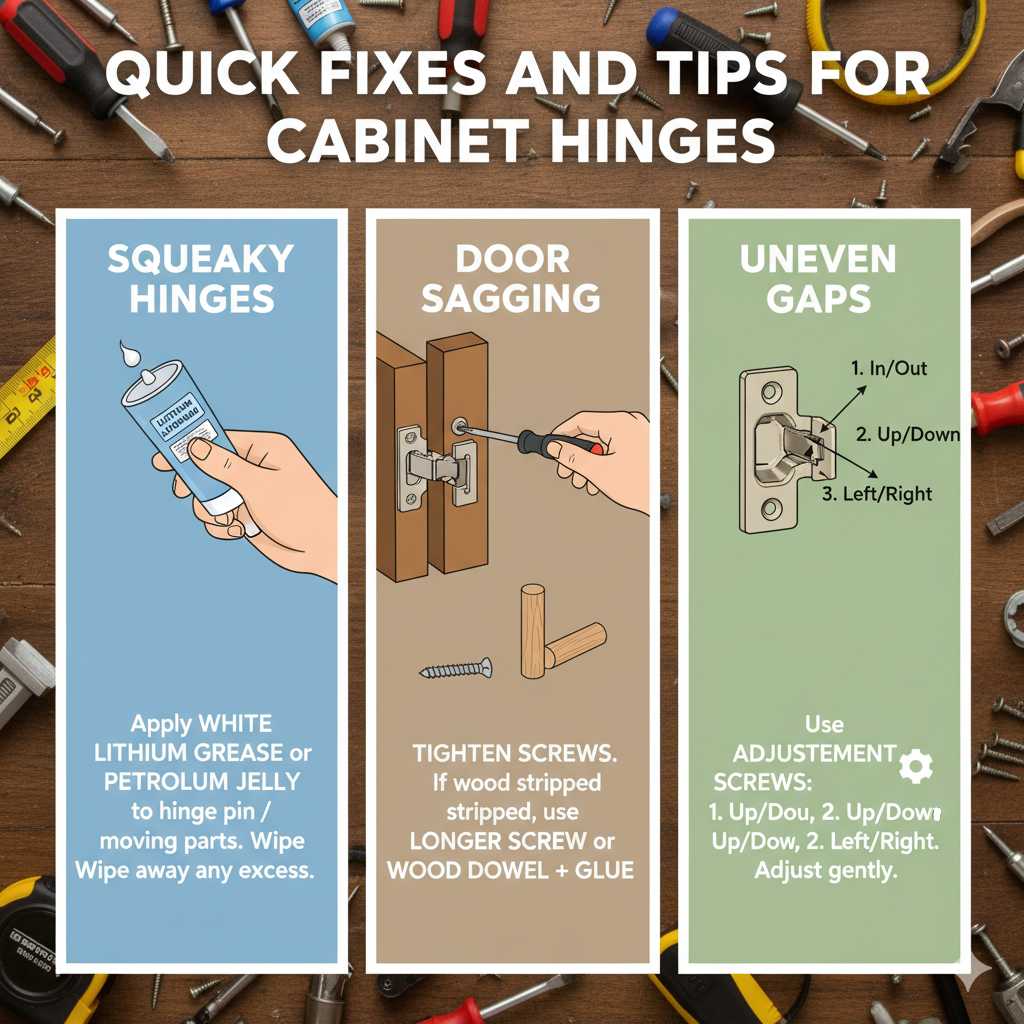
Quick Fixes and Tips for Cabinet Hinges
Sometimes a small tweak makes a big difference.
Squeaky Hinges: A little bit of white lithium grease or even a dab of petroleum jelly can help. Apply it directly to the hinge pin or moving parts. Wipe away any excess.
Door Sagging: Often, this means the hinge screws are loose. Tighten them up. If the wood around the screw hole is stripped, you might need a longer screw or a wood dowel and glue to fix it.
Uneven Gaps: This is where adjustment screws shine. For European hinges, there are usually three screws. One moves the door in/out. Another moves it up/down. A third moves it left/right. Experiment gently to see what each screw does.
Buying
Quick Hinge Checks
1. Are screws tight? Check all screws on both sides of the hinge.
2. Is anything blocking the door? Look for items in the way.
3. Is the door aligned? Check for even gaps.
4. Squeaking? Try a little lubricant on the moving parts.
Frequently Asked Questions About Cabinet Hinges
How do I know if I have full overlay or partial overlay doors?
Full overlay doors cover almost the entire cabinet frame when closed. You see very little of the cabinet box. Partial overlay doors cover only about half the frame.
You will see some of the cabinet box between doors.
Can I convert my old cabinet hinges to soft-close?
Yes, often you can. You can
What’s the difference between European hinges and standard hinges?
European hinges (also called concealed hinges) are hidden when the door is closed, giving a clean look. They offer lots of adjustability. Standard hinges, like overlay or inset hinges, are often visible.
They may have fewer adjustment options.
How do I fix a cabinet door that keeps sagging?
Sagging doors are usually due to loose hinge screws. First, try tightening all the screws on the hinges. If that doesn’t work, the wood might be damaged.
You might need to use longer screws or repair the wood hole with glue and a dowel.
What kind of hinge do I need for a frameless cabinet?
For frameless cabinets, you typically need European-style (concealed) hinges. These hinges attach directly to the side of the cabinet box and the door. They are designed to work without a cabinet frame.
How do I adjust cabinet hinges for a better fit?
Most modern hinges, especially European ones, have adjustment screws. Look for screws on the hinge arm. Gently turning these screws will move the door up, down, left, right, or in and out.
Make small adjustments and check the door fit after each one.
Key Takeaways on Cabinet Hinges
Choosing the right cabinet hinges makes a difference. It affects how your cabinets look and work. From sleek European hinges to classic decorative ones, there’s a type for every style. Pay attention to your cabinet construction and door type. Consider features like soft-close. With a little knowledge, you can pick the best hinges for your home project. And remember, simple adjustments can often fix minor issues.
Sponsored / affiliate links. As an Amazon Associate I earn from qualifying purchases. I may earn additional commission from eligible campaigns.Products related to this article