Full Overlay Cabinets vs Partial Overlay: Which Fits
Choose full overlay cabinets if you want a narrower face-frame reveal and your installer can hold tight tolerances; choose partial overlay if you want a more forgiving fit, lower cost, or a traditional framed look. Ignore cabinet construction and the doors can bind, gaps can look uneven, and replacement parts may not line up. This guide compares fit, sizing, installation precision, and the tradeoffs that matter in real kitchens.
This guide is part of our Kitchen cabinets: styles, materials and installation series.
What is the difference between full overlay and partial overlay cabinets?


Cabinet overlay is the amount of face frame covered by the doors and drawer fronts. Full overlay cabinets cover nearly all of the face frame, while partial overlay cabinets cover only part of it and leave more frame visible. Inset cabinets are different because the doors sit inside the frame rather than sitting over it.
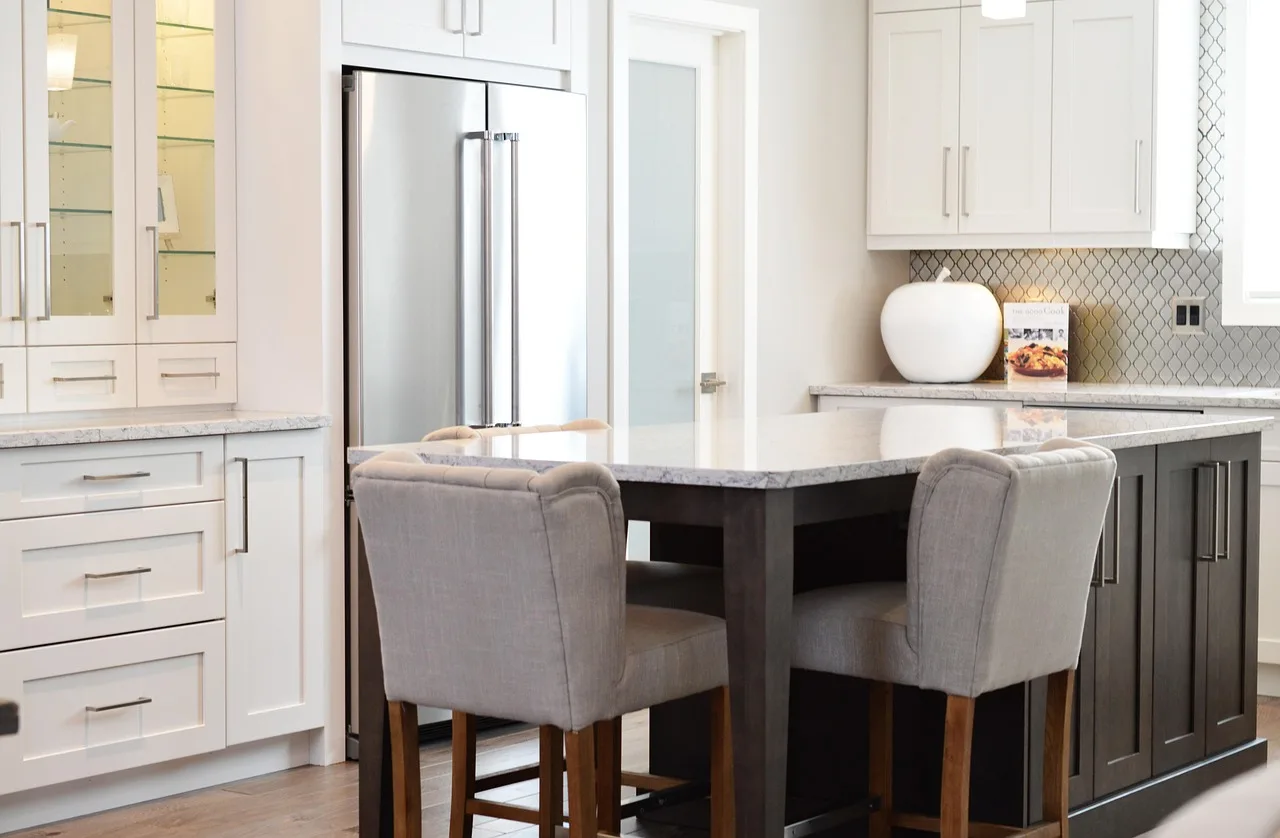
Full overlay cabinets vs partial overlay cabinets on a face frame
The face frame is the wood frame attached to the front of framed cabinets. With full overlay, the frame shows as a thin border, so the front reads as one flat plane. With partial overlay, the frame shows between doors and drawers, which breaks up the front more visibly.
Why this is not the same as inset cabinets
Inset cabinets are a separate category, not another overlay level. Their doors sit within the opening, which creates a different fit, different hinge needs, and usually tighter cabinet making. Overlay choice only describes how much of the face frame is covered.
Full overlay cabinets
Full overlay cabinets hide most of the cabinet frame for a smoother look. That is why they often read as cleaner and more updated, and why they can feel similar to frameless cabinets even when they are built on a face frame. The tradeoff is tighter installation and more exact hinge adjustment.
How much of the face frame stays visible
Very little. The door and drawer fronts cover nearly the entire face frame, so the reveal is narrow. That reduced frame visibility gives the front a more continuous look, but it also leaves less room for error when doors are hung and aligned.
Why concealed hinges matter here
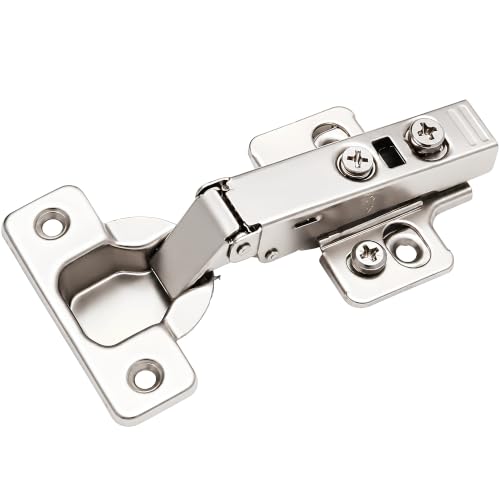
Full overlay commonly uses concealed hinges. Those hinges help create the cleaner front because they stay out of sight when the door is closed. They also need precise adjustment to prevent rubbing at the edges, especially where cabinets meet at corners or where walls are not perfectly square.
Partial overlay cabinets
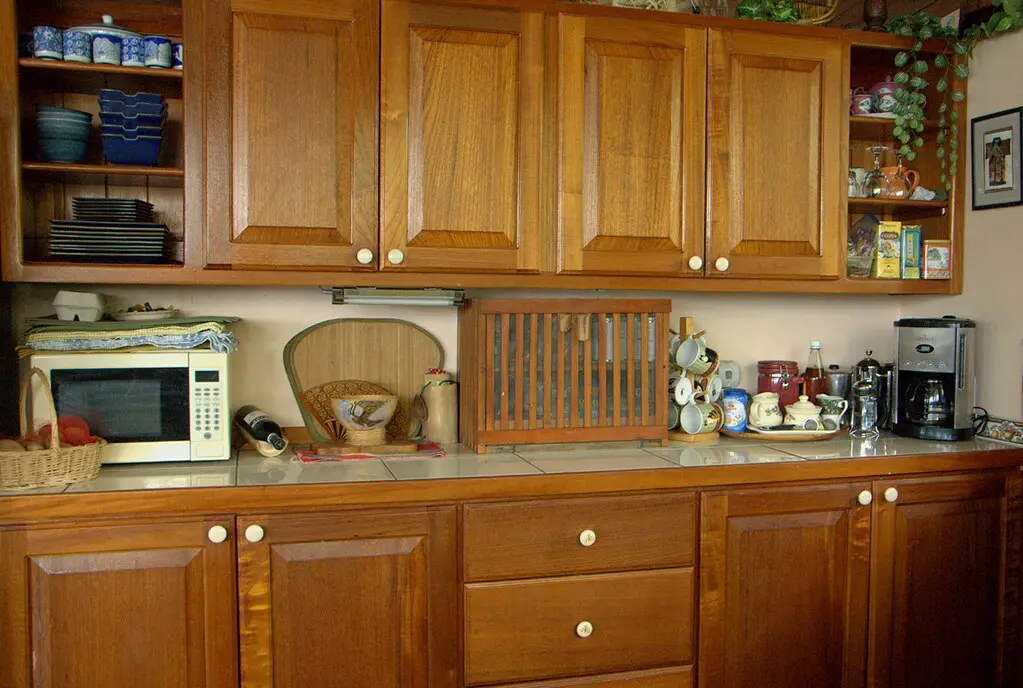
Partial overlay cabinets are also called standard overlay cabinets. They cover only part of the face frame, so more of the frame remains visible between doors and drawers. That visible structure gives the cabinet front a more traditional or classic feel, and it usually makes installation more forgiving.
Why it is also called standard overlay
Standard overlay is another name for partial overlay cabinets. The terms are often used interchangeably, so buyers should treat them as the same cabinet style. If a catalog uses standard overlay, expect more frame exposure than with full overlay.
How visible frame space changes the look
Because more face frame remains in view, the cabinet front feels less dense. Many older kitchens used this format, so the style often matches traditional trim, raised-panel doors, and simpler replacement projects where perfect uniformity is not the main goal.
Why it is usually easier to install
Partial overlay cabinets allow less precision and more flexibility during installation. Small layout errors, hinge variation, and uneven walls are easier to absorb because the visible frame gives more visual margin. That can matter in a remodel where the room is not perfectly true.
Which looks more modern, and which fits a classic kitchen?
Full overlay cabinets usually look more modern because they hide most of the face frame and leave only a narrow border. Partial overlay cabinets often look more classic because the frame stays visible and divides the cabinet faces into smaller sections. Style is secondary, though; construction and layout tolerance should come first.
Visual density and the amount of frame you see
Full overlay lowers visual density at the cabinet front. The doors and drawer fronts read as larger continuous surfaces, which can make a kitchen feel calmer and less segmented. Partial overlay shows more frame lines, so the front has more breaks and a more framed appearance.
How full overlay can echo frameless style
Full overlay can feel similar to frameless cabinets because the front frame is mostly hidden. That similarity is visual, not structural. The cabinet still has a face frame unless it is actually frameless, so overlay should not be confused with cabinet box construction.
Why partial overlay suits traditional layouts
Partial overlay was common in many older kitchens. It works well with painted trim, beadboard backsplashes, and door styles that already lean classic. The visible frame can also soften the look in smaller rooms where very large door fronts might feel heavy.
Comparison table: budget, fit, cleaning, repair, and appearance
The core tradeoff is simple: full overlay gives a tighter, cleaner front, while partial overlay gives more installation forgiveness and usually lower cost. The right choice depends less on style preference than on how exact your cabinet boxes, walls, and labor can be.
| Decision factor | Full Overlay Cabinets | Partial Overlay Cabinets | Winner |
|---|---|---|---|
| Budget | Usually higher because of tighter construction, more exact fitting, and often concealed hinges | Usually lower and more cost-effective for remodels | Partial overlay |
| Alignment tolerance | Needs precise alignment to avoid rubbing | Allows more flexibility during installation | Partial overlay |
| Cleaning | Less exposed frame means fewer ledges and seams to wipe | More frame is visible, so there are more edges to clean | Full overlay |
| Replacement flexibility | Parts must match more closely to preserve even reveals | More forgiving for future door or hinge replacement | Partial overlay |
| Visual density | Lower visual density; more continuous front coverage | Higher visual density; more frame lines remain visible | Full overlay |
Budget and labor
Full overlay cabinets can cost more than partial overlay cabinets, though pricing varies. The added cost tends to come from closer fit requirements, more careful labor, and hardware that has to line up well across the entire run. Partial overlay is described as a cost-effective option for remodels because it is easier to accommodate small irregularities.
Alignment tolerance and hinge adjustment
Full overlay cabinets require precise alignment to avoid rubbing. If a box is slightly out of square, the narrow reveal makes it obvious. Partial overlay cabinets are more forgiving, so they are often the safer choice when walls bow, floors slope, or cabinet boxes need field adjustments.
Say your kitchen has a cabinet run of about that length and one wall bows slightly near the range. A full overlay door set can show uneven reveals right away. A partial overlay layout may hide that small variation better, which can save time during installation and reduce the need for repeated hinge tweaks.
Cleaning and dust lines
Which overlay is easier to clean? Full overlay cabinets are usually a little easier because less frame is exposed. Fewer seams mean fewer places for grease and dust to settle. Partial overlay has more frame showing, so the visible edges and corners take more wiping.
Replacement flexibility and future parts
Overlay affects the front opening, not the interior cabinet volume, but it does affect how replacement parts must fit. Full overlay can be less forgiving if you replace only one door and the reveal no longer matches the others. Partial overlay usually gives more room for a future match, which matters in phased remodels and rental properties.
Visual density and front-face coverage
Which cabinet style looks more modern? Full overlay cabinets usually do, because they cover nearly the whole face frame and produce a cleaner, updated appearance. Partial overlay cabinets read as more traditional, but that does not make them outdated. It just means the front shows more of its framing.
Choose full overlay cabinets if…
Choose full overlay cabinets if you want a tighter, more uniform front and can control the cabinet fit closely. They make sense when the installer can hold tolerances, when you want a cleaner look, and when you are replacing a full set rather than piecing together old and new parts.
Best-fit situations for full overlay
- Your remodel includes new cabinet boxes, level floors, and careful scribing.
- You want a more modern or high-end front presentation.
- You expect concealed hinges and want the door hardware mostly hidden.
- You are less concerned about cost than about a consistent reveal.
Choose partial overlay cabinets if…
Choose partial overlay cabinets if you want a more forgiving install, a lower-budget cabinet line, or a classic framed look. They are often the better call for rentals, phased work, older houses with imperfect walls, and DIY projects where exact alignment is harder to maintain.
Best-fit situations for partial overlay
- You need more room for hinge adjustment and layout variation.
- You are matching existing cabinets in a partial kitchen update.
- You want a standard overlay look for a traditional kitchen.
- You are working with a tighter budget or a faster timeline.
Suppose a landlord is replacing only the sink base and two uppers in a rental kitchen. Partial overlay is usually easier to match, easier to install, and less risky if the old cabinets are not perfectly square. Full overlay would demand a tighter match across more pieces.
Are full overlay cabinets better than partial overlay cabinets?
Full overlay cabinets are not automatically better. They are better when you want a cleaner front and can pay for tighter fitting and more careful installation. Partial overlay is better when flexibility, budget, and easier repair matter more than a nearly frame-free appearance.
The best answer depends on the cabinet boxes, the room, and the installer’s tolerance for small errors. If the kitchen has irregular walls or a phased plan, partial overlay can be the smarter choice. If the layout is accurate and the goal is a polished front, full overlay often wins.
Is partial overlay the same as standard overlay?
Yes. Partial overlay cabinets are also called standard overlay cabinets. Both terms describe doors and drawer fronts that cover only part of the face frame, leaving more of the frame visible than full overlay cabinets do.
Do full overlay cabinets have more storage space?
No, not in any major direct way. Overlay changes how the cabinet face is covered, not the interior box volume. Storage is affected more by cabinet depth, shelf layout, pullouts, and pantry design than by whether the doors sit full overlay or partial overlay.
Are partial overlay cabinets outdated?
No. Partial overlay cabinets were common in many older kitchens, but common does not mean obsolete. They still make sense in classic interiors, budget remodels, rentals, and projects that need a more forgiving fit. Their visible frame is a design choice, not a defect.
What should I choose for a budget kitchen remodel?
For a budget kitchen remodel, partial overlay is usually the safer choice. It is described as more budget-friendly and cost-effective, and it allows more flexibility during installation. Full overlay can still work, but only if the project budget leaves room for tighter labor and hardware alignment.
full overlay cabinets vs partial overlay
Full overlay cabinets vs partial overlay comes down to reveal, precision, and cost. Full overlay hides most of the frame and looks cleaner, but it needs tighter fitting. Partial overlay exposes more of the frame, costs less in many projects, and handles small installation errors more easily.
full overlay vs half overlay cabinets
Full overlay vs half overlay cabinets usually refers to the same comparison as full overlay vs partial overlay. “Half overlay” is a casual phrase, while partial overlay and standard overlay are the more accurate terms. If a seller says half overlay, ask for the actual door reveal dimensions before ordering.
Frequently asked questions
What is the difference between full overlay and partial overlay cabinets?
Full overlay cabinets cover nearly all of the face frame, while partial overlay cabinets cover only part of it and leave more frame visible. The difference affects the cabinet front, hinge setup, and installation tolerance, but it does not change the interior box into a different cabinet category.
Are full overlay cabinets better than partial overlay cabinets?
Not always. Full overlay is better when you want a cleaner, more updated look and can accept tighter installation requirements. Partial overlay is better when you need more forgiveness, a lower cost, or a traditional framed appearance. The right choice depends on the room and the project.
Is partial overlay the same as standard overlay?
Yes. Partial overlay cabinets are also called standard overlay cabinets. Both terms describe cabinet doors and drawer fronts that cover only part of the face frame, leaving more of the frame visible than full overlay does.
Do full overlay cabinets cost more than partial overlay cabinets?
Usually yes. Full overlay often costs more because it needs more exact construction, careful alignment, and commonly concealed hinges. Partial overlay is described as a more budget-friendly, cost-effective option, especially in remodels where the existing room is not perfectly square.
Which cabinet style looks more modern?
Full overlay cabinets usually look more modern because they hide most of the cabinet frame and create a smoother front. Partial overlay reads as more traditional or classic because the frame remains visible and adds more lines across the cabinet face.
Which overlay is easier to clean?
Full overlay cabinets are usually easier to clean because less frame is exposed. That means fewer ledges and seams to collect grease and dust. Partial overlay has more visible frame, so there are more edges and corners to wipe during routine cleaning.
Products related to this article
Sponsored / affiliate links. As an Amazon Associate I earn from qualifying purchases. I may earn additional commission from eligible campaigns.