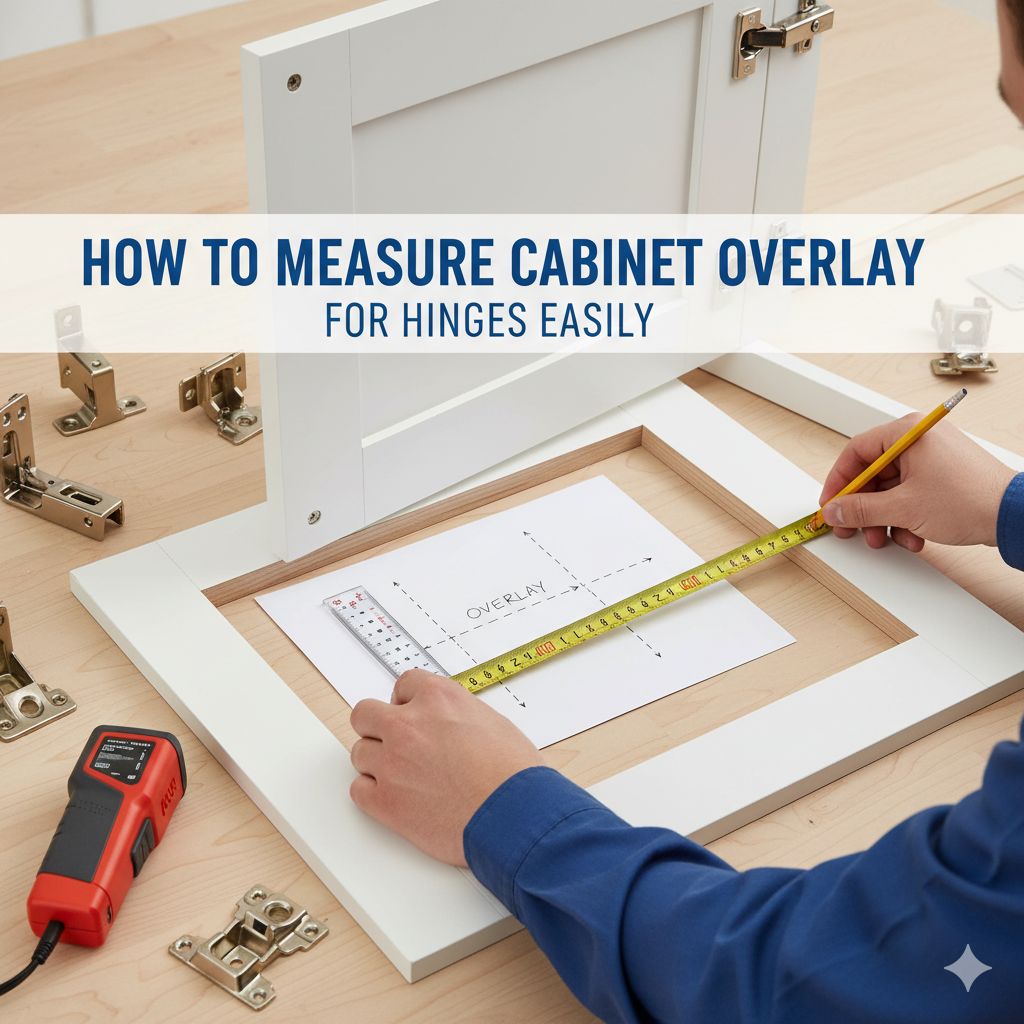
How to Measure Cabinet Overlay for Hinges: 1/4 to 1/2 Inch
Cabinet overlay is how much the door extends past the cabinet frame, measured from the door edge to the frame edge on the hinged side, and it determines which hinges will fit. Order hinges for the wrong overlay and doors wont close flush, might hit each other, or wont open wide enough, forcing a return trip to the hardware store. This guide covers how to measure overlay, the common 1/4 to 1/2 inch sizes, and how to match hinges to your result.
For a related storage or furniture fix, How To Remove Old Door Knobs is a useful next step. For a closely related home or decor topic, Innovative Modern Kitchen Ideas gives readers a useful next step, and How To Attach Drawer Faces covers another related cabinet task.
Understanding Cabinet Overlay
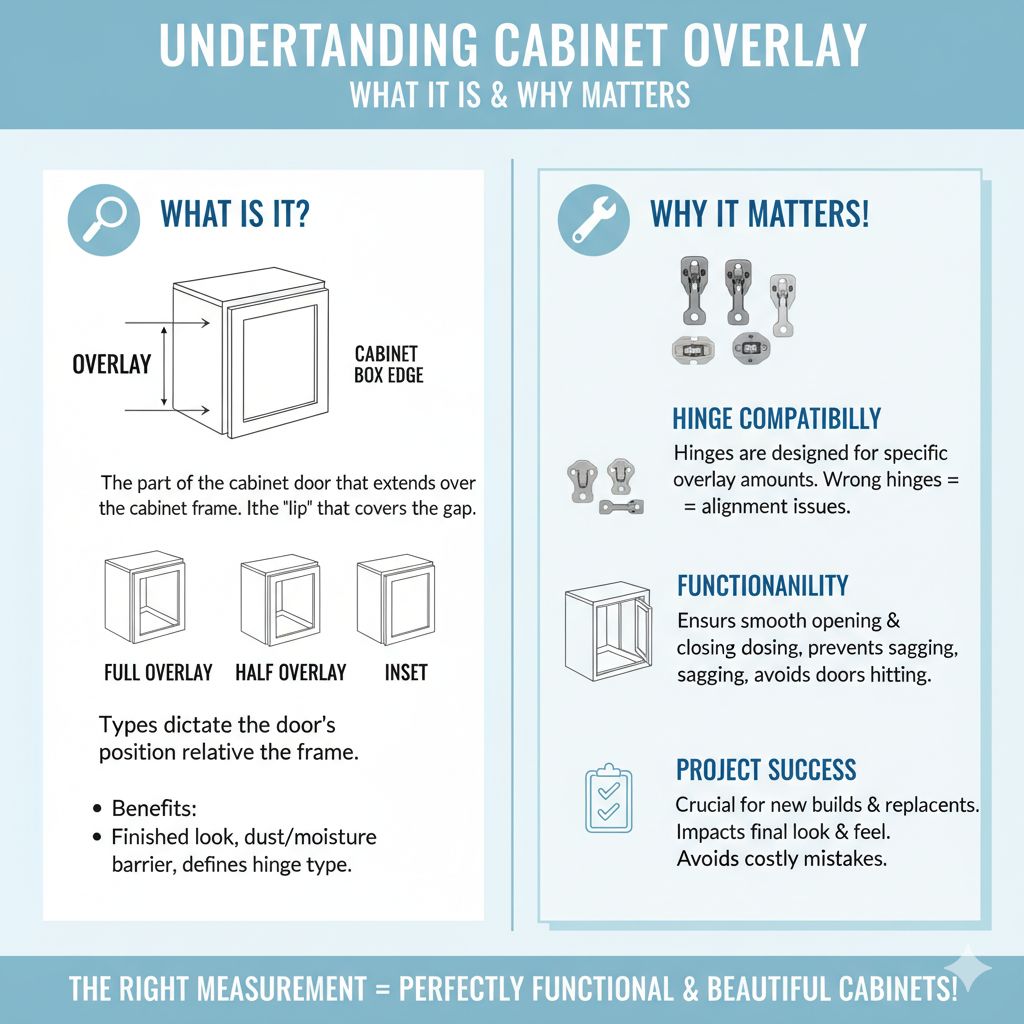
So, what exactly is cabinet overlay? Imagine your cabinet box, the main structure. Now, picture the door that covers it.
Overlay is the part of the door that hangs over the edge of that cabinet box. It’s like a little lip. It’s the extra bit of door that covers the frame.
This overlap makes your cabinets look finished. It also helps keep dust and moisture out. The amount of this overlap tells us what kind of hinges we need.
It dictates how the door sits on the cabinet. It’s a crucial detail for both new builds and replacements.
Why does this measurement matter so much? Well, hinges are designed for specific overlay amounts. If you order hinges for the wrong overlay, your doors simply won’t work as they should.
They might not open wide enough. They might not close flush against the frame. Or, in some cases, they might even hit other doors or drawers.
Getting the overlay measurement correct ensures your cabinets look great and function smoothly for years. It’s a small detail that has a big impact on the final look and feel of your kitchen or any room with cabinets.
Most modern cabinets use what we call “overlay hinges.” These hinges allow the door to sit on top of the cabinet frame. There are different types of overlay. There’s full overlay, half overlay, and inset.
Full overlay means the doors cover almost the entire cabinet frame. Half overlay means the doors meet in the middle of the frame. Inset doors sit inside the frame.
Each type needs a different hinge. Knowing your overlay type is the first step to choosing the right hinge. It’s like picking the right key for a lock.
My Own Overlay Measurement Mishap
I remember one time, I was helping a friend update her kitchen. She wanted new cabinet doors. She had the old ones off and was so excited.
We ordered some beautiful new doors. But when they arrived, we couldn’t get them to hang right. The doors looked a bit off.
They didn’t close quite flush with the frame. I felt a knot of frustration. We spent hours trying to adjust the hinges we had.
We kept tweaking them, but nothing seemed to fix the problem. It turns out, we had measured the overlay wrong. We ordered hinges for a full overlay when her cabinets were actually a half overlay.
That tiny difference meant all our work was for nothing at that moment. It was a real lesson in paying attention to the details. That day taught me how vital accurate measurements are for cabinet hardware.
The struggle was real. I felt a bit foolish, too. I thought I knew what I was doing.
But cabinets can be tricky. The old doors had been on for years, and maybe they weren’t perfectly aligned to begin with. Or maybe the frame itself had a slight warp.
Whatever the reason, the new doors showed us the true importance of precise overlay measurement. We had to send the hinges back and get the correct ones. It was a delay, but it saved us from a wonky-looking kitchen.
It really drives home that the difference between a smooth, professional finish and a DIY disaster can be as small as a quarter of an inch.
This experience made me realize that many people might face this same issue. They might not know how to measure overlay correctly. Or they might not even know what overlay is.
That’s why I want to share this information. I want to help others avoid that same frustration. Accurate measurements are the foundation of good cabinet work.
And thankfully, measuring cabinet overlay is a skill anyone can learn with a little guidance. It’s not rocket science, just a few simple steps and a bit of careful observation.
Understanding Cabinet Overlay Types
Full Overlay: The doors cover most of the cabinet frame, leaving a small gap (often 1/8 inch) between doors or drawers. This is the most common type today.
Half Overlay: Doors meet in the middle of the cabinet frame. This means each door covers about half of the frame’s width. You’ll see a larger gap where doors meet.
Inset: The doors are set inside the cabinet frame. They sit flush with the frame’s face. This gives a very clean, traditional look.
Hinges for inset doors are different.
How to Measure Cabinet Overlay
Let’s get to the main event: how to measure this pesky overlay. It’s not hard once you know what to look for. You’ll need a tape measure.
That’s it for tools. No fancy gadgets needed. We’re going to look at a cabinet door.
We need to see how much it sticks out over the cabinet frame. This is usually measured from the edge of the door to the edge of the cabinet frame.
First, make sure the cabinet door is closed. It needs to be sitting normally. Don’t push it or pull it.
Just let it rest. Now, grab your tape measure. Place the end of the tape measure right on the outside edge of the cabinet door.
This is the part you see and touch. You want to be precise here. Hold the tape measure steady.
Then, carefully bring it across the door. You’re going to measure to where the door stops covering the cabinet frame. This point is the edge of the cabinet frame itself.
That distance is your overlay.
Most often, you’ll measure this from the side of the door. Pick one side. Measure from the very edge of the door straight over to the edge of the cabinet frame.
The frame is the wood structure behind the door. It’s what the door is attached to. It’s important to measure from the side.
Sometimes people measure from the top or bottom, but the side is standard for overlay. You want to ensure your tape measure is straight and level. Avoid angling it.
This can give you an inaccurate reading. A slight angle can make a big difference in the final number.
Let’s break it down with a simple example. Suppose you measure from the side of the door. The door edge is at the “0” mark on your tape.
You bring it across, and the edge of the cabinet frame is at the “1” mark. That means you have a 1-inch overlay on that side. If the frame edge is at the “1/2” mark, you have a half-inch overlay.
If you’re aiming for full overlay, you might see a small gap, say 1/8 inch, between doors. That gap is also part of how full overlay is achieved.
It’s good practice to measure in a few spots. Check the top, bottom, and both sides. Sometimes, cabinets aren’t perfectly square.
You might get slightly different measurements. For most purposes, the measurement from the side is the most important. But if your measurements vary a lot, it might mean your cabinets are not installed perfectly straight.
You can use the average of your measurements. Or, you can use the smallest measurement if you’re concerned about clearance. When in doubt, check the manufacturer’s specs if you know who made your cabinets.
Quick Measurement Steps
- Close the cabinet door.
- Place tape measure end on the outside edge of the door.
- Extend tape measure across the door to the edge of the cabinet frame.
- Note the distance. This is your overlay.
- Measure sides, top, and bottom for accuracy.
Identifying Your Overlay Type
Now that you know how to measure, let’s figure out what type of overlay you have. This is crucial for buying the right hinges. We’ll use those measurements we just took.
Let’s look at typical scenarios and what they mean for hinge selection. Remember, these are general guidelines. There can be slight variations.
Full Overlay: This is very common in modern kitchens. With full overlay, the doors cover almost the entire cabinet face frame. You’ll have a small gap, usually about 1/8 inch, between the edge of one door and the edge of the next door or drawer.
When you measure from the side of the door to the frame edge, you’ll typically find an overlay of about 1 inch or more. For example, a 1-inch overlay is standard for many full overlay cabinets. Some might be 1 1/4 inches.
This means the door hangs well over the frame.
To confirm full overlay, check the gaps. If you have two doors side-by-side, they should have a small, consistent gap between them. The doors themselves will look large relative to the cabinet box.
When you measure, you’ll see the door extends significantly past the frame. If you have a door with no other doors next to it, like on an end cabinet, measure from the outside edge of the door to the edge of the cabinet frame. A measurement of 1 inch or more usually indicates full overlay.
Half Overlay: This type is often found in older kitchens or certain styles. With half overlay, two doors meet in the middle of the cabinet frame. Each door covers about half of the frame’s width.
When you measure the overlay, you’ll typically find a measurement of about 1/2 inch. So, the door extends about half an inch over the frame on the side where it meets the frame edge. The gap where the two doors meet will be larger than with full overlay – usually around 1 inch.
To check for half overlay, look at the center of the cabinet frame. You should see two doors meeting there. Measure the amount of door that covers the frame on one side.
If it’s around 1/2 inch, it’s likely half overlay. The gap between the two doors is a good indicator too. If the gap is about 1 inch, and each door covers about half an inch of frame, that confirms half overlay.
This type of hinge will have a cup that fits into the door and a plate that attaches to the frame, designed for this specific coverage.
Inset: This is a more traditional style. Inset doors sit inside the cabinet frame, so they are flush with the face of the cabinet. When the door is closed, it doesn’t overlap the frame at all.
Instead, it fits into a recessed area within the frame. If you measure the overlay as described before, you’ll find very little, if any, measurement. The door edge will be very close to or touching the frame edge, and it will sit within the plane of the frame.
The primary measurement here is the gap around the inset door within the frame. Hinges for inset doors are different. They mount to the inside of the frame and the back of the door.
To verify inset, close the door and run your hand over it. It should feel flat with the cabinet frame. There won’t be any part of the door extending over the frame.
The door sits within the opening. If you measure from the door edge to the frame, you’ll likely get zero or a very tiny amount. The key difference is the door’s position relative to the frame.
It’s not on top; it’s inside.
Overlay vs. Inset Hinges
Overlay Hinges: These are designed for doors that sit on top of the cabinet frame. They come in different types like “full overlay” or “half overlay” hinges, specified by the amount of overlay they support.
Inset Hinges: These are for doors that are set inside the cabinet frame. They mount to the inside of the frame and the back of the door, creating a flush surface.
Choosing the Right Hinges Based on Overlay
Once you know your overlay type, selecting hinges becomes much simpler. Hinges are not one-size-fits-all. They are engineered for specific applications.
The overlay measurement is the primary factor. Let’s look at how your overlay measurement guides your hinge choice.
For Full Overlay: If your measurement showed a large overlap, say 1 inch or more, you’ll need full overlay hinges. These hinges are designed to allow the door to cover most of the cabinet frame. They often have a cup that drills into the back of the door.
The arm of the hinge then attaches to the cabinet frame. When buying, you’ll often see them described as “1-inch overlay hinges” or “full overlay hinges.” Always check the product description to confirm it matches your measured overlay amount. Some hinges are adjustable, which is a nice bonus for fine-tuning the door position later.
For Half Overlay: If your measurement was around 1/2 inch, you’ll need half overlay hinges. These are designed so that two doors meet in the middle of the frame. Each door covers about half of the frame’s width.
The hinge cup will be similar, but the arm geometry is different. They are often sold as “half overlay hinges.” The key is that they are made for that specific 1/2-inch coverage over the frame. Make sure the hinge specifications clearly state “half overlay” or a 1/2-inch overlay capacity.
For Inset: If your measurement showed little to no overlap, meaning the door sits flush within the frame, you need inset hinges. These are quite different from overlay hinges. They are designed to mount on the inside of the frame and the back of the door, allowing the door to sit flush.
You’ll need to measure the door thickness and the frame opening size. Inset hinges come in various styles, including surface mount or mortise mount (where a small recess is cut). Always ensure the hinge is specifically labeled for inset doors.
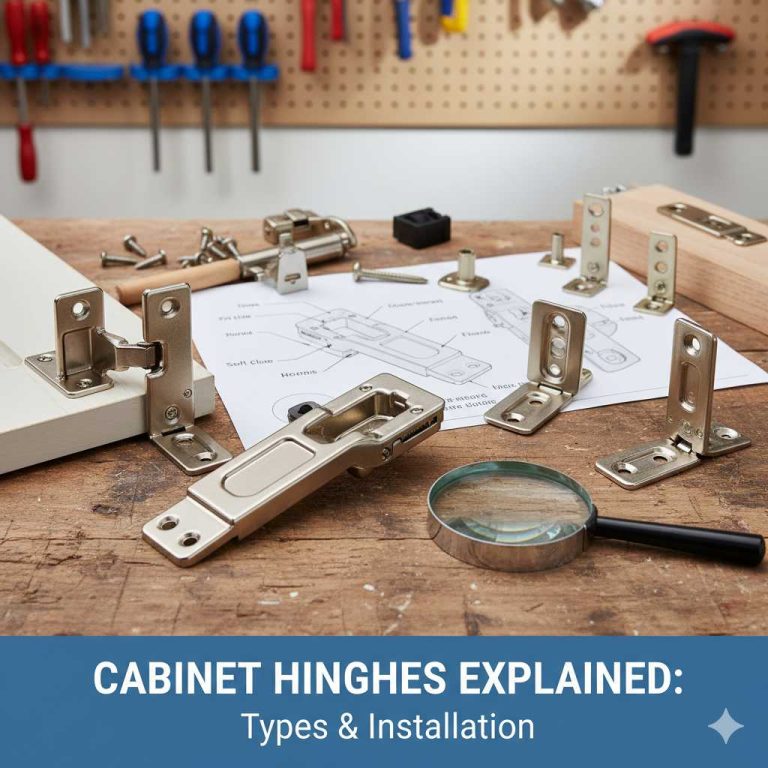
Another factor is how the hinge attaches to the cabinet. Most modern hinges are “cup hinges” or “Euro-style hinges.” These have a large circular depression (the cup) drilled into the back of the door. This is where the hinge sits.
Older cabinets might use “concentric” or “surface mount” hinges that attach directly to the face of the cabinet frame and the door. Your cabinet construction will dictate this. If you have a face frame cabinet, Euro-style hinges are most common for overlay doors.
Hinge Features to Consider
- Soft-Close: Built-in mechanism that gently closes doors, preventing slamming.
- Adjustability: Most Euro-style hinges offer 3-way adjustment (in/out, up/down, left/right) for perfect door alignment.
- Opening Angle: Hinges have different opening angles (e.g., 90°, 110°, 170°). Choose based on how wide you need the door to open.
- Finish: Hinges come in various finishes like brushed nickel, matte black, or antique brass to match your hardware.
Best Full Overlay Hinge Pick
Ravinte Full Overlay Cabinet Door Hinges 105 Degree 5 Pair – $26.99
Full overlay hinges sized for the most common modern overlay this guide describes, once your measured overlay confirms a full-overlay door setup.
- Best for: Replacing hinges across a full set of full-overlay cabinet doors
- Why we picked it: 5 pairs cover a typical run of kitchen cabinets once the overlay measurement in this guide confirms full overlay
- Main drawback: Full overlay only, wont fit a half or inset overlay measurement
Compare more cabinet hinges by overlay type
 Option 1 Ravinte Full Overlay Cabinet Door Hinges 105 Degree 1 Pair – $7.39
|
 Option 2 Cosycove Full Overlay Soft Close Cabinet Hinges – $8.99
|
 Option 3 Chibery Frameless Full Overlay Soft Close Concealed Hinges – $28.99
|
As an Amazon Associate we earn from qualifying purchases.
Common Pitfalls and How to Avoid Them
Measuring cabinet overlay can seem straightforward, but a few common mistakes can trip you up. Being aware of these can save you a lot of headache. I’ve seen these happen, and they always lead to frustration.
Let’s talk about how to sidestep these issues.
One major pitfall is measuring a door that isn’t fully closed. If the door is slightly ajar, your measurement will be off. Always ensure the door is in its natural resting position.
Don’t force it closed, but make sure it’s settled against any catches or stops it might have. A door that’s hanging crooked can also throw off your measurement. Try to get a consistent reading across the side you are measuring.
If one side consistently reads differently, it might point to an issue with the door or frame alignment itself.
Another common error is measuring the wrong part. You need to measure the door overlay, not the gap between doors or the thickness of the door itself. Remember, overlay is the amount the door extends over the cabinet frame.
So, place the tape on the outer edge of the door and measure to the edge of the frame behind it. Don’t measure from the door’s edge to where it meets another door. That’s a different measurement.
Using the wrong type of tape measure can also be an issue. A flimsy, retractable tape measure can bend or flex. This makes precise measurements difficult.
A good quality, rigid tape measure is best. Make sure the markings are clear and easy to read. Tiny fractions of an inch matter in cabinet hardware.
If your tape measure is worn or hard to read, consider getting a new one. It’s a small investment that pays off in accuracy.
Furthermore, assuming all doors on a cabinet are the same can be a mistake. While they usually are, sometimes a replacement door or a slightly warped cabinet might have different overlay amounts on different doors. It’s always best to measure a few doors, especially if you’re ordering hinges for multiple doors.
If there’s a significant difference, you might need to investigate why. It could be a sign that the cabinet itself needs adjustment.
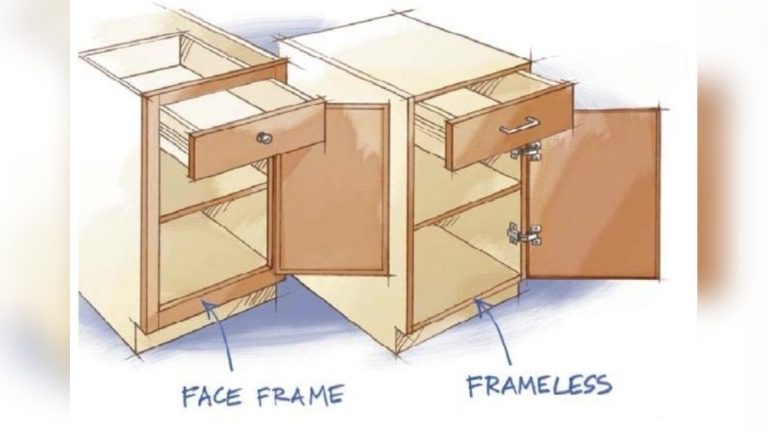
Lastly, not considering the type of cabinet construction is a problem. Are you working with a face frame cabinet (common in the U.S.) or a frameless cabinet (common in Europe)? The overlay measurement and hinge types differ greatly.
Face frame cabinets have a solid wood frame around the opening. Frameless cabinets do not; the doors attach directly to the cabinet box sides. Most of our discussion here assumes face frame cabinets, as they are more prevalent for this type of measurement discussion in the US.
Quick Check for Common Errors
- Door Position: Ensure door is fully closed and settled.
- Measurement Point: Measure door edge to cabinet frame edge.
- Tape Measure: Use a sturdy, clear tape measure.
- Consistency: Measure multiple doors if possible.
- Cabinet Type: Know if it’s face frame or frameless.
Real-World Cabinet Overlay Scenarios
Let’s look at a few real-life situations. This helps bring the measurement and hinge selection to life. Imagine you’re renovating a kitchen.
Or maybe you just want to replace a broken hinge. Knowing your overlay makes these tasks smoother.
Scenario 1: New Kitchen Cabinet Doors
You’re installing new cabinet doors in your kitchen. You know you want a modern look, so you’re aiming for full overlay. You measure the side of one of your cabinet doors.
You find the door extends 1 inch over the cabinet frame. This tells you that you need full overlay hinges designed for a 1-inch overlay. You’ll also check the gap between doors, which should be small, maybe 1/8 inch.
This confirms your full overlay choice. When buying hinges, look for specs like “for 1-inch overlay” or “full overlay hinges.”
Scenario 2: Replacing a Worn Hinge
One of your kitchen cabinet door hinges is broken. You need to
Scenario 3: Updating Older Cabinets
You have older cabinets that have inset doors. You want to give them a more contemporary feel with full overlay doors. This is a bigger project.
You’ll need to remove the old inset doors and frame hardware. Then, you’ll install new doors that are sized for full overlay. You’ll also need to install new, full overlay hinges.
You’ll measure your existing cabinet frame to determine the door size needed for your desired overlay. You might even need to add mounting plates to the cabinet frame for the new hinges.
Scenario 4: Measuring for a Single Drawer Front
Sometimes, it’s not a full door, but a drawer front that needs attention. Drawer fronts often have overlay too. If you’re replacing a drawer front or need to adjust it, the measurement principle is the same.
Close the drawer. Measure how much the drawer front extends over the cabinet frame it sits on. This measurement will help you select the correct hinges or drawer slides that accommodate that overlay, ensuring a flush and functional drawer.
These scenarios show how overlay measurement is a foundational step. Whether you’re doing a small repair or a complete remodel, getting this measurement right is key. It prevents buying the wrong parts and saves you time and money.
It ensures your cabinets look and work the way you want them to. The visual appeal and functionality of your kitchen or bathroom cabinets rely heavily on this detail.
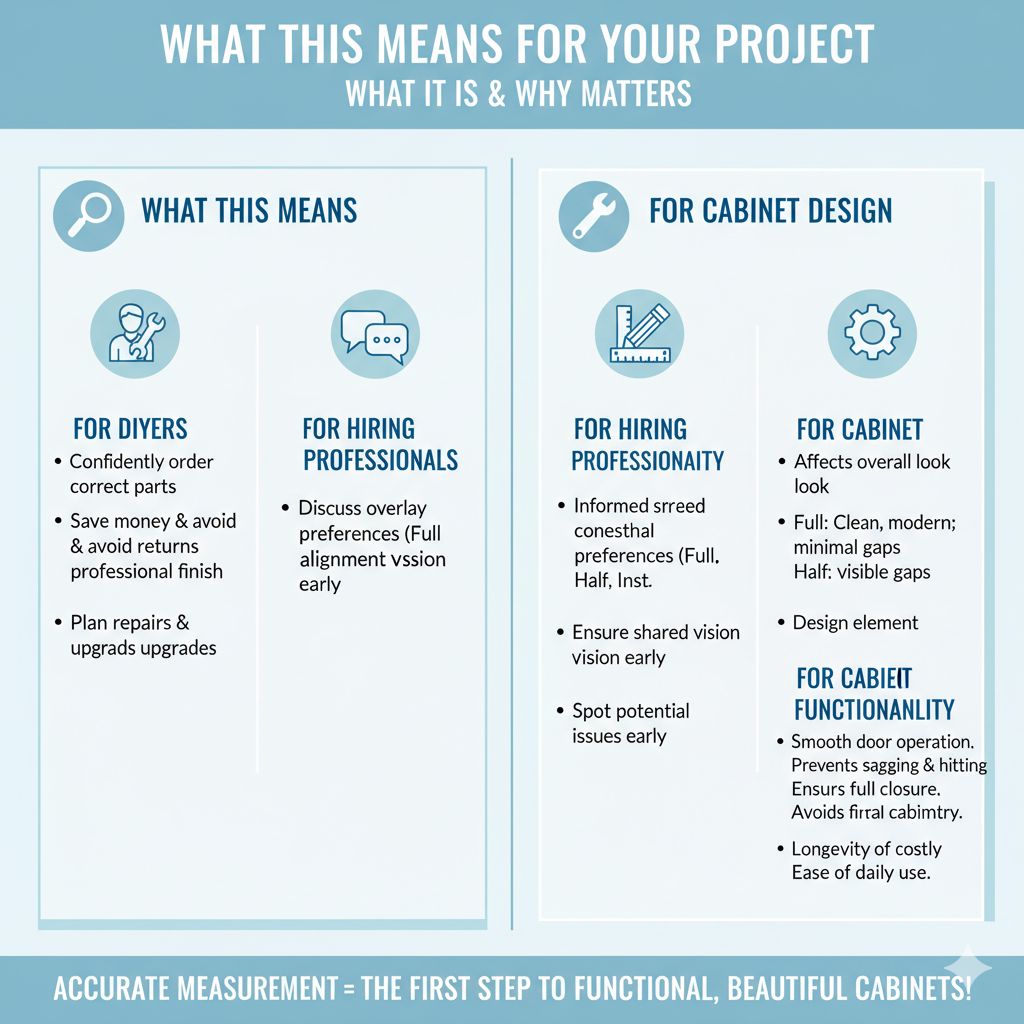
What This Means For Your Project
Understanding cabinet overlay is more than just a technical detail. It directly impacts the success of your cabinet project. Whether you’re a DIY enthusiast or hiring a professional, this knowledge is power.
It helps you communicate effectively and make informed decisions.
For DIYers: Knowing your overlay means you can confidently order the correct cabinet doors and hinges. You won’t waste money on parts that don’t fit. This saves you the frustration of returning items or making do with ill-fitting hardware.
It empowers you to achieve a professional-looking finish in your home. You can tackle repairs or upgrades with a clear plan. It’s about avoiding those “oops” moments.
For Hiring Professionals: If you’re working with a contractor or cabinet maker, understanding overlay allows you to have a more informed conversation. You can ask specific questions about the overlay they plan to use. You can discuss your preferences for full overlay, half overlay, or inset styles.
This ensures you’re on the same page and get the results you envision. It helps you spot potential issues early on.
For Cabinet Design: Overlay choice affects the overall look of your cabinets. Full overlay offers a clean, modern appearance with minimal gaps. Half overlay provides a more traditional look with visible gaps where doors meet.
Inset doors offer a very refined, high-end finish. Your choice of overlay contributes significantly to the aesthetic of your space. It’s a design element as much as a functional one.
For Functionality: The correct hinges, chosen based on overlay, ensure doors open and close smoothly. They prevent doors from sagging, hitting each other, or not closing fully. This means your cabinets function efficiently day-to-day.
It’s about ease of use and preventing wear and tear on your cabinets. Proper hinge function contributes to the longevity of your cabinetry.
Essentially, accurate overlay measurement is the first step to functional, beautiful cabinets. It’s a simple step, but it’s foundational. Don’t overlook it.
It can be the difference between a project that goes smoothly and one that’s plagued by small, irritating problems. It ensures that the hardware you choose will work perfectly with the doors and cabinets you have.
Overlay Impact Summary
- Correct Hardware: Ensures you buy the right hinges and doors.
- Aesthetics: Influences the overall look and style of your cabinets.
- Functionality: Guarantees doors open and close smoothly.
- Ease of Installation: Simplifies the process for DIYers.
- Professional Communication: Improves clarity when working with contractors.
Frequently Asked Questions About Cabinet Overlay and Hinges
What is the standard overlay for kitchen cabinets?
The most common overlay for modern kitchen cabinets is full overlay. This means the doors cover almost the entire cabinet frame, leaving only small gaps (often 1/8 inch) between doors. Older styles might use half overlay, where doors meet in the middle of the frame, or inset doors that sit flush within the frame.
Can I mix different overlay types in my kitchen?
While possible, it’s generally not recommended for aesthetic consistency. Most kitchens stick to one overlay type across all doors and drawers for a uniform look. If you have different cabinet configurations (like a pantry versus wall cabinets), subtle variations might occur, but aiming for a dominant style is best.
How do I measure for hinges if I have frameless cabinets?
For frameless cabinets, you typically measure the door size directly. Hinges are specified by how they mount to the cabinet side and the door, and the degree of opening. Overlay is less of a direct measurement over a frame and more about how the door sits relative to the cabinet box edges.
Consult the hinge manufacturer for precise sizing based on your cabinet box dimensions and door size.
My cabinet doors don’t close evenly. Can hinges fix this?
Yes, most modern cabinet hinges, especially Euro-style ones, have 3-way adjustability. You can usually adjust them up/down, in/out, and left/right. This allows you to fine-tune the position of your cabinet doors so they hang evenly, close flush, and have consistent gaps.
Check the hinge manual for adjustment screws.
What does “overlay hinge” mean?
An “overlay hinge” is a type of cabinet hinge designed for doors that sit on top of the cabinet frame. The door “overlays” the frame. These hinges are categorized by the amount of overlay they support, such as full overlay (door covers most of the frame) or half overlay (door covers about half the frame).
Can I change my cabinet doors from inset to full overlay?
Yes, you can change from inset to full overlay, but it requires changing both the doors and the hinges. You’ll need new doors sized for the desired overlay, and new full overlay hinges. You may also need to add mounting plates to the cabinet frame if the existing hinge locations are not compatible.
Final Thoughts on Measuring Cabinet Overlay
We’ve walked through what cabinet overlay is, why it’s important, and how to measure it. We’ve also looked at common types and how they guide your hinge selection. Remember, precision in this measurement is key to a smooth cabinet project.
It ensures your doors fit right and function beautifully. Don’t rush this step. Take your time, use a good tape measure, and double-check your numbers.
Your cabinets will thank you for it.
Sponsored / affiliate links. As an Amazon Associate I earn from qualifying purchases. I may earn additional commission from eligible campaigns.Products related to this article