Grease buildup on kitchen cabinets is a common, stubborn problem that can make even the cleanest kitchen look neglected. Over time, a thin, sticky film forms from airborne cooking oils, splattered sauces, and everyday handling, especially in homes where frying and sautéing are routine.
Left unchecked, this residue can attract dust, discolor cabinet surfaces, and even degrade the finish, leading to costly repairs or premature replacement.
Cleaning greasy cabinets requires more than a quick wipe with a damp cloth. The right combination of cleaning agents, tools, and techniques is essential to restore your cabinets’ appearance without damaging the wood or paint. Whether you have painted, laminate, or solid wood cabinetry, understanding how to tackle grease effectively saves time, effort, and money.
This comprehensive guide will walk you through proven methods, recommended products, and expert tips to ensure your kitchen cabinets stay sparkling clean.
Key Takeaways
- Grease buildup is best prevented with regular, gentle cleaning and the right choice of cleaning agents.
- Different cabinet materials require specific cleaning methods to avoid damage.
- Natural solutions like vinegar and baking soda are effective and safe for most cabinet finishes.
- Deep cleaning is necessary every 3, 6 months, but spot cleaning should be done weekly.
- Always test cleaning products on a hidden area before full application.
- Proper maintenance extends the life and beauty of your kitchen cabinets.

Credit: www.thekitchn.com
Understanding Grease Buildup On Cabinets
Kitchen cabinets are exposed daily to steam, oils, and food particles, especially around stoves and sinks. When airborne grease mixes with dust, it forms a stubborn film that simple soap and water rarely remove. Over time, this residue can cause:
- Discoloration of painted or stained finishes
- Peeling, bubbling, or softening of laminate and veneer
- Odor retention from absorbed cooking smells
Why Grease Sticks To Cabinets
Grease molecules are hydrophobic, meaning they repel water and bond strongly to surfaces. Standard cleaning agents often lack the surfactants needed to break these bonds. As a result, wiping with water alone spreads the grease rather than lifting it away.
Common Sources Of Cabinet Grease
- Cooking oils and fats: Frying, sautéing, or roasting send microscopic droplets into the air.
- Food splatters: Sauces, soups, and marinades can splash onto cabinet faces.
- Handprints: Natural skin oils transfer easily when opening and closing doors.
How Often Should Cabinets Be Cleaned?
For kitchens in active use, it’s recommended to wipe down cabinet fronts at least weekly and perform a deep clean every 3, 6 months. Higher frequency is needed in homes with heavy frying or open shelving.
Example: The Impact Of Neglect
In a busy family kitchen, neglecting cabinet cleaning for just a few months resulted in sticky, yellowed corners and difficulty opening doors without leaving fingerprints. Regular attention could have prevented this buildup and preserved the finish.
Credit: www.youtube.com
Choosing The Right Cleaning Solutions
Not all cleaning products are safe for every cabinet material. The right choice depends on whether your cabinets are painted, stained, laminate, or solid wood.
Comparing Popular Cleaning Solutions
| Solution | Best For | Effectiveness | Safety | Availability |
|---|---|---|---|---|
| Warm Water & Dish Soap | All surfaces | Moderate | Very safe | High |
| Vinegar & Water | Painted, laminate | High | Safe (avoid on waxed wood) | High |
| Baking Soda Paste | Stubborn spots, most surfaces | High | Safe, gentle abrasive | High |
| Commercial Degreasers | Heavy grease, laminate | Very high | Check label | Medium |
| Lemon Juice | Light grease, odor removal | Moderate | Safe (may lighten wood) | High |
Natural Vs. Commercial Cleaners
- Natural cleaners like vinegar and baking soda are generally safe, inexpensive, and eco-friendly.
- Commercial degreasers (e.g., Krud Kutter, Simple Green) are highly effective but may contain chemicals that can dull or damage certain finishes. Always read labels and spot test first.
Pro Tip:
When using any new cleaning solution, always test a small, inconspicuous area first to ensure it does not damage or discolor the finish.
What To Avoid
- Abrasive powders or steel wool can scratch surfaces.
- Ammonia-based cleaners may strip paint and cloud wood finishes.
- Bleach can lighten or streak cabinet surfaces.
For advice on choosing cleaning agents for other kitchen tasks, see canning salt and iodized salt differ in purity and use.
Step-by-step Guide To Cleaning Greasy Cabinets
Proper technique is as important as the cleaning solution itself. Follow these steps for best results.
Preparation
- Remove items from inside cabinets and clear nearby countertops.
- Open windows or use a fan for ventilation, especially with commercial products.
- Gather supplies: Microfiber cloths, soft sponges, non-scratch scrub pads, a bucket, and your chosen cleaning agent.
Basic Cleaning Method
- Mix your solution: For most jobs, a few drops of dish soap in a quart of warm water is effective.
- Dampen a cloth (not soaking) and wipe cabinet fronts, paying extra attention to handles and corners.
- Rinse with a second cloth dampened in clean water.
- Dry immediately with a clean towel to prevent water damage.
Tackling Stubborn Grease
- Baking soda paste: Mix baking soda with a small amount of water to form a thick paste. Apply to greasy spots, let sit for 5 minutes, then scrub gently with a soft brush or cloth.
- Vinegar spray: Equal parts vinegar and water in a spray bottle. Spray, let sit 2, 3 minutes, then wipe clean.
- Commercial degreaser: Apply as directed. Do not allow to pool or sit longer than recommended.
Cleaning Cabinet Hardware
Cabinet pulls and handles collect as much grease as the doors themselves.
- Remove hardware if possible for a thorough clean.
- Soak in warm, soapy water for 15 minutes, scrub with a toothbrush, rinse, and dry.
Dealing With Glass Inserts
For cabinets with glass panels:
- Use a glass cleaner or vinegar/water solution.
- Avoid overspray on wood, wipe glass with a separate cloth.
- Dry with a lint-free towel to prevent streaking.
Example: Real-world Cleaning Routine
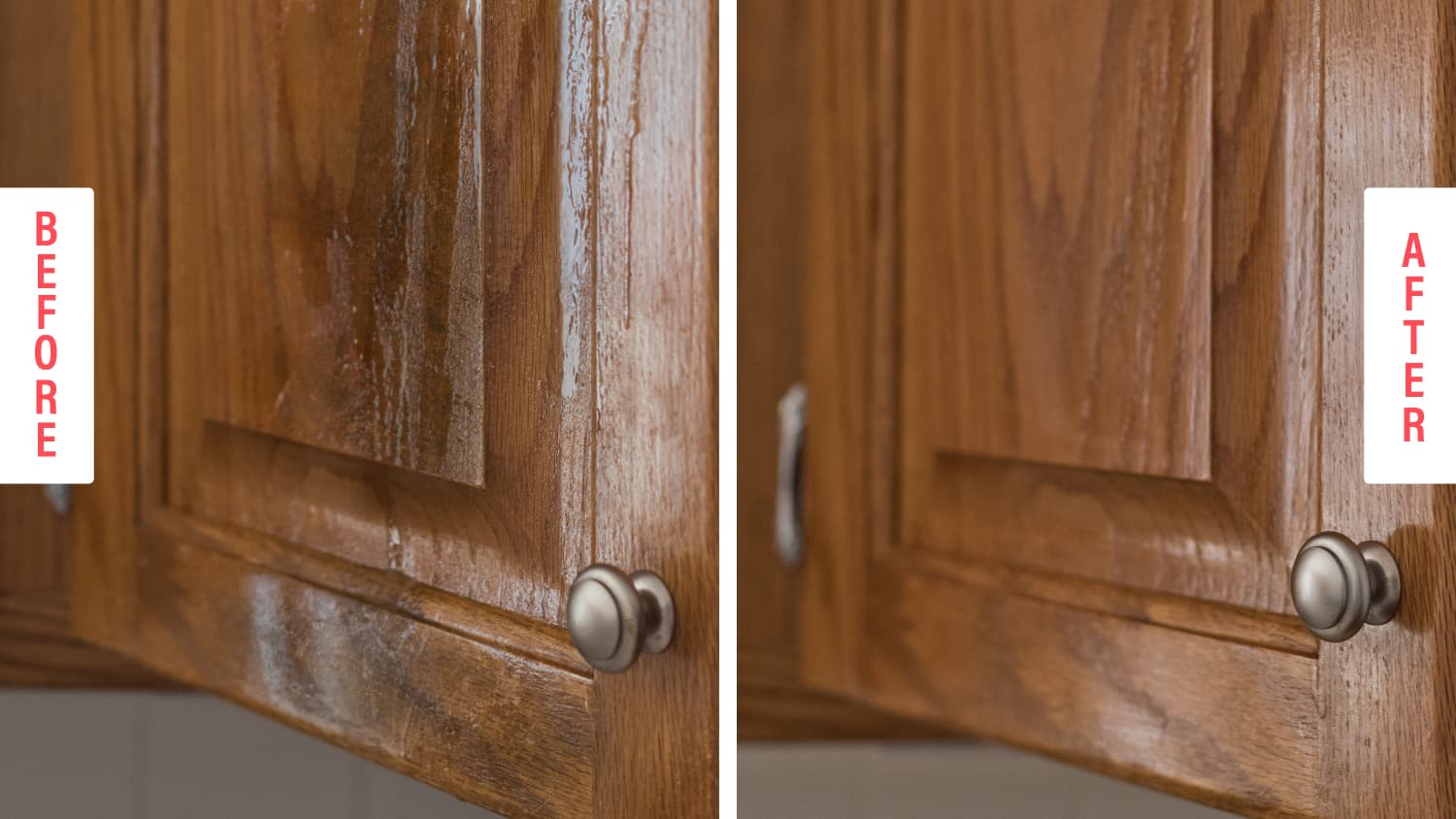
In my experience, using a two-step process (first, a mild soap solution, then a baking soda paste for heavy spots) restored even heavily used cabinet doors to their original look without harming the finish.
Credit: www.thekitchn.com
Methods For Different Cabinet Materials
Cabinets come in a range of materials, each with unique care requirements.
Painted Cabinets
- Use only mild dish soap or a diluted vinegar solution.
- Avoid harsh chemicals or abrasive sponges.
- Dry thoroughly to prevent water marks.
Wood Cabinets
- Wipe in the direction of the wood grain.
- Avoid soaking wood, too much moisture causes swelling or warping.
- For conditioning, follow up cleaning with a wood polish or oil recommended by the manufacturer.
Laminate Cabinets
- Laminate is resilient to most cleaning agents, but still avoid abrasives.
- Vinegar solutions are especially effective for degreasing.
- Rinse and dry to avoid streaks.
Thermofoil Cabinets
- Clean with warm water and dish soap; avoid heat and harsh chemicals.
- Thermofoil can peel if exposed to steam or over-scrubbing.
Comparison Table: Cleaning Methods By Cabinet Material
| Cabinet Material | Recommended Cleaner | Avoid | Special Instructions |
|---|---|---|---|
| Painted Wood | Mild soap, vinegar | Abrasives, ammonia | Dry immediately |
| Natural Wood | Mild soap, baking soda | Excess water, bleach | Polish after cleaning |
| Laminate | Vinegar, commercial degreasers | Steel wool | Rinse well |
| Thermofoil | Dish soap, water | Heat, harsh chemicals | Gentle handling |
Pro Tip:
For solid wood cabinets, using a product with a touch of orange oil can help dissolve grease and restore natural sheen.
Preventing Grease Buildup
A proactive approach makes cleaning easier and protects your investment.
Regular Maintenance
- Wipe down cabinets weekly with a damp microfiber cloth.
- Address splatters and spills immediately.
- Clean handles and knobs regularly, as they are high-touch zones.
Cooking Habits
- Use lids on pans to contain splatter.
- Turn on your range hood or exhaust fan during cooking.
- Place splatter screens over frying pans.
Protective Products
- Cabinet surface protectors or waxes can provide a barrier against grease.
- Self-adhesive liners inside cabinets make cleaning interior surfaces easier.
Example: Maintenance Success Story
A home cook who implemented weekly wipe-downs and always used the vent hood noticed significantly less buildup and cut deep cleaning time in half over six months.
When Professional Help Is Needed
For thick, aged grease or specialty finishes, professional cleaning may be required. This is especially true for antique or high-end custom cabinetry.
Best Tools And Supplies For Cabinet Cleaning
The right tools make the task quicker and safer for your cabinets.
Essential Tools
- Microfiber cloths: Trap grease without scratching.
- Soft sponges: Provide gentle scrubbing.
- Non-scratch scrub pads: For stubborn residue.
- Spray bottles: For applying homemade solutions.
- Old toothbrushes: Detail cleaning around hardware and grooves.
Optional Tools
- Steam cleaners: Use with caution, only on sealed surfaces.
- Magic Erasers: Effective, but test first to avoid removing finish.
Recommended Cleaning Products
- Dish soap: Brands like Dawn are formulated to cut grease.
- White vinegar: Natural degreaser.
- Baking soda: Mild abrasive for tough spots.
- Commercial degreasers: Only those marked as safe for kitchen cabinets.
Product Comparison Table
| Product | Type | Effectiveness | Safe For | Approx. Cost |
|---|---|---|---|---|
| Dawn Dish Soap | Liquid | High | All surfaces | $3/bottle |
| White Vinegar | Liquid | High | Most surfaces | $2/quart |
| Krud Kutter Degreaser | Spray | Very High | Laminate, some wood | $6/bottle |
| Magic Eraser | Foam pad | Moderate-High | Laminate, painted (test first) | $5/pack |
For more advice on selecting household products for kitchen tasks, see choosing the right canning jar makes preserving food easier.
Addressing Special Cabinet Cleaning Challenges
Some situations require extra care or special tactics.
Removing Old, Hardened Grease
- Apply a paste of baking soda and water, let sit for 15 minutes, then scrub gently.
- For wood, use a soft brush and wipe with the grain.
Cleaning Cabinet Interiors
- Vacuum crumbs and dust before wiping.
- Use a mild soap solution, avoid strong degreasers inside cabinets that store food.
Handling Mold And Mildew
- Mix one part white vinegar with one part water.
- Wipe affected areas, then dry thoroughly.
- If mold persists, consult a professional, mold can be a health risk.
Dealing With Sticky Residues
- For adhesive or tape residue, use a small amount of mineral spirits on a cloth, but test first.
- Rinse well and dry.
Example: Tackling Grease In A Rental Kitchen
A tenant faced cabinets coated in years of grease. By alternating between vinegar spray and baking soda paste, and using a non-scratch pad, the surfaces were restored over several sessions.
Eco-friendly And Diy Cabinet Cleaning Solutions
Many homeowners prefer environmentally safe or homemade cleaners.
Vinegar And Water Spray
- Mix equal parts white vinegar and water.
- Spray directly on greasy areas, let sit, wipe with a microfiber cloth.
- Effective for most surfaces except waxed or unfinished wood.
Baking Soda Scrub
- Sprinkle baking soda on a damp sponge, scrub gently.
- Rinse with a clean cloth.
- Great for sticky or caked-on spots.
Lemon Juice Cleaner
- Mix 1 part lemon juice with 2 parts water.
- The citric acid cuts grease and leaves a fresh scent.
Castile Soap Solution
- Combine 1 tablespoon castile soap with 2 cups warm water.
- Gentle, natural, and safe for all cabinet finishes.
Example: Diy Cleaner Success
A homeowner sensitive to chemical cleaners found that a vinegar and baking soda routine, coupled with regular maintenance, kept cabinets grease-free and odorless.
Pro Tip:
Store DIY solutions in clearly labeled spray bottles and keep out of reach of children and pets.
For more on the differences between natural and processed kitchen ingredients, see canning salt vs regular salt: key differences.
Professional-grade Cabinet Cleaning Strategies
Sometimes, at-home methods aren’t enough, especially in commercial kitchens or after years of buildup.
When To Consider A Professional Cleaner
- Severe or aged grease that resists home remedies
- Specialty finishes (e.g., high-gloss lacquer, antique wood)
- Health concerns such as mold, mildew, or pest residue
What Professionals Use
- Commercial-grade degreasers formulated for kitchen use
- Steam cleaning equipment (used with care on wood/laminate)
- Specialized wood cleaning and conditioning products
How The Process Works
- Assessment of cabinet material and condition
- Application of targeted degreasing solution
- Mechanical scrubbing with soft-bristle tools
- Rinse, dry, and optional conditioning/polishing
What It Costs
Professional cabinet cleaning services typically range from $100, $300 for a standard kitchen, depending on size and severity of buildup.
Example: Restaurant Kitchen Deep Clean
A local restaurant scheduled quarterly professional cabinet cleaning, resulting in consistently clean surfaces, improved kitchen hygiene, and longer-lasting cabinetry.
Pro Tip:
Ask for references and verify products used by cleaning services to ensure compatibility with your cabinet materials.
For more on the importance of safe cleaning practices, see Wikipedia: Housekeeping.
Frequently Asked Questions
How Can I Clean Cabinets Without Removing The Finish?
Use only gentle cleaners like diluted dish soap or vinegar solutions. Avoid abrasives and always dry thoroughly after cleaning. Spot test any new product in a hidden area before use.
Is It Safe To Use A Steam Cleaner On Kitchen Cabinets?
Steam cleaners can be effective for sealed laminate or tile but may damage wood or painted finishes. Use at low settings, keep the nozzle moving, and avoid prolonged exposure to heat and moisture.
What Should I Do If Grease Has Stained The Cabinet Surface?
For light stains, baking soda paste can help lift discoloration. For deeper stains, try a wood cleaner and polish recommended by the cabinet manufacturer. Severe or persistent stains may require professional refinishing.
How Do I Keep Cabinets Clean If I Cook Frequently?
Wipe down cabinet fronts weekly, always use the vent hood, and address splatters immediately. Consider applying a cabinet-safe wax or surface protector for an added grease barrier.
Can I Use Olive Oil Or Other Kitchen Oils To Polish Cabinets?
While some recommend using olive oil as a natural polish, it can attract dust and eventually go rancid. Use only wood oils or polishes specifically formulated for cabinetry to avoid sticky buildup.
Grease may be a persistent kitchen nuisance, but with the right strategies and regular care, your cabinets can stay clean, beautiful, and functional for years. By choosing appropriate cleaning solutions, adjusting your cooking habits, and performing routine maintenance, you’ll protect your investment and enjoy a fresher kitchen environment.
Related pick: Check today's price on Amazon
Products related to this article
Sponsored / affiliate links. As an Amazon Associate I earn from qualifying purchases. I may earn additional commission from eligible campaigns.