How to Install Soft Close Cabinet Hinges
To install soft-close cabinet hinges on existing cabinets, confirm your cabinet type, match the hinge overlay or inset, and replace each old hinge with a compatible soft-close version. Most doors use two hinges, while taller or heavier doors may need three. Bad hinge matching causes doors that won’t close flat, rub the frame, or tear out screw holes. This guide covers cabinet identification, hinge compatibility checks, removal, drilling, mounting, and the common retrofit mistakes to avoid.
What you’ll need


- 35 mm Forstner bit and drill
- Cabinet hinge jig or drilling guide
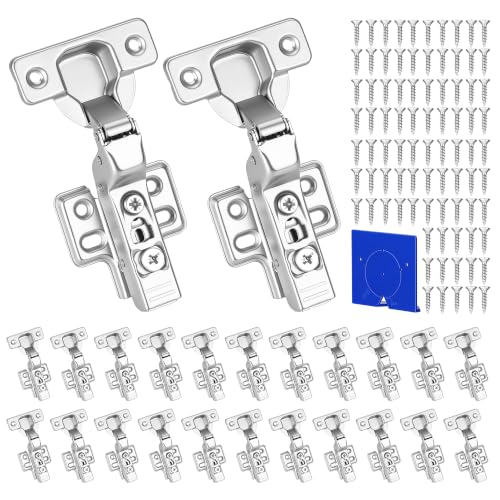
- Soft-close concealed hinges and matching mounting plates
- Screwdriver, tape measure, pencil, and square
- Wood filler, new screws, and optional door bumpers
📊 wikiHow recommends measuring 3.5 inches from the top and bottom edge for concealed hinges. Source: How to Install Cabinet Hinges (with Pictures).
What soft-close hinges fit your cabinet?
Start with the cabinet construction, the door type, and the overlay. A concealed hinge, also called a European or cup hinge, mounts on the inside of the door and uses a 35 mm cup hole on many kitchen cabinets. Face frame and frameless cabinets do not use the same plate geometry.
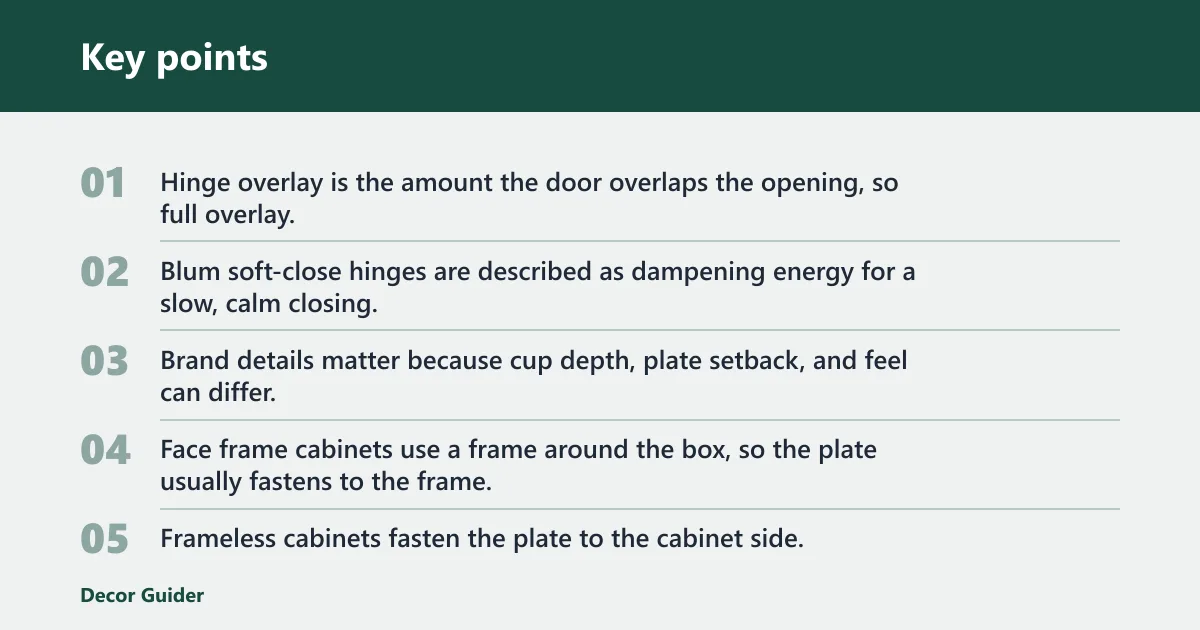
Hinge overlay is the amount the door overlaps the opening, so full overlay, partial overlay, and inset doors need different hardware. Blum soft-close hinges are described as dampening energy for a slow, calm closing, while some IKEA hinges include built-in dampers with 95-degree, 110-degree, or 153-degree opening options. Brand details matter because cup depth, plate setback, and feel can differ.
Check cabinet type first
Face frame cabinets use a frame around the box, so the plate usually fastens to the frame. Frameless cabinets fasten the plate to the cabinet side. If you mix those systems, the door may sit proud, bind on the frame, or miss the plate completely.
Match overlay before you buy
Overlay sets where the door lands relative to the box. Bob Vila notes Furniware hinges that fit overlays from 3/4 to 1 1/2 inches, which shows why a hinge labeled “soft close” is not enough on its own. Check the existing reveal before you order anything.
Look for door thickness, inset, and damage
Thick slab doors, inset doors, warped doors, swollen MDF, and crushed screw holes raise retrofit risk. A hinge can fit on paper and still fail in damaged material. If the old screw holes are loose or the door edge is swollen, repair first or choose a different hinge system.
Cabinet hinge retrofit decision table
Use this table to choose between retrofit, replacement, or stopping for repairs first. Follow the yes/no path before drilling. The likely failure risk tells you what usually goes wrong if you skip that step.
| Cabinet type | Door condition | Hinge style | Overlay | Required tools | Likely failure risk | Step-by-step yes/no path |
|---|---|---|---|---|---|---|
| Frameless | Flat door, sound screw holes | Concealed soft-close with matching plate | Full or partial, as labeled | 35 mm Forstner bit, jig, screwdriver | Low if plate setback matches | Yes: retrofit. No: if plate geometry differs, stop and swap the hinge system. |
| Face frame | Sound frame and door | Face frame soft-close concealed hinge | Overlay must match frame reveal | Jig, drill, filler, new screws | Medium if the frame rail crowds the arm | Yes: install matching face-frame hardware. No: if the arm hits the frame, choose a different plate or hinge style. |
| Any cabinet | Warped, swollen MDF, or stripped holes | Any concealed soft-close hinge | Unknown or mixed | Filler, plugs, clamps, jig | High, because alignment may not hold | No: repair damage first. Yes only after holes hold screws and the door lies flat. |
| Inset or thick slab door | Door edge is thick or flush-fit | Specialized concealed hinge set | Inset, not standard overlay | Measurement tools, jig, test fit hardware | High if you buy a standard overlay hinge | No: confirm the hinge is made for inset or thick doors. Yes only if the cup depth and setback are specified for that door. |
How do you remove the old hinges?
Support the door, remove the screws, and inspect the holes before you buy or drill anything new. The goal is to keep the door square and find out whether the existing wood can accept new fasteners. If the screws spin freely, plan on filler or plugs before installing a new hinge.
Remove one door at a time
- Prop the door with a box or helper.
- Back out the cabinet-side screws first.
- Remove the door-side screws and lift away the old hinge.
- Check for chipped edges, stripped holes, or swollen MDF.
Decide whether to fill, plug, or reuse holes
If the old holes are snug, reuse may be possible with the same plate pattern. If they are enlarged or split, fill them with wood filler or a glued hardwood plug, then redrill. Suppose a face-frame cabinet has two crushed screw holes near the top hinge; reusing them usually causes the door to sag again.
How do you drill for new concealed hinges?

Mark the cup hole from the door edge, drill the 35 mm cup hole to controlled depth, then position the mounting plate with the correct setback. A 35 mm Forstner bit is the standard concealed-hinge cup size, and wikiHow recommends the bit depth be set to 1/2 inch. A drill press or jig improves accuracy. (Wikihow)
Mark the cup location
Use the hinge template or jig to mark the cup center on the inside of the door. wikiHow recommends measuring 3.5 inches from the top and bottom edge for concealed hinges. That spacing keeps the hinge clear of the corners and supports even door alignment.
Drill the 35 mm cup hole
- Clamp the door face down on a flat surface.
- Set the Forstner bit depth stop before drilling.
- Drill the cup hole straight and stop at depth.
- Test-fit the hinge cup before moving to the plate.
F2 says a Forstner-type bit in a drill press is the most accurate method for cup holes. If you use a handheld drill, keep the bit centered and stop early if the cup starts to bottom out. A mis-bored cup hole can leave the hinge tilted and the door hard to close.
Install the mounting plate
The mounting plate attaches to the cabinet side or face frame and must match the hinge arm. The same source notes that some hinge sets include 3 adjustment options, which is common on concealed hardware. Pre-drill pilot holes so the screws bite cleanly, especially in old or brittle stock.
Use a jig when the cabinet is a retrofit
A cabinet hinge jig helps locate both the cup hole and the plate holes. It reduces measurement error, which matters more on used cabinets than on new ones. Say a framed cabinet has one stripped upper hole and one solid lower hole: the jig helps you keep the new plate in line instead of chasing a crooked reveal.
How do you hang and adjust the door?
Mount the door on the plate, then use the hinge screws to set side-to-side, in-out, and up-down position. European hinges allow helpful adjustments after installation, which is why they are so common for retrofits. Final alignment matters more than brute force; the damper cannot fix a door that is already rubbing.
Set the door on the plate
- Hook the hinge arm onto the plate.
- Tighten the plate screws just enough to hold position.
- Close the door slowly and check the reveal on all sides.
Adjust in small increments
Turn one adjustment screw at a time, then recheck the gaps. Move the door 1/2 turn per adjustment and test the close before making another change. That pace helps avoid overcorrecting and keeps the hinge arm from binding against the cabinet box.
Set the soft-close action and bumpers
Soft-close dampers slow the door near the end of close. Some are integrated; others are separate add-ons. If the door still taps the frame, add or replace cabinet door bumpers, because they can work with the hinge and reduce impact noise. If the damper feels weak, the hinge may be worn or the alignment may still be off.
Common mistakes
Most retrofit failures come from wrong overlay, wrong setback, or a cup hole that is off-center or too deep. A soft-close hinge cannot rescue bad geometry. Check the cabinet type, confirm the door thickness, and verify plate compatibility before you make any permanent holes.
- Wrong overlay or inset choice: the door will rub or sit proud.
- Cup hole too deep: the hinge can loosen or bottom out.
- Mixed hinge and plate systems: the arm and plate may not lock together.
- Ignoring warped doors or stripped screw holes: the door will drift out of alignment.
- Expecting the damper to fix fit problems: it only slows the close near the end.
If that didn’t work, try this next
If the door still binds after a standard retrofit, move from adjustment to diagnosis. The next step is usually a plate swap, then a hole repair, then a different hinge style. A hinge that fails because of geometry will keep failing until the geometry changes.
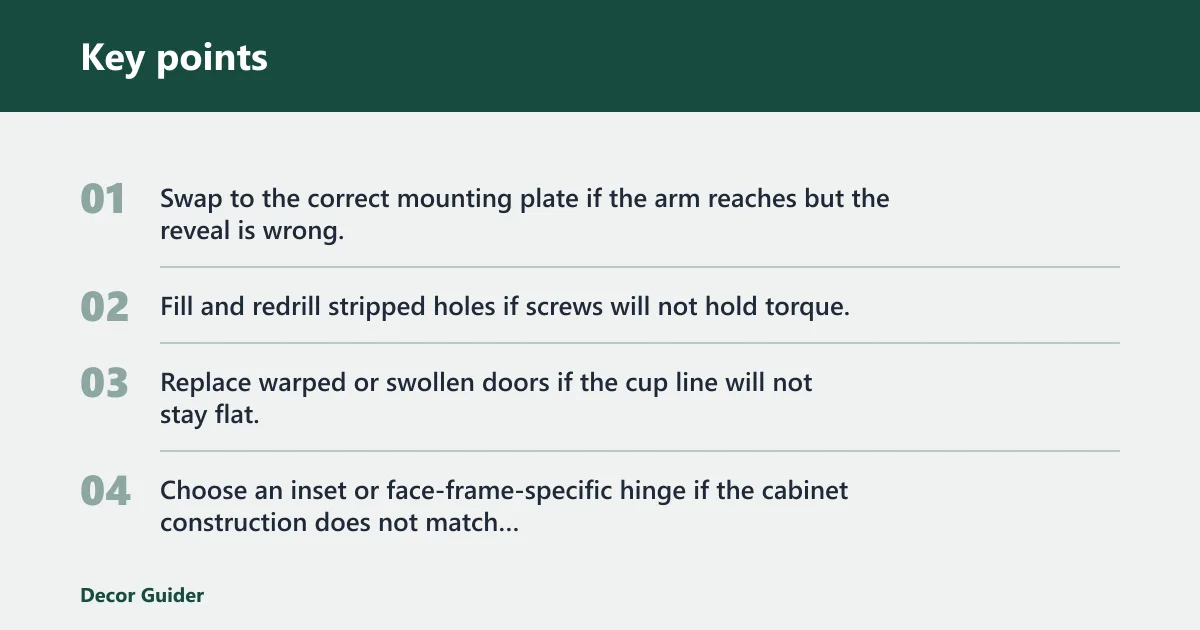
- Swap to the correct mounting plate if the arm reaches but the reveal is wrong.
- Fill and redrill stripped holes if screws will not hold torque.
- Replace warped or swollen doors if the cup line will not stay flat.
- Choose an inset or face-frame-specific hinge if the cabinet construction does not match the current hardware.
Cost matters here. Add the hinge set, the jig if you need one, the 35 mm Forstner bit if you do not already own it, filler or plugs for damaged holes, and replacement screws. A low-cost hinge can become the expensive option if the wrong plate forces a second round of drilling.
Frequently asked questions
How many hinges need to be soft close?
Many standard cabinet doors are commonly fitted with two soft-close hinges, while taller or heavier doors may need three. Match the count to the door height, weight, and the cabinet maker’s existing hinge spacing. If one hinge is worn and the other is not, replace both so the closing action stays even.
Can you put soft close hinges on any cabinet door?
No. The door must accept a concealed cup hole, and the cabinet needs a matching plate style. Thick slab doors, inset doors, warped MDF, and damaged frames can block a direct swap. Measure the overlay and door thickness before buying hardware, or the hinge may not sit correctly.
Can soft close cabinet hinges be adjusted?
Yes. European hinges usually allow side-to-side, in-out, and up-down adjustment after installation. Use one screw at a time and recheck the gaps after each turn. If the door still slams or stops short, the issue is often plate position or damaged mounting holes, not the damper alone.
How do you install Blum soft close cabinet hinges?
Use the same retrofit checks first: cabinet type, overlay, and door condition. Blum soft-close hinges are built to dampen energy for a slow, calm closing, but the cup hole and mounting plate still have to match the door and cabinet. Set the plate, hang the door, then fine-tune the screws.
How do you install soft close hinges on old cabinets?
Treat old cabinets as a repair project first. Check for stripped screw holes, swollen MDF, cracked face frames, and warped doors before drilling. If the wood is sound, a jig, a 35 mm Forstner bit, and a matching plate usually handle the retrofit. If the wood is failing, repair before installation.
How do you install soft close cabinet hardware?
Use the hinge cup, mounting plate, and any bumper or damper parts as one system. Confirm the hinge style, drill the 35 mm cup hole at the correct depth, mount the plate with the right setback, then align the door. Hardware mismatch causes more problems than the closing speed itself.
Products related to this article
Sponsored / affiliate links. As an Amazon Associate I earn from qualifying purchases. I may earn additional commission from eligible campaigns.