Best Plywood For Cabinets: What Pros Recommend
The best plywood for cabinets offers a balance of strength, stability, and moisture resistance, with hardwood plywood and cabinet-grade birch or maple being top choices for durability and appearance. It’s crucial to select materials that can withstand daily use and humidity common in kitchens and bathrooms.

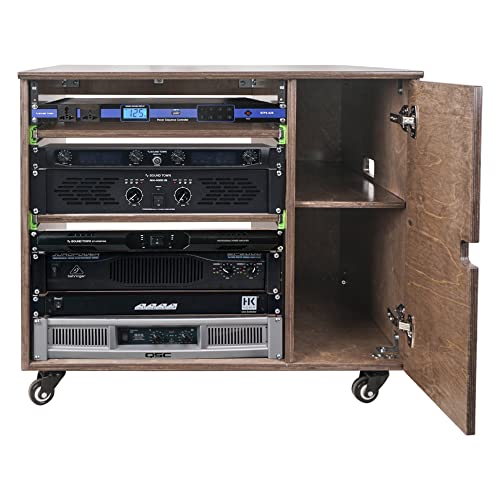
Sound Town
Sound Town DIY 11U Solid Baltic Birch…
- 11U rack space for preamps, effects processors, amplifiers, wireless microphone receivers, and similar pro audio gear
- Pre-cut and easily constructed for do-it-yourself. Rack rails installed, rack rail screws included
- Two slide-out trays for small MIDI controllers and drum machines. The side cabinet with a soft-close door provides storage room fo…
As an Amazon Associate I earn from qualifying purchases.
What Makes Plywood Good for Cabinets?
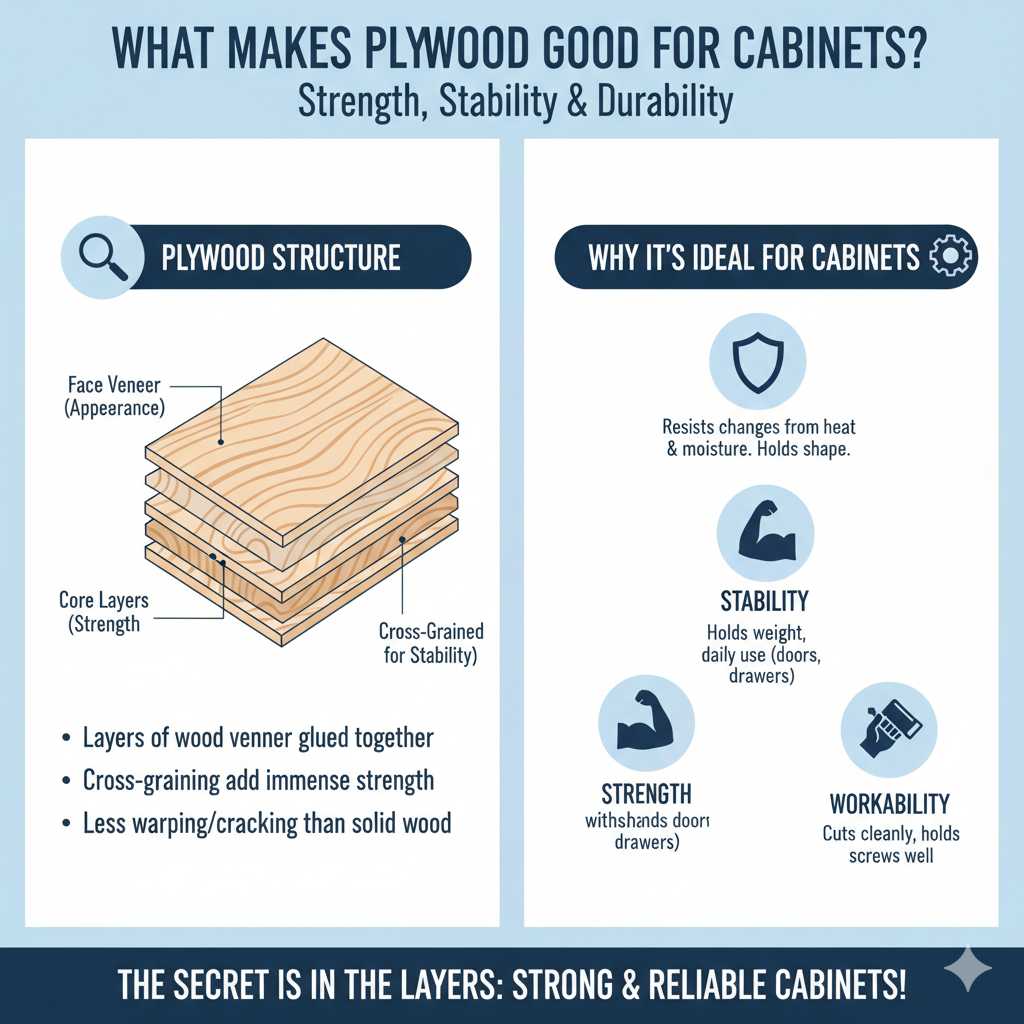
Plywood is made by layering thin sheets of wood veneer. These layers are glued together. The grain of each layer goes in a different direction.
This cross-graining makes plywood very strong. It’s also less likely to warp or crack than solid wood.
For cabinets, we need wood that can hold weight. It needs to stand up to daily use. Things like opening and closing doors happen all the time.
Plywood is a great choice because it’s stable. It doesn’t change much with changes in heat or dampness.
The type of wood used for the outer layers matters a lot. These are called the “face veneers.” They affect how the cabinet looks. The wood in the inner layers, the “core,” affects strength and stability.
A good cabinet plywood has a strong, uniform core.
We also think about how easy it is to work with. Can it be cut cleanly? Does it hold screws well?
Plywood that’s made for cabinets is usually good for this. It means less frustration for the builder and a better final product.
My First Cabinet Build: A Plywood Puzzler
I remember my first attempt at building custom kitchen cabinets. I was excited to finally do it. I’d saved up for months.
I wanted them to be perfect. I went to the lumber yard and saw so many types of plywood. There was pine, oak, maple, and even some exotic-sounding names.
I picked what looked nice and felt solid. I didn’t really understand the difference between “utility grade” and “cabinet grade.” I just knew it was plywood. Fast forward a few weeks, and I was already seeing problems.
Some doors were sagging a little. A few screws in the shelves felt loose already. I felt a knot of disappointment in my stomach.
I had spent so much time and money, and it wasn’t turning out right. It taught me a hard lesson about picking the right materials.
Cabinet Plywood Grades Explained
A-1 Grade: This is the best. Both sides are smooth and free of defects. Great for visible cabinet faces.
A-2 Grade: One side is perfect (A). The other side might have a few small flaws (2).
B-2 Grade: Both sides have some minor imperfections. Good for shelves or cabinet backs.
C-2 / D-4 Grade: Lower grades. These have more knots and defects. Best for areas nobody sees.
Always look for “Cabinet Grade” on the sticker. This means it meets certain quality standards.
The Pros’ Top Picks: Hardwood Plywood
When you ask woodworking pros what the best plywood for cabinets is, one answer comes up a lot: hardwood plywood. This isn’t just any plywood. It has a beautiful hardwood veneer on the outside.
The most common hardwoods for cabinet fronts are oak, maple, and birch. These woods are strong and look great. They also take stains and finishes really well.
This means you can get almost any look you want for your kitchen or bathroom.
Oak plywood is popular for its strong grain patterns. It gives a classic, natural look. Maple plywood is known for its smooth, even surface.
It’s perfect for modern, clean designs. Birch plywood is similar to maple but often a bit lighter in color.
The core of hardwood plywood is also important. It can be made from a hardwood veneer or from materials like poplar or pine. A full hardwood core means more strength and stability.
It also means it costs a bit more.
When buying hardwood plywood, check the number of plies. More plies mean a stronger panel. Also, look at the veneer match.
A “book match” shows mirrored grain. A “slip match” repeats the grain pattern.
Hardwood Veneer Types
Oak: Strong grain, classic look. Great for traditional styles.
Maple: Smooth, fine grain. Perfect for modern, sleek cabinets.
Birch: Similar to maple, often lighter. Versatile for many looks.
Cherry: Rich color, beautiful grain. A bit more of a premium choice.
Walnut: Deep, dark color. Creates a luxurious feel.
Why Birch Plywood is a Cabinet Builder’s Friend
Birch plywood is often a top choice for cabinet boxes and drawer sides. It’s not just about looks, though birch looks fantastic. It’s also about what’s inside.
Birch has a very dense and strong wood core. This means it resists dents and scratches well. It’s also very stable.
It doesn’t swell or shrink much with changes in humidity. This is super important for cabinets in kitchens or bathrooms, where steam and moisture are common.
A good quality birch plywood will have many thin layers. These layers are glued tightly together. This makes the panel very strong.
It won’t sag over time, even when loaded with dishes or pantry items.
One of the best things about birch is how well it finishes. It has a smooth surface. Paint goes on like silk.
Stains soak in evenly, giving you a rich, consistent color. You can achieve a high-end look without a super high price tag.
When choosing birch, look for “baltic birch” plywood. This is a special type. It often has 11-13 plies in a ¾-inch thick sheet.
All the plies are birch. It’s incredibly strong and stable. It’s a favorite for cabinet makers who want the best.
Quick Scan: Birch Plywood Benefits
Strength: Resists dents and holds weight well.
Stability: Doesn’t warp or swell easily with moisture.
Finishing: Smooth surface takes paint and stain beautifully.
Value: Offers high quality at a reasonable price.
Availability: Easy to find at most lumber yards.
Understanding Cabinet-Grade Maple
Maple plywood is another excellent choice for cabinets. It shares many benefits with birch but has its own unique qualities. Maple has a very fine, uniform grain.
This makes it ideal for a modern, minimalist look.
The hardness of maple makes it very durable. It’s tougher than oak, which means it holds up better against knocks and scrapes. This is a big plus in busy kitchens.
The surface is also quite smooth, which makes cleaning easier.
Like birch, maple plywood is very stable. It’s made with cross-banded plies that resist expansion and contraction. This stability means your cabinet doors and drawers will continue to fit well over time.
They won’t stick or get hard to open.
When it comes to finishing, maple is a dream. It’s naturally light in color. You can paint it white or a bold color for a striking look.
You can also stain it. Because the grain is so fine, stains can look very even and smooth.
The core of cabinet-grade maple plywood is usually made from a hardwood material. This gives it extra strength. It’s a premium choice that brings a touch of elegance to any home.
If you want a high-end finish, maple is hard to beat.
Maple vs. Birch for Cabinets
Maple:
- Grain: Very fine, smooth, sometimes subtle figuring.
- Hardness: Slightly harder and more dent-resistant than birch.
- Color: Naturally creamy white to light brown.
- Cost: Often a bit more expensive than birch.
Birch:
- Grain: Fine, but can have more variations and figuring than maple.
- Hardness: Still very hard and durable.
- Color: Light yellow to pale brown.
- Cost: Generally more affordable than maple.
Both are excellent choices. Your decision might come down to subtle visual preferences and budget.
What About Oak Plywood?
Oak plywood has been a go-to for cabinets for a long time. It has a distinctive, strong grain pattern that many people love. It brings a natural, warm feel to a kitchen or bathroom.
There are two main types of oak plywood you’ll see: red oak and white oak. Red oak has a slightly pinkish hue. White oak is more grayish-brown and is naturally more resistant to moisture.
The prominent grain of oak is its signature. It looks great with stains that highlight the wood’s natural texture. It can be stained to look like darker woods or painted for a more modern look, though the grain will still show through.
In terms of strength, oak is very hard and durable. It can handle the wear and tear of daily life. However, its open grain can sometimes hold onto dirt or grease more than maple or birch.
This means it might require a bit more careful cleaning.
For cabinet boxes, oak veneer plywood is a good choice. The core is usually made from less expensive wood, like poplar or pine. This keeps the cost down while still giving you a beautiful oak face.
If you love the classic look of wood grain, oak is a solid option.
Oak Plywood: Key Traits
Visual: Bold, prominent grain pattern.
Durability: Hard and strong, but its open grain needs cleaning.
Finishing: Takes stains very well to enhance its natural look.
Cost: Generally mid-range, depending on the veneer and core.
The Problem with Poplar for Cabinet Fronts
Poplar is a decent wood for many things. It’s affordable and easy to work with. Many cabinet makers use poplar for the frame of cabinet doors or for cabinet boxes where it won’t be seen.
However, poplar is usually not the best choice for the face of cabinet doors or visible panels. Why? The grain is often not as attractive as hardwood options.
It can have greenish streaks or dark spots.
Poplar is also a softer wood compared to maple or oak. It can dent and scratch more easily. If you’re looking for cabinets that will stay looking pristine for years, especially in a high-traffic kitchen, poplar might not be tough enough for the main surfaces.
When you paint cabinets, poplar can work better because the paint hides its grain and color variations. But if you plan to stain your cabinets, you’ll likely be disappointed with the uneven results poplar can give. It doesn’t take stain as beautifully as birch or maple.
So, while poplar has its place in cabinet making, save it for the parts that don’t need to be beautiful or super durable. For the parts you see and touch every day, choose a hardwood veneer.
Poplar: When to Use It
Cabinet Boxes: Yes, if hidden and budget is key.
Drawer Sides/Bottoms: Yes, often a good choice.
Face Frames (Painted): Can work if painted well.
Cabinet Door Fronts (Stained): Generally NO. Avoid this.
Cabinet Door Fronts (Painted): Possible, but other woods finish better.
The Nuances of Melamine and MDF
You might also hear about melamine and MDF (Medium-Density Fiberboard) for cabinets. These are engineered wood products, not true plywood.
Melamine is particleboard or MDF covered with a plastic-like paper. It comes in many colors and wood-look patterns. It’s very affordable and easy to clean.
However, melamine isn’t very strong. It can chip or peel if hit hard. It’s also not good with moisture.
If water gets into the edges, it can swell up badly.
MDF is made from wood fibers pressed together with resin. It’s very smooth and dense. This makes it great for painting because it doesn’t have a grain.
You can get a very smooth finish. But MDF is heavy. It also doesn’t hold screws as well as plywood.
And like melamine, it can be ruined by water.
For cabinets, especially in kitchens and bathrooms, moisture resistance is key. Both melamine and MDF struggle with this. They are better suited for utility cabinets or in very dry environments.
For main cabinetry, they are usually not the first choice for durability and longevity.
Melamine vs. MDF vs. Plywood for Cabinets
Melamine:
- Pros: Affordable, many colors, easy to clean.
- Cons: Not very strong, chips easily, poor moisture resistance.
MDF:
- Pros: Very smooth, great for painting, consistent.
- Cons: Heavy, poor screw holding, poor moisture resistance.
Plywood (Cabinet Grade):
- Pros: Strong, stable, good screw holding, good moisture resistance (depending on type).
- Cons: Can be more expensive, grain might be visible (if not painted).
Marine-Grade Plywood: Overkill or Smart Choice?
Marine-grade plywood is built for the toughest conditions. It’s designed to be constantly exposed to water and harsh weather. It’s made with waterproof glue and has very few voids (gaps) in its core.
This makes it incredibly strong and stable. It’s also very resistant to rot and decay. For a boat that’s always on the water, this is essential.
For a kitchen cabinet, it’s usually more than you need.
The main reason marine-grade plywood is not common for cabinets is the cost. It’s significantly more expensive than standard cabinet-grade plywood. You’re paying for a level of water resistance that most homes don’t require.
However, there are times when a very moisture-resistant material might be considered. If you have a home in a very humid climate, or if your cabinets are in an area prone to splashing (like right next to a sink that’s used heavily), you might think about it. But even then, a good quality hardwood plywood with a moisture-resistant finish often suffices.
Generally, stick to cabinet-grade plywood. It’s designed for the job and offers the best balance of performance and price for most homes.
When to Consider High Moisture Resistance
Humid Climates: Areas with consistently high humidity levels.
Near Water Sources: Cabinets directly next to sinks or bathtubs.
High-Use Areas: Kitchens where spills are frequent.
Boathouses or Docks: If cabinets are in a damp, exposed structure.
Note: Even with these, proper sealing and finishes are critical.
The Core of the Matter: What’s Inside Your Plywood?
We’ve talked about the outer layers, but the inside layers, the core, are just as important for cabinet performance. A good cabinet plywood has a solid, stable core.
Hardwood Core: This means all the layers, inside and out, are made from hardwood. This is the strongest and most stable option. It resists warping and has excellent screw-holding power.
This is often found in premium birch plywood (like Baltic birch) or high-end hardwood veneer plywood.
Combination Core: This is common. The outer layers might be a nice hardwood (like oak or maple). The inner layers could be a mix of hardwoods like poplar or a less expensive wood.
This offers good strength and stability at a more moderate price point.
Softwood Core: Some lower-grade plywood uses softwood like pine for the inner layers. This can be lighter and cheaper. However, softwoods are not as dense or as stable as hardwoods.
They can be more prone to sagging and may not hold screws as well. This type is generally not recommended for cabinet construction.
Void-Free Core: Look for plywood that specifies it has a “void-free” core. This means there are no large gaps or hollow spaces within the layers. Fewer voids mean more strength and better glue adhesion.
It also helps prevent squeaks and noises when the cabinet is used.
Core Material Guide
Full Hardwood Core:
- Pros: Maximum strength, stability, and screw holding.
- Cons: Most expensive option.
- Best for: High-quality, long-lasting cabinets.
Combination Core (Hardwood/Softwood):
- Pros: Good balance of strength and cost.
- Cons: Slightly less stable than full hardwood.
- Best for: Most standard cabinet builds.
Softwood Core:
- Pros: Least expensive.
- Cons: Less strong, less stable, poorer screw holding.
- Best for: Utility shelves, non-structural uses (not recommended for cabinets).
The Importance of Plywood Thickness and Ply Count
When you’re picking out plywood for cabinets, don’t forget to check its thickness and how many layers (plies) it has. These numbers tell you a lot about its strength and how it will perform.
Thickness: For cabinet boxes and shelves, ¾-inch thick plywood is the standard. This thickness provides enough strength to hold heavy items and resist bowing. For cabinet backs or drawer bottoms, ½-inch or even ¼-inch plywood might be used, depending on the design and load requirements.
Ply Count: Plywood is made of multiple thin layers of wood, called plies. The more plies a panel has, the stronger and more stable it is. A standard ¾-inch plywood might have 5 to 7 plies.
However, high-quality cabinet-grade plywood, especially Baltic birch, can have 11, 13, or even more plies in the same thickness.
More plies mean the wood is cross-laminated more effectively. This makes it much harder to bend or break. It also helps prevent the panel from sagging over time, which is a common problem with cheaper plywood.
When buying, if a panel feels too light for its size, it might have fewer plies or thinner plies. Ask the seller or check the product details. Investing in plywood with a higher ply count will pay off in the long run with more durable and reliable cabinets.
Ply Count Matters: A Quick Look
Low Ply Count (e.g., 3-5 plies in ¾”):
- Pros: Cheaper.
- Cons: Less strong, more prone to sagging, can crack.
Medium Ply Count (e.g., 5-7 plies in ¾”):
- Pros: Standard strength, common.
- Cons: Can still sag under very heavy loads over time.
High Ply Count (e.g., 11+ plies in ¾” – Baltic Birch):
- Pros: Extremely strong, very stable, excellent screw holding, resists sagging.
- Cons: More expensive.
Real-World Cabinet Scenarios
Let’s look at how different plywood choices play out in real homes. It’s not just about what the label says; it’s about how the cabinets are used.
Scenario 1: The Busy Family Kitchen
In a home with kids and lots of cooking, cabinets take a beating. Doors get opened and closed constantly. Shelves are loaded with heavy dishes, canned goods, and appliances.
Moisture from cooking and sink use is common. For this environment, durable hardwood plywood like birch or maple is a must. A strong, multi-ply core is essential to prevent sagging shelves.
A smooth finish that’s easy to wipe clean is also a huge bonus.
Scenario 2: The Elegant Master Bathroom
Bathrooms have high humidity. Steam from showers can cause wood to swell and warp if it’s not stable. While less weight might be on the shelves, the moisture is the big enemy.
High-quality hardwood plywood with a good finish is important here too. Birch or maple are excellent. Even a good quality plywood with a poplar core can work if it’s sealed very well.
Avoiding particleboard or MDF for any visible parts is wise.
Scenario 3: The Garage Workshop Storage
Garage cabinets might not need to be as pretty, but they need to be tough. They hold tools, paint cans, and other heavy items. Moisture might not be a big issue, but impact and weight are.
Utility-grade hardwood plywood or even a good quality pine plywood could be suitable here. The focus is on strength and durability. A less expensive hardwood veneer might be used, or even painted softwood plywood.
Environment Checklist for Plywood Choice
Kitchen:
- Focus: Durability, moisture resistance, ease of cleaning, strength under load.
- Best: Birch, Maple, Oak hardwood plywood (high ply count).
Bathroom:
- Focus: Moisture resistance, stability, ease of cleaning.
- Best: Birch, Maple hardwood plywood, well-sealed.
Garage/Utility:
- Focus: Strength, cost-effectiveness, durability against impact.
- Best: Utility-grade hardwood, pine plywood, or even good quality particleboard for non-critical areas.
What This Means for Your Cabinet Project
So, what’s the takeaway when you’re standing in the lumber aisle or looking at cabinet options? It’s about making informed choices based on where your cabinets will live and how they’ll be used.
When it’s normal: It’s normal to see a range of prices for plywood. Higher quality hardwood plywood will cost more. It’s also normal for cabinet-grade plywood to have minor cosmetic flaws on the lower-grade sides.
You expect good strength and stability from cabinet-grade materials.
When to worry: Worry if plywood feels too light for its size. Worry if the edges look rough or have large gaps. Worry if the price seems too good to be true for a “cabinet grade” product.
Also, worry if the seller can’t tell you much about the core or ply count.
Simple checks: Always look for labels that say “Cabinet Grade.” Examine both sides of the panel if possible. Check the edges for signs of delamination or voids. If you’re unsure, ask for advice from the lumberyard staff or a seasoned woodworker.
Your cabinets are an investment, and the right plywood makes them last.
Quick Tips for Choosing Cabinet Plywood
Here are some handy tips to keep in mind:
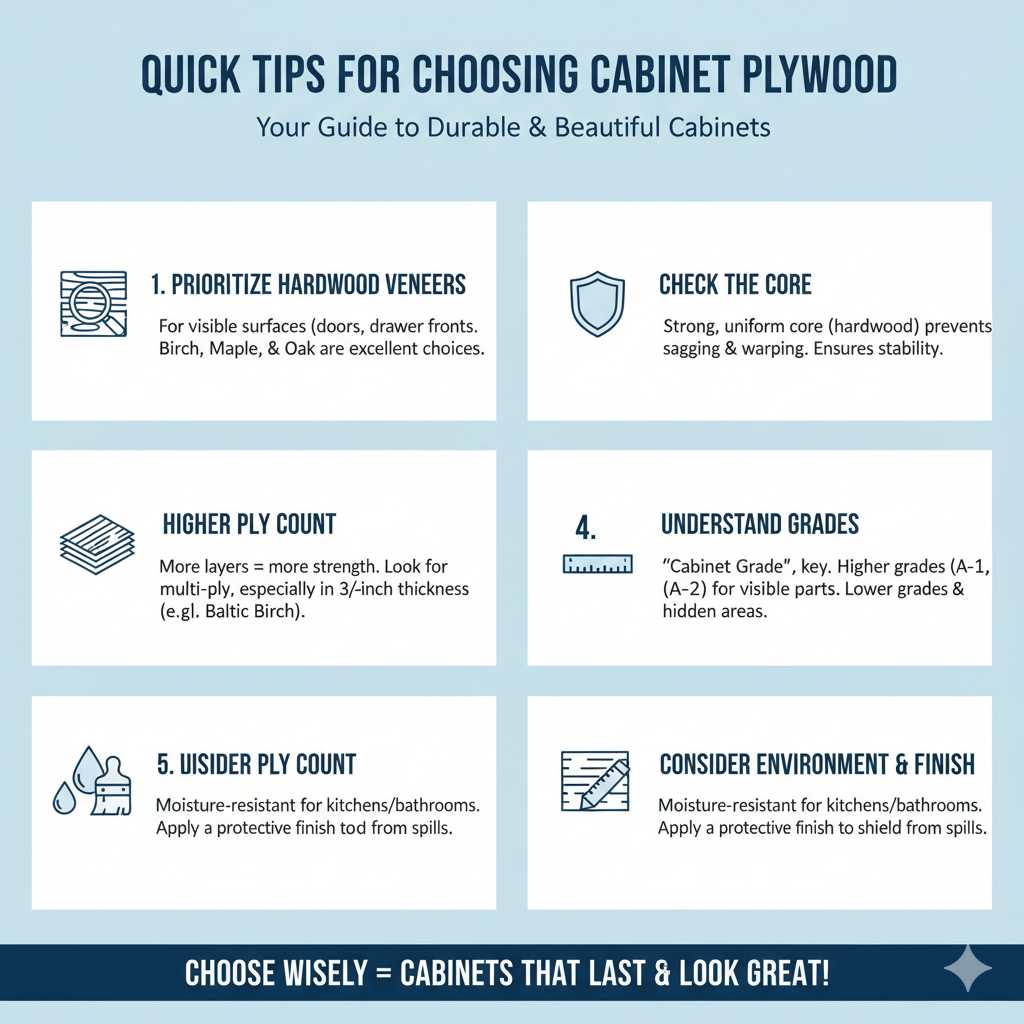
- Prioritize Hardwood Veneers: For visible cabinet doors and drawer fronts, always opt for hardwood plywood. Birch, maple, and oak are excellent choices.
- Check the Core: A strong, stable core made of hardwood or a good combination of hardwoods is crucial for preventing sagging and warping.
- Higher Ply Count is Better: Look for plywood with more plies, especially in ¾-inch thickness. Baltic birch is a prime example of high-quality, multi-ply construction.
- Understand Grades: “Cabinet Grade” is key. Higher grades (like A-1 or A-2) are better for visible surfaces.
- Consider the Environment: Choose materials that can handle the moisture and wear in kitchens and bathrooms. Avoid particleboard or MDF for these areas unless specifically designed and sealed for it.
- Don’t Forget the Finish: Even the best plywood needs a good protective finish to shield it from spills and moisture.
Frequently Asked Questions About Cabinet Plywood
What is the strongest plywood for kitchen cabinets?
The strongest plywood for kitchen cabinets is typically high-quality hardwood plywood with a full hardwood core and a high ply count, such as Baltic birch. This construction offers maximum stability, resistance to sagging, and excellent durability against daily use and moisture.
Can I use regular plywood for cabinets?
While you can technically use regular plywood, it’s not recommended for quality cabinetry. Regular plywood, especially lower grades, often has more voids, a less stable core, and weaker veneers. This can lead to sagging shelves, warping doors, and a shorter lifespan for your cabinets.
What’s the difference between cabinet grade and utility grade plywood?
Cabinet grade plywood has smoother, defect-free outer veneers (the “face”) suitable for finishing and is generally made with better construction (fewer voids, more plies). Utility grade plywood has more knots, defects, and may have more voids, making it suitable only for hidden or structural applications where appearance doesn’t matter.
Is MDF better than plywood for painted cabinets?
MDF is often preferred for painted cabinets because its surface is perfectly smooth and grain-free, allowing for a very sleek, uniform paint finish. However, plywood (especially hardwood plywood) is generally more durable, resistant to moisture, and holds screws better, making it a more robust choice for cabinet construction overall.
How do I protect plywood cabinets from moisture?
Protecting plywood cabinets from moisture involves using high-quality, moisture-resistant plywood and applying a good sealing finish. Use waterproof glues during construction. For finishes, polyurethane, marine-grade varnishes, or specialized cabinet paints designed to repel water are excellent choices.
Ensure all edges and surfaces are well-coated.
Can I use pine plywood for cabinet boxes?
Pine plywood can be used for cabinet boxes, especially for less critical areas like garage cabinets or utility storage where appearance and maximum strength under heavy load aren’t the top priorities. However, pine is softer and less stable than hardwoods like birch or maple, so it’s more prone to dents and warping, particularly in humid environments.
Conclusion: Building with Confidence
Selecting the best plywood for your cabinets is a key step towards a beautiful and lasting result. Focus on cabinet-grade hardwood plywood, like birch or maple, for its strength, stability, and finish potential. Always check the core, ply count, and grade to ensure you’re getting a material that will stand the test of time.
With the right choices, your cabinets will be a source of pride for years to come.
Related pick: Check today's price on Amazon
Products related to this article
Sponsored / affiliate links. As an Amazon Associate I earn from qualifying purchases. I may earn additional commission from eligible campaigns.