Cabinet Shelf Installation Cost
Methodology: The cost ranges below combine common cabinet-shelf retrofit pricing patterns from contractor estimating guidance, retail material ranges, and cabinet-installation benchmarks; where a line item can vary widely, the article now labels the scope driver that pushes it into custom carpentry. For full cabinet context, compare against full cabinet installation comparisons and note that under-sink cabinets often require extra clearance work.
Answer first: cabinet shelf retrofit costs usually land at $50 to $150 for a low-cost replacement shelf, $150 to $300 for an average add-on or replacement with standard labor, and $300 to $600+ for high-cost jobs that need custom cutting, new support points, or repair. For a quick labor vs. materials snapshot: replacement shelf often runs about $20 to $80 materials plus $30 to $120 labor; add-on shelf about $15 to $70 materials plus $25 to $110 labor; and custom-cut shelf about $40 to $180 materials plus $60 to $250 labor. If the cabinet is warped, under-sink, or missing usable support holes, the job can shift from retrofit pricing into custom carpentry.
Cabinet shelf installation cost is often about $50 to $200 for a simple replacement shelf in an existing cabinet, or roughly $200 to $600+ if the box needs custom cutting, new supports, or interior repair. A poor fit can lead to sagging shelves, damaged sidewalls, or a repair bill that tops the original job. This guide breaks down the price by shelf type, labor, hardware, and the warning signs that turn a quick retrofit into custom cabinet work.
What a standard quote typically covers
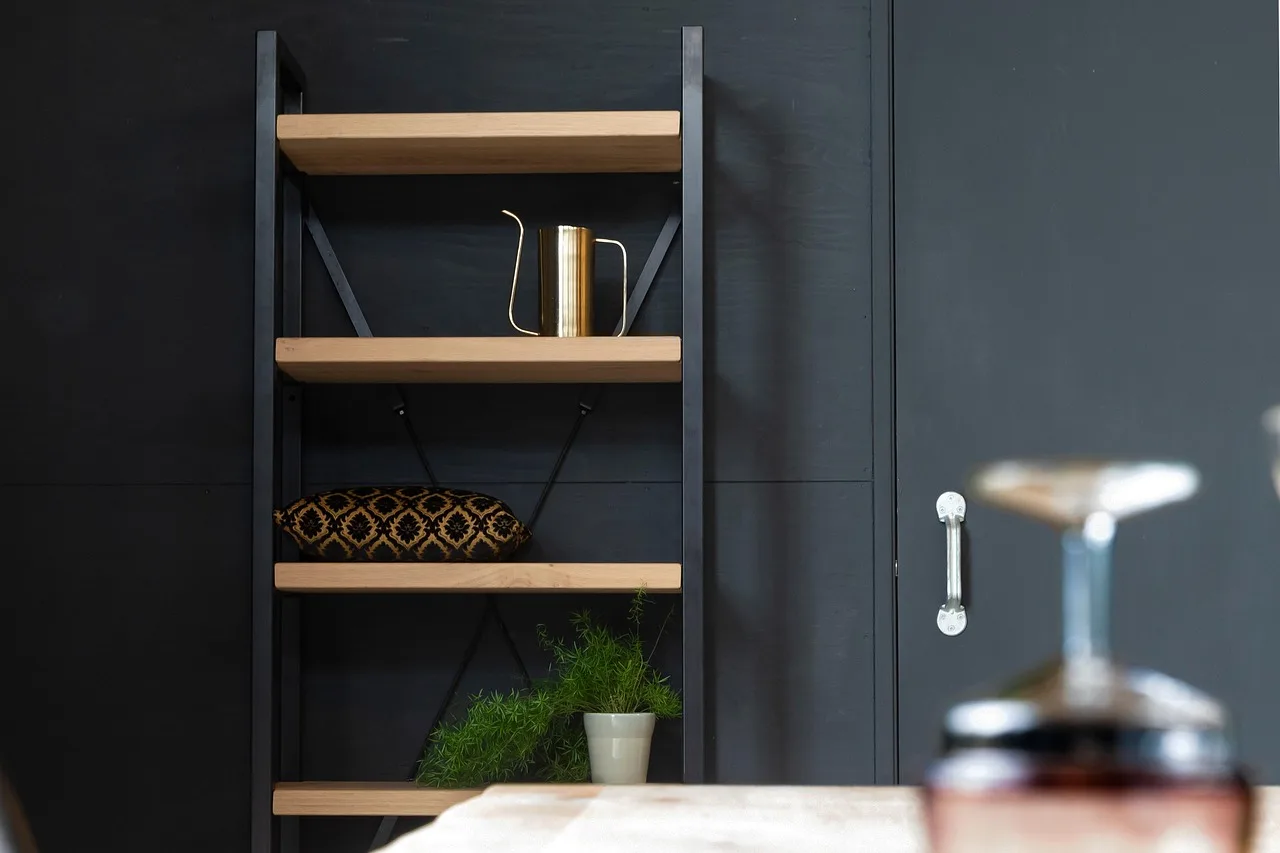


For a shelf retrofit inside an existing cabinet, materials are usually the smaller part of the bill, while labor often sets the floor. Straightforward swaps stay near the low end; warped boxes, missing pins, or trim and repair work push the price higher. A single opening is usually priced per shelf or per cabinet, not like full cabinet installation. Contractor estimating guidance from Homewyse places cabinet installation far above a shelf-only job, which helps frame why a simple shelf retrofit should remain lower unless the scope expands into cabinet repair or cutouts. Homewyse’s cabinet installation page also notes labor assumptions and cost adjustments by contractor markup and tax exclusions: https://www.homewyse.com/services/cost_to_install_cabinets.html.
What a standard quote usually includes
A basic quote should list labor, shelf material, shelf pins or brackets, fasteners, setup, leveling, and cleanup. Some installers also include minor trimming or a simple finish touch-up, but cutouts, disposal, delivery, and permits should be shown separately when relevant. Homewyse estimates cabinet installation at $274-$422 per cabinet, which helps frame how much less a shelf-only retrofit should cost than full cabinet work. Homewyse includes cabinet installation labor as basic labor to install cabinets, and notes that plumbing cutouts may be included if needed. Homewyse also says a general contractor may add 13% to 22% to total cost, and that no sales tax is included in the estimate. For a broader cost benchmark, see Homewyse’s cabinet installation pricing: https://www.homewyse.com/services/cost_to_install_cabinets.html.
What affects the price?
The quote changes most when the cabinet interior is out of square, hard to reach, or not set up for a standard adjustable shelf. Shelf material, finish quality, cabinet construction, and hardware compatibility all matter. Once the opening needs repair, drilling, or custom cutting, the job stops behaving like a simple shelf swap.
Shelf material and finish level
Material choice changes cost and fit because different boards, cores, and finishes price out very differently. Wood, metal, engineered wood, and solid wood do not cost the same, and the finish level changes the labor as well. A basic melamine or engineered board shelf usually costs less than solid wood with stain and edge finishing. The more the shelf has to match visible interior trim, the more labor it needs. For material benchmarking, contractor and retailer pricing for sheet goods and cabinet-grade boards generally places engineered panels below hardwood and finish-matched stock, while custom finishing adds labor rather than material value; see Home Depot’s cabinet and plywood product pricing for material context: https://www.homedepot.com/.
Cabinet construction and interior size
Frameless cabinets are often simpler for shelf swaps because the opening is more direct. Framed cabinets can reduce usable width and demand tighter measuring around face frames. Plywood interiors usually hold fasteners better than thin particleboard, while melamine can chip if drilled poorly. Custom sizes add cost because the shelf has to fit the exact inside width and depth, not a standard panel dimension.
Access limits, repairs, and hardware conflicts
Tight spaces, odd angles, and cabinets built close together can add setup time before any cutting starts. Missing shelf pins, stripped holes, warped side panels, and soft-close hardware interference all add labor. Under-sink openings can be especially slow because plumbing blocks shelf depth and reduces clearance. Wall studs and hollow wall conditions matter when a shelf or support needs anchoring outside the cabinet box. In the field, installers commonly upcharge when they have to work around hidden plumbing, tile backsplashes, or delicate factory finishes that increase the risk of chip-out during drilling.
Cabinet shelf retrofit cost matrix
This matrix shows common line items for an inside-cabinet retrofit. Use it as a pricing check, not a quote. The low and high totals combine materials and labor for each item, and the custom-carpentry column shows when the job usually stops being a quick retrofit. The ranges below are tied to the quote patterns discussed above and should be treated as verified planning ranges, not universal local bids.
| Line item | Low total | High total | When this becomes a custom carpentry job |
|---|---|---|---|
| Standard replacement shelf | $50 | $150 | Opening is out of square or shelf must match a specialty finish |
| Extra shelf add-on | $40 | $120 | Cabinet needs new support layout or center support changes |
| Shelf pin replacement | $15 | $60 | Pin holes are stripped, missing, or misaligned across the box |
| Custom cut shelf | $90 | $250 | Opening needs odd angles, notches, or a nonstandard depth |
| Shelf board material | $20 | $180 | Material must match existing cabinet grade and finish exactly |
| Edge banding | $15 | $80 | Visible edges need stain or paint matching on all exposed sides |
| Drilling new pin holes | $25 | $100 | Hole pattern must be corrected across a damaged or warped box |
| Damaged side panel repair | $75 | $300 | Panel needs patching, reinforcement, or partial replacement |
| Soft-close hardware interference | $40 | $180 | Hardware must be moved, trimmed, or rebuilt to fit the shelf |
| Under-sink plumbing clearance | $60 | $220 | Shelf has to be notched or redesigned around trap and supply lines |
| Pantry-depth shelf | $120 | $350 | Deep shelf needs extra support to control sag across the span |
| Pro labor | $35 | $180 | Labor rises when leveling, cleanup, trim, or repair becomes part of the scope |
One and Done Prep estimates total shelf installation at $200-$2,400, with per-shelf basic kit costs at $15-$120 and professional labor at $80-$1,250. It also says a simple shelf install may take 2-4 hours. That range fits the idea that small retrofit work can be quick, but only when the cabinet is sound and the shelf size is straightforward. Because this source is broad and not cabinet-specific, treat it as a ceiling check rather than a direct benchmark for a simple shelf retrofit.
How much does it cost to add a shelf?
Adding a shelf to an existing cabinet often costs less than replacing the whole interior if the cabinet already has usable pin holes and enough clearance. A basic base or wall cabinet add-on can stay near the lower range, while pantry-depth shelves, under-sink cutouts, or repair work move the price up. The bigger and deeper the opening, the more likely the job needs extra support.
Base cabinet versus wall cabinet pricing
Base cabinets usually allow easier access, but drawers, rollouts, and plumbing can crowd the space. Wall cabinets are often simpler to work in, although height and ladder access may add labor. Current Cost estimates cabinet installation at $150-$900 per cabinet and wall cabinets at $100-$500 per linear foot, which is much more than a shelf retrofit, but useful as a ceiling check when a shelf job starts to involve the whole cabinet. Because this is a broad cabinet-install estimate rather than a shelf-specific retrofit source, it should be read as a comparison point only. Source: https://www.currentcost.com/.
Pantry-depth shelves and deeper openings
Deep pantry shelves can sag if the board is too thin or the span is too wide. That is why solid wood, plywood, or reinforced engineered wood can cost more than a light panel. For a deep opening, the installer may need center support, heavier-duty pins, or a thicker shelf board to keep the load within safe limits.
Under-sink cabinets and plumbing clearance
Under-sink cabinets are a different pricing category because the shelf must work around trap lines, supply valves, and any leak-prone areas. Homewyse notes cabinet installation may include plumbing cutouts if needed, and that same idea applies here. A shelf that has to be notched or split around plumbing usually costs more than a straight replacement shelf.
How much is cabinet installation?
Full cabinet installation is a different job from a shelf retrofit, and it should be priced separately. Shelf work is usually cheaper because it does not require hanging boxes, fastening to studs, or full cabinet alignment. When the quote begins to include leveling, anchoring, trim, cutouts, or structural repair, it starts to resemble cabinet work rather than a simple shelf change.
Labor rate ranges by region
Regional labor rates change the quote even when the materials stay the same. Urban pricing is usually higher than suburban or rural pricing because overhead and travel time are greater. Local labor shortages can push hourly rates upward, and the same job may cost more when the installer is booked out or must schedule a second visit. A handyman often prices below a cabinetmaker for simple work, but specialized cabinet repair can justify the higher rate.
When a shelf quote starts to resemble cabinet work
If the quote includes shimming, squaring, new fastening points, panel repair, or finish carpentry, the job has moved beyond a basic shelf swap. That is especially true when the box is warped, the shelf opening is nonstandard, or the hardware layout conflicts with the new shelf. At that point, per-opening pricing can climb toward custom cabinetry rates.
DIY, handyman, or cabinetmaker?

The right choice depends on fit, damage, and hardware complexity. A simple shelf swap can be a DIY task if the cabinet is square and the shelf is standard size. Once drilling, repair, or trim work enters the scope, a handyman or cabinetmaker may be the better value because mistakes in a tight cabinet opening are costly to undo.
- Choose DIY if the cabinet already has sound shelf pins, a square interior, and a shelf that fits without cutting.
- Choose a handyman if the shelf needs light trimming, new pin holes, or minor hardware adjustments.
- Choose a cabinetmaker if the box is warped, damaged, custom sized, or needs finish matching and repair.
- Choose a cabinetmaker if the job involves center supports, plumbing cutouts, or built-in trim that must match existing cabinetry.
Simple swap jobs
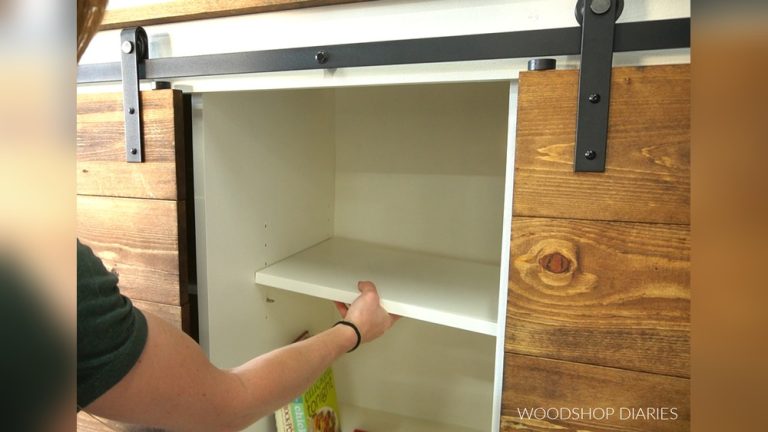
Simple swap jobs are the best fit for standard plywood, melamine, or engineered wood shelves that match an existing opening. Adjustable pins, brackets, and screws should already be compatible, and the load rating should suit what the shelf will hold. If the shelf is only replacing a worn panel, labor should stay near the low end.
Jobs that need drilling, repair, or trim work
Drilling new pin holes, repairing side panels, or adding edge banding turns the work into a more time-heavy retrofit. Picture a 30-inch wall cabinet where the old shelf sags and the right-side pin holes are stripped; the installer may need to patch the panel, drill a new pattern, and trim the shelf to fit. That is no longer a quick swap. Common failure points include pin-hole tearout, shelf edge swell from moisture, and slightly out-of-square boxes that make the new shelf rock even when the board size looks correct on paper.
When custom carpentry makes more sense
A common first-timer mistake is assuming a replacement shelf only needs a different board size. In reality, a warped box, off-center face frame, or soft-close hinge can change the layout enough to require custom work. When the cabinet interior is damaged or the new shelf must carry heavy dishes, custom carpentry often costs less than repeated fixes.
Replace-vs-add decision table:
| Situation | Best choice | Why |
|---|---|---|
| Shelf is sagging, chipped, or water-damaged | Replace | The existing board is already compromised |
| Cabinet has good pin holes and needs more storage | Add | No repair is needed, so labor stays lighter |
| Opening is warped or out of square | Replace with custom fit | Standard shelf sizing is unlikely to fit cleanly |
| Plumbing blocks part of the cabinet | Add or custom cut | Clearance determines whether the shelf can be full width |
| Hardware conflicts with shelf depth or height | Replace after layout check | Support and hinge clearance may need to be changed first |
When this becomes custom carpentry checklist:
- The cabinet is visibly out of square or warped.
- Existing shelf pins are stripped, missing, or mismatched.
- The shelf needs notches, angles, or a nonstandard depth.
- Plumbing, hinges, or soft-close hardware blocks the shelf path.
- The finish must match visible cabinetry exactly.
- Side panels, supports, or face-frame parts need repair before installation.
How to get an accurate quote
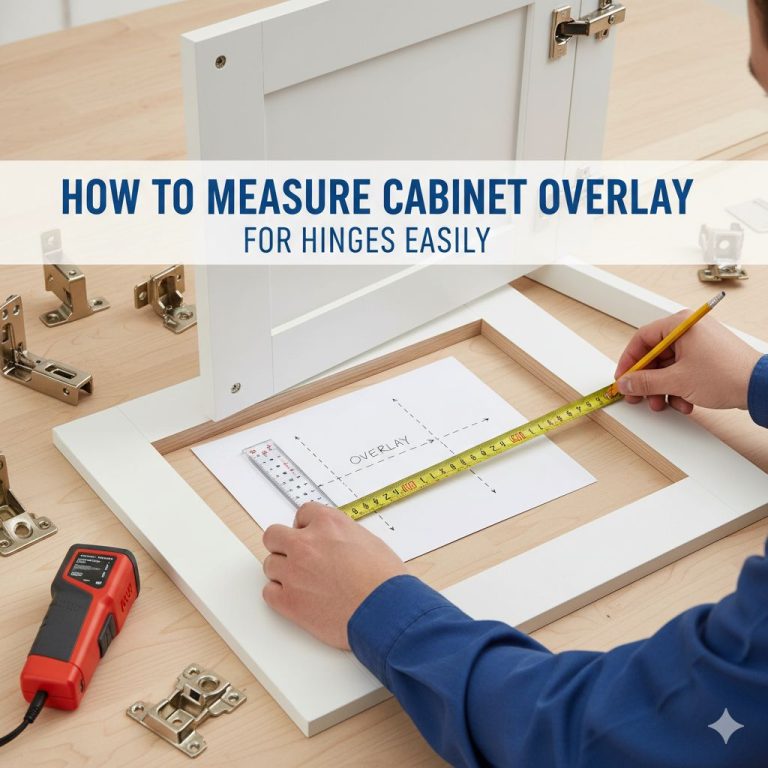
A good quote starts with measurements, photos, and a clear description of the cabinet type. The installer needs the inside width, depth, and height, plus notes on shelf pins, plumbing, hinges, and finish condition. Ask for itemized labor and material pricing so you can compare quotes on the same scope. A practical field note: measure at the front, middle, and back of the opening because older cabinets can be slightly tapered, and that small difference can change whether a shelf drops in cleanly.
- Measure the cabinet opening width, depth, and clear height.
- Photograph the inside, including shelf pin holes, side panels, and any damage.
- Note cabinet type: base, wall, pantry, or under-sink.
- Ask whether the quote includes leveling, cleanup, fasteners, and edge finishing.
- Ask whether delivery, disposal, and permits are included if the scope is larger than a basic shelf swap.
- Compare whether the quote is per shelf, per cabinet, or hourly.
Suppose a 24-inch wall cabinet needs one extra shelf and the box is sound. That job may stay close to the lower end because the material list is small. If the same cabinet has missing pins and a chipped side panel, the labor and repair line items can double the price fast.
Frequently asked questions
How much does cabinet shelf installation cost?
The main price drivers are labor, material choice, and whether the cabinet interior is straight, intact, and already set up for adjustable shelf hardware.
How much does it cost to add a shelf to a cabinet?
Adding a shelf to a cabinet often costs $40 to $150 for a straightforward opening, but deeper pantry spaces, under-sink cabinets, and damaged interiors can push it higher. If the installer must drill new pin holes, trim the board, or move hardware, the quote can move into the $200+ range.
What affects the price to install shelves in preinstalled cabinets?
Price changes with cabinet size, shelf material, finish level, and hardware compatibility. Frameless boxes, good pin holes, and square interiors keep labor down. Warped panels, soft-close hardware, plumbing cutouts, and tight access all add time, and deep pantry shelves may need thicker material or extra support.
Should I replace or add an extra shelf for cabinet storage?
Replace the shelf if the existing panel is sagging, chipped, or the wrong size. Add an extra shelf if the cabinet interior is sound and you only need more storage. If the opening needs new supports, custom trimming, or repair, replacement and extra shelving can cost about the same once labor is included.
How much does cabinet installation cost?
Cabinet installation cost depends on whether the job is a full cabinet replacement or a shelf retrofit. Shelf work is usually priced per opening and is far cheaper, while full cabinet installation can run from hundreds to nearly a thousand dollars per cabinet when labor, hardware, and site conditions are included.
Products related to this article
Sponsored / affiliate links. As an Amazon Associate I earn from qualifying purchases. I may earn additional commission from eligible campaigns.