What Is the Standard Door Knob Height?
A common interior door knob height is 36 inches from the finished floor to the knob centerline, or about 91.4 cm. That height is a common residential reference, and it also sits within the accessible operable-part range for many doors when the rest of the hardware layout is suitable. For a new install, confirm the door prep and the hardware manufacturer’s instructions before drilling. See the ADA/ABA accessible-door guidance for the 34-inch to 48-inch operable-parts range and a typical residential lockset installation guide for door prep and thickness limits.
What is the standard door knob height?
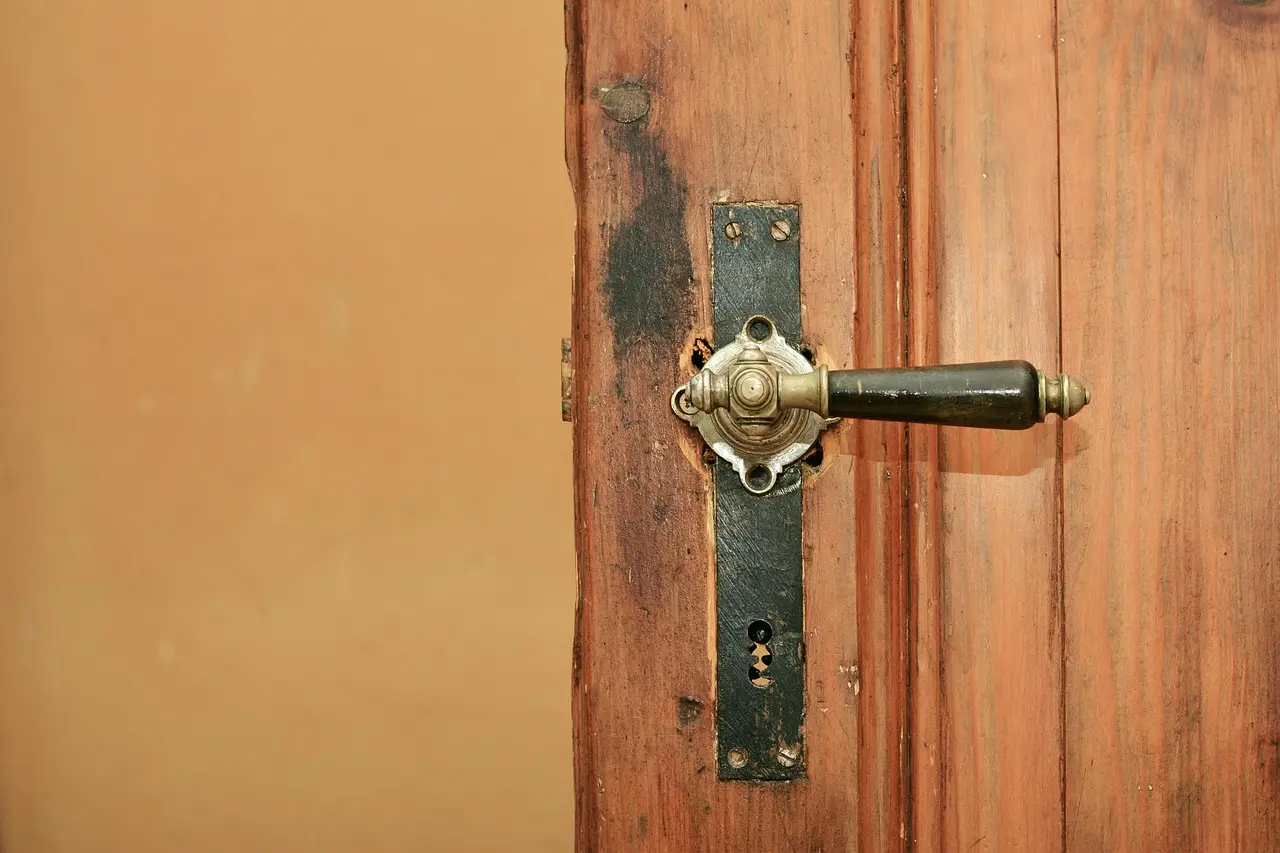
The usual reference for a new interior passage door is 36 inches from the finished floor to the knob centerline, which is about 91.4 cm. That is a common residential layout, not a universal law for every door. When a door already has existing prep, the old bore and the project layout may matter more than resetting the number.
This measurement is a centerline reading, not a measurement to the top of the trim or the edge of the latch. Finished floor is the baseline, so carpet, tile, underlayment, and transitions are part of the reference. For accessible operable parts, the ADA/ABA guidance allows a range of 34 inches minimum to 48 inches maximum above the finished floor on accessible doors, which helps explain why some projects stay near 36 inches and others adjust.
Knob height vs lever height
Door knobs and lever handles often share the same centerline on interior door hardware fixes, so 36 inches is a practical starting point for both. The hardware shape changes, but the measuring method does not. A lever is often chosen when easier operation matters more than matching a knob shape.
A lever can replace a knob on many interior doors if the backset, bore size, and door thickness fit the set. Manufacturer prep sheets commonly specify standard residential door thicknesses such as 1-3/8 inch to 1-3/4 inch and common backsets such as 2-3/8 inch or 2-3/4 inch, so the fit should be checked against the package instructions rather than guessed.
For a standard interior passage door, think in these terms: knob or lever at the common centerline, passage hardware for non-locking doors, privacy hardware for bed and bath doors, and keyed entry hardware mainly where a keyed function is actually needed. For most interior rooms, a keyed entry set is less common than a passage or privacy set because locking needs are usually limited to bedrooms, baths, or other controlled spaces. Dummy knobs are different again because they are decorative or pull-only hardware.
How do you measure knob height?
Measure from the finished floor to the center of the bore, then set the knob or lever centerline at that mark. That baseline keeps measurements consistent across flooring changes, so a project with carpet, tile, or hardwood still lands at the same visual height. If the door already has a bore, confirm the existing centerline before deciding to re-drill.
The measurement is to the center of the round bore or spindle line, not to the top of the plate. That is why two doors can use the same hardware and still look mismatched if one was measured from subfloor and the other from finished flooring. The centerline stays useful only when the baseline stays consistent.
- Mark the finished floor at the door opening.
- Measure up 36 inches for the common knob or lever centerline.
- Confirm the bore center lands on that mark before drilling.
- Check that the latch, strike, and trim can all clear the door stile.
- Repeat the same baseline on every matching door in the project.
A common mistake is setting the door knob height from the top of the subfloor on one hallway door and from the finished carpet on another. That can make a hallway look uneven, even when each door was installed to a number. The right answer is only right if the baseline is the same everywhere.
Suppose you replace a bedroom door knob or lever on a painted interior door and the old bore is already centered at 36 inches. In that case, keeping the existing hole is often the cleanest choice because the new hardware can align with the old prep instead of forcing visible patching and a second bore.
When should you keep the existing height?
Keep the existing height when the current bore is sound, centered, and compatible with the new lockset. If the door already lines up with nearby doors, matching the existing prep is usually better than starting over. Reusing the old layout reduces patching, keeps trim alignment simpler, and avoids moving hardware without a clear reason.
That rule matters most in remodels. Older homes may already have a consistent height across several doors, even if it is not exactly the same as a current reference number. If the new hardware fits the old bore and the door face is in good condition, preserving the existing location is often the cleaner decision.
Keep the existing height when the manufacturer’s prep dimensions still work with the door thickness and bore pattern. Installation sheets for residential locksets commonly specify the allowed door thickness and backset, along with the standard bore and latch measurements, so the old location should be judged against those instructions instead of against height alone. If the prep matches, the hole can usually stay.
Replacement hardware on old bore holes
On a typical interior passage door, the old bore can often stay if the new knob, lever, or privacy lock uses the same standard layout. This is especially true when a home already has a consistent hardware line across several rooms. For a closet or hall door, matching the old hole is often the fastest clean option.
Matching the old hole is also sensible when the door is already painted or finished and patching would leave a visible repair. If the door is sound and the bore is round, there is usually no reason to move the hardware just to chase a newer number. A clean fit is usually more important than a theoretical reset.
When should you change the height?
Change the height when accessibility, damage, hardware fit, or whole-house consistency makes the old location a poor choice. A lever upgrade may call for a new layout if the existing knob location is damaged, awkward for the new trim, or out of step with the rest of the project. Moving the height is a deliberate choice, not a default requirement.
Accessibility is the clearest reason to adjust. The ADA/ABA accessible-door guidance allows operable parts between 34 inches and 48 inches above the finished floor, so a project can move within that range to improve use without leaving the accessible envelope. A lever is often preferred over a knob because it is easier to operate.
Change the height when the old hole is off-center, split, patched poorly, or incompatible with the new lockset. You may also move hardware if you are trying to make several interior doors read as one set and the old door sits outside that pattern. Consistency matters most when doors sit side by side in a hallway.
Exceptions for accessibility and special layouts
Accessibility exceptions are about function, not style. When a door needs easier operation or a different reach point, the project can stay within the accessible range rather than forcing every door to use one exact number. That is why 36 inches is common, but not the only acceptable result in a real house.
Special layouts can also change the decision. Tall trim, raised floors, thick rugs, or a reused slab may make the old bore a better fit than a fresh standard height. In those cases, the key question is whether the hardware is usable, aligned, and within the manufacturer’s prep and accessibility limits.
Say your hall closet still has a knob at a different height from the bedroom doors. If the house is being updated for a uniform look, you can keep the closet hardware where it is if the bore is sound, or re-drill to match the rest of the interior doors. The decision depends on whether preservation or consistency matters more.
Door hardware measurement checklist

Use this checklist to separate knob, lever, lockset, and deadbolt placement before you drill. It is built for interior doors, but the same measuring habit helps you compare interior and exterior layouts without mixing them together. The deadbolt row matters because exterior doors often add a separate lock above the main set, while interior doors often do not.
| Measurement point | Typical reference | How to read it | Match existing holes vs re-drill |
|---|---|---|---|
| Finished floor baseline | Use the finished floor, not the subfloor | Measure every door from the same finished surface | Match existing holes only if the current holes were measured from the same baseline |
| Typical knob centerline | 36 inches / 91.4 cm | Measure to the center of the knob bore | Keep the hole if the current bore already sits at the common centerline and the trim covers the prep |
| Lever centerline | 36 inches / 91.4 cm in many interiors | Measure to the center of the lever spindle or bore | Match existing holes when the lever trim and bore pattern fit the old location |
| Privacy lock position | Usually the same operating height as the main set | Check the lockset center and privacy function before drilling | Keep the hole if the privacy trim hides the old prep cleanly; re-drill if it does not |
| Deadbolt position | Separate from the main lockset on entry doors | Measure the deadbolt center from the finished floor and from the top of the door | Re-drill when the existing deadbolt bore is wrong or does not match the new set |
This checklist also helps when you are choosing between passage, privacy, keyed entry, and dummy hardware. A passage set suits a hall or closet door that does not lock. A privacy set belongs on a bedroom or bath door. Keyed entry hardware is more common on exterior or secure interior doors. Dummy hardware is for doors that do not need a latch but still need a matching look.
Keep existing hole vs re-drill
Keep the existing hole when the old prep is solid, the new hardware covers it cleanly, and the door thickness matches the manufacturer’s range. Re-drill when the current bore is damaged, the trim will not cover the old prep, or the new set needs a different backset or latch pattern. The cleanest option is the one that fits without forcing the door to fight the hardware.
What door sizes and thicknesses affect hardware fit?
Standard interior passage doors are commonly 80 inches tall, and closet doors may be slightly shorter at 78 inches. Common interior widths include 30, 32, and 36 inches, but the exact size depends on the opening and the home’s trim package. Hardware placement still starts from the finished floor, not from the door size alone.
Door thickness matters because the lock body and spindle must fit the slab. Many residential locksets are made for common interior thicknesses around 1-3/8 inches, while some products also fit thicker slabs such as 1-3/4 inches. Check the installation sheet before buying, because the same style may not fit every door in the house.
A 6/8 door is the 6-foot-8-inch interior standard, which is another way to describe the 80-inch height. A closet height of 78 inches is often called a 6/6 door. Those size labels tell you about the slab, but they do not set the knob height by themselves. Hardware placement still starts from the finished floor.
Door thickness matters because the lock body and spindle must fit the slab. A thicker slab can change how trim sits and how long the screws need to be. Manufacturer instructions for residential locksets are the best source for those limits, since bore dimensions, latch depth, and thickness ranges vary by model.
How builders describe door dimensions
Suppliers often describe doors by height, width, and thickness together, then add prep details for the lockset. That means a door may be sold as 80 by 32 by 1-3/8, yet still need separate confirmation for bore spacing and edge distances. The door size and the hardware location are related, but they are not the same measurement.
Does standard height change by door type?
Yes. The common 36-inch centerline is a strong interior reference, but the exact hardware layout changes with door type, room use, and whether a deadbolt is part of the set. Bedroom and bathroom doors often use privacy hardware. Hall and closet doors often use passage hardware. Exterior doors usually need a separate locking setup.
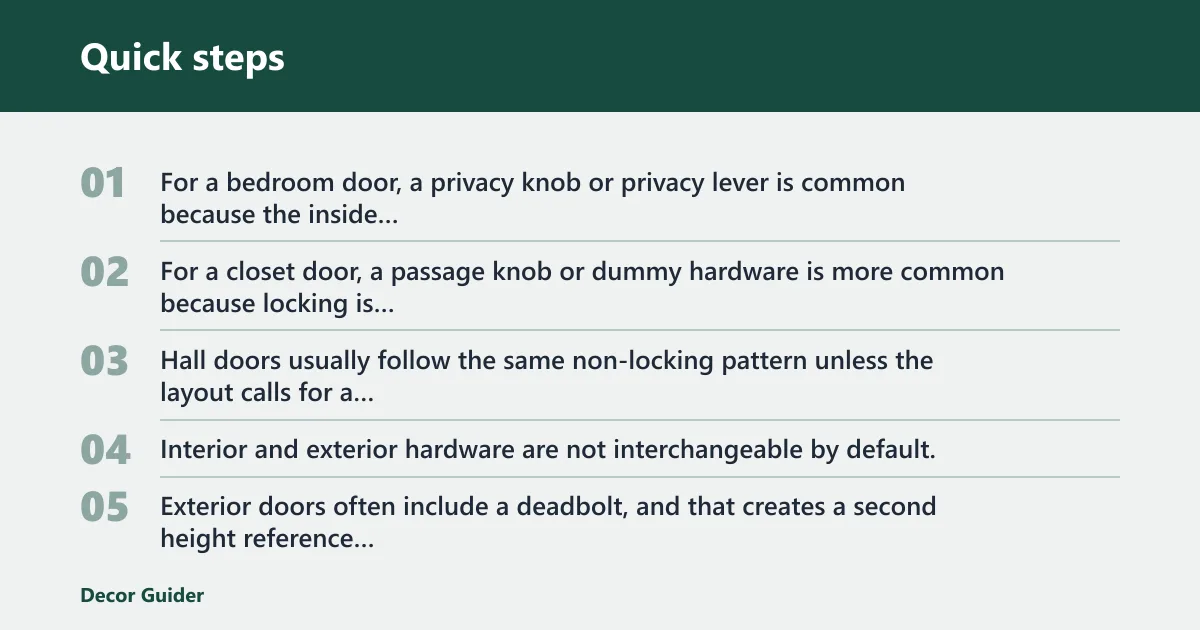
For a bedroom door, a privacy knob or privacy lever is common because the inside function is meant to lock without a keyed cylinder. For a closet door, a passage knob or dummy hardware is more common because locking is often unnecessary. Hall doors usually follow the same non-locking pattern unless the layout calls for a latch.
Interior and exterior hardware are not interchangeable by default. Exterior doors often include a deadbolt, and that creates a second height reference above the main lockset. That is why you should not copy an exterior door layout onto an interior passage door without checking the full prep and the lockset instructions.
Interior vs exterior hardware differences
Interior doors usually rely on a single latch function, while exterior doors add security hardware and a separate deadbolt. That difference changes both the number of holes and the placement logic. A deadbolt is not part of a normal interior passage setup, so a direct copy from an exterior entry door can create unnecessary extra work.
Because exterior hardware can involve more than one centerline, the lock height question needs to be split into parts. Main handle height, deadbolt height, and edge preparation are separate decisions. Treating them as one number can cause fit issues or leave the hardware too close to the top rail.
Bedroom, bath, hall, and closet use cases
Bedroom and bathroom doors usually need privacy hardware. Hall doors usually need a passage set. Closet doors may use a passage set, a dummy knob, or another non-locking option depending on the style of the door and how it opens. The room matters because the function matters.
Picture a bathroom remodel where the old knob is at the right height but the new privacy lever has a larger trim ring. If the hole is centered and the new part covers the old prep, you can keep the location. If the trim leaves damage exposed, re-drilling or patching may be the cleaner route.
Frequently asked questions
What is the standard door handle height?
The standard door handle height for many interior lever installs is also 36 inches from the finished floor to the centerline. The shape changes from knob to lever, but the measuring point usually does not. For accessibility goals, a lever is often the better choice because it is easier to operate.
What is the standard interior door handle height?
The standard interior door handle height is commonly treated the same as the knob height: 36 inches to the centerline from the finished floor. That applies to many passage and privacy doors in homes. If you are replacing old hardware, check the existing bore before deciding whether to keep or change it.
What is the standard door lock height?
For interior locksets, the main handle or knob often sits at the common 36-inch centerline, while a deadbolt on an exterior door sits separately above it. Because deadbolts add a second lock point, the term “lock height” can refer to different parts of the door. Measure each component on its own.
What is the standard door handle height in inches?
The standard door handle height in inches is 36 inches from the finished floor to the centerline on many interior doors. That number works for both many knobs and many levers. If the door is being updated for accessibility, the same centerline may stay in place while the hardware type changes.
Does standard height change for interior vs exterior doors?
Yes. Interior doors often use a single handle or knob at the common 36-inch centerline, while exterior doors may add a deadbolt and different security hardware. Do not copy one setup to the other without checking the full prep. The deadbolt, latch, and backset all need separate review.
Products related to this article
Sponsored / affiliate links. As an Amazon Associate I earn from qualifying purchases. I may earn additional commission from eligible campaigns.