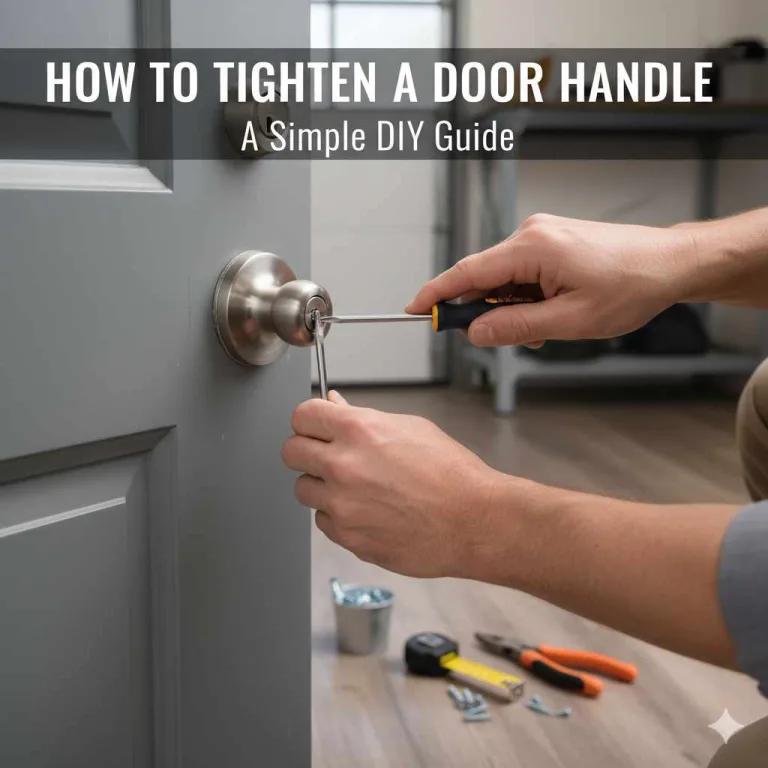
How to Tighten a Loose Lever Door Handle
To tighten a loose lever door handle, first find the failing part: if the lever wobbles, tighten the set screw or through-bolts; if the plate moves, tighten its screws; if the handle drops, inspect the spindle or latch. Tightening the wrong fastener can strip screws, damage trim, or leave the latch unreliable. This guide shows how to identify the problem, tighten the right parts, and avoid over-tightening.
What this fix covers


This applies to interior lever door handles on a rose or on a backplate. Some models use exposed screws, while others hide the fixings behind a trim plate for a cleaner look. That difference changes the access path, so identify the hardware before turning anything.
Loose handles are often traced to one of four places: the set screw, the mounting screws, the spindle, or the latch mechanism. Tightening helps when the parts are merely loose. It will not hold if threads are stripped, the spindle is bent, or the latch is worn.
What you’ll need
- Allen wrench or Allen key that fits the set screw
- Flathead screwdriver for prying a trim plate or pressing a detent pin
- Phillips or flat screwdriver for exposed mounting screws
- Thread locker for recurring loosening
- Small container for screws and trim pieces
Why is the lever loose?
The symptom tells you where to start. A lever that wobbles often points to a loose set screw or loose mounting screws. A lever that spins without moving the latch usually points to a spindle problem. A handle that slips off or falls away usually has a stripped set screw or a broken connection at the spindle.
Say your lever on a round rose moves side to side, but the plate stays still. That usually means the lever itself is loose, not the entire assembly. Suppose the handle feels solid until you turn it, then it does nothing. That points more toward the spindle or latch than the visible screws.
Signs of a loose screw issue
If the rose or backplate shifts against the door, the mounting screws are the first place to check. Loose fixings let the handle rock even when the lever connection is still intact. On concealed-fix hardware, the screws may sit behind a cover plate.
Signs of a spindle or latch issue
If both levers feel loose together, the spindle may not be seated correctly. A damaged latch mechanism can create the same symptom. That is why tightening alone does not always solve it.
Signs the set screw has stripped
If the lever turns around the spindle or slides off easily, the set screw may be worn or stripped. A damaged grub screw will not clamp securely, even if you tighten it more. At that point, replacement is usually the clean fix.
When the trim plate is the problem
If the handle feels loose at the base but the lever itself is firm, the trim plate or rose may be hiding loose screws. Hidden-fix handles often need the cover removed before you can reach the fasteners. A seized plate needs careful pressure, not force.
Step 1: Identify the handle type
Check whether the handle is lever on rose or lever on backplate. Then look for exposed screws or a concealed cover. Find the set screw, which is often reached through a small detent access hole with an Allen key or screwdriver.
- Inspect the base of the lever and the door edge.
- Look for visible screw heads or a snap-on trim plate.
- Insert the correct Allen key into the access hole if the lever has concealed fixing.
- Turn the lever gently to see which part moves.
Step 2: Tighten the fasteners
Start with the mounting screws, then move to the set screw. Tighten until the screws stop moving and the lever no longer shifts side to side. The mounting screws connect the handle to the door, so they need firm contact, not heavy torque. Over-tightening can strip threads or distort the trim plate.
- Remove the cover plate if it hides the screws.
- Tighten each mounting screw a little at a time in a cross pattern.
- Use the right-sized driver so the screw head does not cam out.
- Tighten the set screw until the lever stops shifting on the spindle.
- Stop as soon as resistance rises sharply.
If the loosening keeps coming back, add a tiny drop of thread locker to the screw threads after cleaning them. Let it set before reassembly. That helps on handles that see repeated use, including many commercial-grade levers.
Step 3: Re-seat the spindle
The spindle is the central shaft between both sides of the handle. It must seat correctly in the latch mechanism. If it sits off-center, the lever can feel loose even after the screws are snug. A bent spindle usually needs replacement.
- Remove one lever side if needed to inspect the spindle ends.
- Center the spindle so both handles engage it evenly.
- Check that the spindle enters the latch squarely, without binding.
- Reinstall the lever and retighten the set screw.
- Work both sides back and forth several times.
Picture a corridor office door with a concealed-fix lever that tightens, then loosens again after a week. If the spindle is slightly mismatched to the latch, the handle may never stay secure for long. In that case, the fit problem matters more than the screw torque.
What if tightening does not fix it?
If the handle still feels loose after tightening, move to the latch and the fixing points. A worn latch, stripped screw hole, bent spindle, or damaged set screw will defeat a screw-tightening fix. That is the point where replacement becomes the safer option.
- Remove the lever and inspect the spindle square for rounding or bends.
- Check the latch mechanism for smooth movement and correct alignment.
- Inspect screw holes in the door for stripping.
- Replace any failed part before reassembly.
- If the lever still slips or drops, replace the handle set.
If the door is a front entry or a commercial interior door with heavy use, concealed fixings can wear faster than the visible hardware suggests. In that case, replacement is often wiser than repeated tightening.
Common mistakes
Most trouble comes from forcing the wrong part. A screw may be snug, while the spindle is the real issue. A cover plate may be seized, while the lever connection is fine. Matching the symptom to the part saves time and keeps the hardware intact.
- Over-tightening mounting screws and stripping the threads
- Forcing a seized cover plate with a blade that scars the trim
- Ignoring a slipping spindle and only tightening visible screws
- Using the wrong driver size on a set screw or exposed screw head
- Reusing a stripped grub screw that will not clamp again
Loose lever troubleshooting matrix
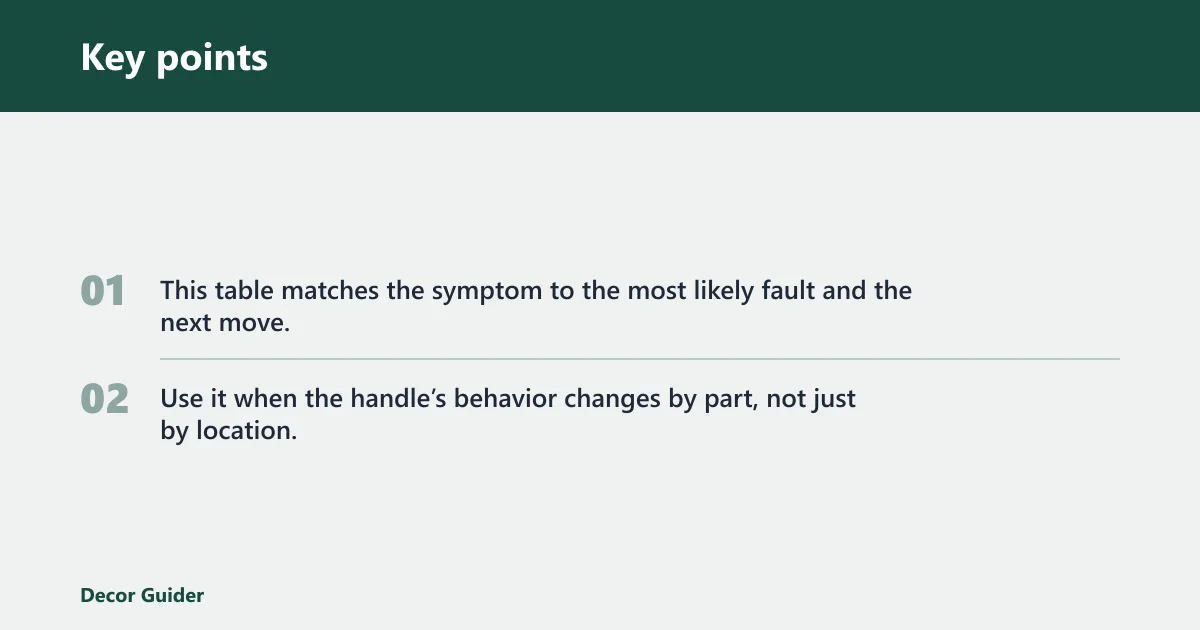
This table matches the symptom to the most likely fault and the next move. Use it when the handle’s behavior changes by part, not just by location.
| Symptom | Likely cause | Exact fix | When to replace |
|---|---|---|---|
| Wobble at the lever | Loose set screw or loose mounting screws | Tighten the set screw with the correct Allen key, then snug the mounting screws evenly | Replace if threads strip or the lever still moves after tightening |
| Spinning lever | Spindle not engaged or worn connection | Remove the lever, re-seat the spindle, and reinstall both sides squarely | Replace if the spindle is rounded, bent, or mismatched |
| Handle slipping off | Stripped set screw or weak clamp at the spindle | Replace the set screw and retighten with the right tool | Replace if the lever socket is worn or the clamp no longer grips |
| Loose rose | Mounting screws behind the trim plate are loose | Remove the trim plate carefully and tighten the fixing screws evenly | Replace if the screw holes are stripped or the plate cracks |
| Handle not retracting latch | Spindle not seated or latch mechanism misaligned | Re-center the spindle and check latch travel for smooth movement | Replace if the latch binds or will not engage correctly |
| Stripped set screw | Worn grub screw or damaged threads | Remove the screw and fit a new one of the same size | Replace if the lever hub threads are damaged too |
| Seized cover plate | Paint, grime, or a tight hidden-fix clip | Press the detent with a flathead screwdriver and pry gently at the edge | Replace if the cover bends, cracks, or will not release |
| Recurring loosening | Worn threads, poor fit, or heavy use | Clean the threads, tighten, then apply thread locker before reassembly | Replace if loosening returns after one reset |
Frequently asked questions
How to fix a lever door handle that fell off
Check the spindle and the set screw before reinstalling anything. If the lever fell off, the connection may be stripped, missing, or worn. Re-seat the spindle, fit the lever squarely, and tighten the set screw. Replace the screw or lever if it will not clamp securely.
Products related to this article
Sponsored / affiliate links. As an Amazon Associate I earn from qualifying purchases. I may earn additional commission from eligible campaigns.