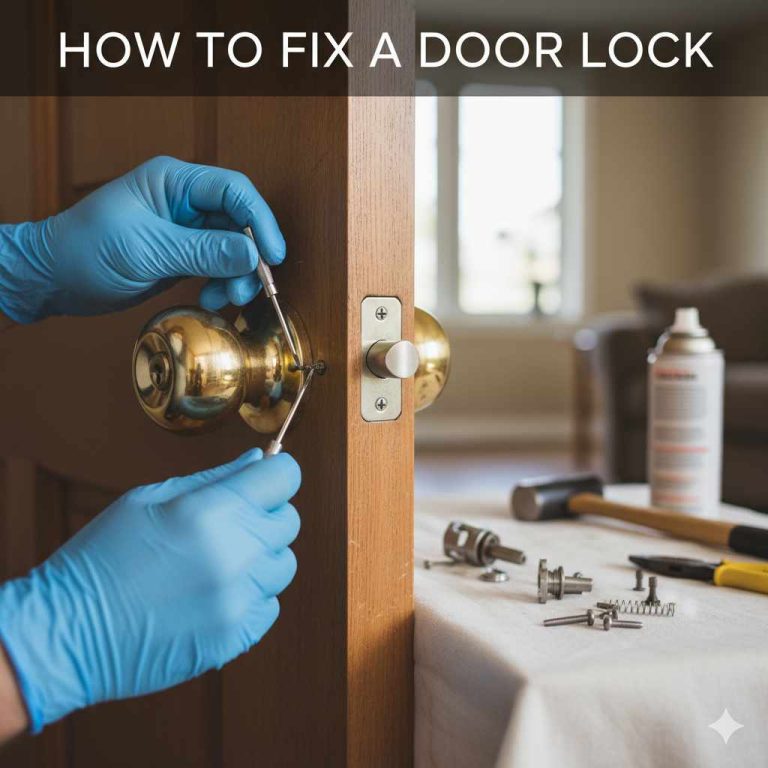
How to Fix a Sagging Interior Door
Fix a sagging interior door by finding the fault first: tighten loose hinge screws, then shim the hinge leaf, plane the rub edge, or adjust the strike only if the door still won’t latch. Use the wrong fix and you can strip screw holes, worsen rubbing, and leave the latch missing its plate. This guide shows how to identify the failure mode and use the lightest repair that solves it.
This guide is part of our Interior Door Problems and Hardware Fixes: Squeaks, Sticking, Handles, Locks and Thresholds series.
What you’ll need
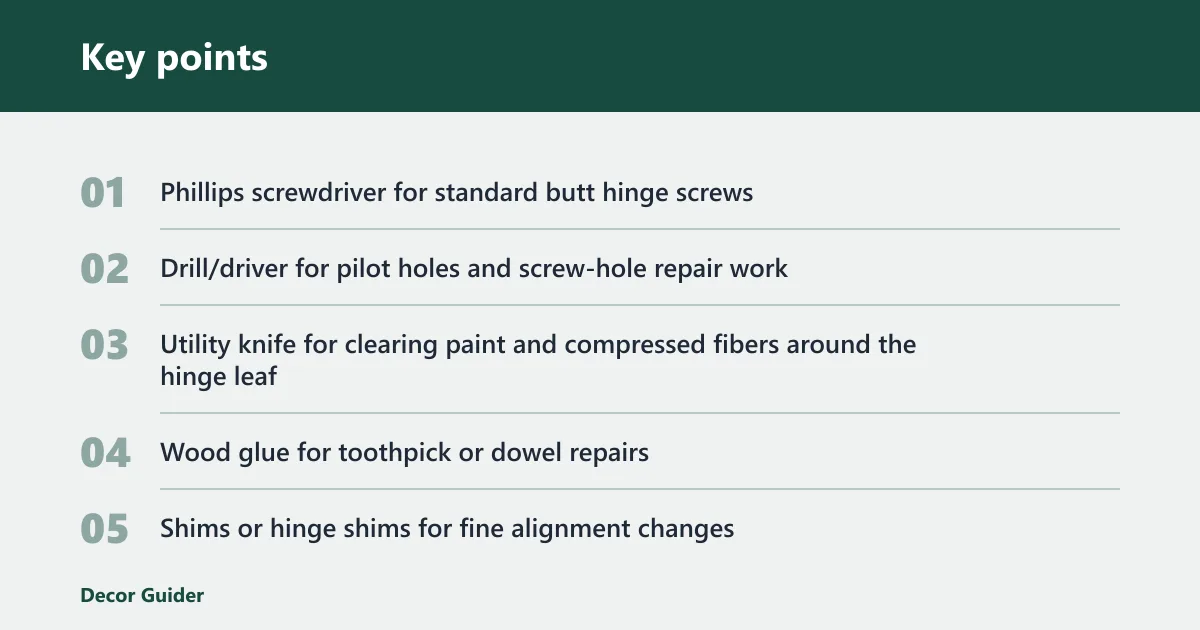


- Phillips screwdriver for standard butt hinge screws
- Drill/driver for pilot holes and screw-hole repair work
- Utility knife for clearing paint and compressed fibers around the hinge leaf
- Wood glue for toothpick or dowel repairs
- Shims or hinge shims for fine alignment changes
- Replacement hinge screws are often available in about 1 inch and 2-1/2 inch lengths, and the finish can be matched to the existing steel or brass when possible.
Why is my interior door sagging at the top corner?
Top-corner rub often points to a drop on the hinge side, especially near the top hinge. If the latch side drags low, the door may be hanging out of square rather than simply loose at one screw. One-side sag can also come from pin wear or a hinge leaf that no longer sits flush.
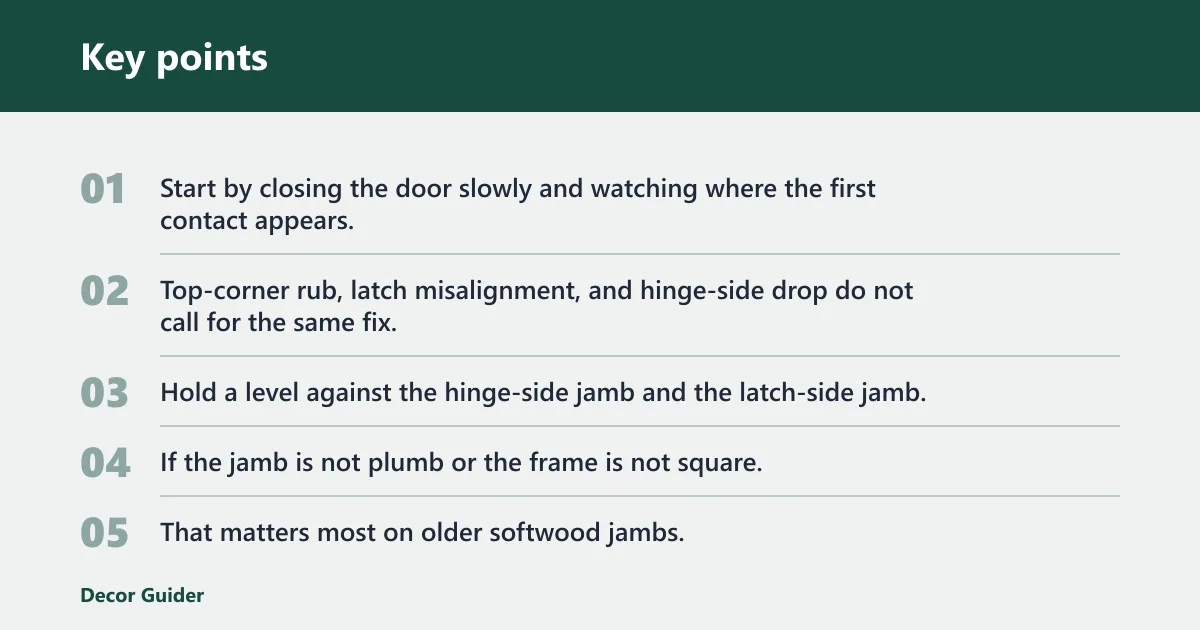
Start by closing the door slowly and watching where the first contact appears. Top-corner rub, latch misalignment, and hinge-side drop do not call for the same fix.
Check plumb and square first
Hold a level against the hinge-side jamb and the latch-side jamb. If the jamb is not plumb or the frame is not square, a perfect hinge adjustment may still leave the door rubbing. That matters most on older softwood jambs, where screw holes can move more easily than the hardware itself.
How do I fix a sagging interior door?
Tighten the hinges first, then move to the smallest repair that matches the symptom. Use longer screws only where the jamb can take them, repair stripped holes before adding shims, and stop if the slab is warped or the frame is visibly out of square. A rehang is better than forcing bad hardware to compensate.
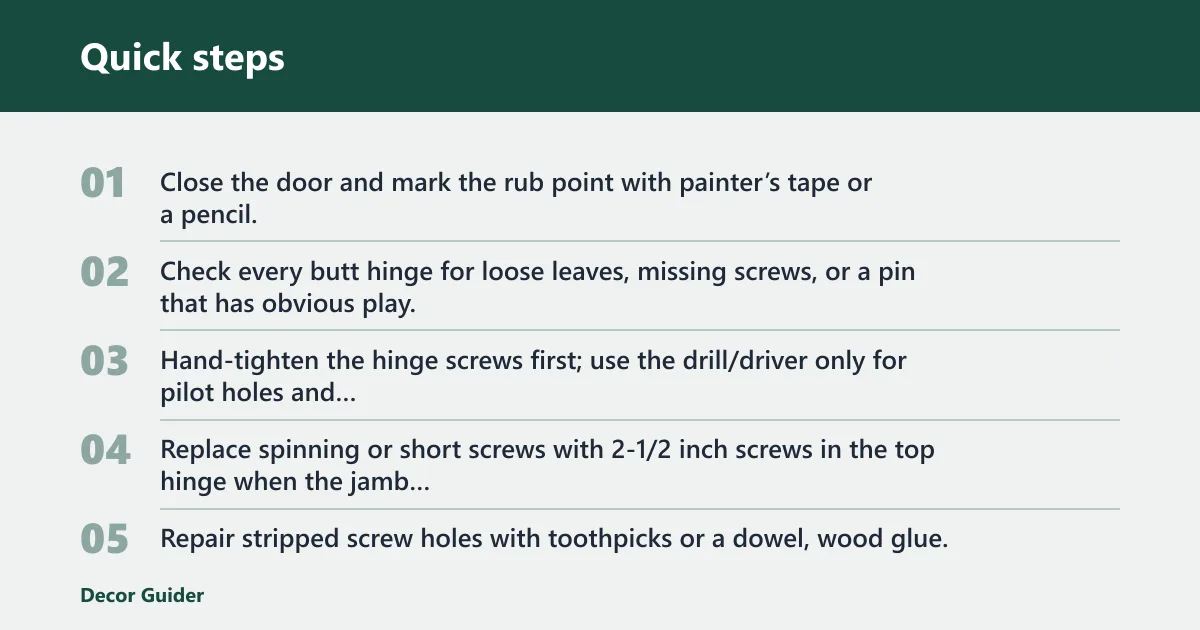
- Close the door and mark the rub point with painter’s tape or a pencil.
- Check every butt hinge for loose leaves, missing screws, or a pin that has obvious play.
- Hand-tighten the hinge screws first; use the drill/driver only for pilot holes and removal.
- Replace spinning or short screws with 2-1/2 inch screws in the top hinge when the jamb can accept a deeper bite into framing behind it.
- Repair stripped screw holes with toothpicks or a dowel, wood glue, and a reset pilot hole if the screw will not hold.
- Add a paper-thin hinge shim only if the rub pattern shows you need a small alignment change.
- Test the swing after each step. If the door still drags or the knuckles are worn, stop and rehang it.
Say your 30-inch hollow core bedroom door rubs the top latch corner after the top hinge screw spins freely. A 2-1/2 inch screw in the top hinge may solve it if the jamb has sound framing behind it; if the hole is stripped in softwood only, repair the hole first instead of forcing a longer screw.
Do you need longer screws or a shim?
Use longer screws when a screw spins or when the top hinge needs more bite into the framing behind the jamb. Use a shim when the door is close and only needs a paper-thin alignment change. If the hinge leaf is pulling away from the jamb, fix the hole before shimming, or the adjustment will not hold.
When longer screws make sense
Most interior butt hinges use common screw sizes around 2-1/2 inches to 3-1/2 inches, but the screw choice matters more than the hinge size. A 1 inch screw only anchors the hinge leaf in the jamb. A 2-1/2 inch screw can reach stronger wood behind the hinge-side jamb, which is useful at the top hinge where sag shows first.
When a shim makes sense
Shimming changes the hinge plane by a very small amount. Use it when the rub is light and the jamb is sound. For fine work, the change should be paper-thin, not a thick spacer. A full hinge mortise shim changes the hinge more than a thin slip behind one leaf.
How do I tighten loose door hinges to stop sagging?
Tightening loose hinge screws is the first fix because it is the least invasive. Start with the top hinge, then move to the middle hinge if the door still drops. If the screw turns without biting, stop tightening and move to hole repair or longer screws.
- Open the door to expose the hinge screws.
- Use a Phillips screwdriver to seat each screw by hand.
- Turn only until snug; do not crush softwood jamb fibers.
- Test the door swing.
- If the screw spins, remove it and repair the hole before trying again.
A common first-timer mistake is putting force into every screw at once. That can strip a hinge-side jamb fast, especially in softwood, while a hardwood jamb may still resist a little more. Tighten one hinge, test, then decide whether the next step should be a shim or a longer screw.
How do I know if the screws are stripped in the hinge?
If a screw head turns but the hinge leaf does not pull tight, the hole is likely stripped. If the screw backs out with little resistance and the threads come out clean, the wood may still be sound but undersized for the screw. Broken screw heads or rounded Phillips slots call for removal before more force is applied.
Look at the jamb side and the hinge leaf separately. The door side can wear, but the hinge-side jamb usually fails first because the screw needs a solid bite there. If the hole is oval, crushed, or powdery, repair it before reinstalling hardware.
Wood-filler and dowel repair
For a stripped hole, a toothpick method works only for minor wear. For a larger strip-out, drill the hole clean, glue in a matched wood dowel, let it set, then re-drill a pilot hole. That reset gives the screw fresh wood instead of relying on loose fibers.
Sagging door decision table
| Symptom | Likely cause | Fastest fix | Required tool | Stop DIY and rehang when |
|---|---|---|---|---|
| Top corner rub at the latch side | Hinge-side drop or loose top hinge | Tighten top hinge screws; use a 2-1/2 inch screw if the jamb can bite framing behind it | Phillips screwdriver, drill/driver | The door still rubs after a snug top hinge and sound screws |
| Bottom latch misalignment | Door hanging low or frame out of square | Check plumb and square, then adjust the top hinge or strike only if the frame is true | Level, screwdriver | The jamb is visibly out of square or the slab is warped |
| Hinge-side drop on one side only | Loose leaves, pin wear, or a hinge leaf not flush | Reset the leaf, replace worn screws, or replace the hinge if the pin is worn | Screwdriver, replacement hinge | The knuckles are worn enough that the door sags again after tightening |
| Screw spins in the jamb | Stripped screw hole | Repair with toothpicks or a dowel, glue, and a new pilot hole | Utility knife, wood glue, drill/driver | The hole keeps stripping or the jamb wood is broken out |
| Door settles again after adjustment | Pin wear or warped slab | Replace the hinge or rehang the door | Replacement hinge, screwdriver | The door keeps dropping after a complete hardware reset |
Common mistakes
Do not overtighten screws into softwood jambs. Do not shim the wrong hinge and create a worse rub at the top or latch side. Do not ignore hinge pin wear if the door sags again after tightening. Do not keep adding filler when the hole needs a proper drill-and-glue reset.
Do not treat every sag the same. A solid core door has more weight and asks more of the fasteners than a hollow core slab, so the repair may need stronger screw retention. A hollow core door still depends on the door edge blocking and the jamb for support, so the weak point is not the hollow center itself.
Frequently asked questions
How do I fix a door that rubs the top of the frame?
Top rub usually means the hinge side has dropped. Tighten the top hinge first, then test the swing. If the latch side still catches, use a paper-thin shim behind the correct hinge leaf or reset a stripped hole. If the jamb is not square, hardware tweaks will only buy time.
Can I fix a sagging door without removing it?
Yes, many interior doors can be corrected in place. Tightening screws, swapping in longer screws, and repairing stripped holes can all be done with the door hanging. Remove the door only if the hinge knuckles are worn, the slab is warped, or the mortise needs a full reset.
When should I use longer screws in door hinges?
Use longer screws when the screw spins, when the top hinge needs more holding power, or when you want the screw to bite into framing behind the hinge-side jamb. A 1 inch screw is for the leaf and shallow jamb grip; a 2-1/2 inch screw is for deeper purchase where wood allows it.
How do I fix a hollow core door that keeps dropping?
First check the hinge-side jamb, not the hollow center. If the screws are loose, repair the jamb holes and use longer screws in the top hinge where framing is available behind the jamb. If the door still drops, the hinge pin may be worn or the slab may be too light for the hardware condition.
Products related to this article
Sponsored / affiliate links. As an Amazon Associate I earn from qualifying purchases. I may earn additional commission from eligible campaigns.