Why Does My Door Creak at Night When It Is Cold?
A cold-night interior door creak usually comes from wood shrinking and rubbing the frame, but if the noise happens only as the door moves, hinge friction is the likely cause. Fixing the wrong part can leave the noise untouched or make frame rub and loose screws worse. This guide shows how to tell hinge friction, seasonal wood movement, and frame contact apart before you lubricate or tighten anything.
Door creak matrix
| Sound type | Likely cause | Best fix |
|---|---|---|
| Hinge squeak | Dry metal-on-metal friction at the pin and knuckle, loose screws, or wear in a butt hinge | Tighten the hinge screws first, then apply a small amount of silicone spray, white lithium grease, or graphite at the pin and knuckle |
| Wood pop or creak | Temperature drop, lower humidity, and seasonal movement in the slab, jamb, or trim | Check clearance, look for rubbing edges, and adjust fit before lubricating anything |
| Frame rub | Door slab contacting the jamb, stop, strike plate, or paint buildup at a contact point | Correct alignment, trim paint bridges, and reset strike plate or hinge screws as needed |
Cold-night-only yes/no path
Start with one question: does the sound happen only when the door moves, or does it happen when the house is still? If it moves with the door leaf, suspect the hinges. If it happens during temperature drop or after sunset without a full open-close cycle, suspect wood movement or frame contact first.
If the door squeaks at the same point every time, hinge friction is likely. If the noise appears near the top edge, latch side, or a painted stop, frame rub is more likely. If the door sounds fine in the afternoon and starts creaking only late at night, cooler air and quiet rooms are part of the clue, not just the cause.
Why does my door creak at night?
Night makes small noises easier to hear. Cooler air after sunset can shrink wood and slightly change door fit, while a quiet house and stopped HVAC system remove the background sound that normally covers minor rubbing or hinge noise. That makes the same door sound louder at night than it did earlier in the day.
Why the sound stands out after sunset
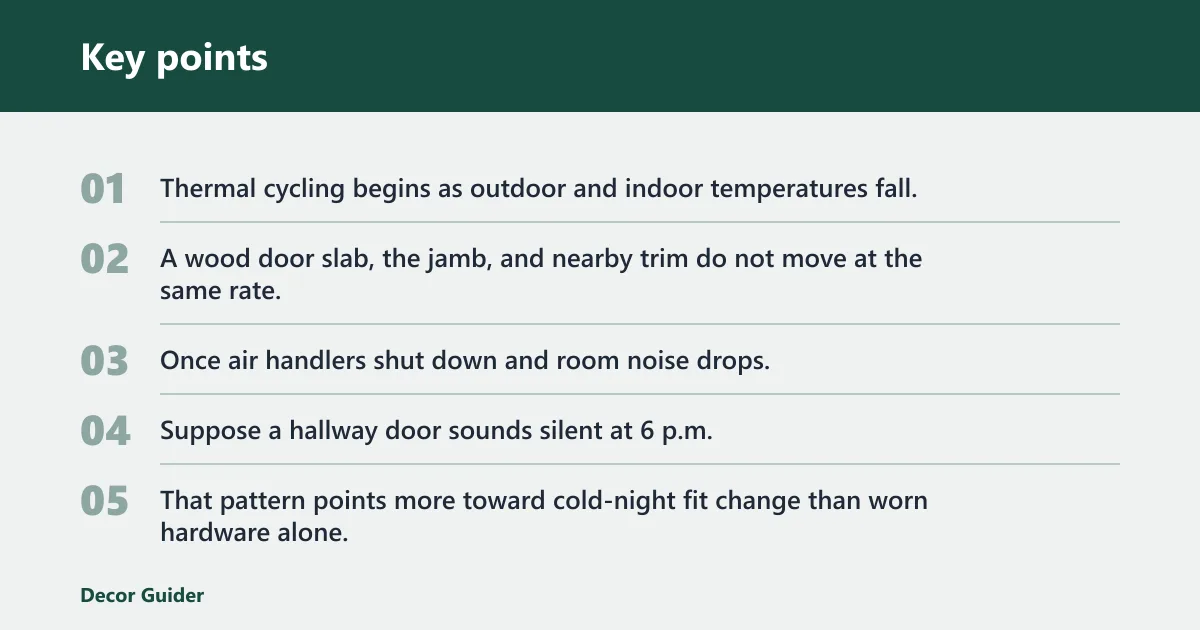
Thermal cycling begins as outdoor and indoor temperatures fall. A wood door slab, the jamb, and nearby trim do not move at the same rate, so one edge can start touching where it did not touch earlier. Once air handlers shut down and room noise drops, even a light creak becomes noticeable in a bedroom.
Suppose a hallway door sounds silent at 6 p.m. but starts creaking at 11 p.m. after the heat turns off. That pattern points more toward cold-night fit change than worn hardware alone. If the door is also rubbing only on the latch side, the timing supports frame contact or strike plate misalignment.
Is it the hinges?

Hinge noise commonly happens as the door swings, not while it sits still. On interior doors, a butt hinge is common, while a ball-bearing hinge is built to reduce friction under repeated movement. Loose screws, dry metal contact, pin wear, or knuckle wear can all create a squeak at the hinge line.
Butt hinge versus ball-bearing hinge
A butt hinge depends on the pin and knuckles sliding against each other. If the pin is dry or worn, the hinge can squeal with each opening. A ball-bearing hinge carries load with internal bearings, so it often stays quieter under use, though loose screws or misalignment can still make it noisy.
What to check before adding lubricant
Look at the hinge leaves, the screw heads, and the gap around the door. If screws back out or the hinge plate shifts, the door can sag and rub the frame even if the hinge itself is not the main problem. Check both top and bottom hinges, because a loose top hinge often changes how the latch side fits.
- Open the door slowly and listen for the exact point of the sound.
- Check whether the noise comes from the hinge pin, the latch area, or the door edge.
- Snug loose hinge screws in the jamb and on the slab.
- Test the door again before adding any lubricant.
- Only lubricate if the sound tracks to hinge movement.
A common mistake is assuming the hinge is dry when the real issue is a loose strike plate shifting as the temperature drops. If the problem is a loose top hinge, oil will not correct the sag, and the door may keep rubbing the strike plate or stop.
Can cold weather make wood doors creak?
Yes. Cold weather can make wood doors, jambs, and trim shrink enough to change clearances. As humidity drops, the door slab may contract, the frame may shift slightly, and painted edges can start rubbing. That movement often creates a pop, creak, or scraping sound that appears only in colder conditions.
Where wood movement shows up first
The top edge and hinge-side clearance are common trouble spots. If the door slab shrinks unevenly, one corner can drift toward the stop or strike plate. Trim can also move against the jamb, and old paint can bridge a joint so the parts stick and release with a creak.
Because the slab, jamb, and trim interact, the noise source is not always on the visible edge. A slight shift in door frame alignment, or racking in the jamb, can move the contact point to the latch side even when the hinges look fine.
Paint buildup and trim contact
Paint bridges can act like glue at a contact point. When the door moves in cold air, that painted edge may crack free with a small pop. This is common around the stop, the jamb corner, and the strike plate opening, especially on older interior doors with several paint layers.
How do you tell frame rub from a hinge squeak?
Hinge squeak sounds like a moving joint, while frame rub sounds like one surface scraping or sticking against another. Check the top edge, hinge-side clearance, and latch-side gap. If the sound happens near the strike plate or at a painted stop, the frame or latch area is the better suspect.
Strike plate and latch clues
If the latch drags as the door closes, the strike plate may be misaligned. Metal rubbing on metal can create a sharp click or scrape, while a latch that hits too high or too low may leave marks around the opening. Adjustment screws on the strike plate often help more than hinge oil in that case.
Jamb racking and anchoring
A door jamb that is not anchored well can rack slightly under use or seasonal movement. That shift changes contact points and can make the slab rub at the top, along the latch side, or near the trim. Check for loose fasteners in the jamb, gaps at the casing, and paint buildup where parts meet.
Picture a bedroom door that squeaks only at the top corner when closing, while the hinge pins stay quiet during a slow swing. That points away from hinge friction and toward top-edge contact or a strike plate that no longer lines up with the latch.
What should you fix first?

Fix the source in order: inspect, listen, tighten, test clearance, then lubricate only if the sound points to hinge friction. That sequence avoids masking a frame rub with oil or leaving a loose screw to keep shifting the door out of alignment.
Tighten screws before anything else
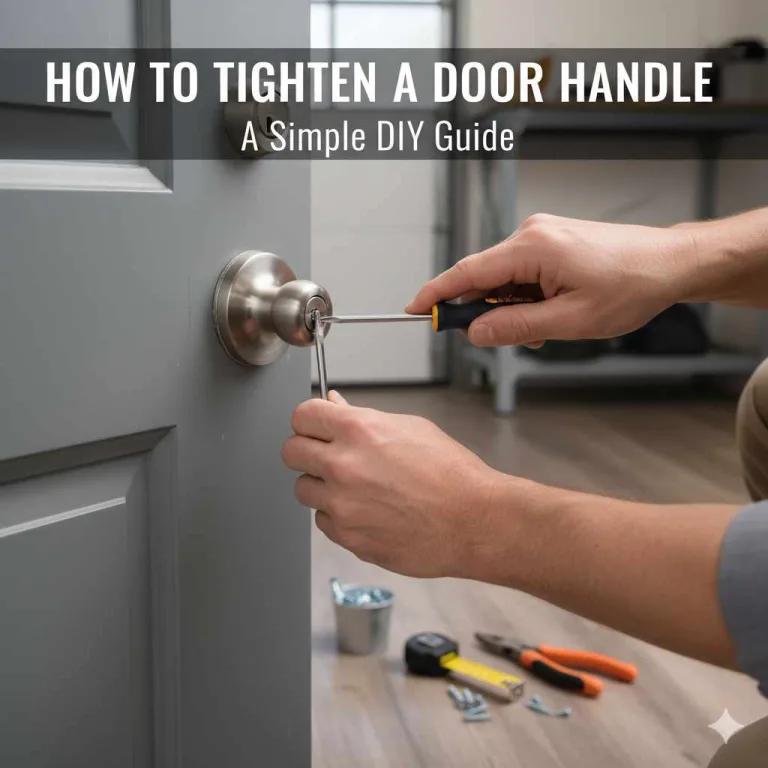
Start with the hinge screws and the strike plate screws. If a screw spins without biting, the hole may be stripped. A wood screw that no longer holds can let the hinge shift and change the door gap enough to create a new rub.
Use longer screws when holes are stripped
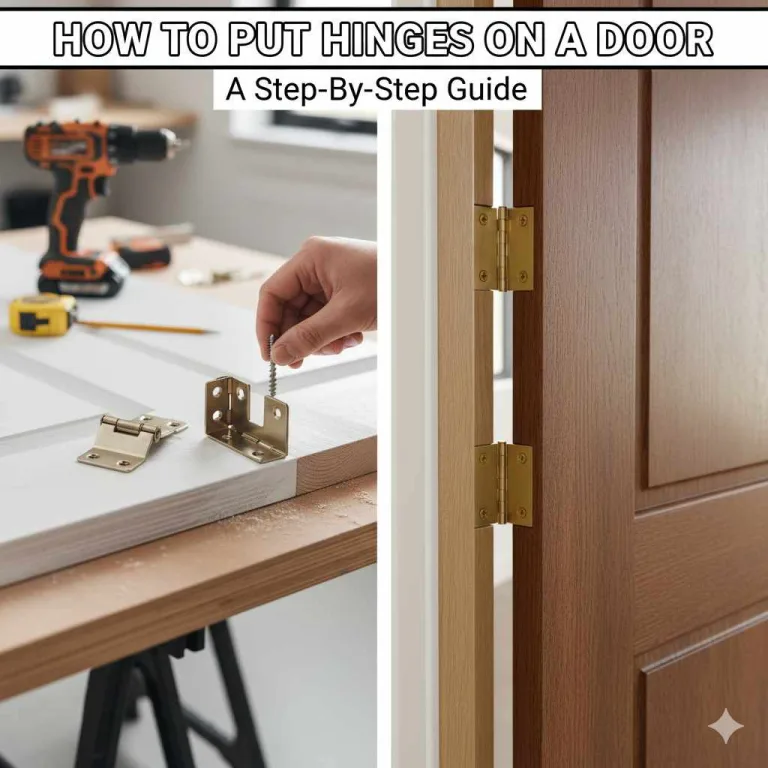
For stripped hinge or jamb holes, a common repair is to replace short screws with about 2 to 3 inch wood screws so they reach solid framing. Pilot holes help prevent splitting. If the hole is badly worn, pack it with toothpicks and glue, or use a dowel repair before reinstalling the screw.
Lubricate only the hinge if the sound fits
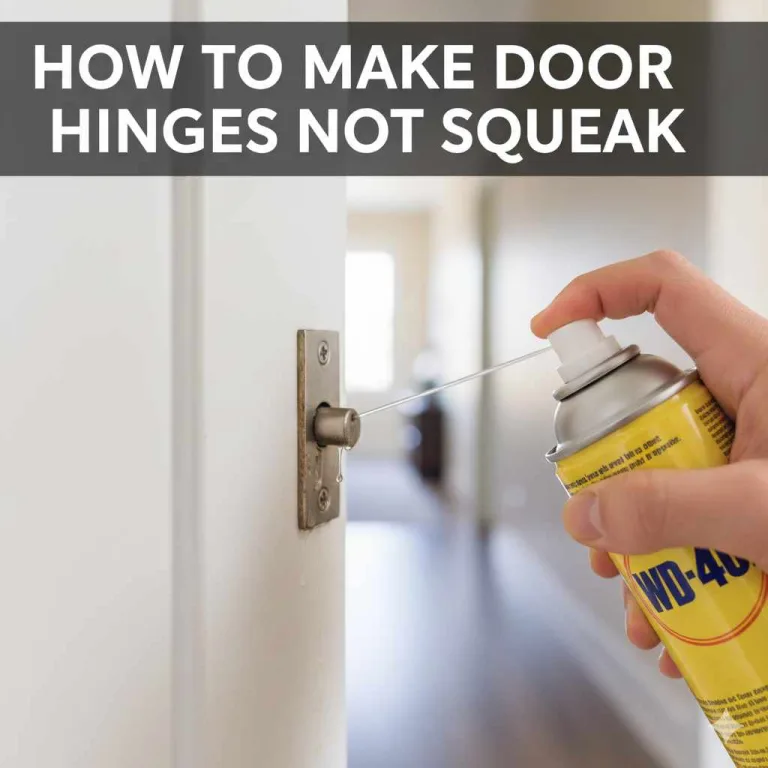
If the noise clearly comes from the hinge, use a small amount of silicone spray, white lithium grease, or graphite at the pin and knuckle. WD-40 can help as a short-term cleaner or moisture displacer, but it is not a long-term lubricant for a door hinge.
Use lubricant sparingly. Too much can attract dirt and leave residue on the door or floor. On a ball-bearing hinge, lubrication may still help if the hinge is dry, but it will not fix a sagging slab or a misaligned strike plate.
How do you stop a bedroom door from waking you up at night?
Start with the noisiest contact point, not the most obvious one. In a bedroom, the goal is to reduce sound at the latch, hinge, and top edge before midnight noise gets amplified by a quiet house. A door that wakes people up often needs alignment work more than heavy lubrication.
Bedroom checklist for quiet doors
- Close the door slowly and note whether the sound starts at the hinge, latch, or edge.
- Check the top edge and hinge-side clearance for cold-night rubbing.
- Snug loose hinge screws and strike plate screws.
- Look for paint buildup at the stop and around the latch opening.
- Replace stripped wood screw holes with toothpicks, dowel material, or longer screws.
- Lubricate only after the source is clear.
One simple rule helps: if the noise follows the swing of the door, start at the hinges; if it appears at a fixed point in the frame, start with fit and alignment. That keeps you from treating every creak as a hardware problem.
Frequently asked questions
Why does my house creak at night?
Nighttime creaks are often louder because the house gets quieter while temperatures fall. Wood, trim, and even fasteners can move slightly as materials cool and contract. HVAC shutdown removes background noise, so a minor pop in a jamb or floor framing becomes easier to hear.
Why do doors creak?
Doors often creak for reasons such as hinge friction, wood movement, or contact with the frame or strike plate. Hinge squeaks usually happen during motion. Wood or frame creaks are more likely when temperature or humidity changes alter fit and cause rubbing at the slab, jamb, or trim.
Should I lubricate the hinges or tighten them first?
Tighten them first. A loose screw can let the hinge shift, which changes alignment and creates frame rub or latch misfit. After the screws are snug and the door still squeaks at the hinge pin or knuckle, add a small amount of lubricant to the hinge only.
Is a creaking door a sign of damage?
Not always. Many cold-night creaks are normal seasonal movement, especially in interior doors and frames. The sound becomes more concerning if the door sticks, drags, no longer latches cleanly, or shows new gaps, stripped screws, or visible contact marks on the jamb or trim.
How do I stop a door from creaking?
First identify the sound source. Tighten loose hinge and strike plate screws, check clearance at the top and latch side, and look for paint buildup or rubbing marks. If the noise is from hinge friction, use silicone spray, white lithium grease, or graphite. If not, adjust fit first.
When is a creaky door a hinge problem versus a frame problem?
If the noise happens only as the door swings and seems centered on the hinge line, the hinge is likely the issue. If the sound comes from a fixed spot near the latch, top edge, or stop, frame rub or strike plate misalignment is more likely. The sound pattern tells you where to start.
Products related to this article
Sponsored / affiliate links. As an Amazon Associate I earn from qualifying purchases. I may earn additional commission from eligible campaigns.