Can You Use Vaseline on Door Hinges?
Yes, you can use Vaseline on a squeaky interior door hinge as a short-term fix, but it is not the best long-term lubricant. If it is applied poorly or left in place, the hinge can attract dust, turn gummy, and start squeaking again. This guide shows how to use it safely, when it will fail, and which lubricant lasts longer.
Can you use Vaseline on door hinges?



Yes, for an interior door hinge, petroleum jelly can reduce friction and quiet the squeak for a while. It works best as a temporary fix when the hinge is otherwise in decent shape. Petroleum jelly is often less dependable on heavy-use doors, rusty hardware, or hinges exposed to moisture and grime.
Vaseline is petroleum jelly, not lotion or body oil. Its thick texture helps it cling to the pin and knuckles with less dripping than thin oil. That same thickness is also why it can collect dust if you apply too much.
What causes the squeak?
Most squeaks come from metal-on-metal rubbing at the hinge pin and knuckles. Dirt, dust, grime, rust, and paint can make that contact noisier. If the door is rubbing the frame, the issue may be alignment or paint friction rather than a lack of lubricant.
That matters because lubricant only helps when friction is the main problem. Loose screws, worn hinge parts, and a misaligned door can keep squeaking even after you coat the pin.
What you’ll need
- Vaseline petroleum jelly
- Hammer and long nail
- Rag or cloth
- Cotton swab or Q-tip
- Steel wool

Remove the hinge pin, clean it, coat it lightly, then reinstall it and work the door. The cleanest method is to take the pin out first, because that lets you reach the wear points instead of smearing jelly only on the visible edge of the hinge.
- Open the door far enough to expose the hinge pin.
- Tap the pin up with a long nail and hammer.
- Pull the pin free and wipe off dirt or rust with a rag, cloth, cotton swab, or steel wool.
- Apply a thin layer of petroleum jelly to the pin and the moving contact points.
- Reinsert the pin and close the hinge fully.
- Open and close the door several times so the lubricant spreads.
- Wipe away any excess jelly from the hinge and nearby floor trim.
To apply Vaseline with a Q-tip, then swing the door a few times. That keeps the coating controlled and off the surrounding woodwork. A common first-timer mistake is packing on extra jelly and assuming more will quiet the hinge faster.
Suppose a hallway door squeaks every time it opens at night. A light coat on the pin may quiet it. If the hinge still groans after cleaning and relubricating, the problem is likely wear, rust, or poor alignment rather than a dry pin alone.
What works better than Vaseline?
Silicone spray and dry-film lubricant are often reported to last longer. Silicone spray is a cleaner choice for many interior hinges, while dry-film lubricant is often preferred when you want less residue. Vaseline can work in a pinch, but it is usually the stopgap, not the finish line.
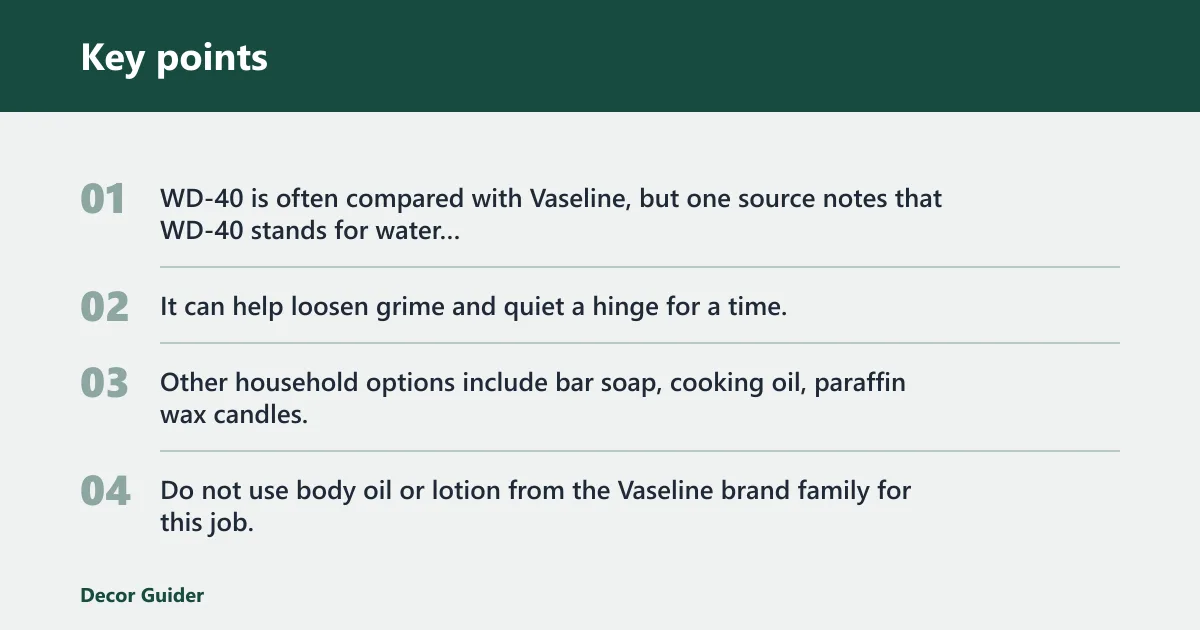
WD-40 is often compared with Vaseline, but one source notes that WD-40 stands for water displacement. It can help loosen grime and quiet a hinge for a time, yet it can also leave black streaks and is not the best long-term lubricant. Other household options include bar soap, cooking oil, paraffin wax candles, and 3-in-1 oil, but those are also temporary fixes.
Do not use body oil or lotion from the Vaseline brand family for this job. Only petroleum jelly belongs here.
Door hinge lubricant matrix
| Product | Ease | Mess risk | Dust attraction | Longevity | Best-use scenario for interior door hinges |
|---|---|---|---|---|---|
| Vaseline | Easy | Moderate if overapplied | Moderate to high if left thick | Short-term | Quick indoor fix when you need something on hand |
| WD-40 | Easy | Moderate; can leave streaks | Moderate | Short-term | Temporary quieting when grime needs loosening first |
| Silicone spray | Easy | Low | Low | Medium to long | Regular interior use when you want a cleaner finish |
| Dry-film lubricant | Moderate | Low | Low | Longer-lasting | Cleaner, lower-residue option for repeat squeak control |
Common mistakes
Using too much jelly is the fastest way to make a clean hinge dirty again. A thin coating is enough; heavy application can drip, collect dust, and leave a greasy mark on the floor or trim.
Skipping cleanup causes trouble later. Wipe off extra Vaseline after application so it does not build grime around the hinge pin.
Ignoring worn or misaligned hinges is another common miss. If the squeak comes from paint friction, loose screws, or hinge wear, lubrication alone may not solve it.
Using the wrong product on the wrong door can also backfire. Vaseline is a short-term indoor fix. Exterior doors, high-humidity areas, and high-use hinges usually do better with silicone spray or dry-film lubricant.
Picture a bathroom door that squeaks after every shower. The humidity and repeat use make Vaseline more likely to fail early, especially if the hinge already has rust or sticky paint edges.
If that didn’t work
If the squeak remains after cleaning and relubricating, move to the next likely cause. Check the hinge screws first, then inspect the pin and knuckles for wear or rust. If the door scrapes the frame, adjust the hinge or address the alignment issue instead of adding more lubricant.
- Tighten the hinge screws with the correct screwdriver.
- Remove the pin again and inspect it for grooves, corrosion, or bend.
- Clean the pin and knuckles more thoroughly with steel wool.
- Switch to silicone spray or dry-film lubricant if you want longer wear.
- Replace the hinge if the pin or knuckles are visibly worn.
Prevention: For an interior door that squeaks often, relubricate only when the sound returns, and keep the hinge pin clean before reapplying anything.
Frequently asked questions
Can you put Vaseline on door hinges?
Yes, petroleum jelly can quiet an interior hinge when applied lightly to the pin and contact points. Remove the pin first if possible, clean off grime, then wipe away any extra after reassembly. It is useful in a pinch, not as a forever fix.
Can you use petroleum jelly on door hinges?
Yes. Petroleum jelly is the product that matters here, and its thick texture helps it stay on the metal instead of running off right away. Keep the layer thin, because excess jelly can attract dirt and make the hinge messy over time.
Can you use Vaseline on squeaky door hinges?
Yes, if the hinge squeak comes from friction at the pin and knuckles. It is less likely to help when the door is rubbing, misaligned, or worn. For those cases, adjust the hardware or switch to a longer-lasting lubricant.
What can I use to grease door hinges?
For interior hinges, silicone spray and dry-film lubricant are better long-term choices. WD-40, bar soap, cooking oil, paraffin wax candles, and 3-in-1 oil can help in a pinch, but they are usually less durable or messier than the two cleaner options.
Can you use Vaseline on car door hinges?
It can work briefly, but car door hinges face more vibration, dirt, and weather than interior hinges. A purpose-made automotive lubricant is the better choice there. Keep Vaseline for indoor emergency use where the hinge stays dry and lightly loaded.
Products related to this article
Sponsored / affiliate links. As an Amazon Associate I earn from qualifying purchases. I may earn additional commission from eligible campaigns.