How to Fix a Drooping Door Handle That Keeps Sagging
A drooping interior door handle usually means one of three failures: a loose set screw, a worn spindle, or a broken return spring. Check them in that order, and replace the trim if tightening no longer holds. Ignoring it can leave the latch unreliable, cause the handle to sag further, or strip parts that would have been cheap to fix. This guide shows how to diagnose each fault, tighten the right fastener, and decide when replacement is the honest fix.
What you’ll need

- Ball-end design helps reach angled fasteners
- Long arms add leverage on stubborn screws
- Compact holder keeps sizes organized
- Allen wrench or hex key
- Screwdriver
- Dry lubricant for latch parts, such as PTFE or graphite
- Replacement spindle or handle set if needed
- Small flashlight
- Painter’s tape or chalk for latch alignment checks
Is the handle drooping or just loose?
A true droop stays below horizontal after you release the lever. A loose handle usually wobbles, shifts, or spins but still springs back up. If the latch itself is dragging or the door will not latch, the handle may be fine and the problem may be the latch, strike plate, or top hinge instead.
Why the difference matters
Most lever wobble comes from the set screw at the lever’s neck backing off with use. A lever that droops below horizontal can mean a fatigued internal return spring. If the handle feels solid but the door will not catch, stop at the handle only long enough to rule out a latch or hinge issue.
Say your lever falls about 15 degrees below level but the rosette stays still. That points more toward a weak return spring than a loose cover. Suppose the lever spins a little at the neck and then catches; that usually points to the set screw or spindle before anything else.
Handle droop diagnosis table

Why a handle droops: 6-symptom diagnosis
| Symptom | Likely cause | Quick test | Fix | Replace-now threshold |
|---|---|---|---|---|
| Lever hangs below horizontal after use | Return spring fatigue | Lift the lever and release it; note whether it returns fully | Tighten the set screw, then retest the spring action | If wobble returns within weeks, replacement is the better fix |
| Lever wobbles at the neck | Set screw backing off | Check the underside or inner-face set screw with a hex key | Tighten the small hex set screw | If the screw will not hold torque, replace the lever set |
| Handle feels loose at the trim | Loose rosette or through-bolts | Twist the rosette cover and check for movement at the base | Tighten the through-bolts alternately | Replace if the threads strip or the halves will not clamp |
| Knob spins or rocks | Loose spindle or stripped threads | Remove the knob and inspect the spindle interface | Reset the spindle or tighten mounting screws | Replace if the spindle or threads are worn smooth |
| Handle works, but the door will not latch | Strike plate or hinge alignment issue | Mark the latch with lipstick or chalk and close the door | Adjust the top hinge first, then the strike plate | Move the strike if the latch misses by more than 3mm |
| Privacy latch droops and binds | Spring wear plus latch drag | Check lever return and latch travel separately | Lubricate dry latch parts with PTFE or graphite | Replace the set if return weakens again after tightening |
Knobs and privacy sets
Door knob and interior knob sets usually fail at the set screw or mounting screws, then at the spindle. Privacy, passage, and keyed entry variants generally use the same basic checks, but privacy sets can hide a spring or latch issue that feels like a loose knob. If the spindle is stripped or the threads are damaged, tightening only delays the failure.

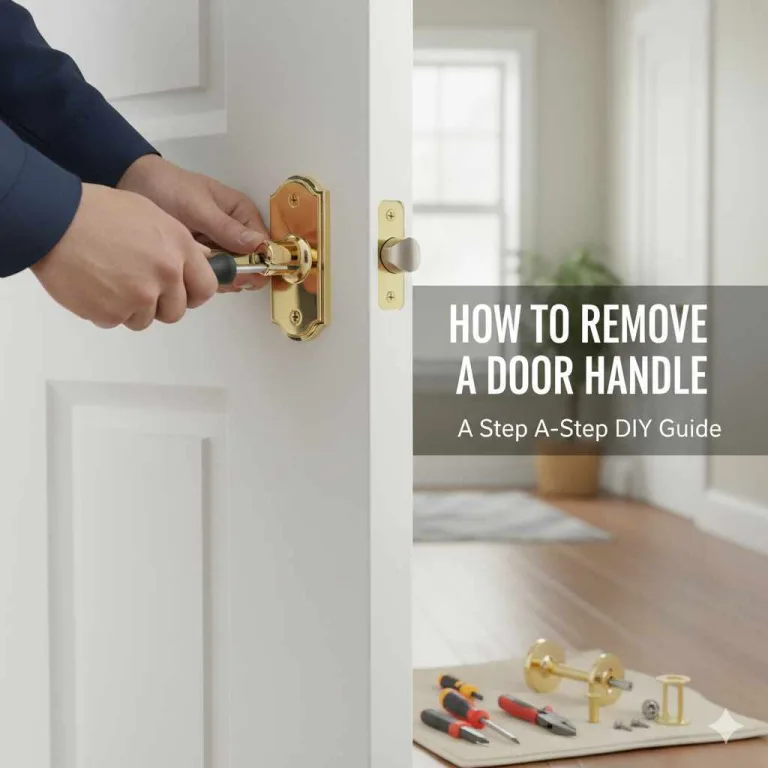
Fix the most likely mechanical point first: start with the set screw, then check through-bolts or mounting screws, then the spindle or spring. For a lever door handle, the underside or inner-face set screw is often the first fastener to check with an Allen wrench or hex key. For a knob, focus on mounting screws and the spindle. Stop tightening once parts seat firmly; extra torque can strip threads.
- Hold the handle level and check for play at the neck, trim, and latch.
- Insert the Allen wrench or screwdriver into the visible fastener and snug it until the handle stops shifting.
- Remove the rosette if the screws are hidden, then tighten the through-bolts alternately.
- Reinstall the trim and test the lever return after every adjustment.
How to access concealed rosettes
On rose-style hardware, the rosette is the concealed cover that hides the mounting screws. It usually twists or pries off to expose the interior fasteners. Once open, tighten the two through-bolts alternately so the halves clamp evenly. That order matters; tightening only one side can pull the trim out of square.
Picture a lever on a bedroom privacy set that feels loose at the base but still returns smartly. The fix is likely under the rosette, not in the latch. If the trim refuses to sit flush after the bolts are snug, the spindle or the mounting threads may already be worn.
Step 2: Check the spindle, spring, and latch
If tightening does not cure the droop, inspect the parts that actually move the handle. The spindle connects the lever to the latch mechanism, and wear there can create wobble or droop even when the screws are tight. A fatigued return spring is the other common cause when the lever falls below horizontal.
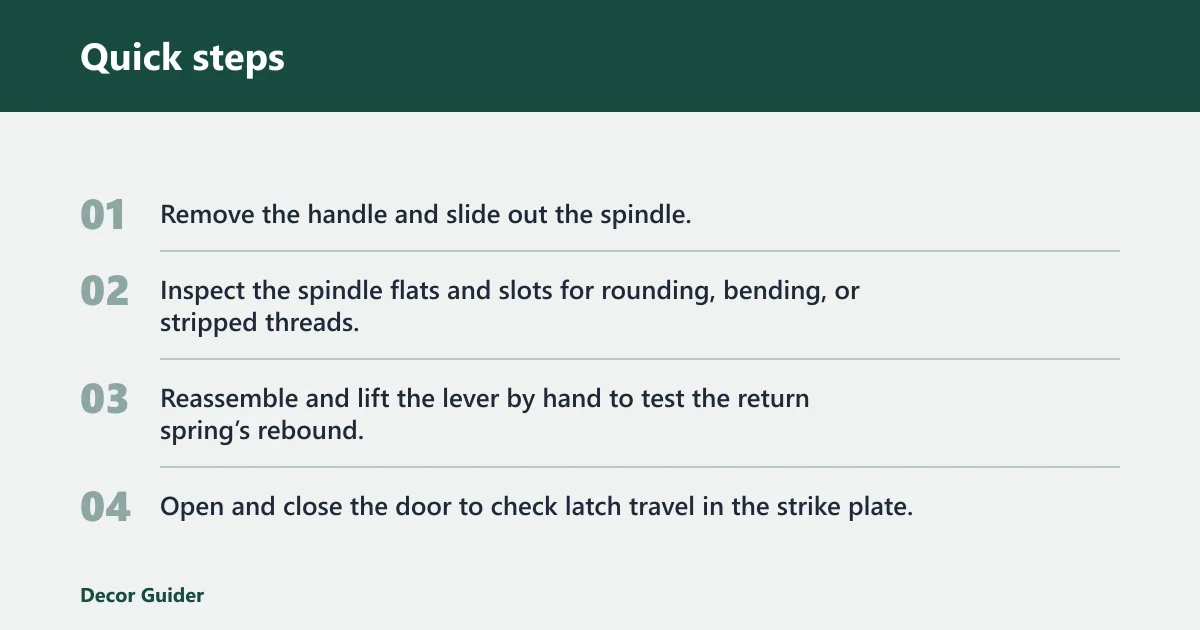
- Remove the handle and slide out the spindle.
- Inspect the spindle flats and slots for rounding, bending, or stripped threads.
- Reassemble and lift the lever by hand to test the return spring’s rebound.
- Open and close the door to check latch travel in the strike plate.
Check latch and strike alignment
If the latch misses the strike, the handle may feel like the fault when the real problem is the door position. For a door that will not latch, tightening the top hinge is a first diagnostic step. Use lipstick or chalk on the latch bolt, close the door, and look at the mark. If the latch misses the strike by more than 3mm, the strike should be moved.
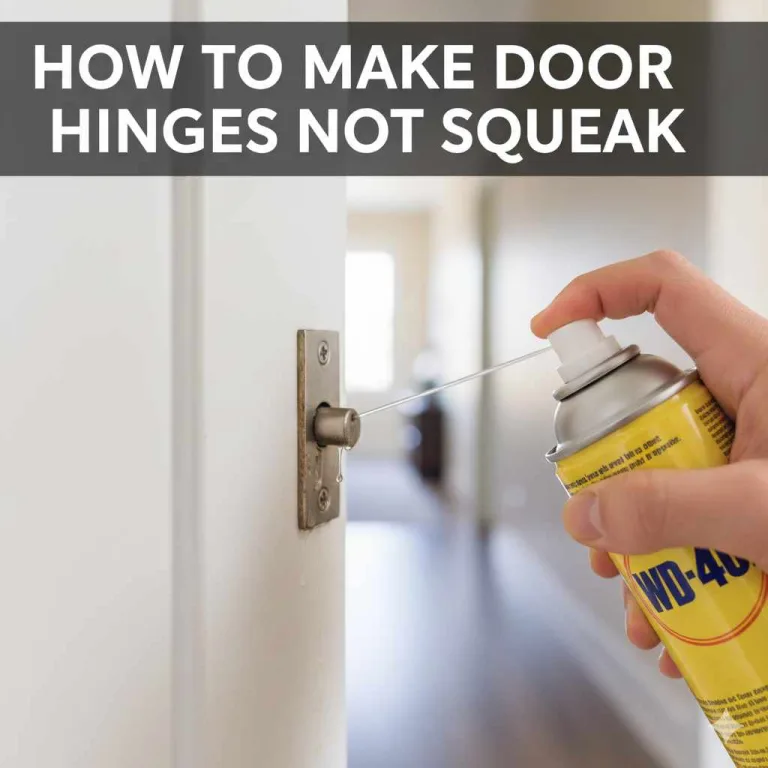
Use dry lubricant only when the latch is dry or dragging. PTFE or graphite is commonly preferred over household oil near the latch, since oil can collect dust and make the action worse over time. If the latch still sticks after lubrication, the problem is probably alignment, not friction.
Could the door itself be causing the problem?
Yes. A sagging door can make a healthy handle seem faulty because the latch no longer meets the strike squarely. Start with the top hinge, not the strike plate. If the door lifts when you pull up on the handle side, the hinge may be loose enough to throw the latch off line.
Top hinge and strike plate checks
Tighten the top hinge screws first. Longer screws are often used when the original screw keeps turning without tightening, and 3-inch screws are a common choice when the hinge needs a stronger pull into the jamb. If the latch mark is only slightly off, a strike plate can sometimes be filed; a common filing threshold is 1/8 inch. Larger misses usually need the plate moved.
A common first-timer mistake is filing the strike plate before checking the hinge. That can hide the real cause. Fix the sag first, then recheck the latch travel. If the handle and latch work separately but fail together, the door is misaligned, not the lever.
Common mistakes
Over-tightening fasteners is the fastest way to turn a repair into replacement. Snug the screw, then stop when the handle stays put. Do not keep cranking on a set screw that already bites, because stripped threads are harder to correct than a loose fastener.
Do not lubricate a drooping handle first. Dry lubricant belongs on a sticking latch, not as a cure for spring failure or stripped parts. Do not replace the handle too soon if the door is simply out of alignment. Do not wait too long either; if wobble returns within weeks, replacement is the better fix.
If that didn’t work, try this next
If the handle still droops after set screw and through-bolt checks, replace the spindle if the flats are worn or rounded. If the lever still falls below horizontal, replace the lever set or trim because the return spring may be fatigued. For knobs, replace the full interior knob set when the spindle or mounting threads no longer hold.
Retighten loose hardware before the wobble turns into spring wear, and keep the latch dry and clean. A lever that keeps loosening after repeated tightening usually needs new trim, not another turn of the screwdriver.
Frequently asked questions
How to fix a dropped door
Adjust the top hinge first, since sag can make the latch miss the strike and make the handle seem at fault. If the latch is only slightly off, a strike plate may need minor filing; if the miss is larger than 3mm, move the strike instead of forcing the latch.
Products related to this article
Sponsored / affiliate links. As an Amazon Associate I earn from qualifying purchases. I may earn additional commission from eligible campaigns.