How to Fix a Door That Swings Open or Closed on Its Own
A door that swings open or closed on its own usually points to hinge adjustment, a frame check, or a latch-side shim, and you need to identify the drift direction first. Leave it alone, and the door can scrape, miss the latch, or reopen after every fix. This guide shows how to tell which way the door is drifting and match the repair to the cause.
This guide is part of our Interior Door Problems and Hardware Fixes: Squeaks, Sticking, Handles, Locks and Thresholds series.
What you’ll need
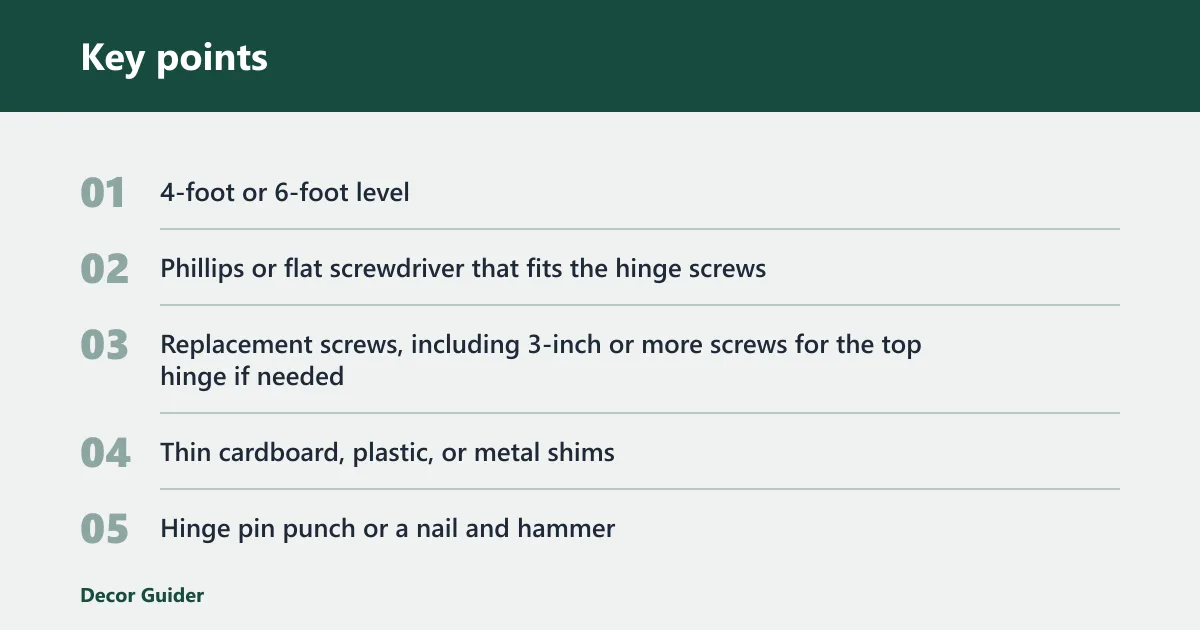


- 4-foot or 6-foot level
- Phillips or flat screwdriver that fits the hinge screws
- Replacement screws, including 3-inch or more screws for the top hinge if needed
- Thin cardboard, plastic, or metal shims
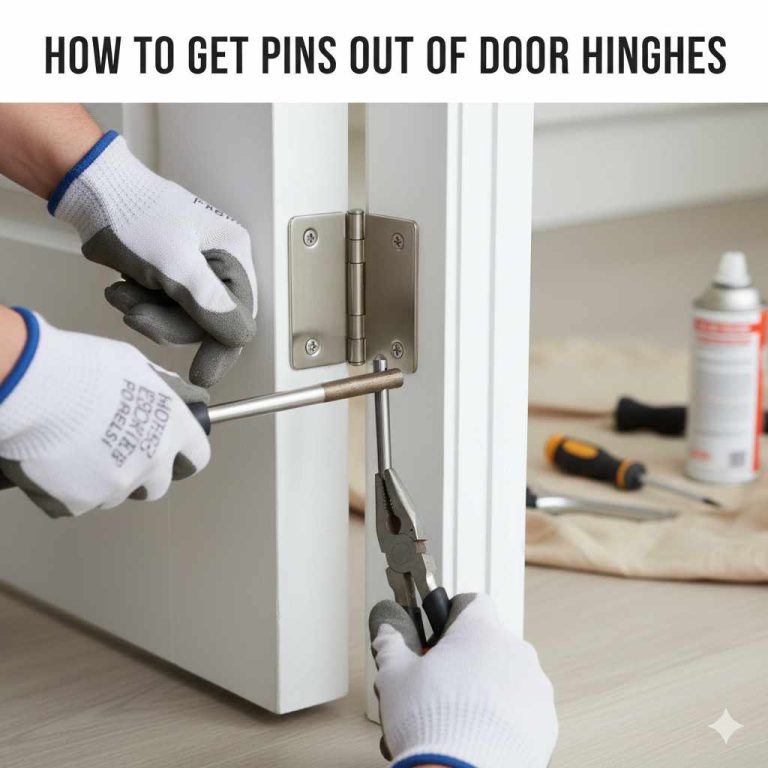
- Hinge pin punch or a nail and hammer
- Pencil
- Masking tape
How do you tell if the frame is out of plumb?
Check the hinge-side jamb vertically with a 4-foot or 6-foot level first. A short level can miss a slight lean. If the top of the hinge-side jamb leans inward, the door can swing open; if the lean favors the latch side, the door can swing closed.
Start with the jamb, not the hinges. That keeps you from fixing the wrong side of the opening.
- Open the door and place the level on the hinge-side jamb.
- Check the full height, then mark the high and low spots with pencil.
- Move the level to the head jamb and check it horizontally.
- Decide whether the frame leans toward the room or toward the latch side before touching any screw.
Why does my door swing open by itself?
A door that swings open on its own usually has a hinge-side jamb that is not plumb, with the top leaning toward the room. Loose top-hinge screws can add to the drift, but gravity is usually doing most of the work. If airflow is not present, start with the frame and hinge side.
Fix a door that swings open
- Tighten the top hinge screws first.
- If the screw holes are stripped, replace one screw in the top hinge with a 3-inch or more screw into the framing.
- Recheck the jamb with the level.
- If the door still opens, add a thin shim behind the top hinge leaf, then recheck.
- If drift remains mild, remove the hinge pin and bend it slightly before reinstalling it.
Loose hinge screws are one of the easiest problems to fix. If a screw turns but does not bite, stop and move to a longer screw or a shim instead of spinning it in place.
Why does my door swing shut by itself?
A door that swings shut on its own often has the opposite lean, or the latch side may be binding. The frame may tilt so the opening favors the latch, or the floor slope may help the slab move. Air movement can also push it closed, so check that first.
Check the opposite lean and the latch side
- Close the door and see whether it touches the latch side before the latch engages.
- Hold the level against the hinge-side jamb and note whether the top leans away from the room.
- Open and close the door slowly to find any rub at the latch edge.
- If the frame is slightly out of plumb, shim the hinge leaf in small steps on the side that moves the slab toward plumb.
Suppose a 30-inch interior door closes on its own only after the hallway window opens. That points to airflow, not gravity. If the same door still closes in still air, the frame or hinges need attention.
Drift direction fix matrix
| Symptom | Likely cause | Quick test | First fix | Fallback fix | Stop-and-call-a-pro |
|---|---|---|---|---|---|
| Door swings open in still air | Top of hinge-side jamb leans inward; loose top hinge may add play | 4-foot or 6-foot level on hinge-side jamb shows the top leaning toward the room | Tighten top hinge screws; use a 3-inch or more screw if holes are stripped | Shim the top hinge leaf in thin layers; try a slight pin bend only for mild drift | Frame is far from plumb, hinge leaves have excess play, or the slab seems warped |
| Door swings closed in still air | Opposite lean in the frame, latch-side binding, or floor slope | Door touches the latch side first, or the level shows the hinge side leaning away from the room | Tighten the top hinge first, then the middle hinge | Shim the hinge leaf that moves the slab toward plumb; check for rub at the latch edge | Door still moves after hinge correction, or the floor slope keeps defeating adjustments |
| Door moves only with HVAC, open windows, or a pressure difference | Air pressure and drafts | Door stays put when HVAC is off and windows are closed | Close windows, adjust vents, and repeat the test | Add a closer or latch-side catch only after airflow is ruled out | Movement happens with no airflow, or the door still binds after pressure changes are removed |
Should I shim the hinge or bend the hinge pin?
Use shims for a frame or hinge alignment problem; a bent pin is generally used only for mild, temporary friction. Shims change the hinge axis and can move the slab toward plumb. A bent pin does not correct the frame, and the door still wants to swing open or closed.
Use shims for small corrections
- Remove the top hinge leaf screws.
- Place one thin layer of cardboard, plastic, or metal behind the hinge leaf.
- Reinstall the screws and retest.
- Add or remove shim thickness in one layer at a time. One layer of cereal-box cardboard is roughly 1/32 of an inch.
A common first-timer mistake is adding too much shim thickness at once. That can twist the slab, make the latch miss, or create a new rub point.
Use a bent pin only for mild drift
- Open the door and tap the hinge pin out from below with a nail and hammer.
- Bend the pin slightly, then reinstall it.
- Test the door in still air.
Do not hit the hinge pin aggressively while it is installed. This is a friction fix, not a frame correction, and it works best when the drift is light.
What if the door only moves when the HVAC is on?
If the door only moves when the HVAC is on, or when a window is open, the problem is usually airflow, not hinge geometry. That means the door is being pushed by pressure differences. Fix the air source first, then retest before you touch the hinges.
- Turn the HVAC off and close nearby windows.
- Retest the door in still air.
- If the movement stops, adjust vents, pressure balance, or room airflow before hinge work.
- If the movement continues, return to the plumb and hinge checks.
Can a sloped floor make an interior door move by itself?
Yes. A sloped floor can make an interior door move by itself, especially if the frame is already slightly out of plumb. The slope can change how the slab settles in the opening, and that can defeat a simple hinge tweak. If the door keeps drifting after normal hinge adjustment, the floor may be part of the cause.
Picture a hollow-core bedroom door that stays put on carpet but swings shut after the carpet is removed for new flooring. The frame may still be acceptable, but the floor change altered how the door hangs. That is a sign to recheck the jamb and the latch line together.
Common mistakes
Overcorrecting with thick shims is one of the fastest ways to create a new problem. Start with one thin layer and retest.
Bending a pin when the frame is the issue only adds friction. The door may feel different for a while, then drift again.
Ignoring warped slabs, excess hinge play, or stripped screw holes wastes time. Older hinges can develop play, corrosion, or damaged knuckles, and those parts may need replacement instead of another tweak.
Do not use a short level as your main plumb check. It can miss the lean that matters.
When does a self-swinging door need a carpenter?
Bring in a carpenter when the frame is far out of plumb, the slab is warped, the hinges have excess play, or repeated shimming still leaves the door drifting. If the top hinge will not hold screws, or if the opening needs more than hinge correction, deeper frame work is the next step.
- Check whether the door still moves after the top hinge is tightened and the jamb is confirmed with a level.
- Look for repeated screw failure, heavy rub at the latch side, or a frame that stays out of plumb after shimming.
- Stop if the door needs major correction at more than one hinge.
Frequently asked questions
How do I tell if the door frame is out of plumb?
Hold a 4-foot or 6-foot level against the hinge-side jamb and read the bubble from top to bottom. A short level can hide a slight lean. If the top leans toward the room, the door can swing open; if it leans away, the door can swing shut.
Which hinge should I adjust first on a door that drifts?
Start with the top hinge. It has the biggest effect on how the slab hangs and where the top edge sits. Tighten those screws first, then check the middle hinge, and only then move to the bottom hinge if the door still needs correction.
Can loose hinge screws make a door swing on its own?
Yes. Loose screws are one of the easiest problems to fix, and they can let the slab shift enough to drift. Tighten the top hinge first. If the screw holes are stripped, switch to a 3-inch or more screw into framing so the hinge has a stronger hold.
Products related to this article
Sponsored / affiliate links. As an Amazon Associate I earn from qualifying purchases. I may earn additional commission from eligible campaigns.