How to Fix a Door That Squeaks When Opening but Not Closing
If a door squeaks only when opening, start with the hinge: add lubricant to the pin and knuckles, then tighten loose screws. If the noise stays, clean the hinge or replace worn hardware. Ignoring it can turn a minor hinge-friction problem into worn pins, stripped screws, or a door that starts sticking. This guide helps you identify the cause and choose the fastest fix without removing the door.
Why does my door squeak only when I open it?



A one-way squeak usually means friction changes under load. On opening, the door weight shifts on the hinge pin, the knuckle, or a slightly loose leaf, so metal rubs in a way that closing does not repeat. If the sound is louder at the start of the swing, the hinge is often the source.
That differs from jamb rub. A rubbing door usually drags on the frame or strike side in both directions, often with a scuff mark on the edge or stop. A hinge squeak can still happen even when the latch works normally and the door closes cleanly.
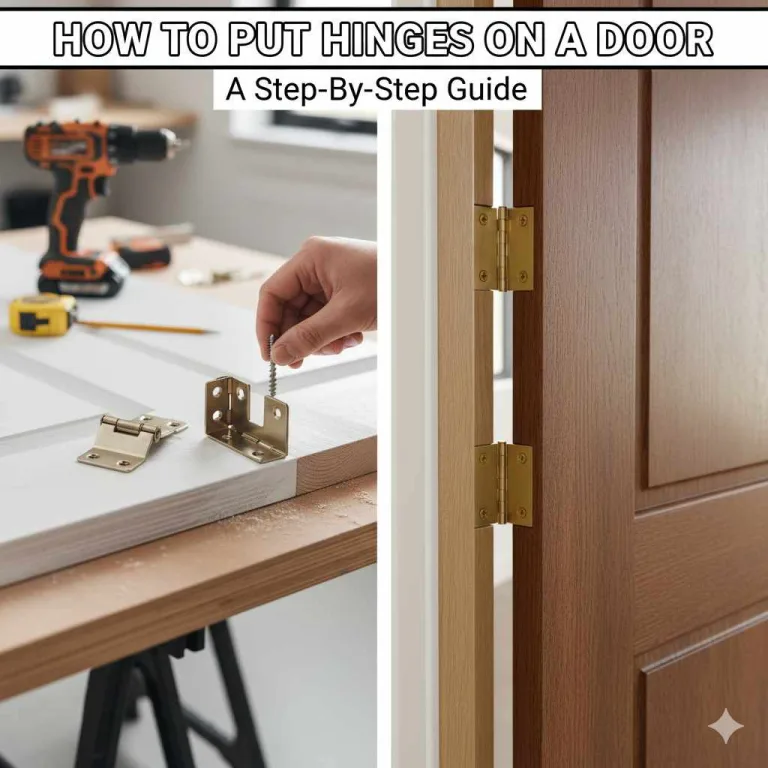
Butt hinges are the common exposed type on interior doors. Many are 3-inch or 3.5-inch hinges, with a visible pin and two leaves. Concealed hinges hide inside the cabinet or door structure, so the access points are different and the fix may require adjustment rather than a simple pin treatment.
The noise source is often the pin or knuckle. The knuckle is the rolled barrel section where the leaves meet, and the pin passes through it. Wear, rust, paint buildup, or a leaf that shifts under load can create a squeak that appears on opening but stays quiet on the return swing.
Check the hinge before you spray anything
Start with a quick inspection. Tighten loose hinge screws, check the pin for rust or bending, and confirm that the door is not rubbing the jamb. A ten-second look can save you from spraying the wrong part and leaving dust or residue on finished wood.
Look for loose screws in the leaf and frame
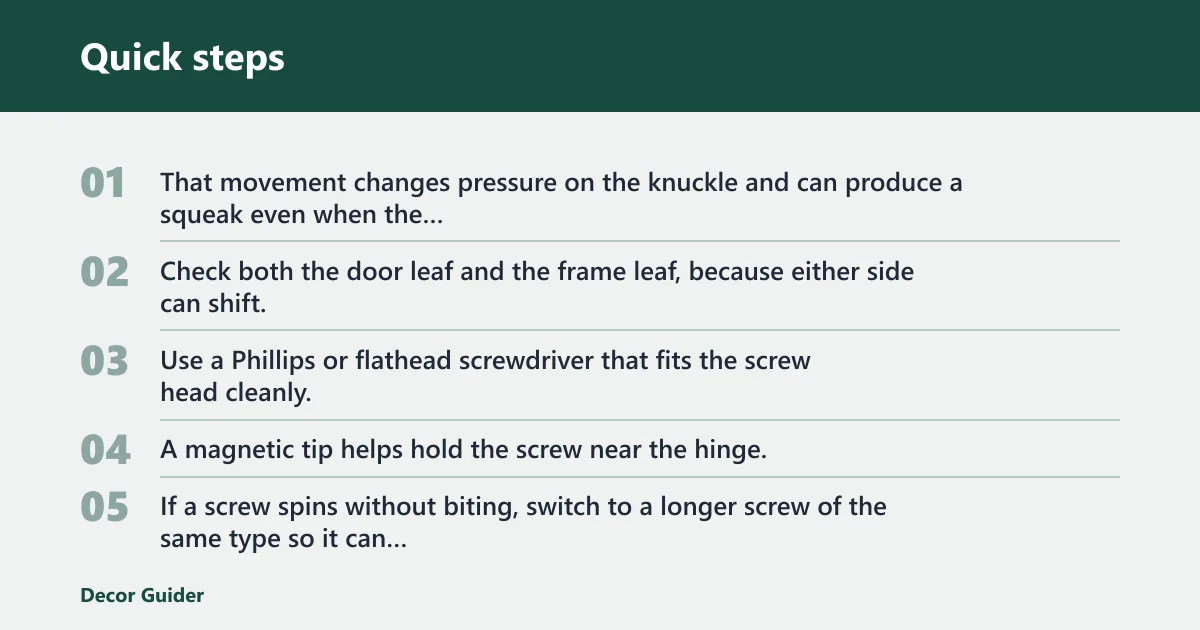
Loose screws let the leaf move. That movement changes pressure on the knuckle and can produce a squeak even when the hinge itself is not worn out. Check both the door leaf and the frame leaf, because either side can shift.
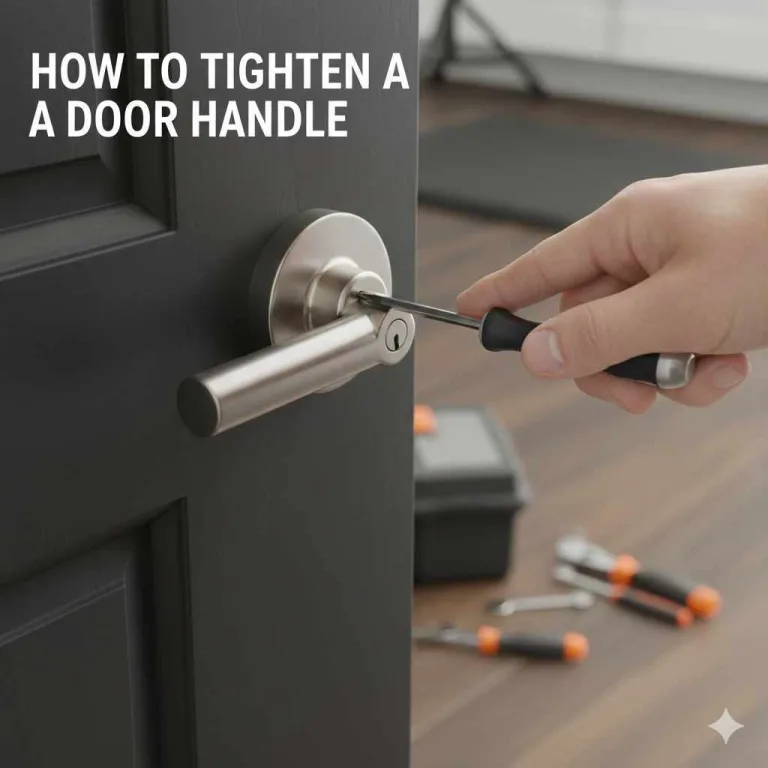
Use a Phillips or flathead screwdriver that fits the screw head cleanly. A magnetic tip helps hold the screw near the hinge, especially when the hinge is mounted high on a door. If a screw spins without biting, switch to a longer screw of the same type so it can reach solid wood behind the jamb.
Inspect the pin for rust, paint, or bending
Remove the hinge pin only if the hinge design allows it. Some butt hinges have a removable pin; many concealed hinges do not. A removable pin should usually slide out with light lifting at the door edge. If it resists hard, stop and check for paint or corrosion before forcing it.
Look for rust, grooves, a bent shaft, or flaking paint on the pin. Those signs point to wear or surface buildup. When the pin goes back in, it should seat fully and align with the knuckle from top to bottom. A pin that sits proud or at an angle can squeak right away.
Confirm the hinge type and size
Match the hinge before buying replacement parts. Interior butt hinges are commonly 3-inch or 3.5-inch, and the screw hole pattern matters as much as the size. Concealed hinges need a different replacement path because the cup depth, arm style, and adjustment range vary by model.
If the door is heavy, the load rating matters. Use hardware meant for the door weight, and match the finish when possible so the replacement does not stand out. Steel is common, brass is often used for appearance, and stainless is a practical choice in damp rooms.
How do I stop a squeaky door hinge without taking the door off?
You can usually stop it in place. Tighten the screws first, then clean and lubricate the pin and knuckle if the squeak remains. That order matters because a loose leaf can keep making noise even after the hinge is lubricated. This is the lowest-mess path for renters and apartment doors.
Use the right screwdriver for hinge screws
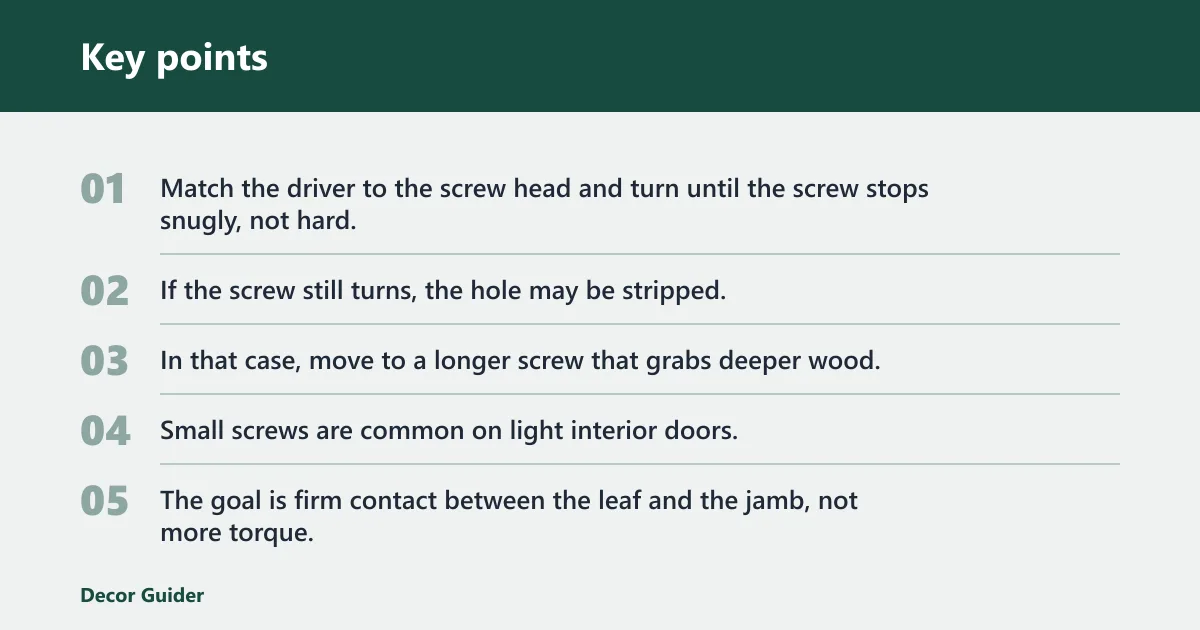
Match the driver to the screw head and turn until the screw stops snugly, not hard. If the screw still turns, the hole may be stripped. In that case, move to a longer screw that grabs deeper wood, or fill the hole and reset the screw if the door is coming apart at the frame.
Small screws are common on light interior doors, but a longer screw can restore hold when the original threads are worn. The goal is firm contact between the leaf and the jamb, not more torque.
Clean the pin and knuckle before adding lubricant
Wipe off loose dirt, old grease, and flakes of paint. If the pin is removable, clean it with a dry cloth first. For stubborn buildup, a small amount of penetrating oil can help loosen a rusted pin, but it is a temporary fix and should be wiped off because it can attract dust.
Say your 3.5-inch bedroom hinge squeaks only when you open the door, and the pin shows a brown ring near the middle. Clean the pin, wipe the knuckle opening, and add a dry lubricant before reinstalling. That sequence often fixes the noise without leaving wet residue on the jamb.
Door hinge troubleshooting matrix
| Symptom pattern | Likely cause | Fastest fix | When to replace |
|---|---|---|---|
| Squeaks only on opening | Directional friction at the pin, knuckle, or a leaf that shifts under load | Tighten screws, clean the pin, then apply dry lubricant | Replace if the pin is bent, deeply grooved, or rusted through |
| Squeaks on both directions | General hinge friction, loose screws, or door rub at the jamb | Check alignment, tighten hardware, and inspect for frame contact | Replace if the hinge leaf is warped or the knuckle is worn |
| Squeaks after painting | Paint buildup inside the knuckle or around the leaf edge | Clear paint from the pin area and free the hinge movement | Replace if paint has fused parts of the hinge or the pin will not move cleanly |
| Squeaks that return after lubrication | Wet oil attracts dust, rust remains, or humidity keeps changing the fit | Clean residue, switch to a dry lubricant, and recheck screws | Replace if the squeak returns after cleaning and two lubrication attempts |
What can I spray on a door hinge to stop squeaking?
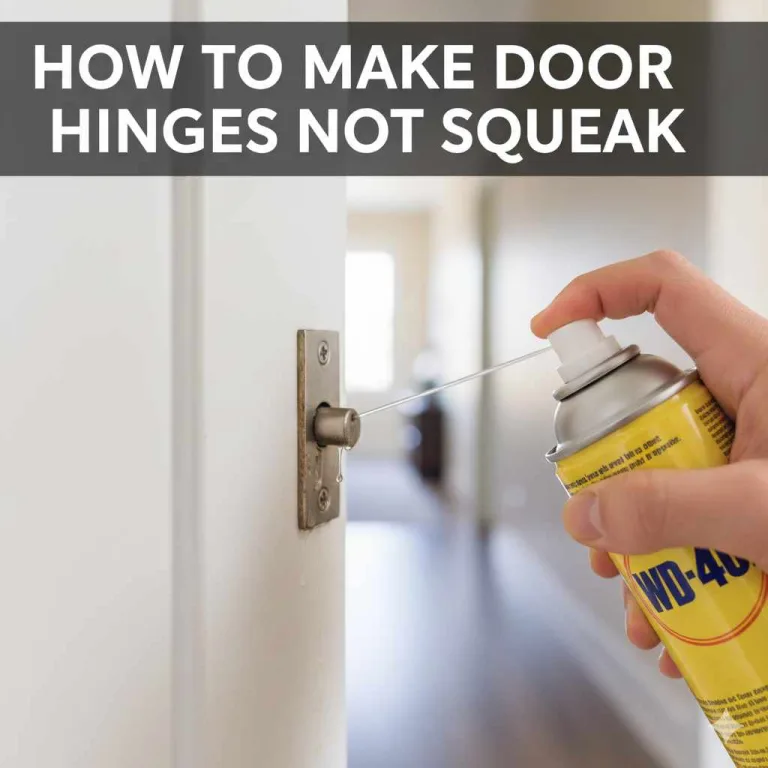
Use a silicone or PTFE dry lubricant if you want low mess and a cleaner-looking finish. It works well for light friction on finished wood and painted hardware. Penetrating oil can help a rusted pin free up, but it is best treated as a short-term move, not the final fix.
Graphite powder is another dry option. It suits tight hinge clearances where liquid products drip out, but overuse can stain light finishes. Apply only a small amount and wipe away loose powder from the leaf edges and floor.
Avoid heavy wet oils on apartment doors unless you can clean every trace. They can leave marks on trim, collect dust, and keep migrating from the hinge. If a product leaves a visible film, use less next time or switch to a dry formula.
How much cleanup each option needs
Dry lubricant needs the least cleanup. Spray or apply a small amount, move the door a few times, then wipe off overspray. Penetrating oil needs more cleanup because it can run into the knuckle and onto the jamb. Graphite needs careful application to avoid dark residue on light paint or wood.
A common first-timer mistake is drenching the latch side when the squeak is really coming from the top hinge on the opening swing. The active friction point is inside the knuckle and around the pin, so extra product on the outer leaf does little except make cleanup harder.
Why does the squeak return after a day?
If the noise comes back quickly, the hinge likely has a repeat cause. Wet oil may have pulled in dust, paint may be binding the leaf, or humidity may be changing the fit of the door and frame. A quick return means the problem was not fully cleaned or the hinge is worn past simple lubrication.
Dust buildup from wet oil
Penetrating oil and other wet lubricants can stop squeaks at first, then the sound returns as dust sticks to the residue. That sludge increases friction in the knuckle. Wipe off the excess and switch to a dry lubricant if the hinge keeps collecting debris.
Paint buildup around hinge leaves
Paint can seal the moving edges of the leaf, especially after a fresh repaint. If the hinge squeaks after painting, inspect the leaf edges and the pin line for a thin bridge of dried paint. Carefully clear the contact points so the hinge can move freely again.
Humidity and seasonal swelling in wood doors
Wood doors can swell in damp weather, especially in bathrooms, basements, and other humid rooms. Humidity and seasonal wood swelling can change how the door rides in the frame and can mimic hinge failure. If the squeak appears in damp months and eases when the air dries, the fit may be part of the problem.
Picture an interior bathroom door that squeaks only in summer and only on the first opening of the day. If the screws are tight and the pin is clean, seasonal swelling is a strong suspect. A small alignment change or better ventilation may matter more than extra lubricant.
When should you replace the hinge?
Replace the hinge when cleaning and lubrication do not hold, or when the hardware is visibly worn. Match the size, finish, and hole pattern when possible so the new hinge fits the existing cutout and screw locations. If the door is heavy, choose hardware with an appropriate load rating.
Choose steel, brass, or stainless hardware
Steel is the usual choice for standard interior use. Brass is useful when the finish should match older trim or decorative hardware. Stainless is worth considering in damp rooms because it generally resists corrosion better than plain steel, especially where humidity keeps returning.
Know when the pin or leaf is beyond repair
Replace the hinge if the pin is deeply worn, the knuckle is out of round, or the leaf is bent. Those problems change the friction pattern and can keep the door squeaking even after a thorough cleaning. If the hinge was painted shut or the pin will not re-seat correctly, replacement may be the cleaner fix.
Frequently asked questions
Why does the door squeak when opening but not when closing?
That usually points to directional friction. The hinge pin, knuckle, or a slightly loose leaf may bind only when the door weight shifts during the opening stroke. If closing is quiet, check the hinge first, then look for jamb rub or seasonal swelling that affects the door only under one load direction.
How do I know if the hinge pin is worn out?
Look for grooves, a shiny flattened spot, rust, or a bend in the pin. A worn pin may also re-create the squeak soon after cleaning and lubricating. If the pin no longer seats smoothly in the knuckle or feels loose when reinstalled, replacement is usually the better choice.
Can I fix a squeaky interior door in an apartment without making a mess?
Yes. Tighten the screws first, then use a silicone or PTFE dry lubricant on the pin and knuckle. Wipe any overspray from the hinge, jamb, and floor. Dry products are usually the best low-mess option because they leave less residue than wet oils and are safer on finished surfaces.
What is the best lubricant for door hinges?
For most interior hinges, a silicone or PTFE dry lubricant is the best starting point because it handles light friction with little mess. Use penetrating oil only for rusted pins and wipe it off afterward. Graphite works in tight clearances, but use it sparingly to avoid staining nearby finishes.
How do I fix a squeaky door if the hinges are painted shut?
First, check whether the paint is bridging the leaf edges or sealing the pin area. Carefully clear the paint at the moving points, then test the hinge again. If the pin will not move cleanly or the paint has fused the parts, replacement is often faster than forcing the hardware.
When should I replace the hinge instead of lubricating it?
Replace it when the squeak returns after cleaning and lubrication, when the pin is worn or rusted badly, or when the leaf is bent. Also replace it if the same hole pattern and size can be matched easily and the old hinge no longer holds alignment. That is the point where repair stops paying off.
Products related to this article
Sponsored / affiliate links. As an Amazon Associate I earn from qualifying purchases. I may earn additional commission from eligible campaigns.
 Doodlream 12PCS 4 x 4 Inch Ball Bearing Door Hinges, 304 Stainless Steel Brushed Satin Silver Hinges with Square Corners, Smooth Quiet Interior/Exterior Heavy Duty Door Hardware with Non-Removable Pin
 QWORK Butt Hinges Stainless Steel Ball Bearing Hinges, 40Pcs 1.73"/44 mm Thickened Inner Door Hinges with Screws for Home Door, Window, Storage Box Repair