How to Fix a Pocket Door That Won’t Slide
If a pocket door won’t slide, check dirty rollers first, then look for door misalignment, a bent track, or a failing hanger before removing trim. Ignoring the symptom usually means more force, more track damage, and a door that can jam inside the wall. This guide shows how to diagnose each fault in order, fix the common ones, and decide when the hardware needs replacement.
What you’ll need



- Screwdriver
- Drill
- Pliers
- Flashlight
- Level
- Pocket door wrench
- Dry lubricant or silicone spray
- Door stop
- Clean cloth
Pocket door troubleshooting matrix
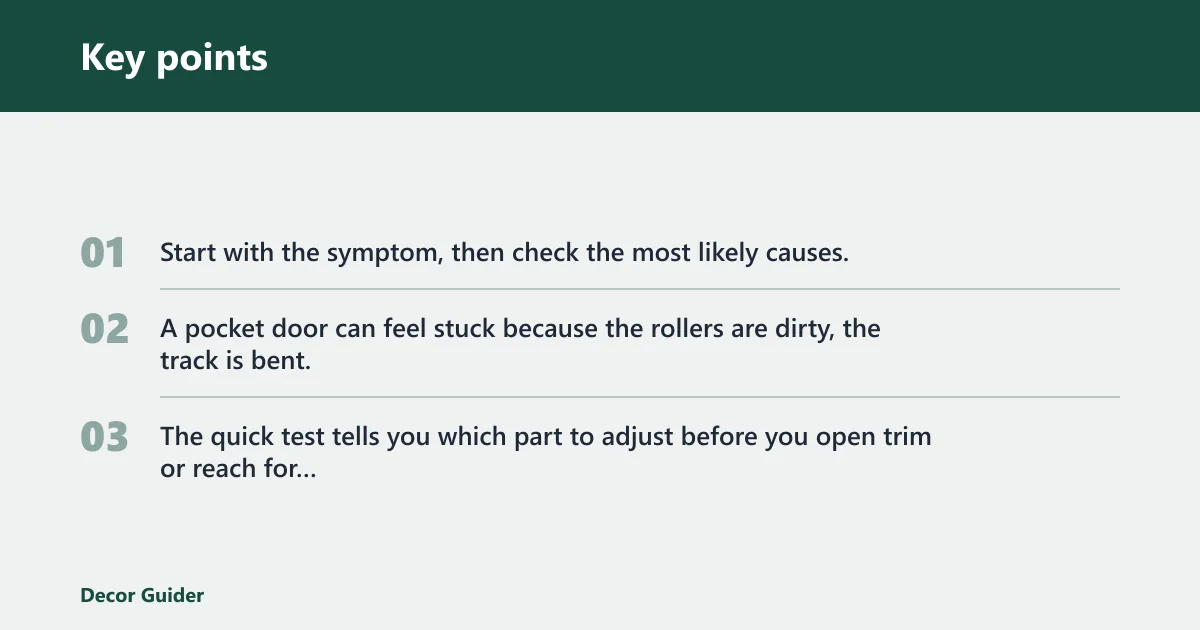
Start with the symptom, then check the most likely causes. A pocket door can feel stuck because the rollers are dirty, the track is bent, the hangers are out of height, the floor guide is out of line, or the slab itself is warped. The quick test tells you which part to adjust before you open trim or reach for replacement hardware.
| Symptom | Likely cause | Quick test | DIY fix | Replace or call a pro threshold |
|---|---|---|---|---|
| Hard-to-move door | Dirty rollers or dry track | Open the door halfway and watch for a rough spot or scraping sound | Clean the track, wipe the rollers, then apply dry lubricant or silicone spray | If it still binds after cleaning and lubrication, inspect the hangers and track |
| One-side drag | Roller height mismatch or loose bracket | Check whether the top edge sits closer to one side of the jamb | Adjust the hanger height with a pocket door wrench and tighten fasteners evenly | If the slab stays tilted after adjustment, the hanger may be worn |
| Off-track door | Loose hardware or derailed hanger | Look for a wheel or hanger that has dropped out of the track slot | Support the slab, reset the hanger, and retighten the track brackets | If the track is bent or the hanger is damaged, replacement is usually safer |
| Top-edge rubbing | Track not level, hanger set too high, or warped slab | Check for contact marks along the top edge and confirm the slab is plumb | Lower the door slightly, then inspect the track for dents | If the slab is warped or the track is bent inside the wall cavity, get help |
| Slides but will not latch | Misaligned latch, floor guide, or slab position | See whether the latch misses the strike or the door wanders at the bottom | Realign the floor guide and reset the door height so the latch lines up | If the latch hardware or jamb strike is damaged, replacement parts may be needed |
How to fix a sliding pocket door
Begin with cleaning, then check alignment. A pocket door hangs from a metal track inside the wall cavity, so binding often comes from dirt, loose fasteners, or hanger height that is off by a little. This method works without opening a wall unless the track or hanger is badly damaged.
- Slide the door to the most accessible position and set a door stop under it.
- Wipe the exposed track and the top rollers with a clean cloth.
- Check the track fasteners and brackets with a drill or screwdriver.
- Clean again, then apply dry lubricant or silicone spray to the rollers and track.
- Test the door through the full travel path.
Say your 30-inch bathroom pocket door starts dragging only near the last 6 inches of travel. If the track is clean and the drag stays in the same spot, that points to a dent or a hanger that sits too low, not a dirty full-length track.
Why is your pocket door sticking?
Sticky movement usually starts with the track or rollers, then moves to the hangers, guide, or slab. Clean parts first, because lubricant only helps after dirt is removed. A bent or dented pocket door track can also cause tilt, and that tilt creates side load on the rollers.
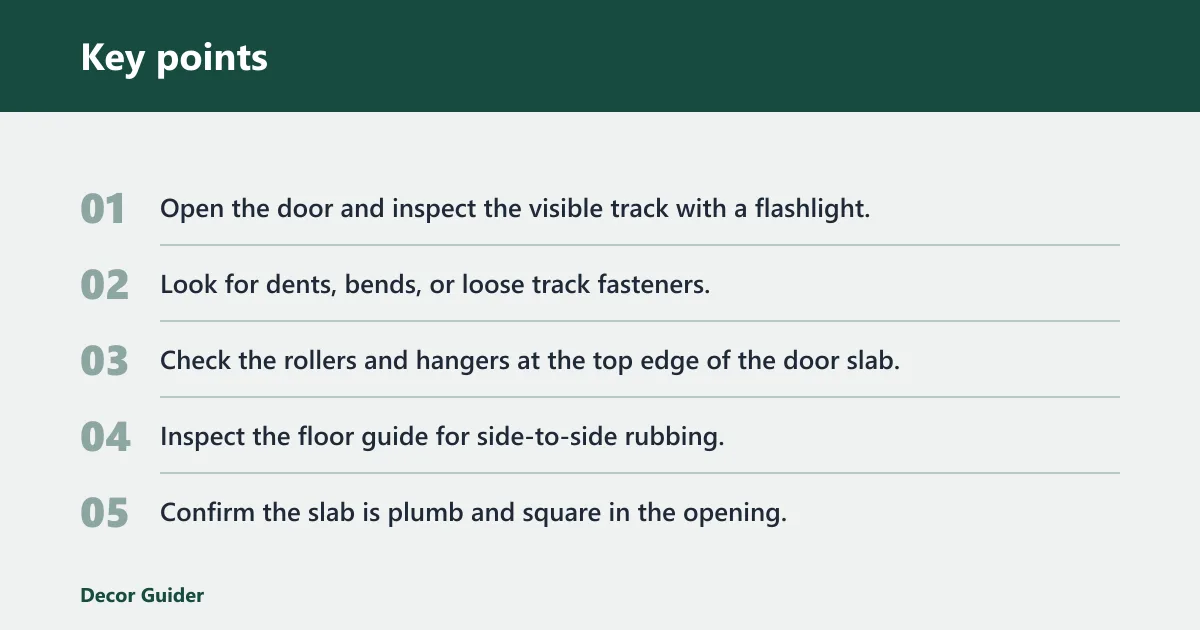
- Open the door and inspect the visible track with a flashlight.
- Look for dents, bends, or loose track fasteners.
- Check the rollers and hangers at the top edge of the door slab.
- Inspect the floor guide for side-to-side rubbing.
- Confirm the slab is plumb and square in the opening.
A common first-timer mistake is to spray lubricant onto dust and grit. That can turn a light drag into heavy, grinding resistance, especially at the same spot every time the door moves.
How do you adjust the rollers?
Adjust the rollers when the door sits unevenly or the top edge is not parallel to the track. The hanger adjustment screws raise or lower the slab, and a pocket door wrench makes the job easier in tight spaces. Make changes in small increments and recheck travel after each one.
- Find the hanger adjustment screws at the top edge of the slab.
- Turn each screw about one-quarter turn at a time with a pocket door wrench.
- Raise or lower the door until the top edge runs parallel to the track.
- Recheck the door from both sides of the opening.
- Tighten the brackets evenly after the slab sits level.
Suppose one side of the slab rubs the jamb while the other side clears cleanly. That usually means one hanger is lower than the other, so one-quarter turn per screw is a safer adjustment than a large change.
What if the door is off track?
If the door has dropped or the hanger has slipped out of the track, hold the slab steady before you touch hardware. A door stop can help keep the door from drifting while you reset the hanger and tighten the track fasteners. If the track is bent or the hanger is damaged, stop at repair instead of forcing it.
- Place a door stop under the slab to hold position.
- Use a flashlight to locate the hanger and track slot.
- Support the door while you reset the hanger into the track.
- Tighten loose brackets evenly.
- Slide the door slowly and confirm the rollers stay centered.
If the door keeps jumping out after a reset, the track may be bowed or the hanger wheel may be worn enough to fail under load. That is the point to replace the hardware, not to keep forcing the slab.
How to make a pocket door slide easier
The fastest improvement usually comes from cleaning, then adding the right lubricant to clean metal parts. Use dry lubricant or silicone spray after the track is wiped clean. The goal is smoother wheel movement, not a wet film that traps dust on the rollers and track.
- Vacuum or wipe loose grit from the track.
- Clean the rollers with a dry cloth.
- Apply dry lubricant or silicone spray in a light pass.
- Move the door back and forth several times.
- Wipe away any excess so dirt does not stick to the parts.
The same approach helps when a door slides but scrapes. If the floor guide is off center, the bottom edge can wander while the top hardware still feels fine, so do not stop at the rollers.
Common mistakes
Most pocket door trouble comes from skipped diagnosis. Clean first, then adjust, then replace only when the parts are clearly worn or bent.
- Lubricating a dirty track instead of cleaning it first
- Adjusting one hanger too far and tilting the slab
- Ignoring a bent track or loose bracket
- Skipping the floor guide when the door still scrapes
- Forcing a door that has already dropped off the track
When should you replace parts or call a pro?
Replace hardware when the rollers are worn flat, the hanger will not hold its setting, or the track has a bend that will not straighten. If the door is stuck inside the wall cavity and the hardware cannot be reached from the opening, the safer move is professional help. The article guidance says a stuck pocket door may require the entire door to be removed.
- Test the latch, guide, and travel again after adjustment.
- Replace worn rollers or a failing hanger if the problem returns.
- Call a pro if the track is inaccessible, bent badly, or the slab will not stay aligned.
Many pocket door repairs stay outside the wall. If the hardware is loose, dirty, or out of height, you can usually correct it without removing trim.
Frequently asked questions
How to fix a sliding glass door that won’t slide
A sliding glass door uses different hardware, so do not use pocket-door adjustments on it. Clean the bottom track, check the rollers, and make sure the frame is square. If the rollers are worn or the track is damaged, replacement parts are usually the next step.
How to fix a sliding door that doesn’t slide well
Check for dirt first, then test for drag on one side and look for misaligned hardware. If the door is a pocket door, inspect the hanger screws, track fasteners, and floor guide. A one-quarter turn adjustment can sometimes correct a slight tilt without replacing parts.
How to fix a sliding screen door that won’t slide
Screen doors usually stick because the rollers are dirty or the bottom track is clogged. Clean the track, adjust the roller screws, and confirm the frame sits square in the opening. If the frame is bent, the door may need replacement rather than more adjustment.
Products related to this article
Sponsored / affiliate links. As an Amazon Associate I earn from qualifying purchases. I may earn additional commission from eligible campaigns.