How to WD-40 a Door Hinge: 7 Steps Plus Alternatives
Spray WD-40 into the hinge pin gap, work the door back and forth to spread it through the joint, then wipe away the excess so it does not drip or attract dust. WD-40 dissolves the rust causing most squeaks, but it is a short-term fix since it evaporates faster than silicone lubricant. This guide covers the full seven-step process, removing the pin for a stubborn squeak, and what to use if WD-40 does not hold.
Why Do Door Hinges Squeak?
Before we dive into the fix, let’s briefly understand why those hinges decide to speak up. Over time, the lubrication inside your door hinges can dry out. This is often due to exposure to air and moisture, which can cause the metal components within the hinge to rub against each other directly. When metal grinds against metal without a protective lubricant, it creates friction, leading to those unmistakable squeaks and groans.
Dust, dirt, and rust can also accumulate within the hinge mechanism. These particles act like sandpaper, increasing friction and exacerbating the squeaking problem. Think of it like this: the tiny moving parts of the hinge need a smooth barrier between them to prevent them from wearing down and making noise. When that barrier is gone, they start to complain loudly!

Gathering Your Supplies: What You’ll Need
The beauty of this quick fix is that you won’t need a complex toolkit. Most of these items are likely already in your home, or they are very inexpensive to pick up. Having everything ready beforehand will make the process even smoother.
Essential Items:
- A Can of WD-40: This is your star player! WD-40 is a multi-use product that lubricates, penetrates, and displaces moisture, making it perfect for squeaky hinges. Look for the classic blue and yellow can.
- Rag or Paper Towels: You’ll need these to wipe away any excess WD-40 and to protect your floor or surrounding surfaces from drips. Old t-shirts or shop rags work great.
- Optional: Straw Attachment (often comes with the WD-40 can): This thin, red straw allows for more precise application, directing the spray right where you need it.
Optional but Helpful Items:
- Gloves: If you’re concerned about getting your hands greasy, a pair of disposable gloves is a good idea.
- Painter’s Tape: For extra protection, you can tape off the area around the hinge and the floor to catch any drips.
- Small Hammer and a Nail (for stubborn hinges): In some rare cases, you might need to gently tap the hinge pin out.
Best Door Hinge Lubricant Pick
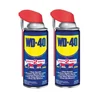
WD-40 Classic Multi-Use Product with Smart Straw – $18.99
The exact product this guide walks through applying in its seven-step process, with the Smart Straw for precise aim into the hinge gap.
- Best for: Steps 3 and 4 of this guide, positioning the straw and applying WD-40 into the pin gap
- Why we picked it: Smart Straw folds down for the precise, low-mess application this guide's steps describe
- Main drawback: Short-term fix on a heavy door, the exact limitation this guide's alternatives section addresses
Compare more lubricants and pin removal tools
 Option 1 WD-40 Specialist Penetrant with Smart Straw – $7.98
|
 Option 2 WD-40 Multi-Use Product, Industrial Size, 16 OZ – $15.33
|
 Option 3 WD-40 Classic Multi-Use Product, 2-Pack – $23.21
|
As an Amazon Associate we earn from qualifying purchases.
Step-by-Step: How to WD-40 a Door Hinge
Now, let’s get down to business! Follow these straightforward steps, and you’ll have those squeaky doors silenced in no time. This method is designed for simplicity, so don’t worry if you’ve never done it before.
Step 1: Locate the Squeaky Hinge(s)
Open and close the door slowly to pinpoint exactly which hinge or hinges are causing the noise. Sometimes it’s just one, and other times it might be all of them. Knowing this helps you focus your efforts.
Step 2: Prepare the Area
Lay down a rag or some paper towels near the bottom of the door, directly beneath the hinge you’re about to treat. This will catch any drips of WD-40 and prevent it from staining your floor or carpet.
Step 3: Position the WD-40 Straw
If your WD-40 can came with a thin red straw, attach it now. This makes it much easier to aim the spray directly into the hinge mechanism, ensuring maximum effectiveness and minimal mess.
Step 4: Apply the WD-40
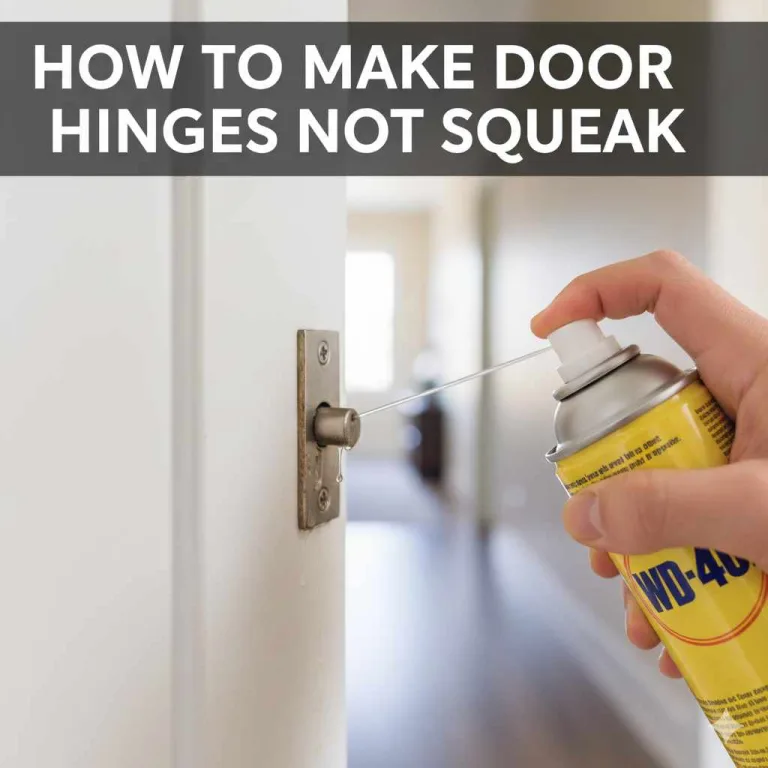
Aim the straw at the top of the hinge, where the top part of the hinge meets the bottom part, and where the pin enters the hinge. Give a short, controlled spray. You want to get the lubricant into the moving parts. If you’re not using the straw, hold the can a few inches away and spray carefully.
Pro Tip: It’s better to use a few short bursts rather than one long, continuous spray. This gives you more control.
Step 5: Work the Lubricant In
After applying the WD-40, immediately open and close the door several times. This motion helps the lubricant penetrate all the crevices within the hinge and distribute itself evenly. You might hear the squeak lessen or even disappear with this initial movement.
Step 6: Wipe Away Excess
Use your rag or paper towels to wipe away any excess WD-40 that has dripped onto the door, frame, or floor. This keeps things tidy and prevents the lubricant from attracting dust later on.
If the squeak keeps coming back even after this, pulling the pin out for a deeper clean is the next step; see our guide on getting pins out of door hinges.Step 7: Test and Repeat (If Necessary)
Open and close the door again to see if the squeak is gone. If the noise has vanished, congratulations! You’re done. If there’s still a faint squeak, repeat steps 4 through 6, perhaps applying a little more WD-40 or ensuring the straw was aimed precisely at the hinge pin.
When to Go the Extra Mile: Removing the Hinge Pin
For most squeaky hinges, the above steps are perfectly sufficient. However, if the squeak is particularly stubborn, or if you suspect significant rust or dirt buildup, you can achieve even better results by removing the hinge pin and lubricating it directly. This isn’t as intimidating as it sounds!
If you also want to fill the old screw holes while the hinge is off, our guide on filling drawer and hardware holes covers the same patching method.Tools for Pin Removal:
- WD-40
- A Small Hammer
- A Nail or Phillips Head Screwdriver (something to tap the pin out with)
- Rag or Paper Towels
- Gloves (recommended)
Steps for Pin Removal:
- Prepare the Door: Close the door almost completely, leaving just a tiny gap. This takes the tension off the hinge pin, making it easier to remove. You might also want to place a wedge or a book under the door for support while the pin is out.
- Protect the Area: Place your rag underneath the hinge to catch any drips.
- Tap the Pin Upwards: Place the tip of a nail or screwdriver on the bottom of the hinge pin (the headless end that usually protrudes slightly). Gently tap it upwards with the hammer. You’re not trying to force it, just give it enough persuasion to start moving.
- Pull the Pin Out: Once the pin is loosened, you should be able to pull it out the rest of the way by hand or with pliers. If it’s still stuck, a few more gentle taps might be needed.
- Lubricate the Pin and Hinge: Spray WD-40 generously onto the hinge pin itself. Also, spray some into the hollow of the hinge where the pin was.
- Reinsert the Pin: Slide the lubricated pin back into the hinge from the top. You might need to tap it gently with the hammer to seat it fully.
- Work the Hinge: Open and close the door multiple times to distribute the WD-40.
- Clean Up: Wipe away any excess WD-40.
Removing the pin allows you to thoroughly clean and lubricate each component, offering a more robust and longer-lasting solution for those persistently squeaky hinges.
Alternatives and Complementary Lubricants
While WD-40 is an excellent and readily available solution for door hinges, it’s worth noting that it’s primarily a water displacer and light lubricant. For very heavy-duty applications or if you’re looking for a longer-lasting, greasier solution, other lubricants might be considered. However, for typical interior and exterior doors, WD-40 is usually more than sufficient and incredibly easy to use.
Some other options include:
- Silicone Spray Lubricant: This is a good alternative, especially for metal-to-metal contact. It’s less greasy than some other options and won’t attract as much dust.
- Lithium Grease Spray: This provides a thicker, longer-lasting lubrication and is excellent for heavy-duty hinges or outdoor applications where weather resistance is a factor. Be aware it can be a bit messier.
- Graphite Lubricant Powder: This is a dry lubricant, meaning it doesn’t attract dust or dirt. It’s often used for locks but can be applied to hinges as well. You’d typically apply it directly to the pin and hinge.
For the ease and immediate effectiveness of solving a squeaky door hinge, WD-40 remains a top choice for homeowners and renters alike. Its ability to penetrate, lubricate, and protect makes it incredibly versatile.

A Quick Comparison: WD-40 vs. Other Lubricants
Understanding the differences can help you choose the best product for your needs, although for simple door hinges, the choice is usually clear!
| Lubricant Type | Primary Use | Pros for Door Hinges | Cons for Door Hinges |
|---|---|---|---|
| WD-40 | Penetrating oil, rust prevention, light lubrication | Quick, easy to apply, effective for most squeaks, displaces moisture, readily available. Excellent starting point. | May need reapplication more frequently than heavier greases. Not ideal for extremely heavy-duty or high-friction applications. |
| Silicone Spray | Lubrication, water repellent, protects rubber and plastic | Clean operation, good for metal-on-metal, less prone to attracting dust than grease. | Can sometimes be less potent than WD-40 at penetrating stuck parts. |
| Lithium Grease (Spray) | Heavy-duty lubrication, moisture resistance | Provides long-lasting lubrication, very durable, excellent for outdoor or high-wear hinges. | Can be messy, attracts more dust and dirt, might require more thorough cleaning of excess. |
| Graphite Lubricant (Powder/Spray) | Dry lubrication, especially for locks and mechanisms | Doesn’t attract dust, provides a dry film of lubrication. | Application can be trickier, especially for powdered forms. May not penetrate as effectively as liquid sprays for stuck hinges. |
Considering ease of use and common household availability, WD-40 is the go-to for most hinge squeaks.
Frequently Asked Questions (FAQ)
Q1: How often should I lubricate my door hinges?
A1: For most interior doors, lubricating hinges once or twice a year is sufficient, or whenever you notice a squeak reappearing. Exterior doors might benefit from more frequent attention, perhaps every 3-6 months, especially in humid or coastal climates where corrosion is more common.
Q2: Can I use cooking oil or other household items like olive oil on my door hinges?
A2: While in a pinch, you might get temporary relief, it’s not recommended. Cooking oils can attract dust and debris, eventually gumming up the hinge and making the problem worse. They can also break down and turn rancid. Specialized lubricants like WD-40 are designed for this purpose and are much more effective and longer-lasting.
Q3: My door is very heavy. Does that change how I WD-40 the hinge?
A3: For heavy doors, the process is the same, but you might find removing the hinge pin (as described in the advanced steps) to be more beneficial. This ensures thorough lubrication of the robust hinges that support a heavy door. Also, ensure the door is well-supported when the pin is removed.
Q4: What if WD-40 doesn’t stop the squeak?
A4: If WD-40 alone doesn’t solve it, try removing the hinge pin and cleaning it thoroughly with a wire brush to remove any rust or debris before lubricating. If the hinge is heavily corroded or damaged, it might be time to consider replacing the hinge itself. You can find new hinges at most hardware stores, and replacing them is a fairly simple DIY task.
Q5: Will WD-40 damage my door or paint?
A5: WD-40 is generally safe for most surfaces when used as directed. However, it’s always wise to protect your surfaces with a rag or newspaper, as the oil can potentially stain certain materials or finishes if left in contact for too long. Wipe away any excess immediately. For very delicate finishes, a spot test in an inconspicuous area might be a good idea.
Q6: Is WD-40 safe to use on all types of doors?
A6: Yes, WD-40 is safe for most types of doors found in homes, including interior wooden doors, exterior metal or wooden doors, and even screen doors. Its primary function as a lubricant and rust inhibitor makes it suitable for the metal hinges on virtually any door. Always follow the general usage instructions to protect surrounding finishes.
Conclusion
And there you have it! You’ve learned how to effectively use WD-40 to silence those nagging, squeaky door hinges. It’s a small task with a wonderfully satisfying outcome – restoring peace and quiet to your home. Remember, a well-maintained home doesn’t require grand gestures, but rather consistent care for these small details. By following these simple steps, you’ve not only fixed an annoyance but also contributed to the overall comfort and quiet enjoyment of your living space.
This effortless fix proves that you don’t need to be a professional to handle common household issues. With the right tool and a little know-how, you can tackle these minor challenges with confidence. So, go forth and conquer those creaks! Your home will thank you for the newfound serenity.
Products related to this article
Sponsored / affiliate links. As an Amazon Associate I earn from qualifying purchases. I may earn additional commission from eligible campaigns.