How to Fix a Door Hinge That Squeaks Even After Oiling
If a door hinge still squeaks after oiling, stop adding lubricant and find the cause: the noise usually means the oil missed the knuckles, dirt or rust is still inside, or the door is rubbing the frame.
What you’ll need


- Light machine oil or multipurpose oil for a quick hinge-pin application
- Silicone spray for a lower-dust lubricating film on interior doors
- WD-40 for freeing stuck parts and flushing dirt before a dedicated lubricant
- Graphite powder when you want a dry lubricant and cleaner handling
- Screwdriver that matches the hinge screws
- Rag or paper towels
- Small brush or cloth for cleaning the hinge area
- Optional: nail and hammer, or pliers, if the hinge pin is removable
Why does my door hinge still squeak after I oil it?

A hinge can still squeak after oiling when the lubricant never reached the main friction points inside the hinge knuckles, when dirt or rust is still packed in the joint, or when the door is rubbing the frame instead of the hinge itself. Loose screws and bent hardware can also keep the noise going.
Squeak diagnosis table
| Symptom | Likely cause | Quick test | Next fix |
|---|---|---|---|
| Squeak stayed the same after spraying the seam | Dry hinge | Move the door slowly and listen near the knuckles | Apply lubricant directly at the pin and knuckle contact points |
| Noise sounds gritty or harsh | Dirty hinge | Look for dark residue, dust, or sticky buildup at the seam | Clean the hinge, then relubricate |
| Door shifts in the frame or feels loose | Loose screws | Check whether hinge leaf screws turn easily or sit proud | Tighten screws or replace with properly sized screws if holes are stripped |
| Metal looks uneven, warped, or scarred | Bent pin or knuckles | Open and close the door while watching the hinge line | Replace the damaged hinge if movement stays rough |
| Squeak happens only when the door swings near the frame | Misalignment or rubbing | Check for paint marks, wood scuffs, or contact at the edge or frame | Adjust alignment before adding more lubricant |
| Squeak returns after cleaning and relubrication | Worn-out hinge replacement | Inspect for play, corrosion, or repeated binding | Replace the hinge instead of repeating oiling |
Know where the friction
Hinge knuckles are the interlocking cylindrical sections that carry most of the movement, and they are a common friction point in a squeaky hinge. Dirt, grime, and rust can collect there even when the visible outside of the hinge looks clean. If the noise follows the hinge line, that joint needs attention before any more product goes on.
Say your bedroom door squeaks only when it opens halfway, but the frame and latch area stay quiet. That pattern usually points to hinge friction, not a frame rub. If the same door squeaks only when the bottom edge drags the jamb after painting, that is a rubbing problem, so more oil will not fix it.
Should you remove the hinge pin if spraying the hinge did not work?
Remove the hinge pin when the quick spray did not reach the friction point, or when the hinge needs deep cleaning inside the knuckles. Some pins are removable and some are not, depending on the hinge design. If the pin comes out, cleaning the pin and knuckles before relubricating gives the lubricant a better path.
A standard hinge pin can be treated at the pin and knuckle contact points without removal, but deeper buildup may need the pin out of the hinge. Bob Vila notes that spraying lubricant on the hinge pins and, if needed, removing the hinge pin with a nail and hammer are common next steps. He also advises cleaning with a grease-cutting cleaner or steel wool when dirt or rust is present. Daitool identifies dust and grime buildup as a common cause, and says silicone spray is a long-lasting, low-dust option.
Fix the squeak step by step
Start with the least invasive fix, then move to cleaning and deeper service only if the noise remains. For interior doors, a quick application of multipurpose oil, light machine oil, silicone spray, or graphite powder may solve a dry hinge. WD-40 can help free parts and flush dirt, though a dedicated lubricant may still be needed afterward.
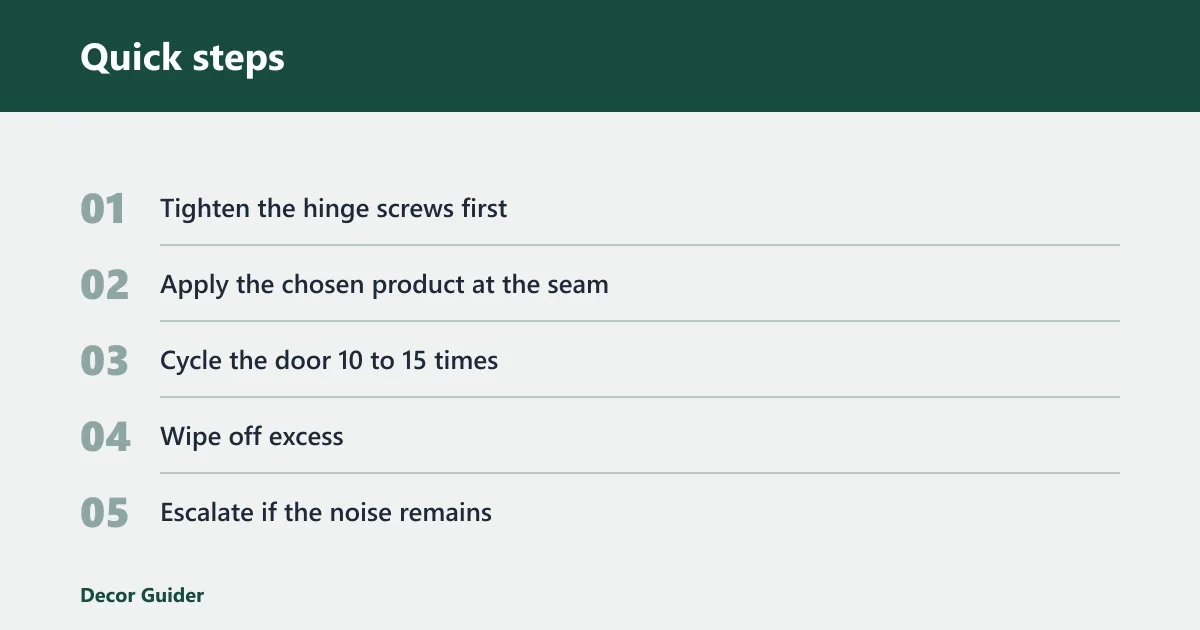
- Tighten the hinge screws first. Check the top and bottom hinge leaves, then snug any loose screws so the hinge sits squarely in the frame.
- Apply the chosen product at the seam. Aim at the hinge knuckles and pin area, not just the visible outside edge. If the pin is removable, coat it directly before reinstalling.
- Cycle the door 10 to 15 times. Open and close it repeatedly so the lubricant moves through the knuckles and along the pin.
- Wipe off excess. Remove drips and residue with a rag so dust does not stick to the hinge or stain the floor.
- Escalate if the noise remains. Clean out dirt or rust, then switch from a flush-and-clean product to a dedicated lubricant, or inspect for rubbing and misalignment.
What should I do if WD-40 did not stop the squeak?
If WD-40 did not stop the squeak, treat it as a cleaning step rather than the final repair. Wipe away the residue, clean the knuckles, and follow with silicone spray, light machine oil, or graphite powder depending on the hinge and the need for lower dust. If the door still binds, look for screw or alignment problems.
WD-40 is useful when dirt is part of the problem because it can clean and free stuck parts, but it is not always a long-term standalone fix. If the hinge still grates after that, the remaining issue is often dry metal contact, corrosion, or rubbing at the frame.
Common mistakes to avoid
More lubricant is not the default answer. Too much product can collect dust and leave residue that brings the squeak back faster.
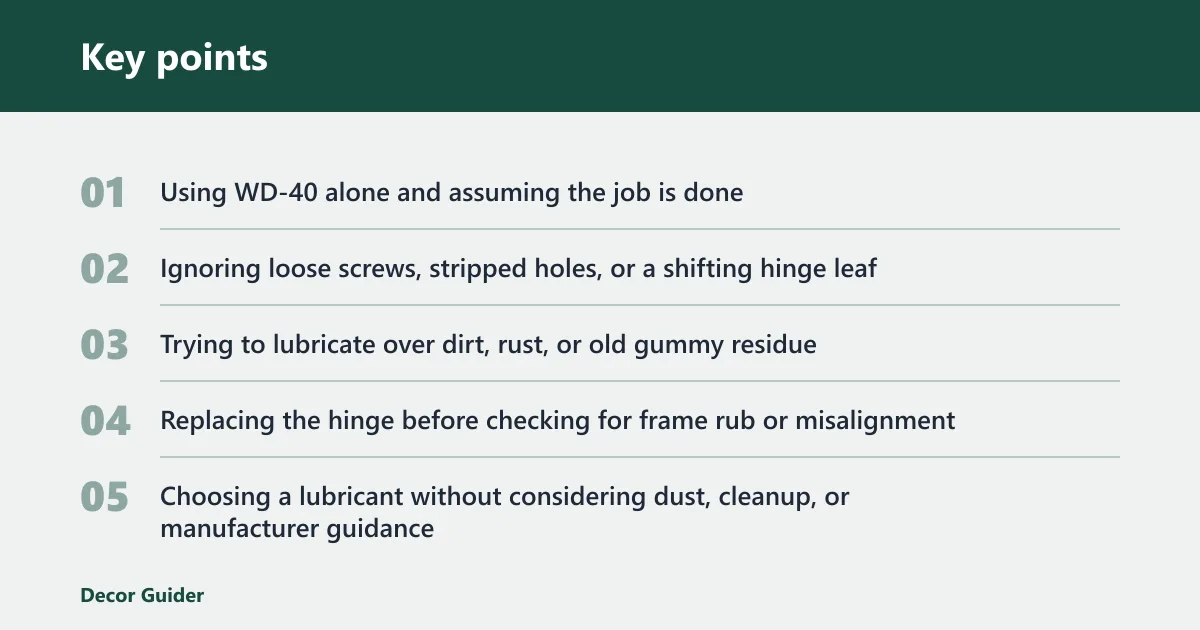
- Using WD-40 alone and assuming the job is done
- Ignoring loose screws, stripped holes, or a shifting hinge leaf
- Trying to lubricate over dirt, rust, or old gummy residue
- Replacing the hinge before checking for frame rub or misalignment
- Choosing a lubricant without considering dust, cleanup, or manufacturer guidance
Can loose screws cause a hinge to squeak even after oiling? Yes. Loose hinge screws can create uneven pressure, racking, and recurring noise, which can make the hinge move out of alignment under load. Tighten the existing screws first; if the hole no longer grips, use a properly sized replacement screw or repair the wood before relying on lubricant.
Rust or corrosion is another common reason a squeak may persist after oiling, especially on older hinges or doors exposed to moisture. Clean the hinge before relubricating so the oil or spray reaches metal, not crusted residue. Bob Vila also lists loose screws and bent hinges as causes of squeaking, which is why a mechanical check comes before repeated oiling.
When should you replace a squeaky hinge instead of lubricating it? Replace it when the hinge is worn, bent, or rusted enough that cleaning and relubrication do not restore smooth movement, or when the squeak keeps returning after the hardware has been cleaned and checked. Hinge replacement is often a better answer than repeated oiling when the metal itself is no longer moving cleanly.
Frequently asked questions
How do I know whether the squeak is from the hinge or the frame?
Open the door slowly and listen at the hinge line, then look for paint scuffs, wood rub marks, or places where the edge touches the jamb. If the noise appears only when the door contacts wood or the stop, the fix is alignment or clearance work, not more lubricant at the hinge.
How do I clean a dirty hinge before relubricating it?
Wipe away loose dust first, then clean the knuckles and pin area with a grease-cutting cleaner or steel wool if residue is heavy. Let the metal dry, apply the chosen lubricant, and move the door several times so the product reaches the contact points inside the hinge.
What lubricant works best for a squeaky interior door hinge?
There is no single best choice for every hinge. Light machine oil and multipurpose oil are common quick fixes, silicone spray is a lower-dust option, and graphite powder is useful when you want a dry lubricant. Check the hinge condition, your cleanup tolerance, and the manufacturer listing for your door hardware.
How many times should I move the door after applying lubricant?
Open and close the door about 10 to 15 times, or until the squeak drops off and the motion feels even. That action spreads the product through the knuckles and along the pin. Stop if the hinge starts to drip, then wipe away the excess before it attracts dust.
Why does the squeak come back after a few days?
That usually means the first product only masked the symptom, or that dust, rust, misalignment, or loose screws were still present. Clean the hinge, tighten the hardware, and use a lubricant suited to the issue. A recurring squeak is often a sign that the hinge needs mechanical correction, not another spray.
Can loose screws cause a hinge to squeak even after oiling?
Yes. Loose screws let the hinge shift, which changes the load on the knuckles and can bring the squeak back quickly. Tighten the screws first, then test the door. If the screw holes are stripped, replace the screws with properly sized ones or repair the wood before retrying lubrication.
Products related to this article
Sponsored / affiliate links. As an Amazon Associate I earn from qualifying purchases. I may earn additional commission from eligible campaigns.