How to Tighten Loose Door Hinges
A loose door hinge should first be checked for screws that are loose, stripped, or pulling out of the jamb; tighten sound screws, use a longer screw when one no longer bites, and repair the hole if the screw spins. If you ignore the cause, the hinge sags, scrapes the floor, and keeps stripping the same hole. This guide shows how to identify each failure mode and match it to the right fix.
This guide is part of our Interior Door Problems and Hardware Fixes: Squeaks, Sticking, Handles, Locks and Thresholds series.
What is actually loose?


Start by finding the part that moved: the hinge leaf, the screw heads, the hinge pin, or the screw holes. A hinge leaf on the jamb side and door side should sit flush; if it is proud or twisted, the screws can loosen again after tightening. Loose hinge screws can also make a door sag and rub at the top.
Look for three clues before you turn a screw. If the screw heads are intact but the hinge leaf shifts, the hinge may only need retightening. If the screw turns without gripping, the hole is likely stripped. If the door sticks, binds, or scrapes the floor, the problem may be beyond the screw itself and may involve the jamb wood or the hinge layout.
Loose hinge pins are different from loose screw holes. A worn pin can let a door rattle, shift, or squeak, but it does not repair a stripped fastener hole. If the pin is worn, the hinge may need a new pin or full hinge replacement rather than a screw repair, especially if the leaves themselves are bent or loose. See also replacing door hinges and fixing a sagging door.
What you’ll need
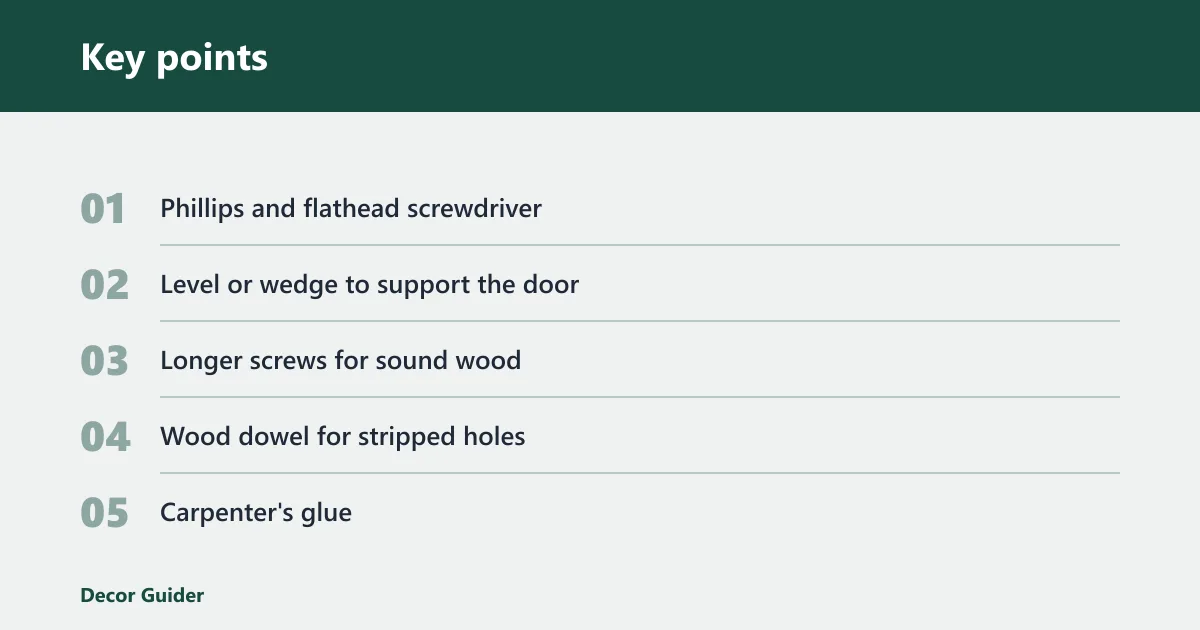
- Phillips and flathead screwdriver
- Level or wedge to support the door
- Longer screws for sound wood
- Wood dowel for stripped holes
- Carpenter’s glue
- Drill and self-centering bit
- Sharp chisel or flush-cut saw
Can you tighten door hinges without removing the door?
Yes, if the screws still bite and the hinge leaf can sit flush. Support the door first with a level or wedge, then tighten the screws that still hold. If the leaf binds, sits crooked, or pulls away from the jamb, stop and repair the wood before you continue.
- Wedge the door so its weight is not hanging on the hinge screws.
- Use a Phillips or flathead screwdriver that fits the screw head cleanly.
- Tighten each loose screw until the hinge leaf sits flush.
- Open and close the door once to check for binding or scraping.
- Stop if the screw spins or the leaf will not seat flat.
A common mistake is driving a loose screw harder after the hole has already enlarged. That usually strips the hole farther. If your interior bedroom door has one screw that turns, while the other two stay firm, tighten the firm screws first, then move to the failed hole instead of forcing the bad one again. For a deeper walkthrough, see repairing stripped screw holes.
What if the screw spins?
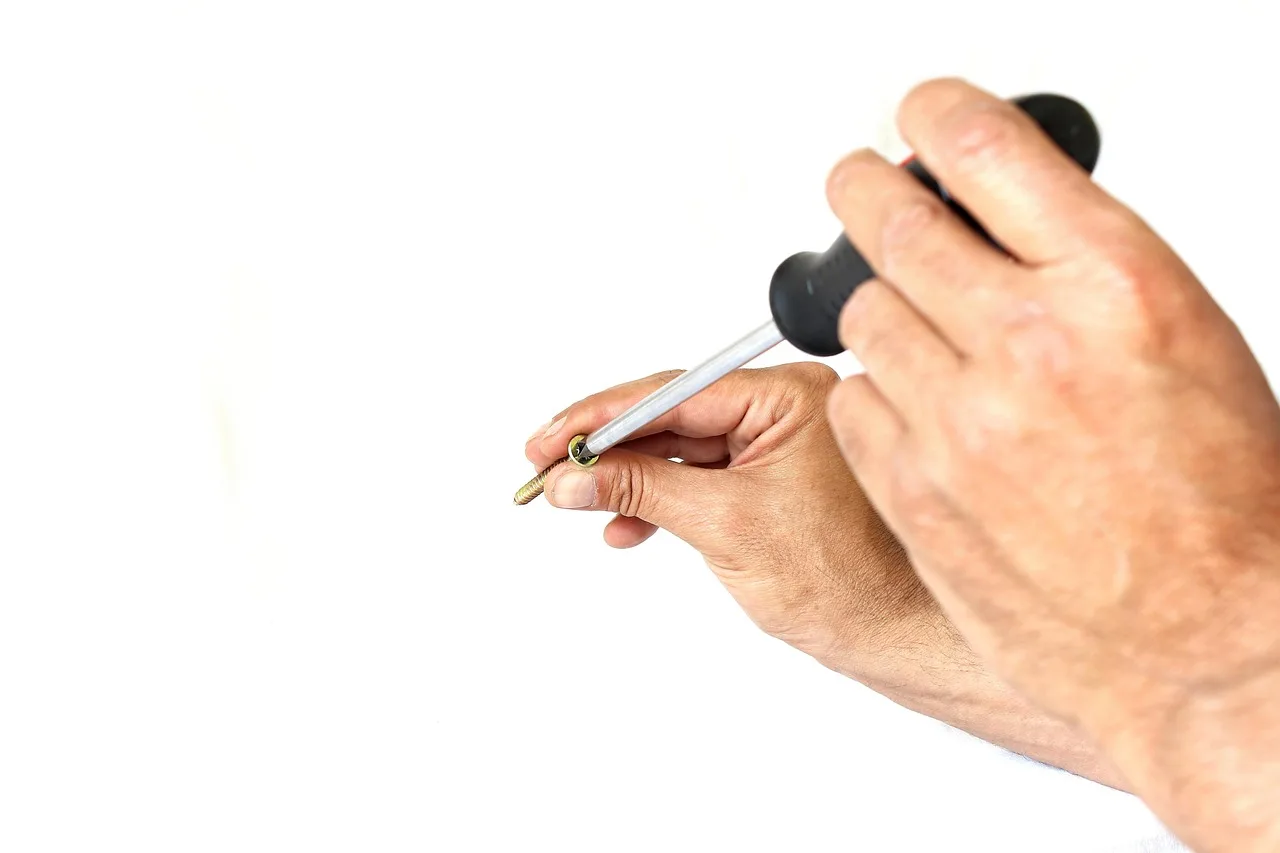
A spinning screw usually means the threads are no longer biting the wood. That is the point where tightening stops helping. If the surrounding jamb wood is still sound, a longer screw may reach fresh material. If the hole is enlarged, fill it first so the hinge has something solid to grip.
Use a longer screw when the wood is still sound
- Remove the loose screw with the matching screwdriver.
- Choose a longer screw of the same head style.
- Drive it until the head sits flush with the hinge leaf.
- Check that it does not protrude through the jamb.
- Make sure the head does not stick out past the hinge leaf.
Longer screws work best when the jamb fibers are intact and the fastener simply missed fresher wood. Choose a screw that can reach sound material without punching through the opposite side of a thin jamb. If the hole is ovalized or the surrounding wood is soft, move to a filler repair instead of forcing a bigger fastener.
Fill stripped holes when the screw will not hold
A stripped screw hole can often be repaired with a glued filler such as matchsticks, a golf tee, or a wood dowel, and working one hole at a time can help avoid removing the door. The matchstick repair uses carpenter’s glue in the screw hole, then the excess is broken or cut off flush after drying. Wooden golf tees are another option because they are tapered, and a pro repair may use ripped 1/4-inch poplar strips turned into round plugs. For repair method guidance, see repairing stripped screw holes.
- Remove the loose screw.
- Pack the hole with glued matchsticks, a glued golf tee, or a glued wood dowel.
- Let the glue dry fully.
- Trim the repair flush with a sharp chisel.
- Reinstall the screw and test the hinge again.
If the hole keeps reopening after a repair, the jamb may be too damaged for another plug-and-screw fix. At that point, the repair has moved from fastener work to wood reconstruction. Door jamb repair guides from woodworking and building-supply sources commonly recommend stopping when the surrounding fibers crumble, split, or no longer provide solid material for the screw to bite.
Fix a loose hinge pin when the hinge rattles but the screws hold
If the screws are tight but the door rattles, squeaks, or shifts in the hinge barrel, the pin may be the problem. A loose hinge pin can often be tapped back in, replaced, or swapped for the correct size. If the barrels are worn or bent, replacing the hinge is usually more reliable than chasing the pin.
What kind of loose hinge do you have?
| Symptom | Likely cause | Best fix | Tools needed | When to stop and call a pro |
|---|---|---|---|---|
| Screw feels loose but still turns normally | Fastener has backed out, but the hole still holds | Tighten the screw and recheck the hinge leaf | Phillips or flathead screwdriver | If the head strips or the screw keeps backing out |
| Screw spins endlessly | Stripped screw hole | Fill the hole with a glued dowel, matchstick, tee, or plug | Screwdriver, glue, dowel, chisel | If the wood keeps crumbling or the hole reopens |
| Hinge still feels loose after tightening | Enlarged screw holes | Repair the hole, then reinstall with a properly sized screw | Screwdriver, glue, dowel, drill bit | If repeated pull-out has damaged the jamb around the hinge |
| Door sags, rubs, or sticks at the top | Loose hinge screws or wider jamb damage | Support the door, repair the weak hole, and test alignment | Level or wedge, screwdriver, repair fill | If the door still binds after repair |
| Wood around the hinge is soft or broken | Damaged jamb wood | Stop and repair the jamb wood before refastening | Inspection only at first | Call a pro if the jamb is rotten, split, or missing material |
How do you fix repeated loose hinges?
Repeated loosening means the original fix did not match the failure mode. Start over with the screw hole, the hinge leaf, and the jamb wood. If the wood is sound, use a longer screw or a repaired hole. If the jamb is damaged, that needs attention before any new screw will stay tight.
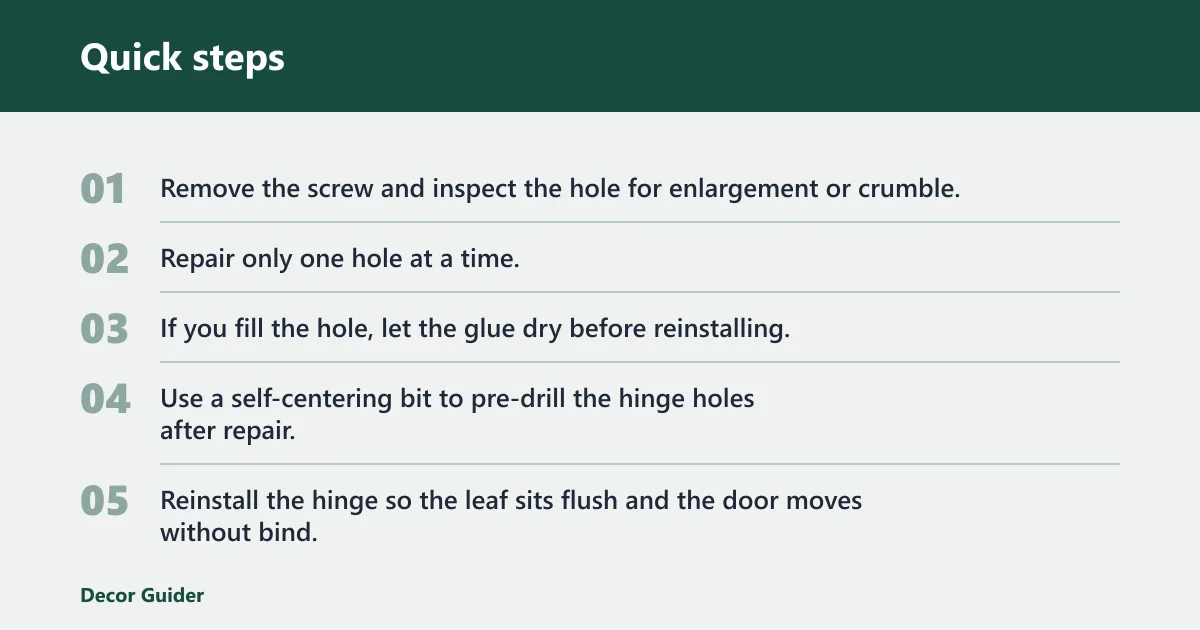
- Remove the screw and inspect the hole for enlargement or crumble.
- Repair only one hole at a time.
- If you fill the hole, let the glue dry before reinstalling.
- Use a self-centering bit to pre-drill the hinge holes after repair.
- Reinstall the hinge so the leaf sits flush and the door moves without bind.
If a kitchen pantry door keeps loosening after every seasonal change, check whether one screw hole has already been filled once and pulls out again. That repeated pull-out is a sign to stop treating it as a screw problem. At that point, the jamb wood itself may need repair or replacement, and cabinet hardware may need a different adjustment approach. See also adjusting cabinet hinges.
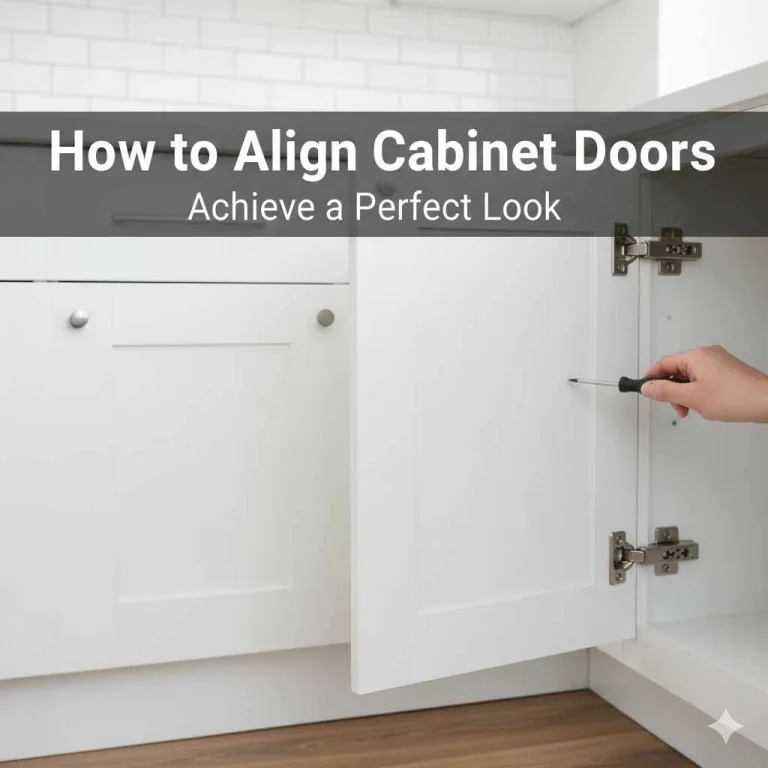
Fix loose cabinet and kitchen cabinet hinges by checking the mounting plate first
Loose cabinet hinges often come from stripped screws in particleboard, not the hinge barrel itself. Tighten the mounting screws first, then inspect the plate and the cabinet side for swelling or crumble. If the screws spin, repair the hole with a filler made for engineered wood or move the fastener to solid material if the cabinet design allows it.
Fix a loose door-side hinge on hollow-core and interior doors by reinforcing the screw path
On hollow-core or lightweight interior doors, the door-side screws may loosen even when the jamb is sound. Use only the screw length the door can safely accept, and avoid overdriving. If the door edge is weak, the fix may require reinforcing the screw path or replacing the hinge, rather than simply using a larger screw. See also replacing door hinges.
Common mistakes
- Using screws that are too long and protrude through the jamb.
- Leaving a screw head proud of the hinge leaf.
- Forcing a hinge leaf that does not sit flush.
- Skipping the support wedge or level before removing screws.
- Ignoring a door that still sags, sticks, or scrapes after repair.
- Using the same quick fix on a stripped hole and damaged jamb wood.
- Confusing a loose pin with a stripped screw hole.
- Trying to keep reusing a crumbling jamb instead of stopping for wood repair.
Loose hinge pins are a different issue from loose screws and holes. A worn pin can let the door rattle or shift, but it will not repair a stripped screw hole. If the pin is the problem, the hinge may need a new pin or a hinge replacement rather than a screw repair.
Keep the hinge leaf flush, fix the first sign of screw movement, and repair a hole before it opens wider. That avoids the cycle where a loose screw becomes a stripped hole, then a sagging door. If the jamb wood is soft or split, wider repair is the safer path than repeated refastening.
Frequently asked questions
How to fix loose door hinge screw holes
Remove one screw at a time and fill the hole with a glued matchstick bundle, golf tee, wood dowel, or wood plug. After the glue dries, trim it flush and reinstall the screw. A self-centering bit helps you pre-drill the repaired hole without splitting the wood.
How to fix a loose door hinge on a frame
Support the door with a wedge, then inspect the jamb side hinge leaf and screw holes. If the wood still holds, use a longer screw that does not protrude through the jamb. If the jamb wood is soft, split, or missing, repair that wood before refastening the hinge.
Can you tighten door hinges?
Yes, when the screws still have grip and the hinge leaf can sit flat. Tightening is the right first move for a hinge that has only backed out a little. If the screw spins or the door still sags, a hole repair or jamb repair is the next step.
When does damaged jamb wood need broader repair?
If the hinge area is soft, split, crushed, or missing material, screw repairs may only fail again. That is the point to stop and repair the jamb wood itself before refastening. Building and woodworking repair guides generally treat rotten or crumbling jamb sections as a wood repair job, not a fastener-only fix.
How do you decide between tightening, plugging, or replacing?
Use tightening for slightly loose screws, plugging for spinning screws and enlarged holes, and replacement when the hinge or surrounding wood cannot hold hardware anymore. If the door is sagging because the top hinge pulled out, the hole repair must be stronger than the original fastener path, or the problem will return.
Products related to this article
Sponsored / affiliate links. As an Amazon Associate I earn from qualifying purchases. I may earn additional commission from eligible campaigns.