How to Fix a Door Latch That Is Stuck Inside the Door
Start by checking the handle and the door edge. If the latch will not retract at all, remove the knobset first. If it retracts by hand but misses the strike, adjust the strike plate and hinges. A stuck latch can trap the door shut, scar the bore, or strip the spindle and screws. This guide shows you how to tell a jammed latch from misalignment or a disconnected spindle, then fix each one step by step.
Why your door latch gets Stuck


The spring-loaded latch bolt sits in the door edge and should slide back when you turn the knob. Dirt, rust, wear, a bent latch, or a poor fit at the strike plate can stop that movement. If the knob turns but the latch stays buried, the fault is usually in the latch path, not only at the jamb.
Check the door gaps before you remove hardware. Gaps should stay even on all four sides, and an uneven gap often points to sagging or binding. Humidity swelling is also a common cause of sticking doors, so a swollen door can pinch the latch before it reaches the strike plate.
Say your 32-inch interior door closes fine in winter but begins rubbing at the top in summer. If the latch only hangs up when the door edge is tight against the jamb, the problem is more likely alignment than a broken spring inside the latch body.
What you’ll need
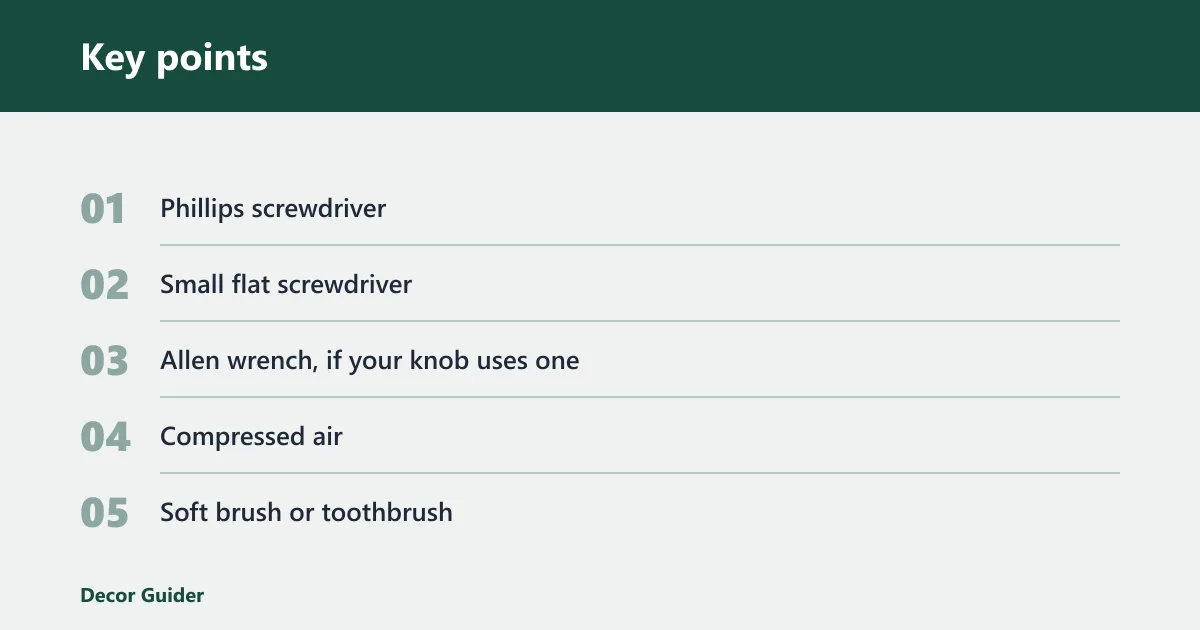
- Phillips screwdriver
- Small flat screwdriver
- Allen wrench, if your knob uses one
- Compressed air
- Soft brush or toothbrush
- WD-40 or a silicone-based lubricant
- Paper towels or a rag
- Replacement screws
- Replacement tubular latch assembly, if needed
- Replacement knob set, if the spindle or hub is damaged
Safety and access: If the door is shut and the screws are out of reach, stop before prying hard. Use a thin plastic card only as a temporary way to depress the latch if the gap allows it. If the latch will not move and the door is locked shut, that is the point to call a locksmith or handyman.
Latch troubleshooting matrix
| Symptom | Likely cause | Fastest safe test | Likely part to replace | When to stop DIY |
|---|---|---|---|---|
| Knob turns normally but latch stays in | Stuck latch bolt, debris in the latch opening, or failed tubular latch assembly | Remove the knob and press the latch by hand; blow compressed air into the latch opening | Tubular latch assembly | If the latch will not move by hand, feels gritty after cleaning, or the spring does not snap back cleanly, stop DIY repairs and replace the assembly. |
| Knob spins freely | Spindle stripped or slipped out, or a loose set screw | Remove the knob and inspect the spindle hub and set screw | Spindle, set screw, or full knob set | If the spindle is rounded off, the hub is cracked, or tightening the set screw does not restore drive, replace the knob set. |
| Door closes but won’t catch | Strike plate misaligned or door sagging | Look for rub marks on the strike plate and check the gap around the door | Strike plate screws, shifted strike plate, or hinge correction | If the latch still misses after the plate is shifted and screws are tight, or the door edge continues to bind after hinge adjustment, stop DIY and call a pro. |
| Latch retracts only halfway | Debris, weak spring, bent latch bolt, or internal wear | Work the latch by hand after compressed air and a light lubricant | Tubular latch assembly | If the bolt still binds halfway, returns unevenly, or the spring action is weak after cleaning, stop DIY and replace the latch assembly. |
How do you diagnose the spindle and set screw?
A spinning knob usually means the handle is no longer transferring force to the latch. That can happen because the set screw is loose, the spindle has slipped out of the hub, or the spindle is stripped. Inspecting those parts first prevents unnecessary latch replacement.
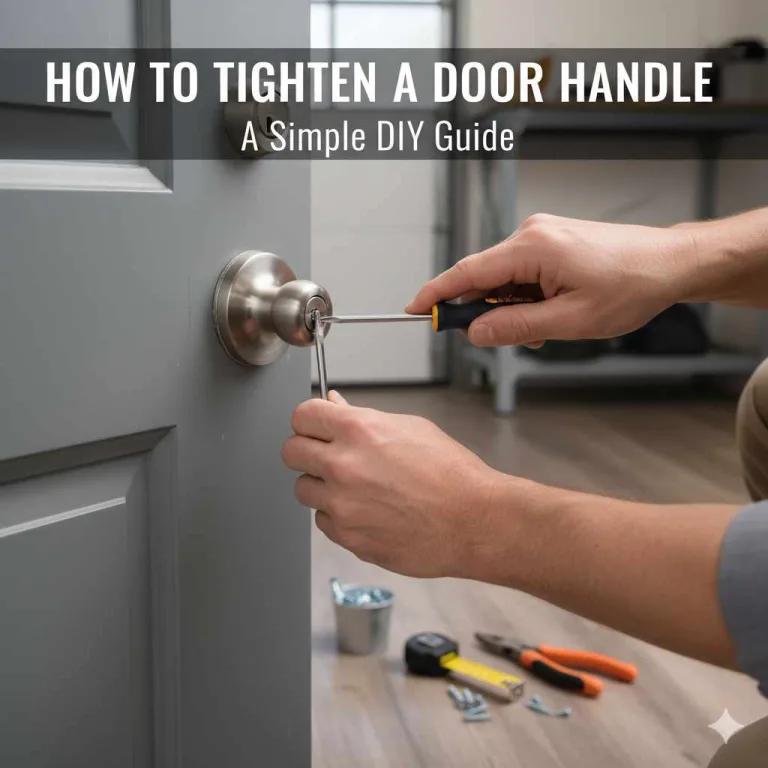
Inspect the spindle and set screw
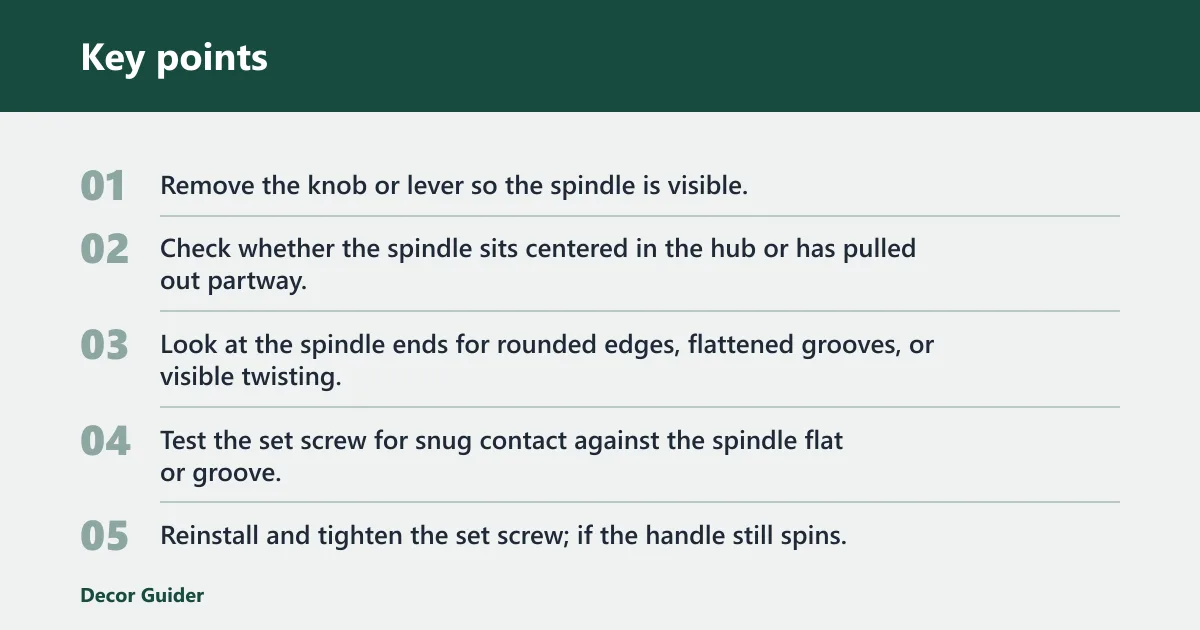
- Remove the knob or lever so the spindle is visible.
- Check whether the spindle sits centered in the hub or has pulled out partway.
- Look at the spindle ends for rounded edges, flattened grooves, or visible twisting.
- Test the set screw for snug contact against the spindle flat or groove.
- Reinstall and tighten the set screw; if the handle still spins, the spindle is likely stripped or the hub is damaged.
- Replace the spindle or full knob set if tightening does not restore solid engagement.
If the set screw simply backed out, tightening may be enough. If the spindle no longer has crisp edges for the hub to grab, or if the hub cracks when tightened, replace the full knob set instead of reusing worn parts.
What if the latch is stuck but the knob still turns?
If the knob turns normally, the handle is probably still connected to the spindle, but the latch bolt is not retracting fully. That points to a dirty or worn latch body, not a handle failure. Start by cleaning and adding a light lubricant before you remove the edge plate.
Steps to free the latch
- Open the door if possible, then turn the knob while watching the latch bolt.
- Blow compressed air into the latch opening on the door edge.
- Wipe the exposed latch face and edge plate with a dry rag.
- Apply one short spray of WD-40 or a silicone-based lubricant into the latch opening. Do not soak it.
- Work the knob about 10 to 15 times, then test the latch by hand again.
If that did not work, remove the two edge screws and slide out the tubular latch assembly. If the spring feels weak, the bolt sticks halfway, or the mechanism binds off the door, replacement is faster than more cleaning.
How do you fix a door latch that won’t retract all the way?
A latch that retracts only halfway usually has dirt in the mechanism, a weak spring, or a bent bolt. Clean first. Lubricate second. Replace third. Do not keep forcing the knob, because partial travel can shear the spindle or round the set screw.
Clean and retest
- Remove the knob or lever using the set screw, then slide the spindle out.
- Use compressed air to clear dust from the latch opening and the edge plate.
- Work the latch bolt with a fingertip while spraying a sparing amount of lubricant.
- Reinstall the spindle and knob, then test the latch about 10 times with the door open.
- If travel improves but still stops short, replace the tubular latch assembly.
Use WD-40 or a silicone-based lubricant sparingly when sticky parts need help moving. Graphite lock lubricant is a different product and is commonly preferred for stuck locks, not oily latch cleanup. For a sticky door latch, keep the amount light so dust does not build into a paste.
How do you fix the door alignment?
If the latch misses the strike plate, the door may be sagging or binding. The fix is not inside the latch body. Start with the hinge side, because a crooked door can push the latch out of line even when the hardware itself is sound.
Adjust hinges before the strike plate
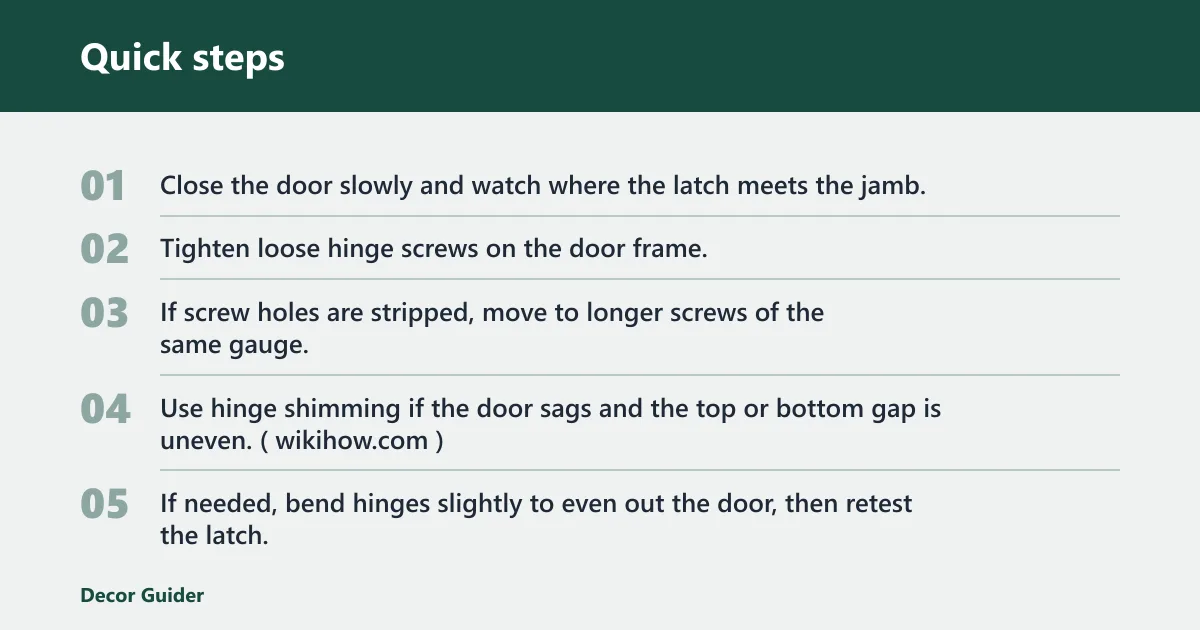
- Close the door slowly and watch where the latch meets the jamb.
- Tighten loose hinge screws on the door frame.
- If screw holes are stripped, move to longer screws of the same gauge.
- Use hinge shimming if the door sags and the top or bottom gap is uneven. (Wikihow)
- If needed, bend hinges slightly to even out the door, then retest the latch.
When the gaps are still uneven after hinge work, the strike plate may need to move. Loosen the strike plate screws, shift the plate to latch height, and retighten. If the hole is too tight for the latch, enlarge the strike plate opening with a file in small passes, then test after each pass. A small plate adjustment is often enough to save a door that only misses by a few millimeters.
Should you replace the latch or the whole doorknob set?
Replace only the tubular latch assembly when the knob turns, the spindle is sound, and the failure is inside the latch body. Replace the whole knob set when the spindle is stripped, the hub is cracked, or the set screw keeps loosening because the parts do not hold alignment. In most cases, the latch is the cheaper first swap.
If the door is shut and the hardware cannot be removed without forcing it, stop there and call a pro. A forced repair can enlarge the bore or split the door edge.
Replacement order
- Replace the latch only if the spindle and knob hub still transfer motion cleanly.
- Replace the full set if the spindle spins without moving the latch or the set screw will not hold.
- Replace the strike plate only after alignment checks show the latch reaches the jamb correctly.
What if the door is shut and I can’t access the screws?
Try the least invasive opening methods first. Press the door toward the jamb to reduce binding, then turn the knob again. If the strike plate is visible and the gap is wide enough, a thin plastic card may depress the latch. Stop if the edge starts splintering or the latch does not move.
Safe opening options
- Press the door toward the jamb, then pull the knob while turning it.
- Use a plastic card only if you can clearly reach the latch edge.
- If the inside screws are hidden, wait until the door opens before removing the knob.
- Stop immediately if the latch stays buried, the card will not slide in, or the door frame begins to damage.
A common first-timer mistake is yanking harder after the latch jams. That often bends the bolt or strips the spindle. If the latch is buried and the door will not move, wait for a locksmith rather than drilling into the edge at random.
Common mistakes
These errors turn a simple fix into a bigger repair. Avoid them early.
- Forcing the knob or latch: This can strip the spindle or break the latch spring.
- Using the wrong lubricant: Do not treat graphite lock lubricant and WD-40 as the same product.
- Ignoring a loose set screw: A loose set screw can disconnect the handle from the spindle even when the latch is otherwise working.
- Skipping the hinge and strike check: A clean latch still fails if the door is sagging or the strike plate is off by a few millimeters.
- Replacing the whole knob too early: If the latch assembly alone is worn, a full set swap wastes parts and time.
Keep the latch opening free of dust, retighten loose hinge screws before the door sags, and recheck the strike plate after any paint, seasonal swelling, or hardware change.
Frequently asked questions
Why is my door latch stuck inside the door?
Most often, the latch bolt is jammed by dirt, rust, wear, or a poor fit at the strike plate. If the knob turns but the bolt does not move, clean the latch opening with compressed air first. If the latch still will not retract by hand, replace the tubular latch assembly.
How do I tell if the strike plate is misaligned?
Look for shiny rub marks, chipped paint, or a latch that hits the edge of the plate instead of the hole. Gaps should be even on all four sides. If the door sits crooked, fix the hinges first, then loosen the strike plate screws and shift the plate to match latch height.
What lubricant should I use on a sticky door latch?
Use a light spray of WD-40 or a silicone-based lubricant in the latch opening, and apply it sparingly. Clean first with compressed air. Graphite lock lubricant is a different product and is typically used for locks rather than a sticky latch mechanism inside the door edge.
When should I call a locksmith instead of repairing it myself?
Call a locksmith or handyman when the door is shut and you cannot reach the screws, when the latch will not move even after cleaning, or when the spindle and hub are damaged. If forcing the door risks breaking the edge or boring out the hardware, stop there.
Products related to this article
Sponsored / affiliate links. As an Amazon Associate I earn from qualifying purchases. I may earn additional commission from eligible campaigns.