How to Replace the Door Sweep on an Interior Door
Replace an interior door sweep by matching the mount style to the door edge, such as screw-on, slide-on, or adhesive-backed, and replace the sweep only if the gap is even and the door already closes squarely. Pick the wrong style or ignore sagging hinges, and the new strip will drag, peel off, or still leave a draft. This guide shows how to identify the right replacement, check fit before you buy, and tell when door alignment is the real fix.
What you’ll need


- Replacement door sweep sized for the door width
- Utility knife or shears for trimming flexible material
- Measuring tape
- Pencil
- Screwdriver or drill-driver
- Drill bit for pilot holes
- Cleaning cloth
- Mild cleaner or rubbing alcohol for residue removal
- Paper towel or rag
- Optional shims or hinge screwdriver for alignment checks
Where does the sweep go?
A door sweep mounts on the bottom edge of the door slab, not on the jamb, and it normally faces the room side on an interior swing door. It should touch the threshold or floor lightly when the door closes. If it scrapes hard, the sweep is too low or the door is out of alignment.
Check the threshold first
Look at the threshold before you buy anything. A fixed threshold can have a high spot or slope, and an adjustable one may sit unevenly across its length. Uneven contact creates drag on one side and a gap on the other, which makes a new sweep look wrong even when the strip itself fits.
Say your bedroom door clears hardwood but brushes carpet in one corner. That usually points to floor variation or door sag, not a bad sweep. In that case, a thinner profile may help, but the hinge and threshold still need a check.
Door sweep checklist
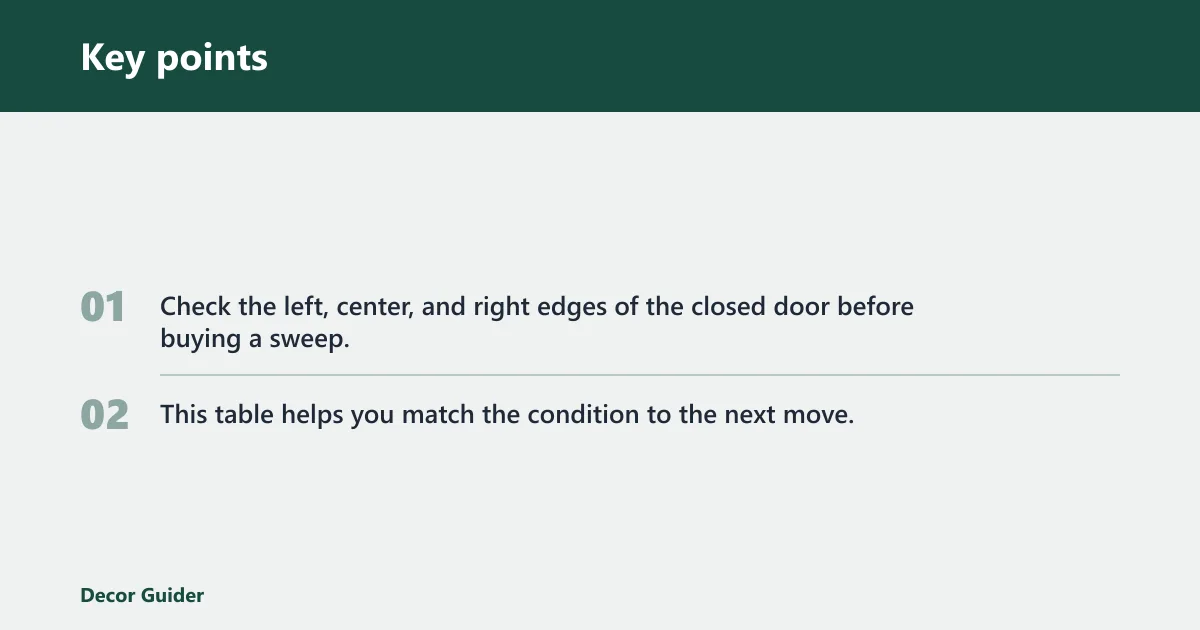
Measure the bottom gap before you buy. Check the left, center, and right edges of the closed door before buying a sweep, because an even gap may accept a simple sweep while an uneven gap can suggest sagging hinges or a warped slab. This table helps you match the condition to the next move.
| Door condition | Best sweep type | Next step |
|---|---|---|
| Left, center, and right gaps are nearly equal | Screw-on or adhesive-backed, depending on door surface | Measure width, cut to fit, then test for light contact |
| Center gap is larger than both sides | Screw-on with a flexible fin or bulb | Check for sagging hinges before installing |
| One side drags while the other leaks | Low-profile screw-on | Inspect hinge tightness and threshold level |
| Bottom edge clears carpet by a little | Thin sweep with soft fin | Confirm the door still swings freely after fitting |
| Bottom edge hits carpet pile | Shorter or more flexible sweep | Check carpet clearance before fastening |
| Door bottom is warped or bowed | Flexible screw-on sweep | Use the sweep as a stopgap, then address the slab |
| Hinges are loose on the strike side | Any type only after alignment repair | Tighten screws or adjust the door first |
| Old adhesive residue remains | Screw-on is usually safer | Remove residue fully before sticking anything new |
| Gap heights at left/center/right are 3 different numbers | None until alignment is checked | Measure each point and correct the door, not just the seal |
What size sweep do you need?
Choose a sweep that matches the door width, then trim the ends only after a dry fit. For a replacement, the sweep should cover the full bottom edge without hanging past the latch or hinge side. A common fitting method is to cut it slightly short, minus 1/8 inch on each side, so it does not bind.
Match the gap to the profile
Use the gap height to choose the seal shape. A narrow, even gap can take a flat fin or brush style. A larger gap often needs a deeper fin or a bulb profile. If the door closes over carpet, prioritize clearance first and sealing second. A thick seal that drags will wear out quickly.
Measure at the left corner, center point, and right corner of the closed door. If one reading is clearly different, the door is telling you something about fit, not just about air leakage. A new sweep can mask the issue for a while, but it will not square a sagging slab.
Choose adhesive or screw-on
Self-adhesive sweeps are fast, but they need clean, smooth surfaces and often fail on textured finishes. Cold rooms can weaken adhesion too. Screw-on sweeps hold better on repeated-use interior doors and are a better choice for hollow-core or solid-core slabs when you want a longer-lasting fit.
How do you replace the old sweep?
Remove the old sweep without gouging the bottom edge, then clean away every trace before the new one goes on. If the old part was adhesive-backed, expect residue. If the door had old weatherstripping on the bottom edge, remove it completely before installing new material so the new sweep sits flat.
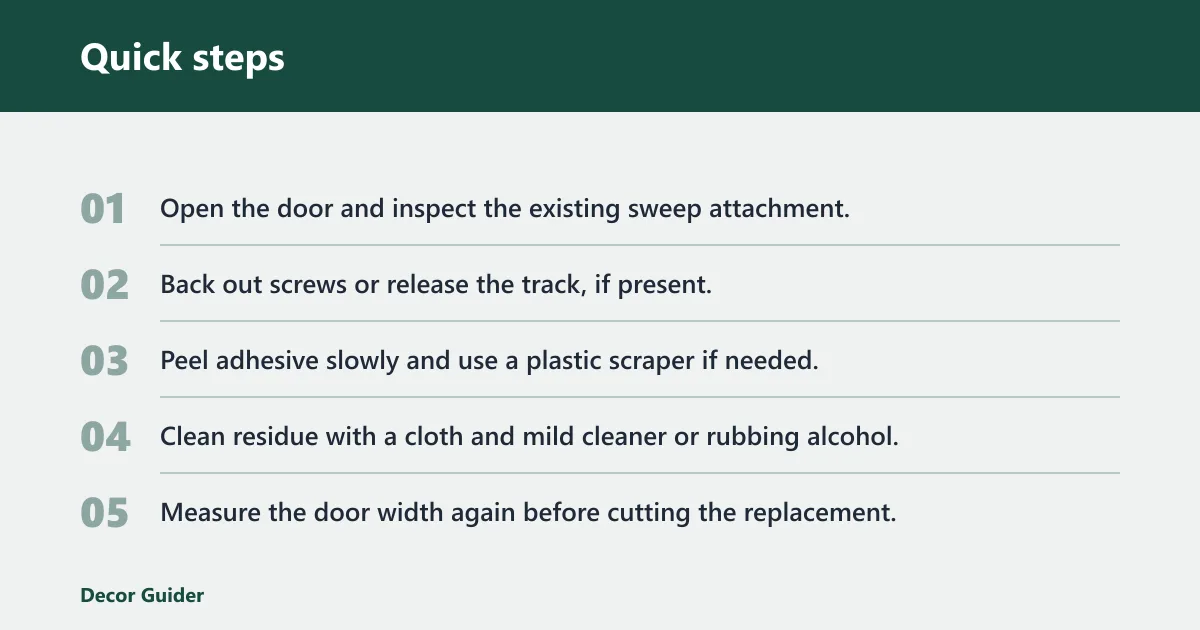
- Open the door and inspect the existing sweep attachment.
- Back out screws or release the track, if present.
- Peel adhesive slowly and use a plastic scraper if needed.
- Clean residue with a cloth and mild cleaner or rubbing alcohol.
- Measure the door width again before cutting the replacement.
- Cut the sweep with a utility knife or shears, depending on the material.
- Hold the sweep in place and mark screw locations or adhesive alignment.
- Drill pilot holes for screw-on hardware to prevent splitting.
- Fasten the sweep, then close the door and check contact.
- Trim or reset the sweep if it drags or leaves a visible gap.
Pilot holes matter on screw-on sweeps, especially on hollow-core interior doors where the edge material can split or crumble if fasteners are forced. Use the holes to keep the screws aligned and straight. On a slide-on style, keep the track square so the seal rides evenly across the threshold.
Picture a hall closet door with a 30-inch sweep opening and leftover glue on the bottom edge. A screw-on replacement is the safer choice there, because fresh adhesive over old residue often peels early and can leave the strip crooked on day one.
What if the door still leaks air?
If the sweep is fitted correctly and the draft remains, work outward from the bottom edge. The most common next causes are hinge sag, an uneven threshold, or a warped slab. A new sweep cannot correct a door that is hanging low on one side or rocking against the floor at the other.
Check hinge sag and alignment
Start by closing the door and looking at the top and side reveals. If the latch side pinches while the hinge side opens up, the door may be sagging. Some drafty doors need hinge work, because sagging can create a gap even when shut. Tighten loose screws first, then reassess the sweep.
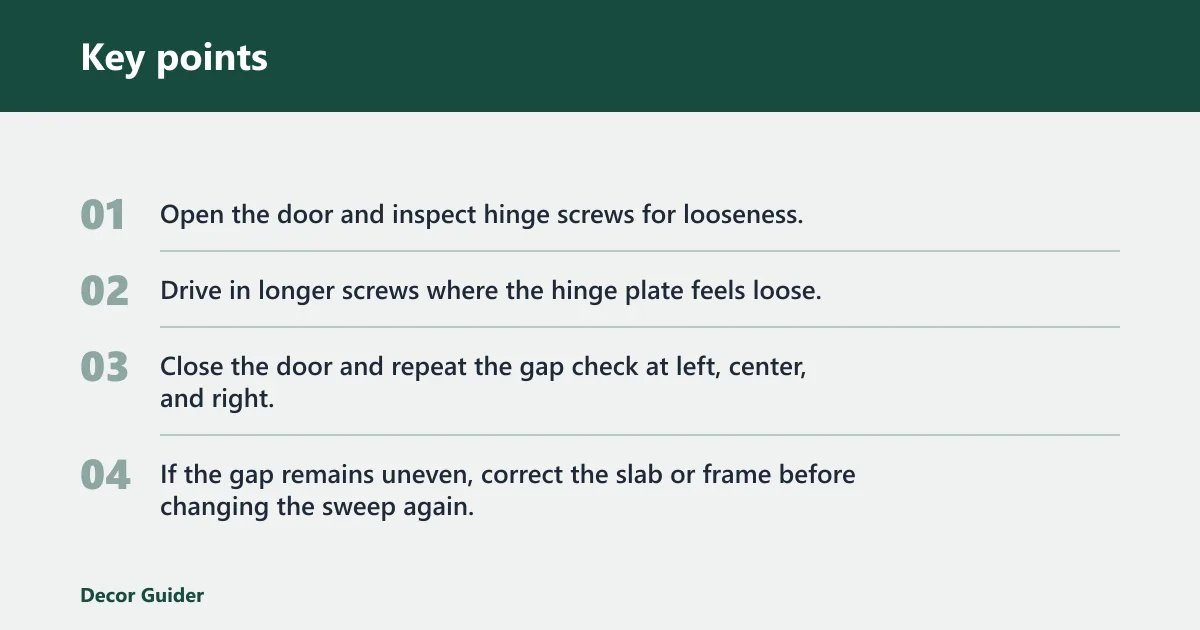
- Open the door and inspect hinge screws for looseness.
- Drive in longer screws where the hinge plate feels loose.
- Close the door and repeat the gap check at left, center, and right.
- If the gap remains uneven, correct the slab or frame before changing the sweep again.
Inspect the threshold
Run a straight visual check along the threshold edge. If one end sits higher, the sweep may touch there and miss the other side. An adjustable threshold can often be raised slightly; a fixed one may need replacement or shimming by a qualified repair. Keep the sweep contact light, not compressed.
A door that sticks after new sealing may need a thinner seal or edge trimming. If you trim, remove only enough material to restore free swing. Test after each change so you do not cut away more than needed.
Decide whether the sweep or the door needs adjustment
If the door closes squarely and the gap is even, stay with sweep replacement. If the gap varies by side, fix the door first. If the threshold is uneven, correct that next. Only after those checks should you swap to a different sweep profile. That sequence prevents wasted parts and repeated rework.
Common mistakes
- Mounting on the wrong side. Interior sweeps belong on the bottom edge of the slab, with the seal oriented to contact the threshold or floor.
- Using adhesive on a poor surface. Textured paint, dusty edges, or cold conditions can weaken the bond.
- Skipping pilot holes. Screw-on hardware can split a hollow-core or thin door edge if you drive screws directly.
- Ignoring uneven gaps. A bigger gap on one side usually means sagging hinges or a warped door.
- Installing over residue. Old adhesive and debris prevent a flat fit.
- Choosing too much thickness for carpet. A sweep that drags will wear quickly and make the door hard to close.
Prevention is simple here: keep the bottom edge clean, measure all three gap points before buying, and choose the sweep style that matches the door surface, not just the draft.
Frequently asked questions
How to install a door sweep on an interior door
Measure the door width, cut the sweep slightly short if needed, then hold it against the bottom edge with the door closed. Fasten screw-on styles with pilot holes, or press adhesive styles only after cleaning the surface well. Close the door and verify that the seal just touches the threshold.
Does a door sweep go on the inside or outside of the door?
On an interior swing door, the sweep normally mounts on the room side of the door bottom so it contacts the threshold or floor as the door closes. Do not mount it on the opposite face unless the hardware is built for that orientation and the swing direction requires it.
How do I remove the old door sweep without damaging the door?
Back out screws, then lift the sweep straight off. For adhesive-backed strips, soften the bond by peeling slowly and scraping gently with a plastic tool. Clean the remaining residue with a cloth and mild cleaner before installing the new part, or the replacement may sit crooked.
What size door sweep do I need for my interior door?
Use the exact door width as your starting point, then trim the replacement only after a dry fit. Match the profile to the gap height at left, center, and right. If the gap changes across the bottom edge, size the fit around the largest usable clearance and fix alignment if needed.
Can I install a door sweep if the door opens over carpet?
Yes, but only if the pile clearance leaves enough room for the door to swing without dragging. Choose a thinner, flexible sweep and test it slowly after fastening. If the carpet rubs the strip, a sweep alone will not solve the problem; the door or threshold may need adjustment.
What if the door is still drafty after replacing the sweep?
Check hinge tightness, threshold height, and the gap at the left, center, and right bottom edge. If the gap is uneven, the sweep is probably not the main issue. Tighten the hinges first, then inspect the threshold, and only then change to a different sweep profile if the door is otherwise square.
Products related to this article
Sponsored / affiliate links. As an Amazon Associate I earn from qualifying purchases. I may earn additional commission from eligible campaigns.