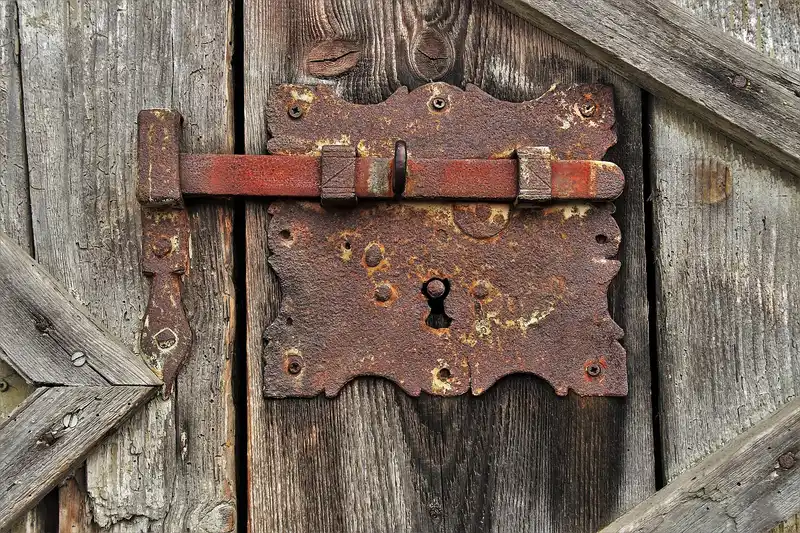
How to Fix a Door Latch Not Aligned with the Strike Plate
Check whether the latch misses high or low: if the knob works but the door catches, start with the strike plate; if the door rubs the frame or the gap is wider at the top, fix sagging hinges before you touch the latch. If you skip the real cause, the door can rattle open, stick shut, or chew up the strike and latch over time. This guide shows a fast symptom check and the simplest repairs in the right order.
Quickest path: diagnose the miss, tighten or reinforce the hinges, fine-tune the strike plate, then inspect the latch mechanism. Seasonal swelling can also change alignment, especially on wood doors and frames that expand and contract with humidity. For small strike adjustments, filing is usually limited to about 1/8 inch; if the offset is larger, move the plate instead of over-filing.
In a hurry? Use this sequence: 1) identify where the latch mark lands, 2) tighten the top hinge first, 3) test a longer screw if the door sags, 4) file only a minor strike miss, and 5) replace a sticky latch if the bolt does not snap freely.
Why the latch misses the strike plate


The latch bolt is spring-loaded, so its beveled face should slide over the strike plate and snap fully into the opening. If the bolt does not line up, the door may need a push, the latch may scrape the strike face, or the bolt may stop short and leave the door unlatched.
Three common forces change that alignment. Hinges can sag, which drops the latch below the hole. The strike plate can sit too far in, too far out, or slightly off center. And wood can swell in humid months, which shrinks the closing gap enough to stop the latch from entering fully. [This Old House door latch basics] and [The Family Handyman on fixing a sticking door] both point to these same root causes.
When the frame is the problem, the door can look square but still miss the strike opening. Loose hinge screws can let the door settle. A proud strike plate can block the latch even when the hole location is close. A worn latch bolt can also retract slowly, stick, or fail to extend far enough to catch.
Start with a fast diagnosis
Before changing hardware, confirm whether the miss is vertical, horizontal, or mechanical. A low mark usually points to sagging hinges. A high or side mark usually points to the strike plate. A centered mark with poor engagement usually means the latch is sticking, the plate is too shallow, or seasonal swelling has narrowed the gap.
Latch misalignment decision table
| Symptom | Likely cause | First fix | How to confirm |
|---|---|---|---|
| Latch hits below hole | Sagging hinges or loose top hinge screws | Tighten hinges; try a 3-inch screw in the top hinge jamb side | Mark lands low in a lipstick test and the door lifts slightly when you pull up on the knob |
| Latch hits above hole | Strike plate position is too low or the door is sitting high | Mark the contact point, then move or file the strike plate as needed | Mark lands above the opening and the latch rubs the top edge of the strike face |
| Latch rubs strike face | Small offset, paint buildup, or strike plate sitting proud | File the opening if the miss is slight; deepen the mortise if the plate stands proud | Latch enters partly, then stops on the rim instead of snapping fully home |
| Door needs a shove to close | Humid swelling, frame shift, or the latch barely missing the hole | Run a lipstick test, then check hinges before enlarging the strike opening | Problem appears during damp weather or after the door has been painted |
| Latch retracts slowly | Weak or sticky latch mechanism, paint, or debris | Clean the bolt and test the spring action; replace the latch if it still drags | Thumb test shows sluggish movement or a weak snap-back |
| Door only fails in humid months | Humidity swelling in the door or jamb | Look for seasonal rubbing first; a small hinge or strike adjustment may be enough | Door works in dry weather and sticks or misses when humidity rises |
If you want a second check, use this five-step diagnostic checklist: 1) close the door gently and note whether it sticks high, low, or dead center; 2) perform the lipstick test on the strike plate; 3) lift the knob slightly and see whether the latch improves; 4) press the latch by hand to check spring action; 5) inspect for swollen wood, fresh paint, or a proud strike plate.
How do you tell if the latch is high or low?
Use a quick lipstick test on the strike plate. Use about a small dab of lipstick, marker, or chalk on tape over the strike opening, close the door gently, then open it and read the mark. A mark below the hole points to sagging hinges; a mark above the hole points to the strike plate position.
Read the mark before you change hardware
If the latch mark sits centered but the door still will not close, the bolt may be sticking or the strike plate mortise may be too shallow. If the mark is only slightly off, you are likely dealing with a small alignment error, not a full frame problem. Precision matters here; even a sixteenth of an inch can keep the bolt from dropping in.
Suppose the latch leaves a scrape line just under the strike opening and the door closes only when you lift the knob. That points to sag. Suppose the mark is high and the top edge of the latch rubs the strike face. That usually points to a strike plate that sits too low, or to a door that has shifted upward on the hinges.
Spot a latch that rubs the strike face
A latch can also rub the strike face without missing the hole by much. That usually means the opening is too tight, the plate is set too shallow, or paint and debris are narrowing the path. A metal file works best for this kind of small correction because it lets you open the hole in short, controlled passes. [Stanley’s guidance on fitting door hardware] and common strike-plate repair advice from hardware manufacturers support this kind of incremental metal removal rather than over-cutting the opening.
Should you fix the hinges first?
Yes, if the door sags or the latch mark lands below the strike opening, start with the hinges. Loose screws are a common culprit, and tightening them is the fastest way to remove a simple drop at the latch side. If that does not help, use a longer screw or a hinge shim before touching the strike plate. A 3-inch screw is commonly recommended because it can reach framing better than a short hinge screw.
Tighten loose hinge screws
Start with the top hinge, then the bottom hinge. Tighten every screw that bites into the jamb and the door edge. If a screw spins without grabbing, the hole may be stripped, which is why the hinge can drift out of position over time.
The order matters. Top hinge movement changes the latch side more than the bottom hinge does, so it usually gives the fastest correction. If the door already sits close to square, a single snug screw can be enough to bring the latch back into the strike opening.
Use a 3-inch screw on the jamb side
If tightening alone does not pull the door back into alignment, replace one jamb-side screw in the top hinge with a 3-inch screw. That longer screw can reach wall framing or a stud and pull the frame side slightly. Bob Vila recommends this approach when the latch misses because the hinge side has shifted.
Charleston Crafted also advises starting with a 3-inch screw in the hinge when a door will not catch. Use it on the hinge jamb side, not the door edge. The goal is a small correction, not a forced bend in the frame. For a deeper explanation of the method, see [how to repair a door hinge] and [door hinge repair basics].
Add a hinge shim when the door needs a small tilt change
A hinge shim is a thin cardboard or fiber spacer that changes the door tilt by a small amount. Put it behind the top hinge if the latch needs to move up, or behind the bottom hinge if the door needs a slight drop. This is useful when the door is close and only needs a small angle change.
Deep hinge mortises can also affect alignment. If the hinge leaf sits too deep in the wood, the door can bind or sit off plane. A chisel is the right tool when you need to deepen a hinge mortise rather than simply tighten screws. For related guidance, see [using wood shims or chisels for door repairs].
When should you adjust the strike plate?
Adjust the strike plate after you know the door is hanging correctly. If the offset is small, file the opening. If the miss is larger, move the plate. If the plate sits proud of the jamb, deepen the mortise so the plate sits flush before you enlarge anything else.
File the opening for a small miss
For a minor miss, a metal file is usually enough. A half-round file can match the latch-hole curve and let you open the strike hole without reshaping the whole plate. Charleston Crafted says filing is the first move when the latch is off by 1/8 inch or less, which keeps the repair focused and avoids extra woodwork. [Pella’s door hardware adjustment guidance] also emphasizes small, incremental hardware changes before re-cutting wood.
Use the file in short passes, then test the door. If the latch still scrapes or stops short, file a little more. Stop as soon as the beveled face rides in cleanly and the bolt snaps fully into place.
Move the plate for a larger offset
If the miss is greater than 1/8 inch, the strike plate usually needs to move rather than just be filed. The same source says that kind of misalignment may require relocating the plate. Move it only after you confirm the hinges are sound, or you may hide the real cause and repeat the repair later.
A plate shift also makes sense when the latch hits the edge of the opening instead of entering it. That means the hole location is wrong, not merely tight. In that case, mark the new position, remove the plate, chisel a fresh mortise if needed, and reinstall it flush.
Deepen the mortise when the plate sits proud
If the strike plate stands proud of the jamb, the latch can catch on the metal before it enters the hole. That is not a filing problem. Use a chisel to deepen the strike plate mortise so the plate sits flat with the jamb face, then retest the latch.
The same approach applies if the strike opening is aligned but too shallow for the bolt to enter fully. A deeper mortise gives the latch a clear path and prevents the bolt from hanging on the edge of the plate.
What if the latch itself is the problem?
Check the latch mechanism if the door looks aligned but the bolt does not spring out cleanly. A slow or sticky latch can fail even with a perfect strike plate. Paint, dirt, weak spring action, or a bent bolt can all keep the latch from extending far enough to catch.
Check for slow retraction or sticking
Press the latch with your thumb and release it several times. It should move smoothly and usually snap back on its own. If it drags, the bolt may be worn or the internal spring may be weak. That problem can look like misalignment when the real issue is a latch that does not fully reset.
Look closely at the bolt face and the edge of the strike opening. Fresh paint can narrow the path. Debris in the latch pocket can also slow the mechanism. Clean the parts first, then test again before you replace hardware.
Decide when replacement is the better fix
If the latch still retracts slowly after cleaning, replacement is often the smarter move. A worn latch bolt can keep missing the strike opening even when the door and frame are otherwise correct. That is especially true on interior passage doors that need to shut reliably without extra force.
Picture a bedroom door that closes fine in summer but needs a firm push in winter, even after the hinges are tight. If the strike mark is centered and the bolt still drags, the latch mechanism may be the weak point, not the alignment. For replacement guidance, see [replacing a door latch] and [how to replace a door latch].
How much misalignment can a strike plate file fix?
A file is best for small misalignment, not for moving the whole closing point. The same source says 1/8 inch or less is a reasonable range for filing the strike plate opening. If the offset is bigger, filing alone usually leaves the door still hanging up at the edge of the plate.
Use the file when the bolt enters the opening but scrapes the rim. Use a chisel and relocation when the bolt is clearly missing the hole or the strike plate mortise is set wrong. A file can fine-tune a close fit; it cannot correct a frame that is out of position.
Can humidity cause a door latch to stop lining up?
Yes. Humidity swelling can make a door or jamb grow enough to stop the latch from closing far enough. This is common when the problem appears only in humid months and disappears when the air dries out. The door may still seem square, but the closing gap shrinks by just enough to matter. The U.S. Forest Service notes that wood movement with moisture changes is normal, especially when humidity shifts seasonally.
When seasonal swelling is the cause, do the lipstick test before changing hardware. If the mark shows only a slight miss, a hinge tweak or a small strike adjustment may solve it. If the door also rubs the frame edge, check for swelling before you file or relocate the plate.
Watch for seasonal movement before over-adjusting
Wood doors and wood jambs can move with moisture, and that movement often shows up first as a latch that suddenly feels tight. If the issue appears during humid weather and eases when the air dries, keep the repair small. A slight hinge correction or modest strike adjustment is often better than permanently enlarging the opening.
Frequently asked questions
Why won’t my door latch unless I lift it?
That usually means the door has sagged at the hinge side, so the latch sits below the strike opening. Tighten the hinge screws first, then try a 3-inch screw in the top hinge jamb side. If the door still needs lifting, add a small hinge shim or inspect for a worn latch.
How do I tell if the latch is hitting above or below the strike plate?
Use the lipstick test. Put lipstick, marker, or chalk on tape over the strike opening, close the door, and look at the mark. A mark below the hole points to sagging hinges. A mark above the hole points to the strike plate position or a door that sits too high.
Should I tighten hinges or move the strike plate first?
Fix the hinges first if the door sags, rubs at the top, or the latch mark lands below the hole. Move the strike plate first only when the door hangs straight and the mark is above or beside the opening. That order avoids masking a hinge problem with a plate adjustment.
Can long screws pull a sagging door back into alignment?
Yes, sometimes. A 3-inch screw in the hinge jamb side can reach framing or a stud and pull the hinge side slightly back into place. That can correct a door that drops just enough to miss the strike. Use the top hinge first, then retest before adding more changes.
What if the latch is fine but the door still won’t stay shut?
If the latch clicks into place but the door still pops open, the strike plate opening may be too shallow, the plate may sit proud, or the door may be swelling in humid months. Check the bolt for full entry and look for rubbing at the strike face before replacing the latch.
When do I need to chisel the strike plate mortise deeper?
Use a chisel when the strike plate does not sit flush with the jamb. A proud plate can stop the latch from entering fully even when the hole location is correct. Deeper mortising also helps when moving the plate requires a fresh recess that matches the hardware.
How do I know if the problem is the door, the frame, or the latch mechanism?
If the door rubs the frame, the issue is usually door or hinge alignment. If the bolt touches the strike face but misses the hole, the frame side or strike plate is off. If the bolt retracts slowly or sticks even with a good fit, the latch mechanism itself is likely worn or dirty.
Products related to this article
Sponsored / affiliate links. As an Amazon Associate I earn from qualifying purchases. I may earn additional commission from eligible campaigns.