How to Rehang a Door That Fell Off Its Hinges
Rehang the door only if the hinges are intact, the screw holes still grip fasteners, and the frame is square. If the screws spin or the hinge knuckles are bent, repair or replace the hardware first. Forcing a bad hinge back into place can strip wood, crack the jamb, or drop the door again. This guide shows how to check the hinges, decide between rehang, repair, or replacement, and lift the door back safely.
What do you need before you start?
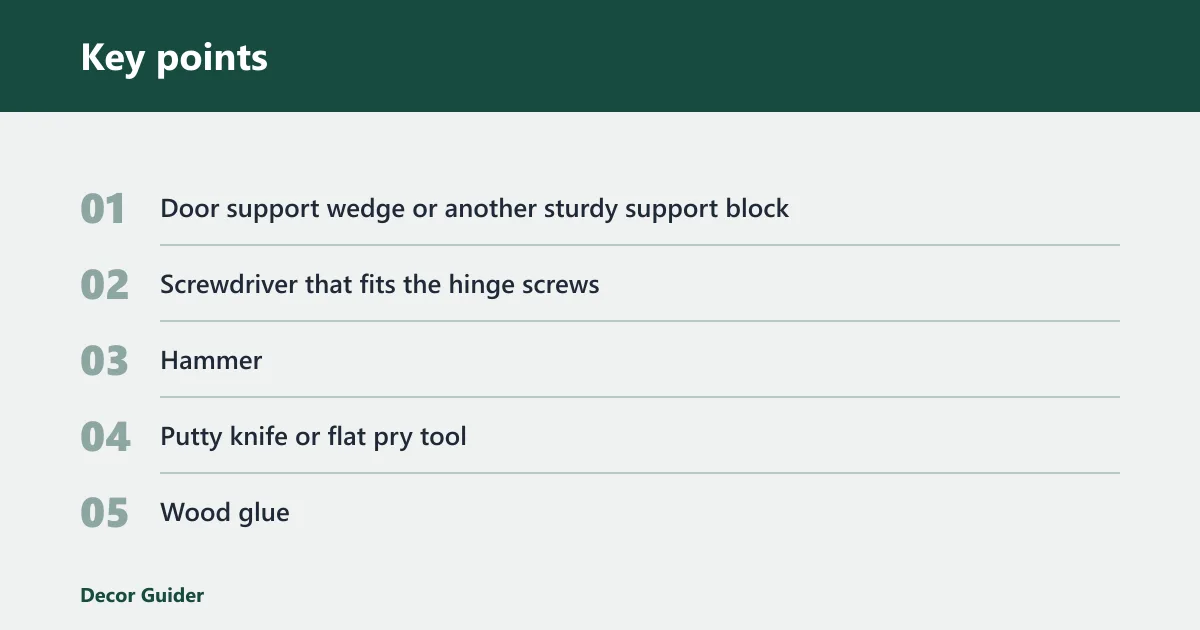


Gather the support, fastening, and repair materials before loosening any hardware. A stable wedge keeps the door from dropping, while the right screws, shims, and hole-repair materials let you fix the actual failure instead of forcing the hinge back into damaged wood. For door-handling safety, keep the slab supported and controlled throughout the repair. JB Kind advises a wedge or sturdy support under the door.
- Door support wedge or another sturdy support block
- Screwdriver that fits the hinge screws
- Hammer
- Putty knife or flat pry tool
- Wood glue
- Wood filler or a wooden dowel for stripped screw holes
- Plastic plug, if that is the repair method you have on hand
- Replacement screws, including 2-inch screws for loose hinge screws
- Credit card or cardboard for a hinge shim
- Silicone spray lubricant or white lithium grease
- Replacement hinges that match the existing size and type
- Optional sandpaper for minor edge cleanup
How do you diagnose a door that fell or sagged?
Start by checking the screws, hinge leaf, hinge pin, and jamb wood before you lift the door back into place. Many door problems come from poor hinge alignment, but a fallen door can also mean stripped holes, a bent pin, torn-out jamb wood, or a mis-mortised replacement hinge. Matching the hinge size and type matters because a mismatched replacement can worsen the fit. interior door hinge replacement
Which rehang fix fits the failure?
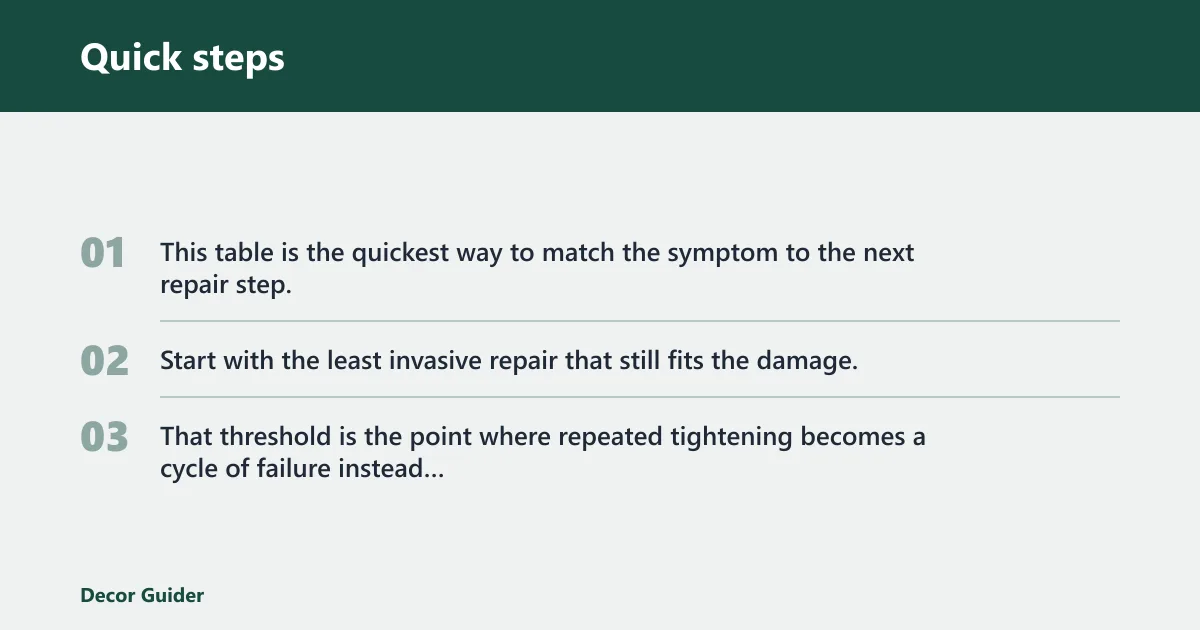
This table is the quickest way to match the symptom to the next repair step. Start with the least invasive repair that still fits the damage, and stop at replacement or professional help when the wood, hinge, or frame can no longer hold a secure fastener. That threshold is the point where repeated tightening becomes a cycle of failure instead of a fix.
| Symptom | Likely cause | Severity | Tools needed | Time | Safe to rehang now? | Fastest fix | When DIY stops and replacement/pro help starts |
|---|---|---|---|---|---|---|---|
| One hinge feels loose, but the others hold | Loose door hinge screws | Low | Screwdriver, 2-inch replacement screws | 10-20 minutes | Usually yes, after tightening | Tighten the screws first, then try 2-inch replacement screws if the wood still grips poorly | Stop if the leaf bends, the hole won’t bite after screw replacement, or the hinge keeps shifting out of plane |
| All screws spin without biting | Stripped screw hole repair needed | Medium | Wood filler, dowel or plug, drill, screwdriver | 30-60 minutes plus drying | Not yet | Fill the hole with wood filler, a dowel, or a plastic plug, then re-drill | Replace the hinge or call a pro if the repaired hole still cannot hold load after curing |
| Wood around the jamb is torn out | Damaged jamb wood | High | Wood glue, filler or dowel, drill, screwdriver | 45-90 minutes plus drying | No | Repair the wood first, then use new pilot holes | Replacement/pro help starts when the hinge leaf cannot sit flat or the jamb is split deep enough to weaken the frame |
| Door dropped on one side and the pin will not seat cleanly | Bent pin or misaligned hinge pin chamber | Medium | Hammer, screwdriver, lubricant | 10-30 minutes | Usually yes, after alignment | Tap the hinge pin out, straighten it slightly if needed, and reinsert it after alignment | Replace the hinge if the pin is misshapen, the knuckles are worn oval, or the door repeatedly drops again |
| Leaf sits crooked in the recess | Misaligned mortise | Medium | Pry tool, sandpaper, screwdriver, shim material | 20-45 minutes | Maybe, if the hinge sits flush after adjustment | Shim the hinge or correct the recess depth | Stop DIY if the mortise is cut wrong for the hinge type or the frame is too distorted to square the leaf |
| Door still scrapes after rehanging | Sag or out-of-square alignment | Medium | Shim, screwdriver, possible strike plate tools | 15-40 minutes | Usually yes, if the hinge and frame are sound | Add a hinge shim, then check the strike plate and latch fit | Call for replacement or pro help if the frame is racked, the door is warped, or repeated shimming cannot correct the gap |
| Heavy solid wood or exterior-rated slab sags immediately after rehang | Weight overload, worn hinges, or weak fasteners | High | Heavy-duty hinges, long screws, drill, filler or dowel | 30-90 minutes | Not until the hold is proven | Upgrade the fasteners and match the hinge size and type before rehang | If the door is unusually heavy, repeatedly pulls out of the frame, or the jamb is splitting, replacement or a pro is the safer path |
| Hollow core or MDF edge keeps crushing around the screws | Fragile door material | High | Filler, dowel or plug, drill, screwdriver | 30-60 minutes plus drying | No, not without a material repair | Rebuild the hole before reinstalling the hinge | Replace the slab or get pro help if the edge material has failed too far to hold a secure fastener |
How do you support the door and remove the hardware safely?
Set the door on a wedge before you touch the hinges, then remove the hardware in a controlled order. That keeps the slab from dropping suddenly when the pin or screws come free. For safety, a second person can steady larger doors, and the door should never be allowed to hang on one loose hinge while fasteners are being removed. tighten loose door hinges
- Wedge the door so it cannot drop when the hardware comes off.
- Remove the hinge pins from the top down, or back out the screws in a controlled order if the door is already loose.
- Lift the door away only after the last fastener is free, and keep the hinge leaves visible so you can inspect the fit.
If the top hinge failed and the bottom hinge is only half attached, remove the top pin first, support the weight, and keep pressure off the lower leaf so the jamb wood does not tear farther.
How do you repair loose hinges and stripped screw holes?
Tighten every fastener first, then move to hole repair only if the wood still will not grip. Short screws can work in sound wood, but a damaged jamb usually needs longer 2-inch screws or a rebuilt hole to restore holding power. For wood repairs, use clean, solid filler material and let it cure before re-drilling. wood-repair best practices
- Tighten every existing screw first, because a snug hinge may solve the problem without deeper repair.
- Replace short or weak screws with 2-inch replacement screws if the hole still has some grip.
- Fill stripped holes with wood filler, a dowel, or a plastic plug, then let the repair set before you re-drill.
- Use new pilot holes if the old ones are too damaged to hold fasteners.
- Inspect the hinge pin and leaves; if the pin is bent, straighten it slightly or replace the hinge if the hardware is misshapen.
If the jamb wood is torn out, longer screws alone will not hold. Rebuild the hole first, because soft or split wood can strip again the moment you tighten the screw.
How do you rehang, align, and test the door?
Reinstall the leaves with the slab supported, then check the swing and latch before considering the job done. If the door sags, a hinge shim can correct a small alignment problem, but it should not be used to mask major frame damage. After the hinge is set, recheck the strike plate so the latch and opening line up cleanly. lubrication
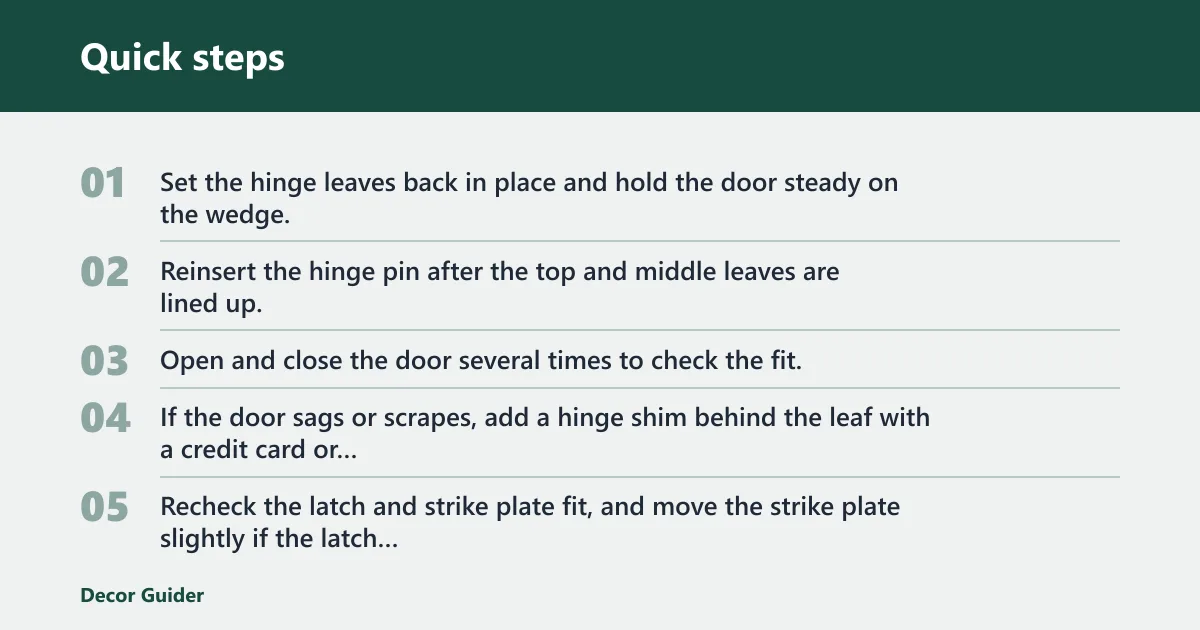
- Set the hinge leaves back in place and hold the door steady on the wedge.
- Reinsert the hinge pin after the top and middle leaves are lined up.
- Open and close the door several times to check the fit.
- If the door sags or scrapes, add a hinge shim behind the leaf with a credit card or cardboard.
- Recheck the latch and strike plate fit, and move the strike plate slightly if the latch misses the opening.
Hinge shims are thin spacers placed behind the hinge leaf. They help correct sag and square the door when the leaves are close but not quite aligned.
A common first-timer mistake is adding the shim, tightening the screws, and stopping there. Add the shim, then close the door and recheck the gap at the latch side before you call it done.
What if the door still scrapes after rehanging?
If the door still rubs, move to the strike plate and then the hinge mortise. The latch receiver on the jamb can often be shifted slightly with its screws, or enlarged and repositioned if the latch is catching high or low. If the hinge recess is the problem, the fix is a small shim, a new pilot hole, or a correctly sized replacement hinge rather than more tightening.
When should you replace the hinges instead of rehanging?
Replace the hinges when the leaves are bent, the knuckles are worn, or the pin chamber no longer lines up cleanly. The replacement must match the existing size and type so the mortise and screw pattern still fit the door. If the hinge does not sit flush after repair, the problem has moved beyond a simple rehang. common interior door hardware problems
If the new hinge does not sit flush, you may need new pilot holes or a small chisel adjustment to recess it. That is normal when the old hardware was misshapen or the original cutout was damaged.
How do you rehang a door with new hinges?
Match the hinge size and type first, then transfer the screw pattern only if the old layout still works. If it does not, mark new pilot holes, mount the new hinges, and test the door before tightening every screw fully.
New hinges are the right call when a bent pin keeps returning out of line, or when the leaves have worn so much that shimming cannot square the door. That is also true when the old hardware has repeated stripping in soft wood.
What mistakes make a loose door worse?
The most common failures come from tightening into weak wood, skipping support, or blaming the hinge when the frame is the real issue. Door material matters too: hollow core doors, MDF edges, and heavy solid-wood slabs all respond differently. The safer approach is to repair the load-bearing point first, then rehang and test the latch. door handling/safety guidance
- Overtightening screws and stripping soft wood again.
- Using longer screws before checking whether the jamb wood is split.
- Rehanging before the door support wedge is in place.
- Assuming a bent pin is fine when the hinge keeps shifting out of line.
- Sanding too early on a hollow core door or MDF edge, where the material can damage easily.
- Skipping the strike plate check when the latch is the part that is actually binding.
Door material changes the last step. Hollow core doors need careful sanding, and MDF edges are easier to damage, so only sand after hardware repair and alignment have already done most of the work.
Check the hinge screws and the latch fit at the first sign of sag, before the wood starts to tear out.
How do you fix a door that fell off its hinges?
Support the door with a wedge, remove the hardware in order, and check whether the screws, pin, or jamb wood failed first. Tighten the screws, repair stripped holes with filler or a dowel, then rehang and test the latch fit before you call it finished.
How do you rehang a door on hinges?
Align the hinge leaves with the door supported in place, then reinsert the hinge pin after the top and middle leaves line up. Open and close the door several times, and move the strike plate slightly if the latch does not seat cleanly.
What screws should you use for loose door hinges?
Use the existing screws only if they still bite. If the hole is weak, 2-inch replacement screws give better hold than many 1 inch-long screws, but they still need solid wood; in damaged wood, repair the hole first and re-drill.
What if the hinge screw holes are stripped?
Fill the hole with wood filler, a dowel, or a plastic plug, then let it set and re-drill for the screw. If the damage is severe or the new screws still spin, the hinge or the jamb section may need replacement instead of another fastener.
How do you realign a door after rehanging it?
Check the gap all the way around the door, then add a hinge shim behind the leaf if the door sags or scrapes. After that, test the latch and strike plate fit, because a door can hang straight and still miss the receiver.
When should you call a professional for a fallen door?
Call a pro if the jamb is split, the mortise is badly damaged, the replacement hinge will not sit flush, or the door is too large for one person to control safely. Heavy doors, warped slabs, and severe frame damage are not good candidates for trial-and-error rehanging.
Products related to this article
Sponsored / affiliate links. As an Amazon Associate I earn from qualifying purchases. I may earn additional commission from eligible campaigns.