How to Remove Rust From a Door Knob
Remove rust from a door knob with a nonabrasive cleaner or a baking-soda paste, then lubricate it. Replace the knob if rust has pitted the metal or the latch still binds after cleaning. Rust can scratch the finish, seize the latch, and make the knob fail when you need it. This guide shows how to judge surface rust, clean it safely, lubricate the mechanism, and decide when replacement is the better fix.
What you’ll need


- Phillips and flathead screwdrivers
- Small Allen key for a set screw, if present
- Soft cloths or microfiber towels
- White vinegar for removable small metal parts
- Baking soda and water
- Lemon juice and table salt
- Small bowl or plastic container
- Soft toothbrush or nylon brush
- Steel wool for loosened corrosion only
- Graphite lubricant or silicone-based lock spray
- Painter’s tape or a cloth to protect nearby finish
Door knob decision table
| Symptom | Likely cause | Tools needed | Best action | Do not use |
|---|---|---|---|---|
| Light surface rust | Surface corrosion from moisture and hand residue | Cloth, baking soda paste, soft brush | Clean, dry, then lubricate if the knob still feels dry | Harsh abrasive pads on polished plating |
| Sticky knob | Dirt, oxidation, or a dry spindle | Screwdriver, cleaner, graphite or silicone spray | Remove the knob, clean the spindle, then lubricate | Oil-heavy spray inside the lock cylinder |
| Frozen spindle | Heavy corrosion or seized internal parts | Screwdriver, penetrating cleaner, replacement set | Stop forcing it and plan for replacement | More torque on the knob or spindle |
| Pitted chrome | Deep surface damage from long-term rust | Cloth, mild cleaner, replacement hardware | Clean only what remains sound; replace if pits are deep | Vinegar soak on decorative plated finishes |
| Rusted screws | Moisture reached the fasteners | Driver, replacement screws, lubricant | Replace the screws if heads start to strip or crumble | Forcing a corroded screw with the wrong bit |
| Latch failure | Internal spring or latch mechanism has failed | Replacement latch set, screwdriver | Replace the latch or whole assembly | Cleaning as the only fix |
What rust on a door knob means
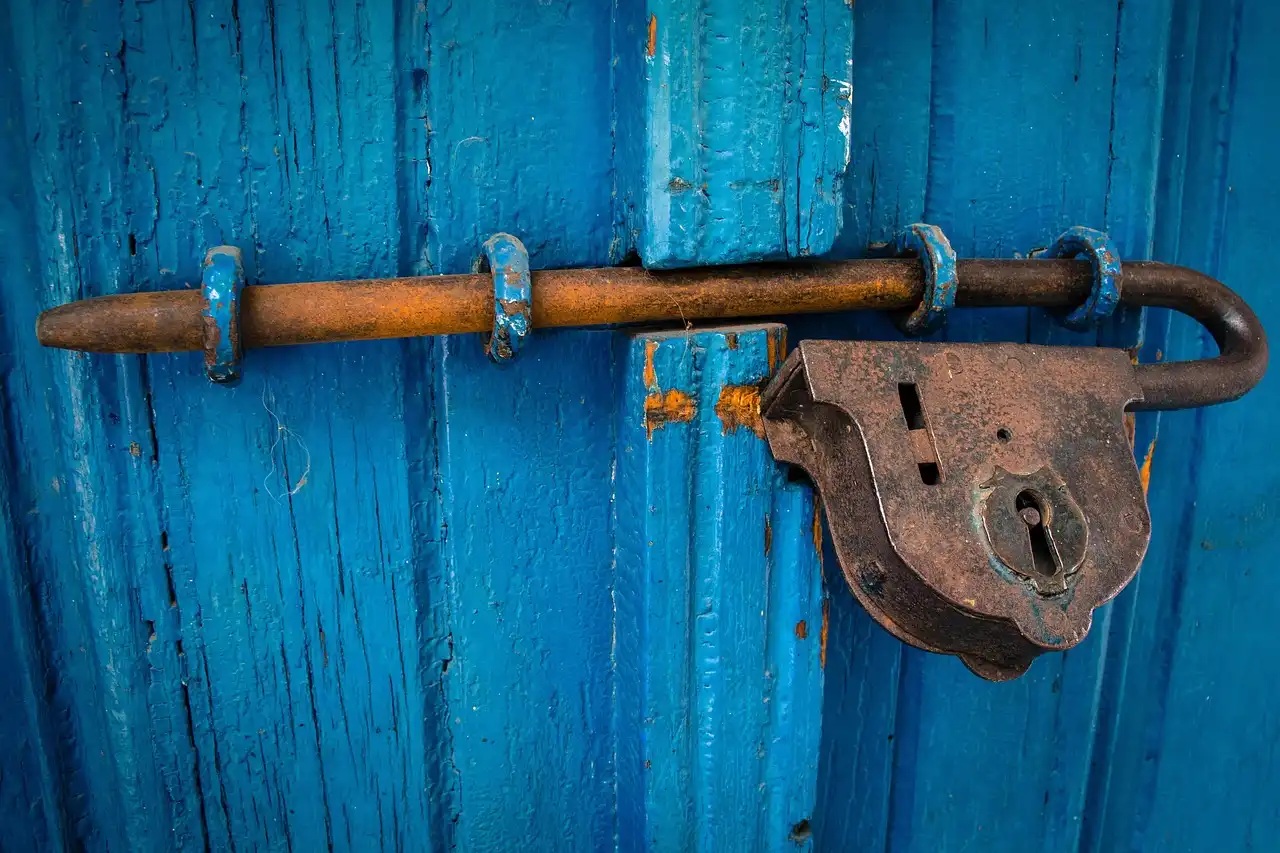
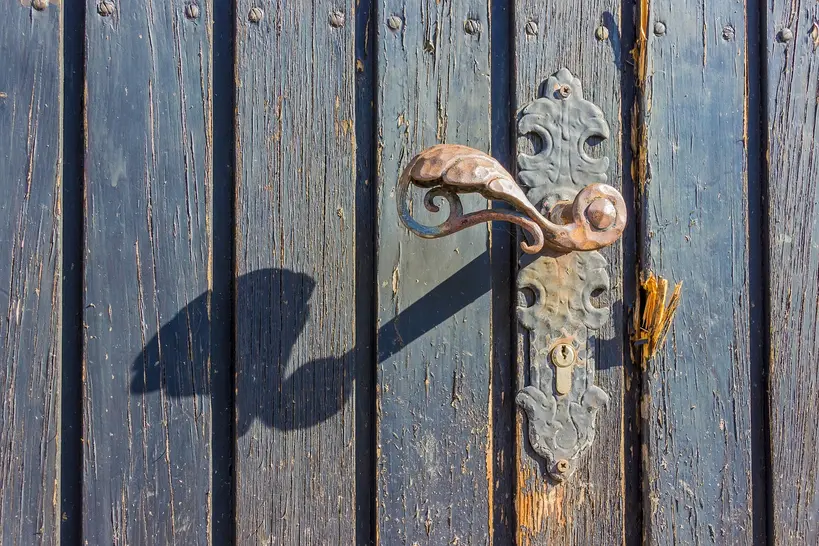
Rust on a door handle is iron oxidation, and moisture makes it spread faster. Light rust usually sits on the surface and often wipes or scrubs away after treatment. Pitted chrome, frozen spindle movement, rusted screws, and latch failure usually point to deeper damage that cleaning will not fix.
Light surface rust vs. deep pitting
Surface rust looks like orange or brown dust on the finish. Deep pitting can leave rough spots, tiny craters, or flaking plating. If the metal feels smooth after cleaning, a repair may be enough. If the finish is broken through, replacement is usually the cleaner fix.
Signs the problem is cosmetic or mechanical
Cosmetic rust changes appearance and may make the knob dull. Mechanical rust changes how the hardware moves. A knob that turns stiffly, binds at the latch, or has a key that is hard to turn usually needs a closer look before you start scrubbing.
How do I remove rust from a door knob?
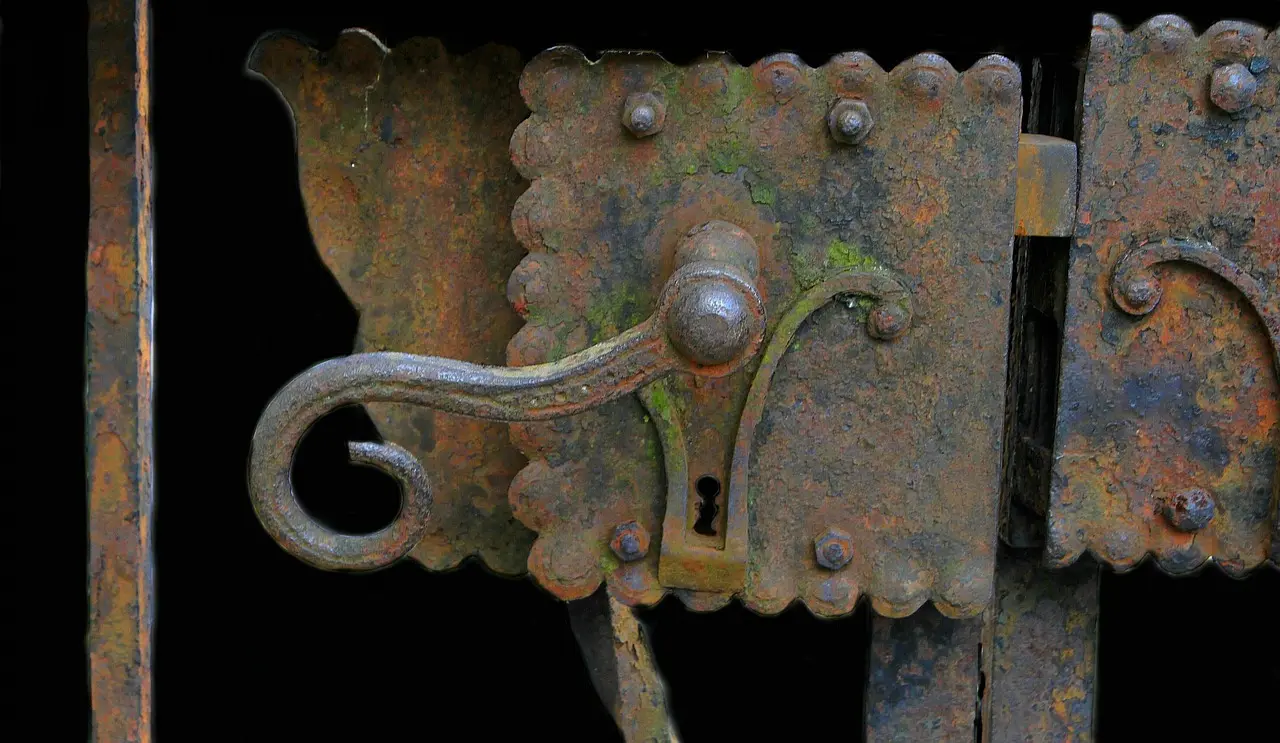
Start by removing the knob and rose plate so you can reach the spindle and back side of the hardware. Use white vinegar for removable small parts, then scrub loosened corrosion with a soft brush or steel wool. For light rust, baking soda paste or lemon juice and salt can help before you dry and lubricate everything.
- Open the door and protect the finish with tape or a cloth.
- Find the set screw or hidden screws and remove the knob assembly.
- Separate removable metal parts from painted trim and wood.
- Soak small rusty parts in white vinegar for up to 12 hours; some items may need overnight or up to 24 hours.
- For light rust, apply a baking soda and water paste or a lemon juice and salt mix.
- Let the paste sit briefly, then scrub the loosened corrosion.
- Use steel wool only after soaking has softened the rust.
- Rinse, dry every part completely, and reinstall the hardware.
- Add graphite lubricant or silicone-based lock spray to the moving parts.
If a brass interior knob has orange spotting but still turns freely, a short soak, light scrubbing, and full drying are often enough. If the same knob feels gritty after reassembly, the issue has moved past surface rust and needs lubrication or replacement.
If that didn’t work, try this next
- Inspect the spindle for scoring, bent metal, or heavy rust rings.
- Check the latch by turning the knob with the door open.
- Replace the spindle or latch if movement is still rough after cleaning.
How do I get a door knob off to clean it?
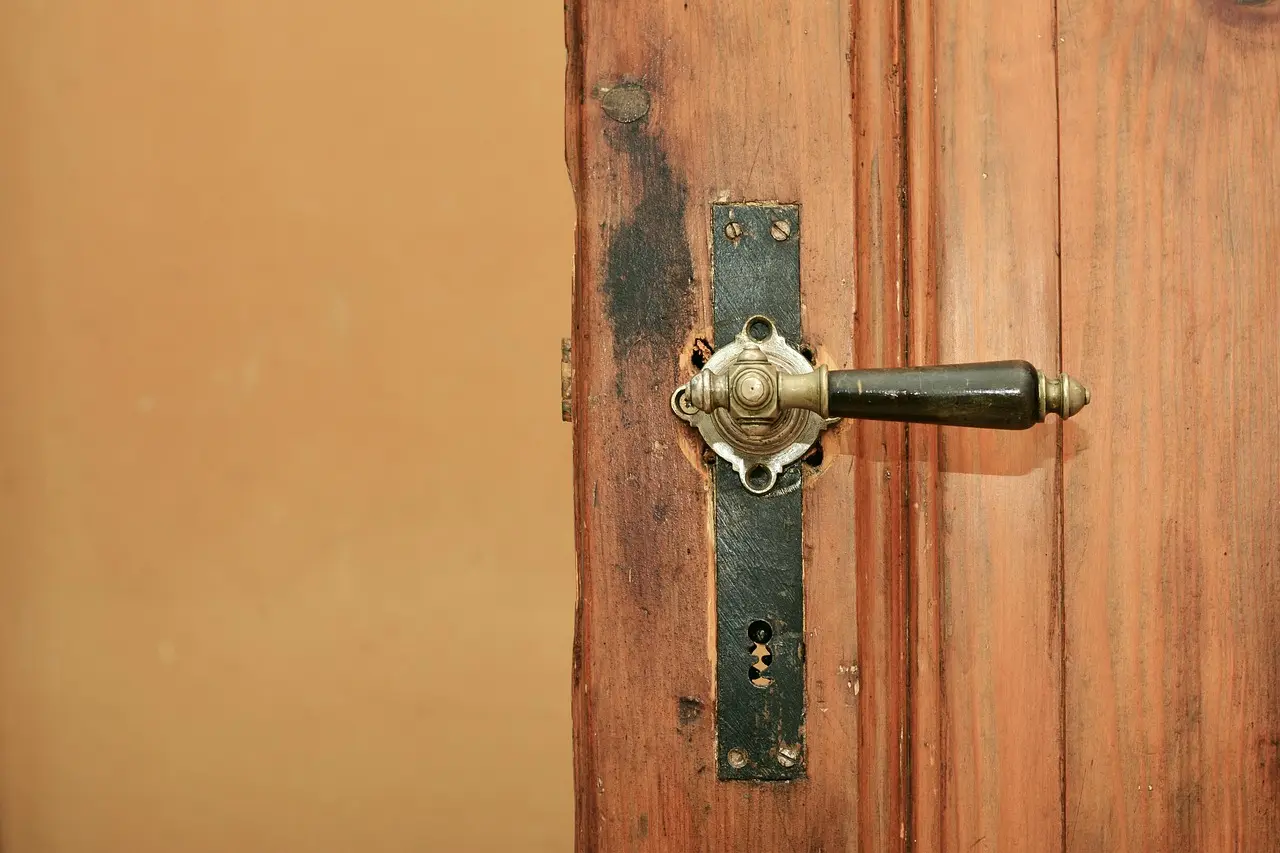
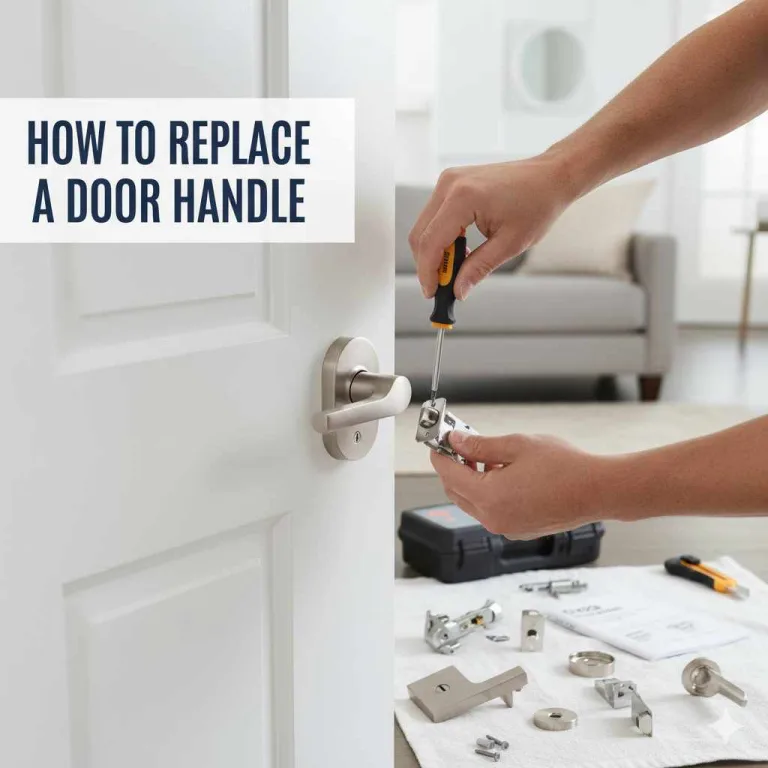
Use the hardware style first, then remove only the parts needed for cleaning. Many interior knobs use a set screw on the shank or hidden screws under the rose plate. If the trim is painted over or stuck, free it gently so you do not strip the screws or twist the spindle.
Find the set screw or hidden screws
Look for a tiny screw on the neck of the knob. If none is visible, check the rose plate for a snap-on cover or concealed fasteners. Use the correct screwdriver or Allen key so the head does not round out.
Protect the finish while removing the rose plate
Slip a cloth between the tool and the trim edge. Pry only enough to expose the screws. If the plate has paint bridging the edges, score the paint line first so the plate does not chip the wall finish.
Free stuck parts without forcing the spindle
Work the knob back and forth while loosening the fasteners. If the spindle will not slide, stop and inspect for rust in the hub. Forcing it can strip the set screw or deform the square shaft.
Should I replace a rusted door knob instead of cleaning it?
Replace the knob when the spindle is frozen or stripped, the latch no longer retracts, the screws are too corroded to reuse, or the finish damage is beyond cleaning. Cleaning is for surface rust. Replacement is the right call when the moving parts or fasteners have failed.
Spindle is frozen or stripped
A spindle that will not move after cleaning usually has internal corrosion or worn square corners. If the knob wobbles but will not engage the latch, the shaft may be rounded off.
Latch no longer retracts
If the latch stays out even with the knob removed, the spring or latch body may have failed. That is a hardware problem, not a rust stain problem.
Screws are too corroded to reuse
Heads that crumble or strip during removal often leave you with partial hardware and loose trim. Replace the fasteners with matching length and thread type before reinstalling the knob.
Finish damage is beyond cleaning
Pitted chrome, peeling plating, or exposed base metal usually means the decorative layer is gone. At that point, cleaning may remove rust, but it will not restore the surface.
Can I use WD-40 on a rusty door knob?
WD-40 can help free a stuck part for a short time, but it is not a lock lubricant. If you use it, let it sit around 10 minutes before wiping and scrubbing, then switch to graphite powder or silicone-based lock spray for ongoing maintenance.
Use it only as a temporary freeing aid
Apply a light amount to the stuck area, not into the lock cylinder as a habit. Rubel Handyman Services warns that WD-40 is not a long-term lock lubricant.
Use a lock-safe lubricant after cleaning
Graphite lubricant and silicone-based lock spray are the better maintenance choices for moving lock parts. They are less likely to leave a gummy residue in the keyway.
What should I use to remove rust from metal hardware?
Choose the cleaner based on the part and finish. White vinegar is a reliable rust remover for small metal items, baking soda works well on light rust stains, and lemon juice plus salt can handle light-to-moderate rust on finish-tolerant parts. Use steel wool only after rust has loosened.
Best match by rust level
For light rust, start with baking soda paste. For removable small parts, white vinegar is a stronger choice. For light-to-moderate buildup, lemon juice and salt can help break the corrosion before scrubbing.
Finish-sensitive warning
Acids can dull, etch, or strip delicate coatings. Test on a hidden spot first when the knob is plated, painted, or lacquered. If the finish clouds quickly, stop and use a milder cleaner.
How do I clean a rusty lock or knob without damaging it?
Clean the rust, not the whole lock mechanism, unless removal is necessary. Use the mildest cleaner that works, keep liquids out of the keyhole, and dry every part before reassembly. For sticky keyholes, use graphite or silicone-based spray instead of oil-heavy products.
- Remove the knob if the rust is on the back side or spindle.
- Apply cleaner to the rusted metal, not the key cylinder.
- Scrub only loosened corrosion with a soft brush or steel wool.
- Wipe the hardware dry and let it air-dry before reassembly.
- Use graphite lubricant or silicone-based lock spray on moving parts.
A common first-timer mistake is soaking the entire assembly. That can trap moisture inside the mechanism and turn a cosmetic rust problem into a sticky latch.
Common mistakes
Using the wrong cleaner or tool can turn a repair into replacement work. Keep the finish, the spindle, and the lock cylinder in mind at every step.
- Using vinegar or lemon juice on plated finishes without a spot test.
- Leaving moisture in the rose plate or latch body.
- Spraying oil-heavy lubricant into the lock cylinder.
- Forcing rusted fasteners and stripping the screw heads.
- Scrubbing polished chrome with steel wool before the rust loosens.
- Ignoring rusted screws or a frozen spindle and expecting a cleaner to fix them.
Frequently asked questions
What is the best way to clean metal door knobs?
Use the gentlest cleaner that matches the rust level: baking soda paste for light rust, white vinegar for removable small parts, or lemon juice and salt for light-to-moderate corrosion. Dry the knob fully before reinstalling it.
How do I fix rust on a metal door knob?
Take the knob apart if possible, clean the rusted sections, and replace any screw, spindle, or latch that no longer moves freely. If the plating is pitted or peeling, replacement gives a cleaner result than more scrubbing.
Products related to this article
Sponsored / affiliate links. As an Amazon Associate I earn from qualifying purchases. I may earn additional commission from eligible campaigns.