How to Measure for a Replacement Door Knob
Use three measurements first: backset, cross-bore, and door thickness. Most residential cylindrical knobs use a 2-3/8 inch or 2-3/4 inch backset, a 2-1/8 inch cross-bore, and a 1-3/8 to 1-3/4 inch door thickness range (per ANSI/BHMA lockset conventions). If any one misses, the set may not fit.
Quick door knob fit check


Door knob sizing worksheet
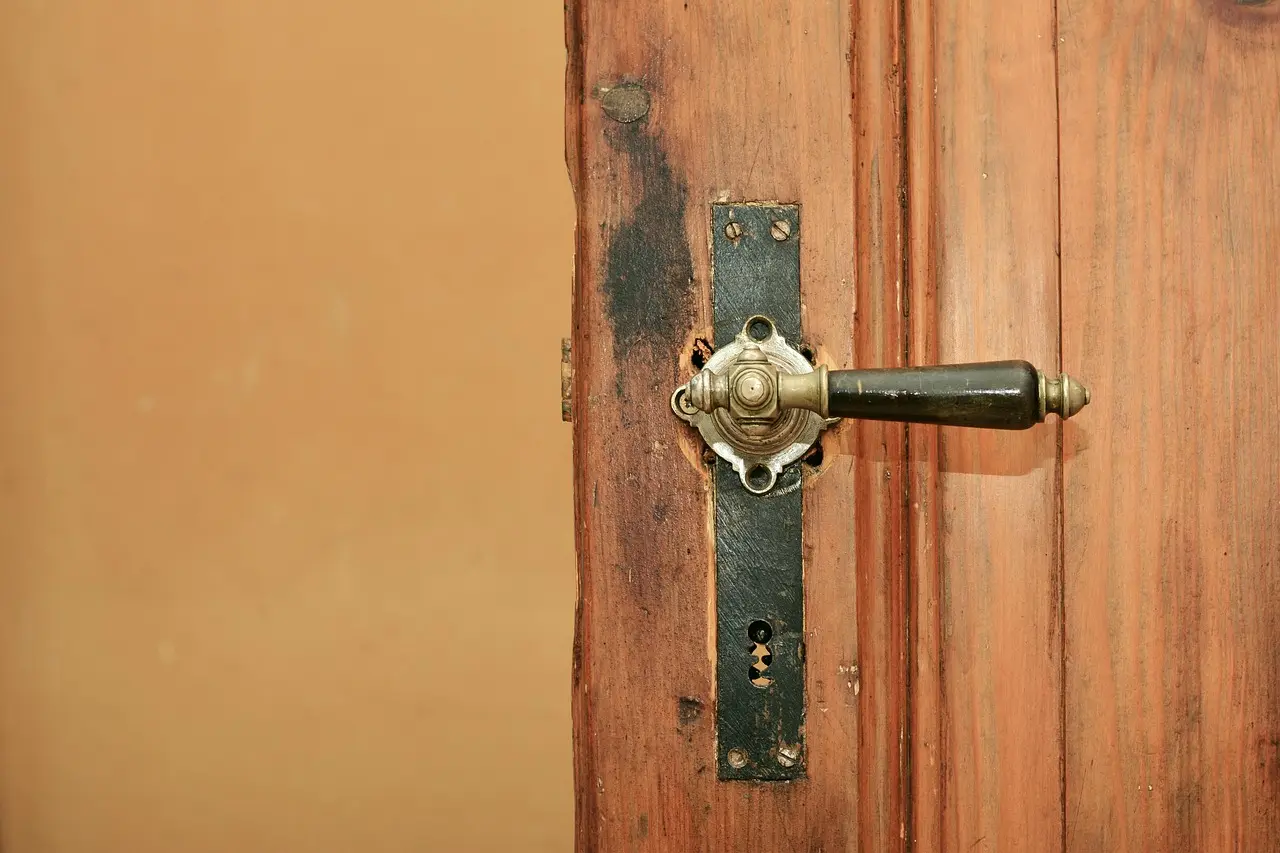
Use this text-only check before you buy. Answer each row Yes or No. If you get any No, choose a different knob, swap the latch, or move to a mortise-compatible product. Finish by confirming the knob, latch assembly, and strike plate all match the existing door prep.
| Check | Measure or inspect | Fit decision | What to buy or verify |
|---|---|---|---|
| Backset | Door edge to bore center: 2-3/8 or 2-3/4 inches | Yes if latch matches or is adjustable | Knob latch that fits the measured backset |
| Bore diameter | Cross-bore: 2-1/8 inches | Yes if the new trim covers the opening | Standard cylindrical knob hardware |
| Door thickness | Door slab: 1-3/8 to 1-3/4 inches | Yes if the lockset supports that range | Compatible knob body and screws |
| Mortise vs cylindrical | Rectangular pocket in the door edge or round latch bore | Yes if it is cylindrical for a standard knob swap | Mortise replacement if the pocket is rectangular |
| Final shopping check | Latch, strike plate, and rosette coverage | Yes if all parts align | Knob, latch, and strike plate that match the door prep |
Backset check: yes or no?
Measure from the door edge to the center of the bore, then decide if the result is 2-3/8 or 2-3/4 inches. Most residential cylindrical knobs use one of those two backsets, and many replacement latches adjust between them. If the latch cannot match, the set is a no.
Cross-bore check: yes or no?
Confirm the large round hole through the door face is 2-1/8 inches. That opening is the cross-bore, not the edge bore. If the trim does not cover the opening cleanly, or the body will not pass through, the fit is a no.
Door thickness check: yes or no?
Measure the slab itself, not the trim. Many standard locksets fit doors from 1-3/8 to 1-3/4 inches thick, which covers most interior and many exterior slabs. If the door falls outside that range, the screws or spindle may not seat correctly, so the answer is no.
Standard or nonstandard door prep: yes or no?
Look at the door edge. A cylindrical knob uses a round latch bore and an edge-mounted latch. A mortise lock uses a rectangular pocket routed into the edge. If you see the rectangular pocket, the answer is no for a standard cylindrical replacement.
Shopping checklist: knob, latch assembly, strike plate
Buy the knob only if the latch matches the backset, the latch body fits the edge bore, and the strike opening lines up with the bolt throw. If the frame opening is worn or offset, plan to replace or move the strike plate instead of forcing the old one.
What you’ll need
- Phillips-head screwdriver
- Flat-head screwdriver or small pry tool, if the release slot needs it
- Allen key, if the knob uses a release set screw
- Tape measure or ruler
- Replacement knob packaging or spec sheet
- Painter’s tape and a pencil for marking measurements
- Replacement latch if the old one does not match the new backset
- Replacement strike plate if the frame opening does not align
A standard residential knob or lever usually installs with just a screwdriver. Keep the new hardware’s spec sheet in hand while you measure, because the latch opening, backset, and thickness limits should match the door before you open the package.
How do you measure the backset?
Measure from the door edge to the center of the bore hole. For standard replacement work, check whether that distance is 2-3/8 inches or 2-3/4 inches, then choose a latch that matches or can adjust to that size. Those are the common residential backset sizes referenced by ANSI/BHMA-style lockset prep.
Measure from the door edge to the bore center
Place the ruler on the edge of the door and measure straight to the middle of the large drilled hole. Do not measure to the hole edge; the center point is the number that matters for the latch. The bore center is the reference point, while the edge bore is the separate hole in the door edge.
Check for 2-3/8 or 2-3/4 inch backset
Most residential cylindrical knobs use one of those two sizes. If the package lists only one backset and it does not match, the latch will sit wrong even if the knob trim looks right. A mismatched backset can leave the bolt short of the strike opening.
Confirm whether the latch is adjustable
Many replacement latches change between the two common backsets. If the latch body has a sliding or reversible setting, set it before installation so the latch bolt reaches the strike plate cleanly. If the latch cannot adjust to your measured backset, treat the set as incompatible.
Say your door measures 2-3/4 inches from edge to bore center, but the replacement latch ships set to 2-3/8 inches. Switch the latch to the longer setting before you tighten the screws, or the bolt may stop short of the frame opening.
What size hole do you need?
A standard knob replacement usually needs a 2-1/8 inch cross-bore and a compatible edge bore for the latch body. Also confirm door thickness before buying, because a correct hole size still fails if the lockset does not fit the slab. The cross-bore is the face hole, not the latch pocket in the edge.
Measure the cross-bore at 2-1/8 inches
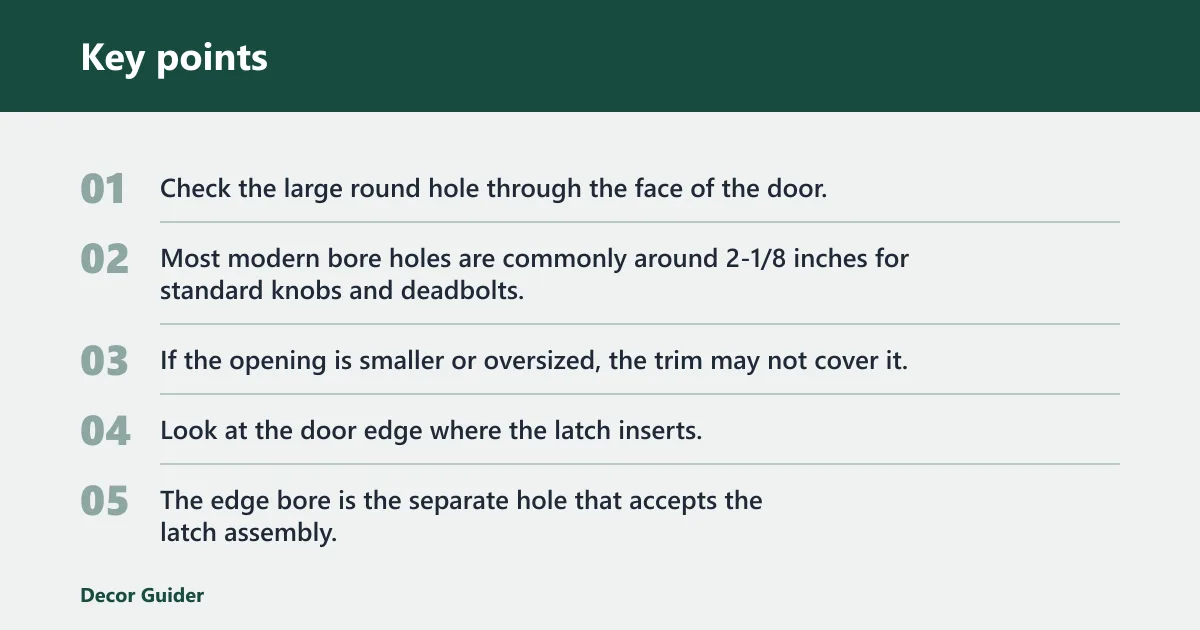
Check the large round hole through the face of the door. Most modern bore holes are commonly around 2-1/8 inches for standard knobs and deadbolts, and that is the size most replacement trim is made around. If the opening is smaller or oversized, the trim may not cover it.
Check the edge bore for the latch body
Look at the door edge where the latch inserts. The edge bore is the separate hole that accepts the latch assembly, while the cross-bore is the larger face opening. The latch needs a clean opening and a faceplate that sits flush; if the edge cutout is damaged or too small, the latch can bind.
Confirm the door thickness before buying
Measure the door at the edge or near the latch area. If the slab falls outside 1-3/8 to 1-3/4 inches, choose hardware rated for that thickness instead of forcing a standard set. That range is the typical fit window for most residential cylindrical locksets.
A common first-timer mistake is buying a stylish privacy knob because the face trim covers the hole, then finding the latch screws are too short for a thicker slab. The outside may look right. The body still needs the right thickness range.
How do you know if it is a standard knob?
A standard knob setup uses drilled round holes and an edge-mounted latch, while a mortise lock uses a rectangular pocket cut into the door edge. If you see the mortise pocket, skip standard knob shopping and look for mortise replacement hardware. Most residential cylindrical knobs follow the drilled-hole pattern.
Identify cylindrical hardware
Round bore through the door face, round or compact latch body in the edge, and two knob halves that pull together with screws usually point to a cylindrical setup. That is the common interior replacement path. The round face hole and separate edge bore are the two key clues.
Look for a mortise pocket in the door edge
If the edge contains a deep rectangular cavity with a larger case inside, the door is not set up for a simple cylindrical swap. Mortise locks sit inside that pocket and use different parts and dimensions. A standard knob set will not solve that geometry.
Decide whether the latch and strike can stay
If the new knob matches the backset and the latch throw reaches the strike plate, you may keep the frame hardware. If the latch sits too deep or the strike opening is misaligned, replace or shift the strike plate. Even when dimensions seem close, worn parts can make reuse a bad choice.
Common mistakes
The most common failures happen after the box is opened, when a knob fits the hole but not the rest of the door prep. Backset, latch throw, and strike plate alignment matter as much as the visible trim. ANSI/BHMA grade marks speak to durability, not automatic fit.
- Measure before choosing style, finish, or privacy function.
- Match the latch backset to the door: 2-3/8 or 2-3/4 inches.
- Check that the bore is 2-1/8 inches and the door thickness is 1-3/8 to 1-3/4 inches.
- Inspect the latch bevel and install it so the angled face points toward the door-closing direction.
- Test the strike plate alignment before fully tightening the screws.
- Choose the correct lock grade if durability matters: ANSI Grade 1, Grade 2, or Grade 3.
Suppose the knob turns freely but the latch never catches. The problem may be the strike plate depth, not the knob itself. Shift the plate slightly, or replace it if the opening is worn or off-center.
If that didn’t work, try this next
If the latch still will not catch after you confirm the backset, move to the frame. Loosen the strike plate, shift it toward the latch in increments of about 1/16 inch, then retighten and test. If the latch still misses, the hardware is likely mismatched or the door prep is nonstandard.
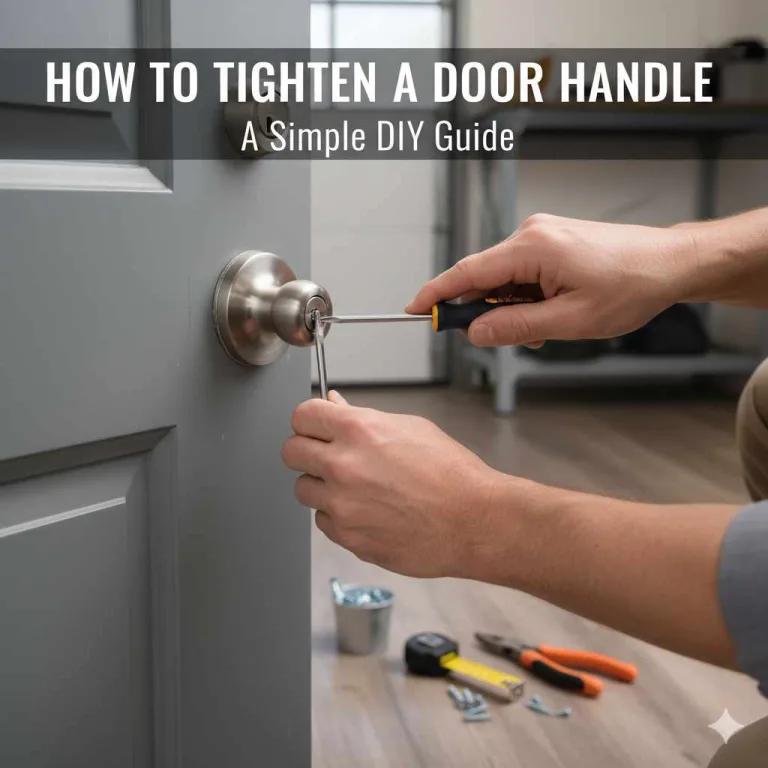
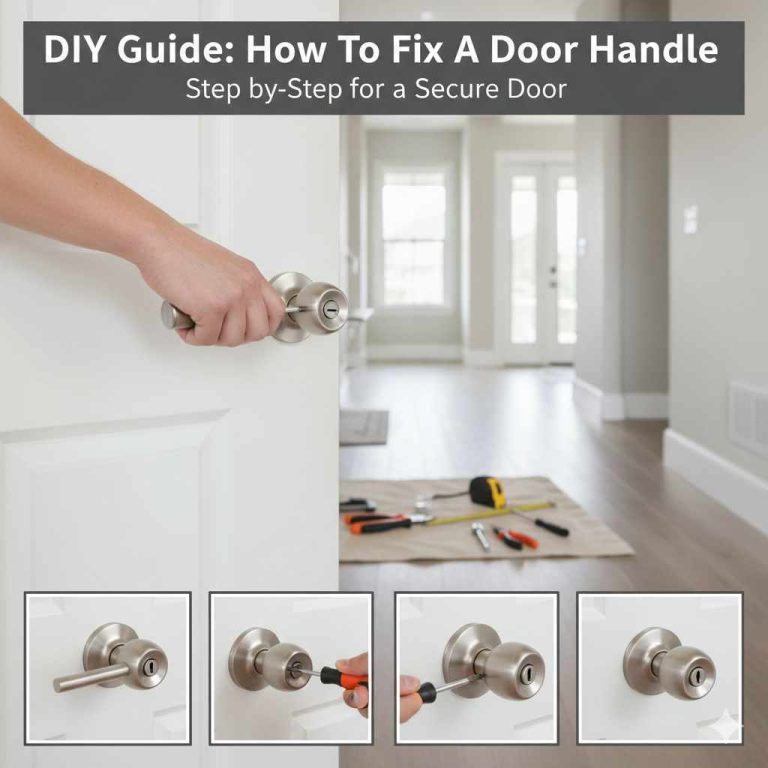
Remove the interior screws, pull both knob halves away, and lift out the latch. Set the new latch to the correct backset, insert it with the beveled face toward the closing direction, then tighten the knobs evenly and test the action from both sides. Reuse the old latch only when the backset, faceplate, and throw all still match.
- Unscrew the interior half and separate the knob set.
- Remove the latch from the door edge with a screwdriver.
- Set the new latch to 2-3/8 or 2-3/4 inches.
- Insert the latch so the bevel faces the door-closing direction.
- Install both knob halves and align the spindle.
- Tighten the mounting screws evenly with a screwdriver.
- Test the knob, latch, and strike plate from both sides.
Keep the screw tension even. Overtightening one side first can pull the trim off center and make the latch bind.
Can you reuse the existing latch when replacing a door knob? Sometimes, yes, if the backset matches, the latch body fits the door edge, and the throw reaches the strike plate cleanly. Replace it if the new knob uses a different backset, the faceplate is damaged, or the bevel points the wrong way.
Frequently asked questions
How do I measure for a replacement door knob?
Measure the backset from the door edge to the bore center, confirm the cross-bore is 2-1/8 inches, and check that the door thickness falls between 1-3/8 and 1-3/4 inches. Then verify whether the door uses a cylindrical latch or a mortise lock before you buy.
What is the backset on a door knob?
It is the distance from the door edge to the center of the bore hole. The standard sizes are 2-3/8 inches and 2-3/4 inches, and the replacement latch should match one of those or adjust to it. Those sizes are common on most residential cylindrical knobs.
What size hole do I need for a replacement door knob?
For a standard knob, the main cross-bore is usually 2-1/8 inches. Also check the edge bore for the latch body and make sure the door thickness stays within the hardware’s stated range. A correct face hole alone does not guarantee a fit.
Are all door knobs standard size?
No. Most residential cylindrical knobs follow standard dimensions, but mortise locks and some specialty sets do not. Measure the backset, bore, and thickness before choosing a replacement, especially on older doors. Standard size does not mean every part is interchangeable.
How do I know if my new door knob will fit?
Match the backset, bore diameter, and door thickness to the product listing, then confirm the latch and strike plate line up. If the door has a rectangular mortise pocket, a standard cylindrical knob will not fit. When the latch or strike is worn, reuse is not always the right answer.
What tools do I need to replace a door knob?
A Phillips-head screwdriver is the main tool for most jobs, and a tape measure is often helpful. Some knobs also use a flat-head release slot or an Allen key for a set screw, and a tape measure helps you confirm the fit before installation.
Products related to this article
Sponsored / affiliate links. As an Amazon Associate I earn from qualifying purchases. I may earn additional commission from eligible campaigns.