How to Replace a Privacy Lock on a Bedroom Door
Replace a bedroom privacy lock by matching the backset, cross-bore, latch style, and door thickness first, then swapping the knob or lever set with the same function. Buy the wrong size or lock type, and you can end up with a latch that will not fit, a loose handle, or a door that will not close. This article shows how to identify the exact replacement and install it without guessing.
What you’ll need


- Phillips screwdriver
- Flathead screwdriver or awl for the exterior emergency release hole
- Tape measure
- Replacement privacy lockset or latch, matched to the door
- New strike plate if the old one is bent or mismatched
- Drill only if the bore or screw holes need adjustment
Before buying parts, inspect the door and the old hardware. A bedroom or bathroom privacy lock usually has an interior push-button or turn-button lock and an outside emergency release hole with no key cylinder. A keyed bedroom lock is a different product, so do not treat them as interchangeable. For standard sizing, many locksets are built around a 1 3/8 in. interior door thickness, a 2 1/8 in. cross bore, and a 1 in. edge bore, with common 2 3/8 in. or 2 3/4 in. backsets; see manufacturer installation documents and BHMA/ANSI hardware standards for those size conventions. Schlage installation instructions, Kwikset installation guidance, and BHMA standards information all reflect those common fit points.
Privacy lock compatibility checklist
Use this checklist as a buy-or-do-not-buy proof sheet before you order. If every measurement and hardware detail lines up, the replacement is usually straightforward. If one item fails—especially backset, bore size, or privacy-versus-keyed function—stop and choose a different part rather than trying to force a fit.
| Check | Common values | What to verify | Reuse latch? | Buy decision |
|---|---|---|---|---|
| Door thickness | 1 3/8 in. interior doors are common | Measure edge to edge through the slab | Only if the new set lists the same thickness range | Buy only if the lockset covers your actual door thickness |
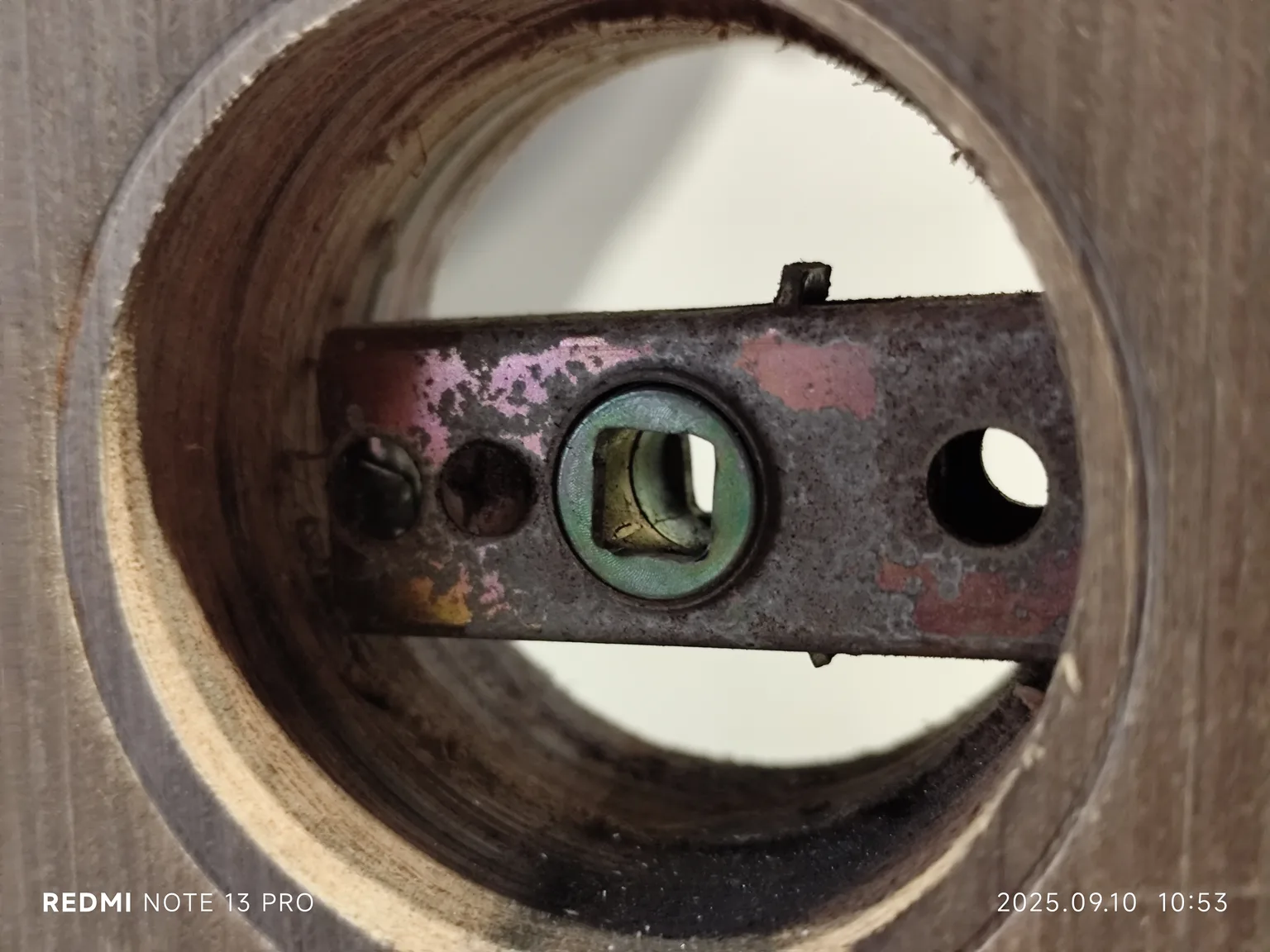
| Backset | 2 3/8 in. or 2 3/4 in. | Measure from the door edge to the center of the cross bore | No if the backset differs | Buy only when the latch matches your measured backset |
| Cross bore | Typically 2 1/8 in. | Measure the large hole for the knob or lever body | No if the bore size is different | Buy only if the chassis fits the 2 1/8 in. opening cleanly |
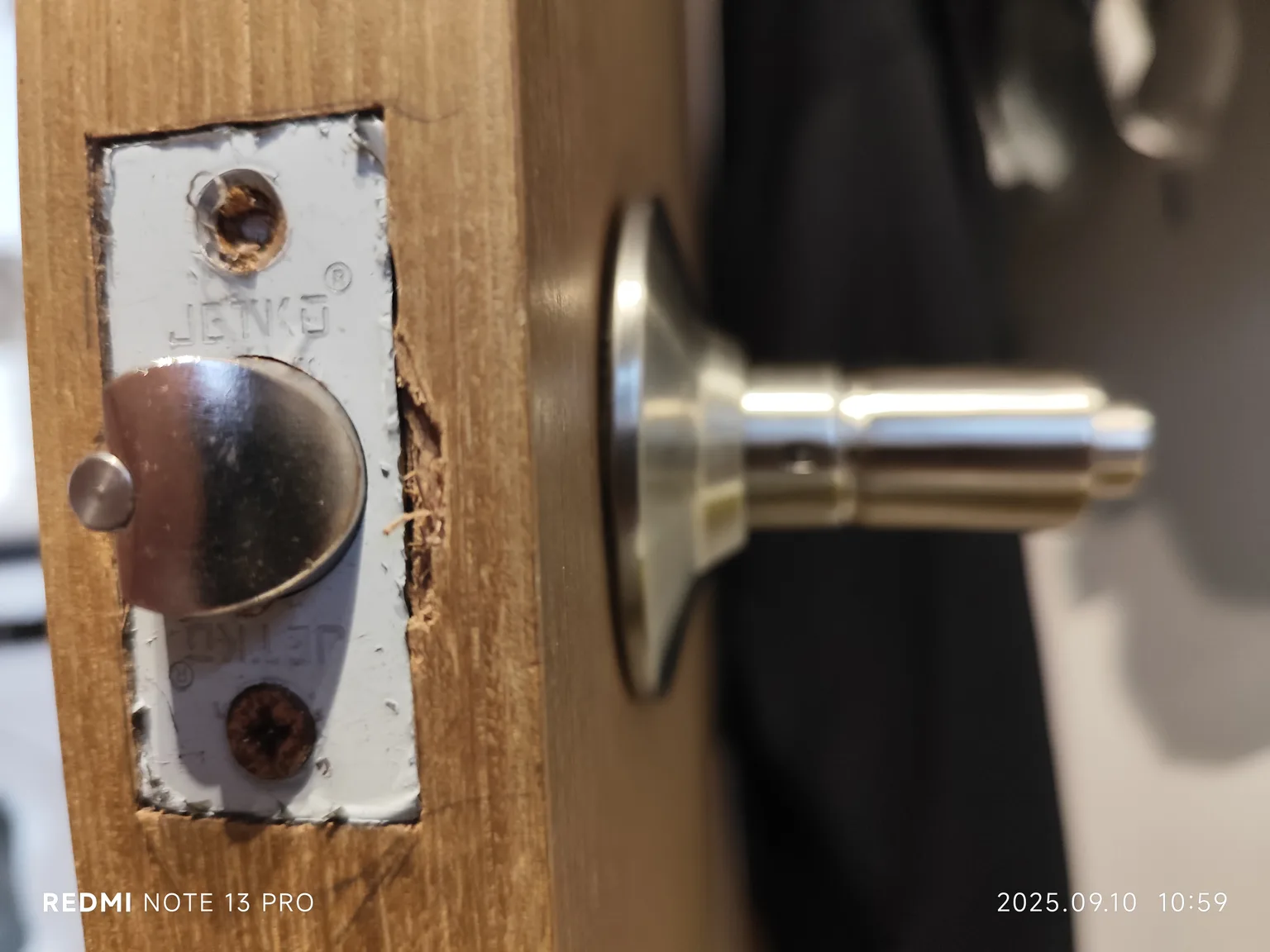
| Edge bore | Usually 1 in. | Measure the hole in the door edge for the latch case | Only if the latch case matches the bore | Buy only if the latch seats flush in the edge bore |
| Faceplate shape | Rounded or square corner | Match the door-edge cutout and screw-hole spacing | Sometimes, if the plate shape and holes match | Buy only when the plate sits flat and the screws align |
| Handedness | Some levers are handed | Check whether the latch and lever are reversible | Sometimes, model dependent | Buy only if the set is reversible or correct-handed |
| Existing latch reusability | Some latches are brand-specific | Compare body width, screw spacing, and bolt travel | Yes, only when the latch case, screws, and throw match | Buy the latch only if the old one still fits and functions cleanly; otherwise buy the full set |
| Final decision | Privacy hardware only | Confirm privacy function, not keyed entry | No, if the function is wrong | Buy if every row above matches; do not buy if keyed hardware is being substituted for privacy hardware |
How do you tell which replacement you need?
Start with the failure type, then match the hardware. If the handle feels loose, the through-bolts or mounting screws may be the problem. If the knob turns but the latch does not retract, the spindle or latch is more likely at fault. Buy a full lockset when the brand, backset, or faceplate shape no longer lines up. For privacy locks, a stuck button or failed release hole can often be corrected without replacing the whole assembly, but only if the latch and spindle still engage normally.
Privacy lock or keyed lock?
A privacy lock has an interior locking button or turn-button and an exterior emergency release hole. It is meant for bedrooms and bathrooms, not keyed entry. A keyed bedroom lock uses a key cylinder outside and is a different category, so replace it only with the same keyed type. Do not substitute keyed hardware for privacy hardware when the door is intended for a quick emergency release from outside.
Latch-only or full lockset?
Replace only the latch if the knob or lever still works, the finish matches, and the existing latch case fits the same backset and edge bore. Buy the full lockset if the spindle profile, screw spacing, or faceplate shape differs, or if the handle halves are worn and wobbling. If the latch body is damaged but the trim is sound, a latch-only swap is usually the least disruptive fix.
Match finish and trim style?
Choose the same finish if the trim is visible and you want the new set to blend in. Finish does not change function, but it does matter when the strike plate, knob, and door rosette are all on display. Keep the shape and screw pattern aligned first.
How do I replace a privacy lock on a bedroom door?
Remove the old handle, match the latch and bore sizes, then install the new privacy lockset in the same opening. The work is straightforward when the backset, cross bore, and faceplate shape match. If those parts do not match, stop and buy the correct set before drilling or forcing anything. For privacy hardware, the emergency release should remain accessible from the outside after installation, since that is part of the lock’s intended behavior and is reflected in common manufacturer instructions for privacy functions.
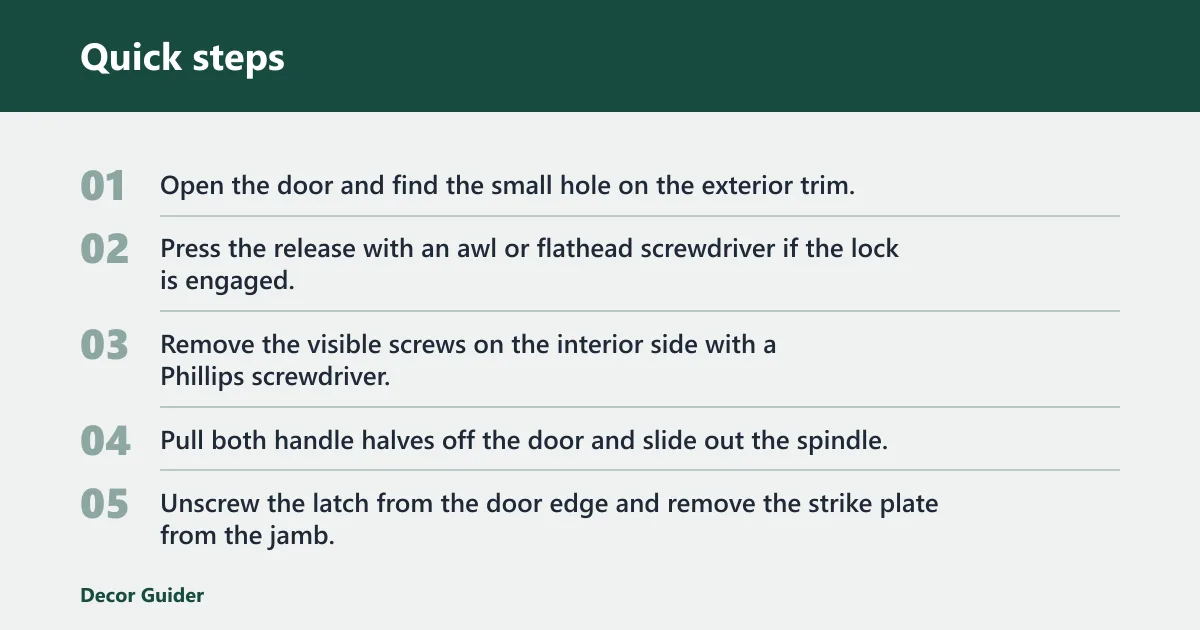
Remove the old hardware?
- Open the door and find the small hole on the exterior trim.
- Press the release with an awl or flathead screwdriver if the lock is engaged.
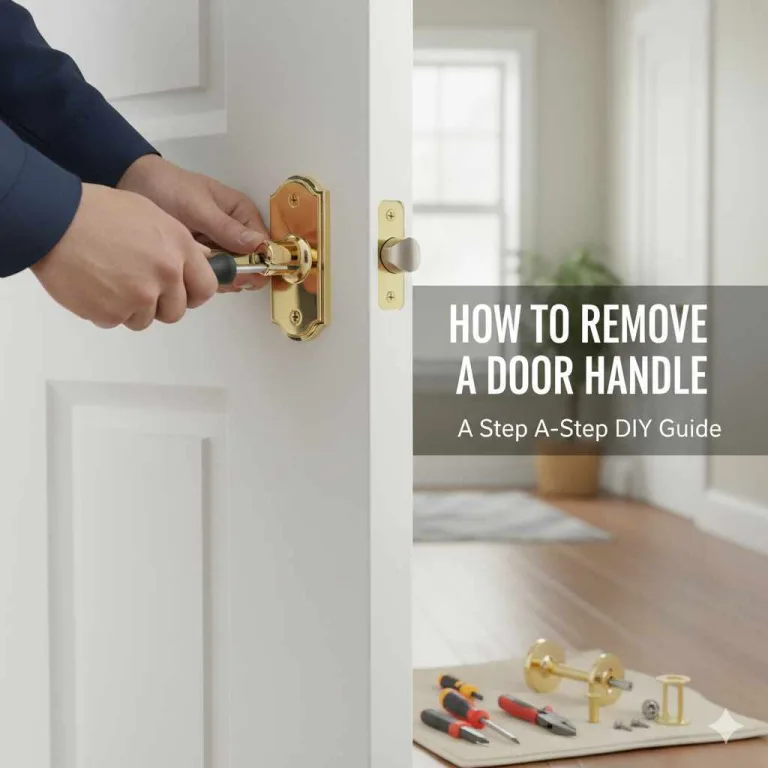
- Remove the visible screws on the interior side with a Phillips screwdriver.
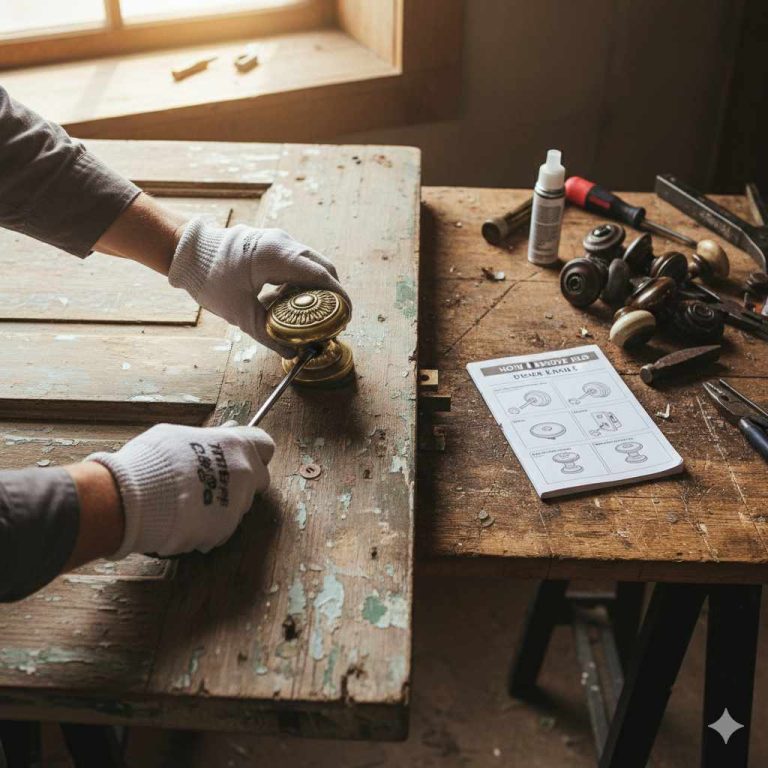
- Pull both handle halves off the door and slide out the spindle.
- Unscrew the latch from the door edge and remove the strike plate from the jamb.
Install the new privacy lock?
- Slide the new latch into the edge bore with the bevel facing the strike plate.
- Screw the latch plate flush to the door edge.
- Insert the spindle through the latch and align both handle halves.
- Join the halves with the through-bolts or mounting screws.
- Tighten the screws evenly, then test the button, turn-button, and release hole.
- If the latch drags, adjust the strike plate by 1/16 inch and recheck.
How do I install a lock on a bedroom door?
Fit the latch first, then mount the knob or lever halves around the spindle. The bore, backset, and screw pattern must already match the replacement. If you are replacing a standard interior set on a rental door, a no-drill swap is possible when the existing openings already match the new hardware. If the spindle shape does not match, do not force the trim together; that usually means you need a different complete lockset.
How do I fix a lock that still sticks?
Start with the easiest cause. Loose screws create wobble, a wrong spindle keeps the latch from moving fully, and a misaligned strike plate stops the tongue from entering cleanly. If the door closes only when lifted or pushed hard, the alignment is still off. When the lock binds only at the button or release side, the issue may be a privacy-function jam rather than a door-fit problem.
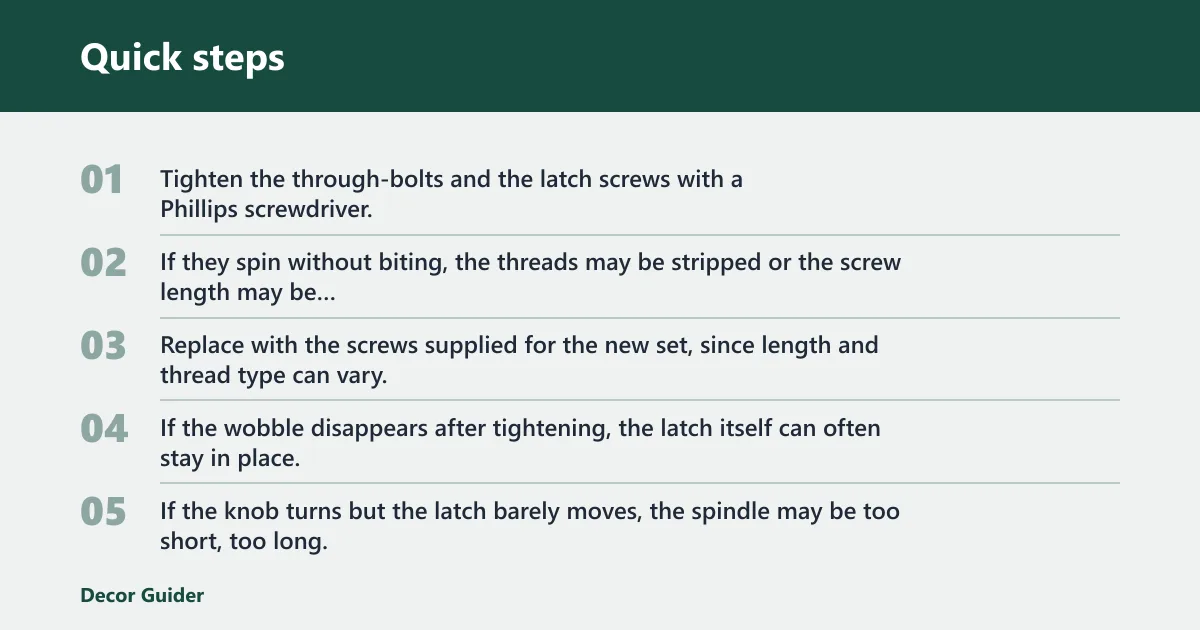
Loose screws and wobble?
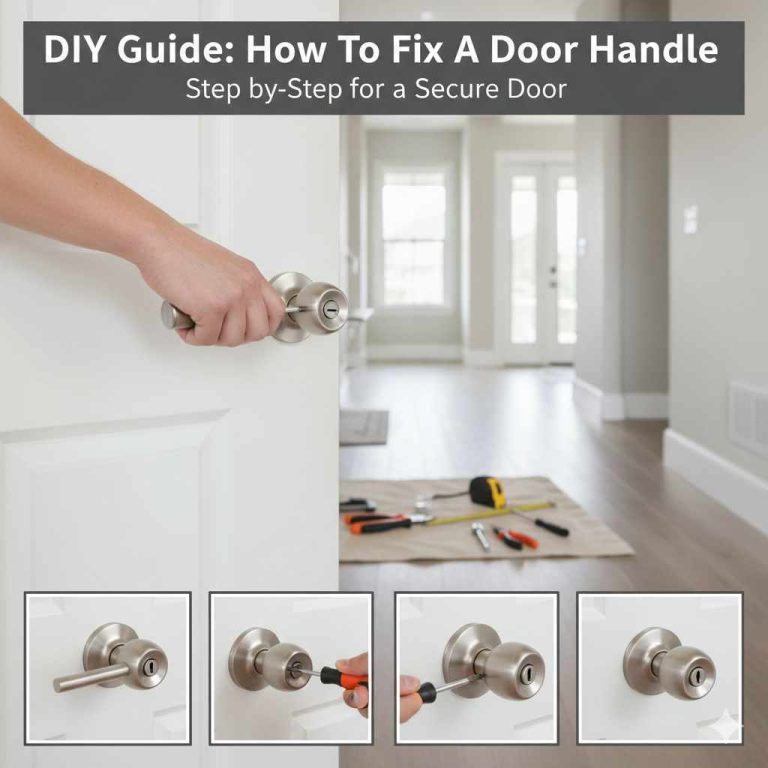
Tighten the through-bolts and the latch screws with a Phillips screwdriver. If they spin without biting, the threads may be stripped or the screw length may be wrong for that brand. Replace with the screws supplied for the new set, since length and thread type can vary. If the wobble disappears after tightening, the latch itself can often stay in place.
Spindle fit problems?
If the knob turns but the latch barely moves, the spindle may be too short, too long, or the wrong profile. Compare the old and new shafts before assembly. A square shaft that does not fully engage the latch body can let the handle turn without retracting the bolt. In that case, a spindle mismatch usually means a full lockset is the better fix, not a partial repair.
Strike plate misalignment?
If the latch tongue hits the frame or rubs the strike plate, loosen the plate and shift it only enough for clean entry. Move it in about 1/16-inch steps, then test after each adjustment. If the plate shape or screw spacing is wrong, replace the strike plate instead of forcing the latch. For a privacy lock, the emergency release should still work smoothly after the plate is adjusted.
Suppose your bedroom door has a 2 3/8 in. backset, a 1 in. edge bore, and a rounded-corner faceplate, but the replacement set comes with a square faceplate and different screw spacing. The latch may fit the bore, yet the plate will not sit flat, so the better choice is a matched lockset rather than a forced install.
Common mistakes?
- Buying the wrong backset. Measure from the door edge to the center of the cross bore before ordering.
- Mixing up privacy and keyed hardware. A privacy lock uses an exterior release hole, not a key cylinder.
- Forcing a mismatched faceplate. Rounded and square corners are not interchangeable if the cutout does not match.
- Reusing stripped screws. Replace them with screws that match the new set’s thread and length.
- Ignoring the spindle. A poor spindle fit can make the handle turn without retracting the latch.
A common first-timer mistake is assuming every loose bedroom handle needs a whole new knob. If the body is sound and only the latch or screws are worn, a partial replacement can solve the problem with less work and less cost. If the issue is a failed spindle or incompatible privacy function, however, a full replacement is the safer route.
How do you remove a stuck bedroom privacy lock without damaging it?
Use the exterior emergency release hole first, not a blade against the latch. A flathead screwdriver or awl can usually open the privacy mechanism with light pressure. If the release does not work, stop before prying the trim or drilling, because the spindle or latch may be jammed. If the lock remains locked after the release is pressed, the issue may be internal spring failure rather than a door alignment problem.
How do I open a locked bedroom door if the push-button lock failed?
Insert an awl, straightened paper clip, or flathead screwdriver into the exterior release hole and press straight in until the button releases. If the latch is stuck, push the door toward the jamb while turning the release tool. That relieves pressure on the mechanism and often frees it. If the release hole opens the door but the button will not reset afterward, the privacy function likely needs replacement.
Frequently asked questions?
How do I know which bedroom door lock replacement I need?
Measure the backset, cross bore, edge bore, and door thickness before shopping. Then compare the latch faceplate shape, screw-hole spacing, and spindle profile. If any of those differ from the old set, choose a full replacement lockset instead of trying to reuse parts. A good fit decision should end with a clear yes or no, not a maybe.
Can I replace a privacy lock without replacing the whole knob?
Yes, if the knob or lever body still works and the new latch matches the existing backset and edge bore. Many sets let you replace only the latch, but that works cleanly only when the plate shape, screw spacing, and spindle engagement all match. If the spindle profile differs, a full set is usually the better buy.
What tools do I need to change a room door lock?
Use a Phillips screwdriver, a flathead screwdriver or awl for the emergency release, and a tape measure for the fit checks. A drill is only needed if the existing bore or screw holes must be adjusted. If the sizes match, the job can stay drill-free.
Should I buy a keyed bedroom door lock or a privacy lock?
Choose a privacy lock for a bedroom or bathroom door when you want interior locking with an emergency release on the outside. Choose a keyed bedroom lock only if the door truly needs key access from the exterior. The two are not the same hardware, and keyed hardware should not be substituted for a privacy function.
How do I match the new privacy lock to the existing door bore?
Measure the cross bore, edge bore, and backset, then compare them to the package specs. The most common backset sizes are about 2 3/8 in. and 2 3/4 in., and the latch should match the one you have. Check faceplate shape and screw spacing last.
Products related to this article
Sponsored / affiliate links. As an Amazon Associate I earn from qualifying purchases. I may earn additional commission from eligible campaigns.