How to Unlock a Privacy Door Knob with a Pinhole
A privacy door knob with a pinhole opens by inserting a straightened paper clip or small release tool into the hole and pressing until the latch pops; if it does not move, the knob likely needs a different emergency release style. Forcing it can bend the mechanism, scratch the door, or leave you with a stuck lock. This guide shows how to identify the lock type, use the right release, and troubleshoot a failed pinhole release before you damage anything.
What a privacy door knob
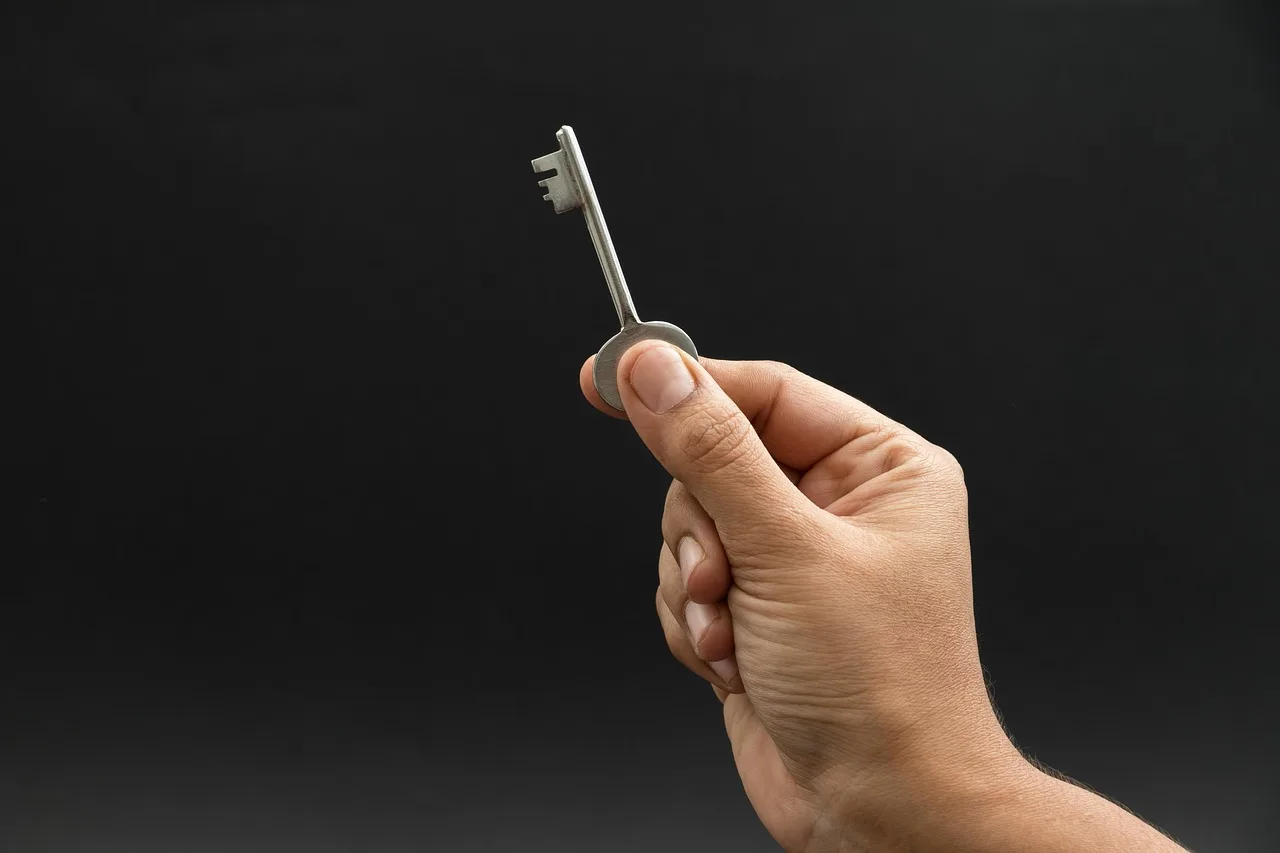

- Designed specifically for Kwikset-brand interior bedroom and bathroom door knobs and levers with emergency access.
- Comes with five durable metal tools, providing spares for multiple rooms or easy replacements over time.
- Flattened, slotted tip slides smoothly into the door knob’s center access hole for fast release.
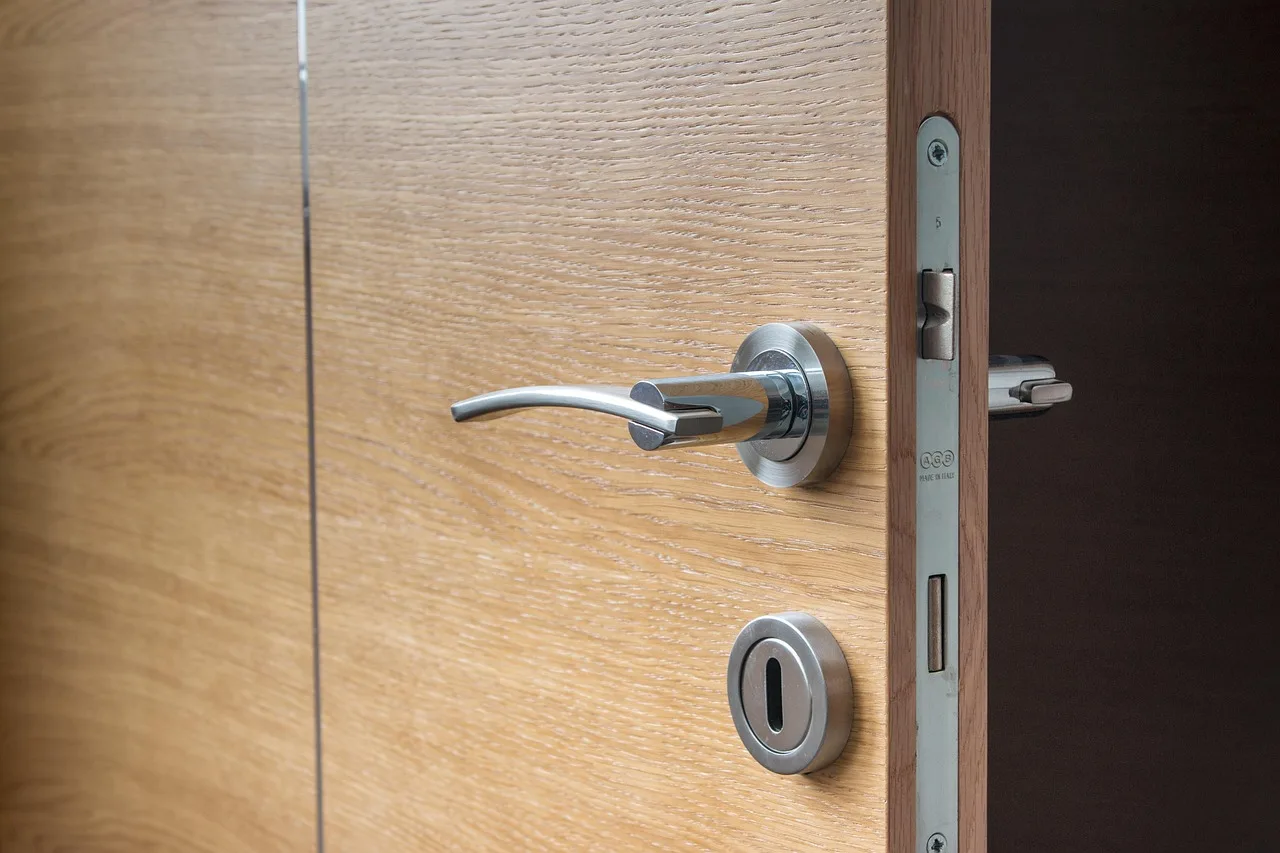
A privacy door knob is an interior-use lockset for bedrooms, bathrooms, and similar rooms where you want quick privacy, not keyed security. Most models lock from the inside with a push-button or turn-button, then allow an outside emergency release so someone can open the door in a lockout.
The outside release is usually a small hole or slot, but the exact design varies by brand and model. That matters because a true release hole, a push-button privacy lock, and a keyed entry knob all fail in different ways and need different next steps.
Inside parts and outside release access
Many privacy knobs use a spring-loaded latch and an interior thumb turn or push-button. The outside emergency release is meant to trip that internal lock with a narrow tool. On some knobs, the access point sits in the center of the exterior knob; on others, it is on the rose or trim ring near the spindle.
Door thickness also matters. Interior doors are commonly around 1 3/8 inches thick, and a mismatch in thickness or spindle engagement can make a knob feel normal while the internal parts may not line up well enough to open cleanly.
How these locks differ from keyed entry knobs
A privacy lock is not the same as a keyed exterior knob or deadbolt. A keyed entry lock uses a key cylinder and is designed for security at entry points. A privacy knob is meant for quick interior privacy and emergency access, which is why the outside release is simpler and lighter-duty.
How do you tell if it has a pinhole?
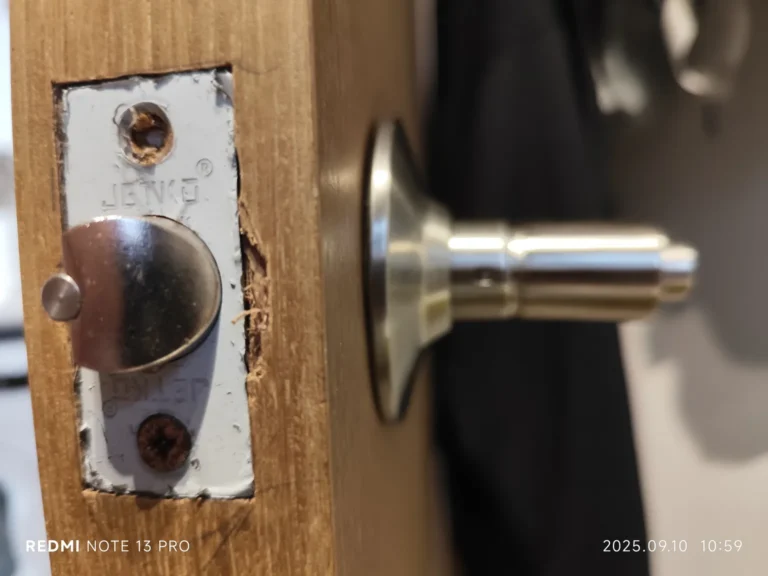
Look for a small outside access hole before you try anything. A true pinhole privacy lock usually opens from the outside with a narrow straight tool and very light pressure. If you see a large button, a slotted turnpiece, or a key cylinder, it is a different lock style and the release method changes.
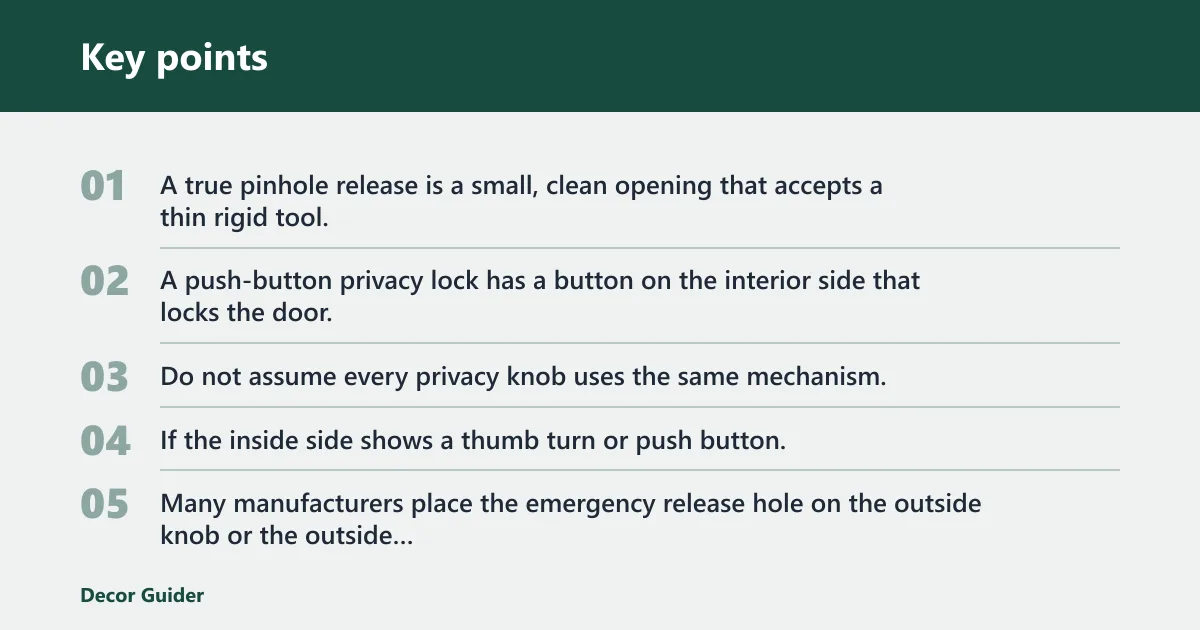
True pinhole release vs push-button lock
A true pinhole release is a small, clean opening that accepts a thin rigid tool. A push-button privacy lock has a button on the interior side that locks the door, but the outside emergency access may still be a pinhole or a different release point. Do not assume every privacy knob uses the same mechanism.
If the inside side shows a thumb turn or push button, but the outside hole does not accept a paper clip cleanly, the knob may not be a pinhole model at all.
Where the emergency release hole usually sits
Many manufacturers place the emergency release hole on the outside knob or the outside rose near the center spindle. The hole can be shallow or recessed, and its exact location varies by model. A shallow hole usually wants a paper clip or thin pin; a deeper slot may accept a small screwdriver only if the blade fits without wedging.
What the hole should and should not look like
The hole should look like a small access point for a straight tool, not a screw head, vent, or decorative detail. It should not require prying. If the opening looks blocked by paint, debris, or a damaged insert, stop and inspect before pushing harder. A jammed-looking opening is a clue, not a challenge.
How do I use the emergency release hole on a privacy lock?
Use a straight, narrow tool and light pressure. Insert the tool into the outside emergency release hole until it engages, then press steadily until you feel or hear a click. If the release is working and the latch is free, the door should open with normal knob movement immediately after that click.
- Straighten a paper clip, or choose a thin pin or nail only if it fits cleanly.
- Check that the tool is rigid enough to push without folding.
- Align the tip with the release hole or slot on the outside knob or rose.
- Insert slowly until you feel internal contact.
- Apply light, steady pressure until the lock releases.
- Turn or pull the knob as needed once the latch pops open.
The tool should be straight and rigid enough to engage the release without bending into the hole. A paper clip is often the best first choice because it is narrow, easy to control, and less likely to damage the mechanism than a larger improvised tool.
Say your bathroom knob has a small hole in the outer knob, and a paper clip slips in about 3/8 inch before stopping. A gentle press may be enough to trip the release. If the clip bends immediately or the hole swallows it unevenly, the lock may be damaged or the hole may not be the right access point.
Privacy lock troubleshooting matrix
This matrix helps separate a true pinhole privacy lock from a different failure. Use the safest next step first. If the symptom does not match the lock style, stop before you force the knob or pry at the trim.
| Lock style | Likely failure symptom | Safest next step |
|---|---|---|
| True pinhole release | Paper clip fits, but no click and no movement | Check hole position, then try light pressure with a straight tool; stop if it flexes or bottoms out |
| Push-button privacy lock | Outside hole is absent, blocked, or does not align with an internal release | Identify the interior button or turnpiece and confirm the model before using any release tool |
| Misaligned latch | Lock releases, but the door still will not open | Push the door toward the frame, lift or lower the door slightly, then try the knob again |
| Stuck thumb turn | Interior turn feels tight, springy, or frozen | Stop forcing it; test the outside release gently and plan for repair or replacement if it will not free up |
| Broken mechanism | No click, no travel, or a loose spinning feel | Do not pry or drill; replace the privacy lockset or call a locksmith if the door must open now |
Why the knob still will not open
A successful release does not guarantee the door will swing open. The latch can still be held by bind, poor alignment, or a stuck internal part. That is why a pinhole release should be followed by a door-motion check, not by harder pressure on the release.
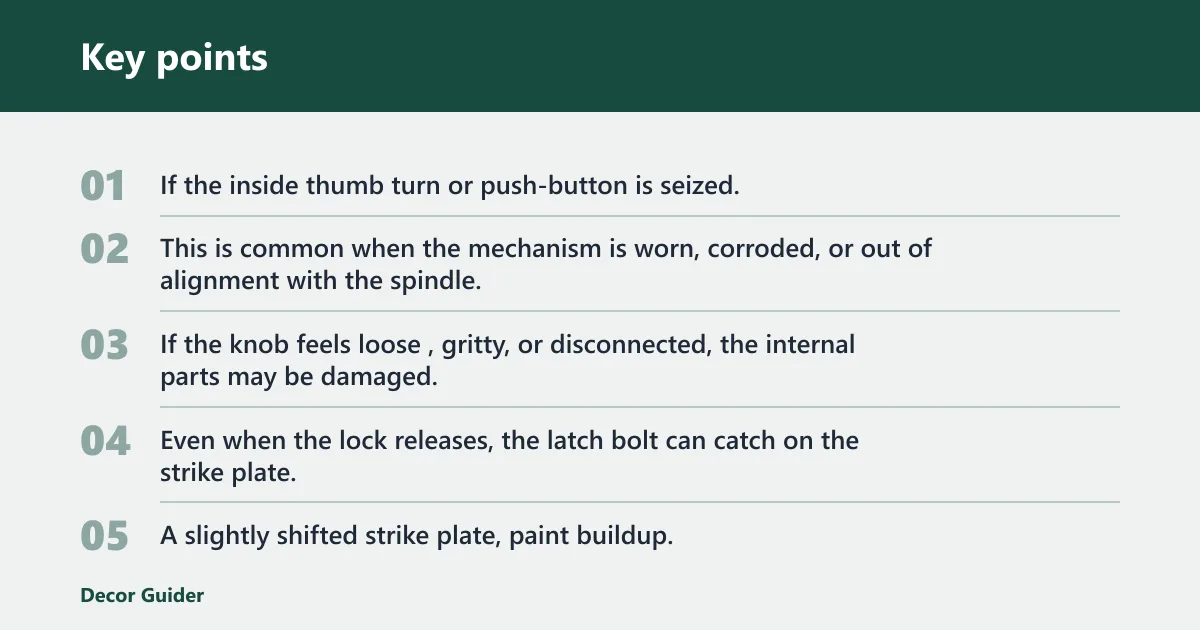
Stuck thumb turn or button
If the inside thumb turn or push-button is seized, the release may not move the internal parts far enough to retract the latch. This is common when the mechanism is worn, corroded, or out of alignment with the spindle. If the knob feels loose, gritty, or disconnected, the internal parts may be damaged.
Latch bind and strike plate misalignment
Even when the lock releases, the latch bolt can catch on the strike plate. A slightly shifted strike plate, paint buildup, or a swollen door edge can hold the latch in place. Try pressing the door inward or lifting the handle side of the door slightly while turning the knob, because door sag or binding can keep a free latch from sliding clear.
Suppose a bedroom door has a privacy knob with a working pinhole, but the door drags near the top latch side. The release clicks, yet the door stays shut. That points to latch bind or sag, not a failed pinhole. A small lift on the knob side may free it without damage.
Door sag, binding, or spindle problems
If the door frame is out of square or the spindle does not engage the mechanism fully, the knob may act normal on the outside and still fail to retract the latch. Interior door thickness, usually around 1 3/8 inches, affects how the parts sit together. If the lockset was swapped onto a different thickness or the spindle is not seated well, the release can misfire.
What if the pinhole does not work?
If the pinhole does not work after light, correct pressure, the release mechanism may be broken, the hole may not belong to a true privacy lock, or the latch may still be holding the door shut. At that point, stop trying harder methods. More force often bends the release, marks the finish, or breaks the latch.
When the release mechanism is broken
A broken release usually feels loose, stuck, or inconsistent. The tool may slide in but never meet a solid release point. If the mechanism is seized or the hole is damaged, the safer move is replacement of the privacy lockset or a locksmith visit, especially if the door needs to open without visible damage.
When the latch is still holding the door
If the release works but the knob will not open, the problem is likely at the latch, not the pinhole. Check for pressure on the door, frame rubbing, or a strike plate that is too tight. In some cases, a slight shift of the door while turning the knob solves it. Do not pry at the edge of the door.
When replacement is the safer option
Replace the lockset when the release is broken, the thumb turn is seized, or the parts are incompatible with the door thickness, bore size, or handedness. A matched replacement privacy lockset should fit the backset, door bore, finish, and handedness. If the knob is badly jammed, replacement is usually safer than repeated force.
How to open a privacy door knob with a pinhole
Insert a straightened paper clip, pin, or compatible small screwdriver into the outside release hole and press gently until the latch clicks open. If the knob does not release with light pressure, the lock may be a push-button style, the latch may be bound, or the mechanism may be broken. Do not pry or drill first.
How to open a door knob without damaging it
Start with identification, then use only the narrowest tool that fits cleanly and press lightly. Avoid twisting, prying, and hammering. If the door still holds after the release clicks, move the door rather than the tool. That approach protects the finish, the trim, and the internal parts.
Frequently asked questions
What is a privacy door knob?
A privacy door knob is an interior lockset used on rooms like bedrooms and bathrooms where quick privacy matters more than keyed security. It usually locks from the inside and includes an outside emergency release for accidental lockouts. The outside release may be a pinhole, slot, or similar access point.
How to open an interior door knob from the outside
For a privacy knob, the usual method is the outside emergency release hole, not a key. Insert a compatible paper clip or thin tool and apply gentle pressure until the lock releases. If there is no pinhole and the knob has a different mechanism, identify that style before trying anything else.
What if the pinhole does not work on the door knob?
Stop forcing it and check three things: whether the knob is a true pinhole privacy lock, whether the latch is still binding in the strike plate, and whether the release mechanism is broken. If none of those issues resolves the lock, replacement or a locksmith is the safer next step.
How to open a keyless door knob if the button is stuck
If the button or thumb turn is stuck, do not keep pressing harder. A stuck privacy button often points to a seized or misaligned mechanism rather than a simple lockout. Try the emergency release only with light pressure; if it still will not move, the knob likely needs repair or replacement.
Products related to this article
Sponsored / affiliate links. As an Amazon Associate I earn from qualifying purchases. I may earn additional commission from eligible campaigns.