Why Does My Door Swing Shut by Itself?
A door may swing shut by itself when gravity, an out-of-plumb frame, worn hinges, or a warped slab makes one side heavier; a common quick check is whether it stays put at about 45 degrees, and if not, the door likely needs adjustment. Ignoring it can lead to latch damage, scraping, and a door that will not stay open in daily use. Check the frame, hinges, and floor before touching the strike plate.
This guide is part of our Interior Door Problems and Hardware Fixes: Squeaks, Sticking, Handles, Locks and Thresholds series.
Why does my door swing shut on its own?
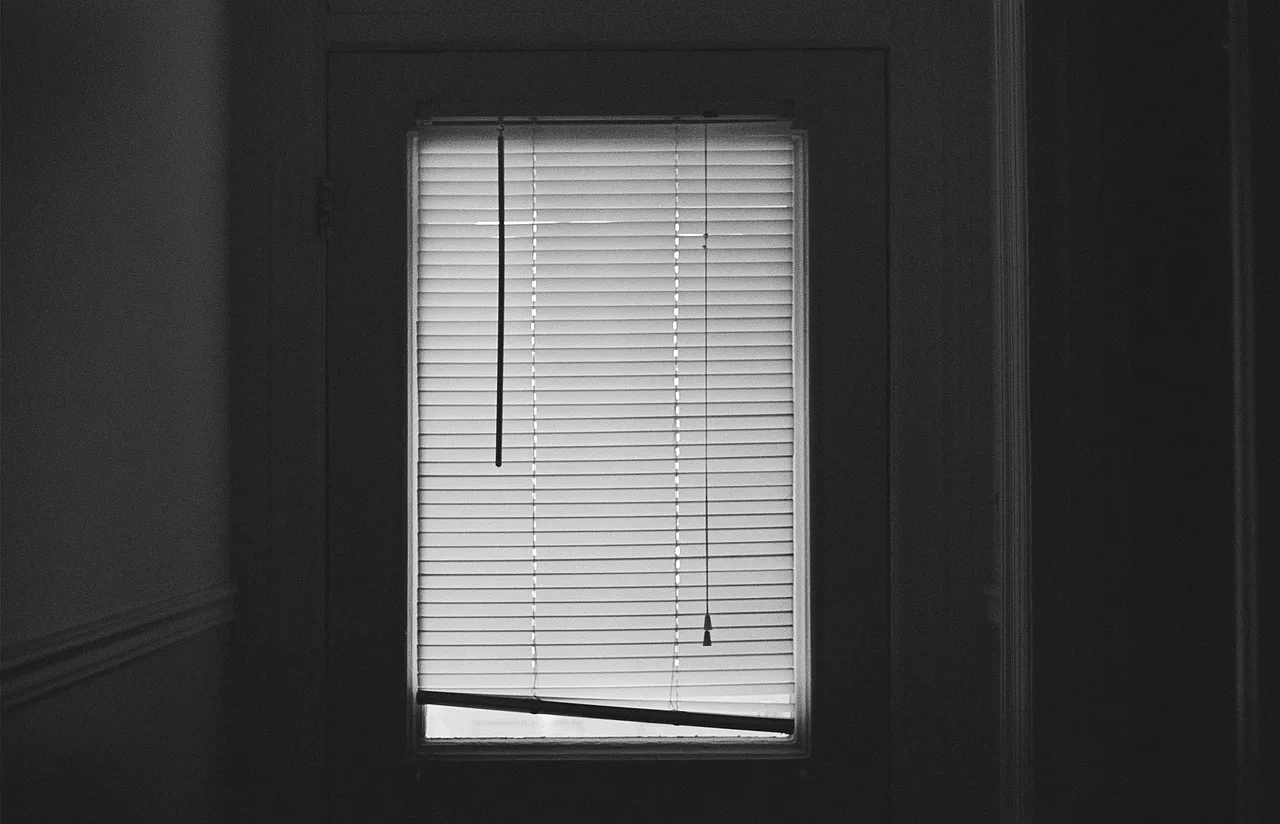

The most common reason is that the door is no longer hanging on a true vertical line, so gravity pulls it toward the low side. A close second is hinge wear that lets the slab drift, especially at the top hinge. A warped slab or a sloped floor can do the same thing.
What gravity can tell you
If the door moves freely, then keeps drifting shut from 45 degrees, the cause is usually balance rather than a sticky latch. That points you toward plumb, hinge geometry, or floor slope. A latch problem usually shows up as rubbing or binding at the strike, not a door that self-moves with the latch fully clear.
How frame plumb affects swing
Use a level on the jamb to check for plumb. If the hinge side or latch side is out of vertical, the slab will drift toward the low side. A jamb can also be out of square after settling or seasonal movement, which changes how the hinges carry the load.
Why hinge wear matters
Loose knuckles, worn pins, and stripped screw holes let the top and bottom hinges fall out of balance. The door then sags slightly and swings to the lower side. Solid-core slabs often reveal this more slowly because they are heavier; hollow-core doors can show it with less wear because the margin for error is smaller.
What you’ll need
- 24-inch level or torpedo level
- Phillips or square-drive screwdriver that matches your hinge screws
- Replacement screws, often about 2 to 3 inches long for wood framing
- Thin shim material, such as cardboard, plastic, or purpose-made hinge shims
- Wedge or doorstop for temporary hold-open or hold-closed control
Door swing checklist
Use this yes/no check before changing hardware. It separates gravity, frame plumb, floor slope, and hinge wear so you can match the fix to the failure mode instead of guessing.
| Check | Yes means | Likely next step |
|---|---|---|
| Door opens and closes freely | The latch is probably not the main cause | Move to the 45-degree test |
| Door stays at 45 degrees | The hanging is close to balanced | Look for a latch bind or minor hinge wear |
| Frame is plumb | The jamb is not tilting the slab | Check floor slope and hinge balance |
| Floor slopes toward the swing direction | Gravity is helping the door move that way | Plan for hinge shimming or a temporary stop |
| Screws are loose or stripped | Hinges are no longer holding position | Tighten, then replace with longer screws |
| Shim needed at top or bottom hinge | The hinge geometry needs correction | Shim in the direction that moves the top of the door the other way |
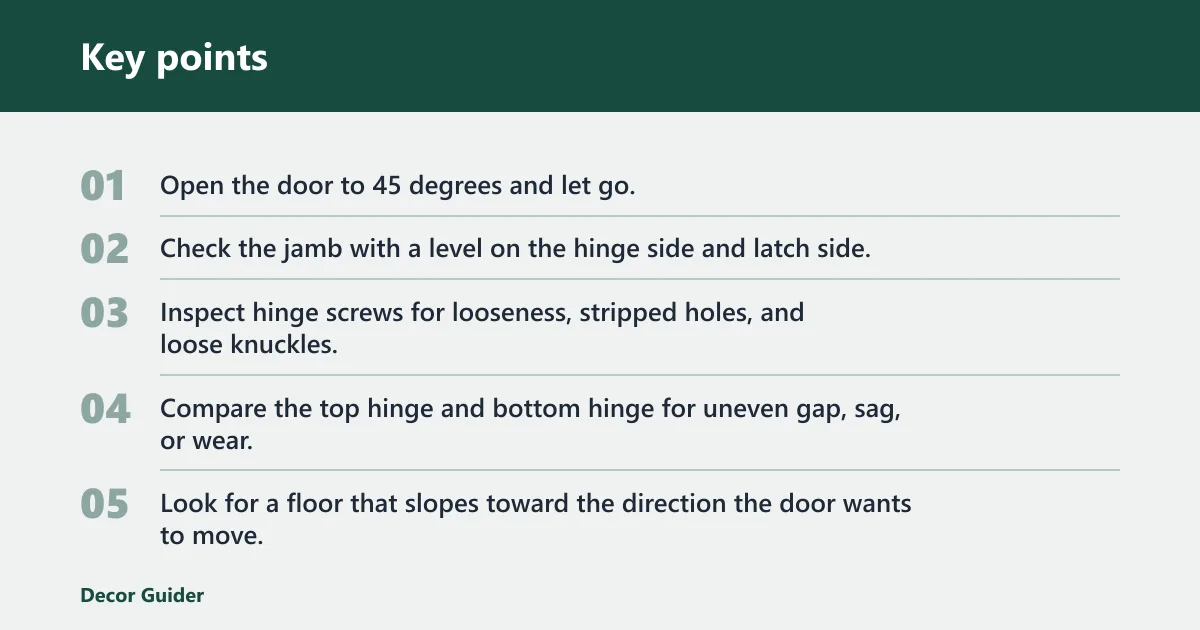
- Open the door to 45 degrees and let go.
- Check the jamb with a level on the hinge side and latch side.
- Inspect hinge screws for looseness, stripped holes, and loose knuckles.
- Compare the top hinge and bottom hinge for uneven gap, sag, or wear.
- Look for a floor that slopes toward the direction the door wants to move.
- If the door drifts, correct the hinge first, not the latch, unless the latch is binding.
Say your bedroom door is a 30-inch hollow-core slab and it slowly closes from 45 degrees. If the jamb is plumb but the top hinge screws are loose, the next move is usually hinge repair, not a strike-plate change. That single variable helps separate hinge looseness from frame tilt.
How do you diagnose the cause?
Start with plumb, then move to screws, then compare the hinges. That order matters because a door can look fine at the latch but still be hanging off vertical. If the frame is straight and the hinges are sound, the slab itself may be the source of the drift.
Check the frame with a level
Place the level on the hinge jamb from top to bottom. Repeat on the latch jamb. If either side leans, the door may swing toward the low side. A small seasonal shift can be enough to change the swing point, while settlement-related distortion usually shows up as a persistent lean or twist.
Look for loose or stripped hinge screws
Open the door and tighten each screw by hand. If a screw spins without biting, the hole is stripped. Replace the worst screws with longer ones that reach framing, not just trim. For wood jambs, 2- to 3-inch screws often give a better hold than the short factory screws.
Compare the top and bottom hinges
The top hinge often controls much of the swing behavior because it carries more of the load. If the door drops at the latch side, the top hinge is often the first place to correct. Worn pin holes or uneven knuckles can make the slab drift even when the screws are tight.
Watch for warp or sag in the slab
Check the door edge against a straight reference. A solid-core door can sag at the hinge side if it is heavy and the hardware is weak. A hollow-core door may twist more easily. If the slab is warped, hinge fixes may reduce the symptom but not remove it entirely.
Suppose a bathroom door in an older hall swings open instead of shut. If the frame is plumb and the floor falls away from the hinge side, the correction can differ from a door that closes on its own. Same symptom category. Different geometry.
How do you fix a door that won’t stay put?

Start with the weakest point that matches the diagnosis. Tighten or replace hinge screws first, then shim the correct hinge in the correct direction. Add a wedge or doorstop if you need an immediate, non-permanent hold-open or hold-closed solution. Adjust the strike plate only when the latch is binding.
Tighten or replace hinge screws
Start with the top hinge. Tighten each screw once, then retest at 45 degrees. If a screw strips, replace it with a longer screw of the same head type and thread suitable for the jamb material. If the hole is badly enlarged, move to a larger temporary screw only if it still seats cleanly.
Shim the correct hinge in the correct direction
Thin shims change hinge geometry by moving one side of the leaf. If the door swings shut, adding shim behind the top hinge leaf on the jamb side can shift the slab’s angle; if it swings open, the opposite hinge adjustment may be needed. Add about 1/32 inch of shim thickness at a time, then close and retest.
Use a wedge or doorstop as a temporary fix
A wedge or freestanding stop is the best renter-safe answer when you need the door to stay open or closed today. It does not correct the cause, but it prevents slamming and gives you time to diagnose. Use it near the floor so the door cannot drift far enough to hit the latch hard.
Adjust the strike plate only if the latch binds
If the latch catches before the door is fully closed, then the strike plate may need a minor shift. That is a different problem from self-swing. File or reposition the strike only after the door’s balance is corrected, otherwise the latch can hide the real issue and make the swing problem worse later.
Common mistakes
Most bad fixes come from treating a swing problem like a latch problem. The door may still need hardware work, but the cause is often geometry, not the strike plate.
- Fixing the latch first: This can hide a frame or hinge problem and leave the swing unchanged.
- Using the wrong shim direction: A shim placed at the wrong hinge can make the drift worse.
- Ignoring floor slope or settling: A level frame can still drift if the floor falls toward the swing path.
- Overlooking a warped or sagging slab: A bent door can keep moving even after screw repairs.
- Stopping at a single screw: One tight screw does not fix loose knuckles or a stripped hole.
If the jamb is visibly out of plumb, the gap changes from top to bottom, or the door has recently started moving after other parts of the house shifted, treat it as more than a hinge issue. That pattern can point to structural movement or settlement and may need a carpenter or contractor, especially if the door also scrapes the frame.
Frequently asked questions
Why does my door swing shut on its own: the usual cause?
The usual cause is a slight lean in the frame, a sagging hinge side, or a floor that drops toward the direction of travel. The fastest check is the 45-degree test. If the door will not stay there, start with plumb, then hinge screws, then shim the hinge that controls the drift.
Why does my door keep swinging shut?
Repeated closing usually means the door is out of balance, not that the latch is wrong. Check whether the top hinge carries more wear than the bottom hinge and whether the jamb is vertical. If the frame is true, replace stripped screws with 2- to 3-inch screws and retest before shimming.
Why does a door swing open by itself?
That often happens when the frame leans the opposite way or the floor slopes away from the open side. A warped slab can also push the door toward open. Verify plumb with a level first, then check whether the top hinge needs a shim that shifts the door back toward center.
How do you stop a door from swinging closed on its own?
Use the 45-degree test, then correct the cause in order: tighten screws, replace stripped screws, and shim the hinge that is letting the slab drop. If you need a quick, non-permanent hold, place a wedge or doorstop at the floor. That keeps the door safe while you make the real fix.
How to stop door from swinging
Choose the least invasive correction that matches the symptom. A plumb frame with loose screws needs tightening or longer screws. A frame that leans needs shimming at the correct hinge. If you only need a temporary hold, a wedge or doorstop is the right short-term answer while you confirm the cause.
Products related to this article
Sponsored / affiliate links. As an Amazon Associate I earn from qualifying purchases. I may earn additional commission from eligible campaigns.