How to Make a Bed Higher with a Box Spring
Start with the height math before you buy anything. Add a standard box spring only if your frame, mattress, and headboard can take the extra roughly 5–9 inches without making the bed unstable, too tall, or hard to climb into. A bad match can strain the mattress and cut into clearance. This guide shows how to measure, check compatibility, and choose a safe height increase.
What you’ll need

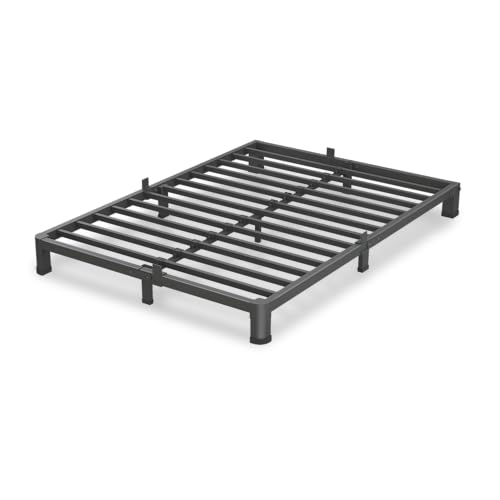
- Heavy-duty metal construction
- Noise-free, stable foundation
- Easy assembly with fabric cover
- Tape measure
- Notebook or phone notes
- Your current frame, mattress, and base specifications
- Optional bed risers or replacement legs
- Flashlight for checking slat spacing and leg fit
How high is your bed now?
Measure from the floor to the top of the mattress, not to the frame. Then add the height of any box spring or topper already in the stack. If you want a taller seat, compare that total with your target sitting height before you add anything new.
Use these measurements first
The stack order matters. For a box-spring bed, the usual order is floor → bed frame → box spring → mattress → topper. A topper changes comfort and adds height, but it is not a structural support layer. A box spring raises the bed and adds some bounce, while a foundation supports the mattress with a firmer base. Many modern mattress warranties require a rigid or closely spaced slatted base rather than a traditional sprung box spring, so always check the mattress maker’s support instructions before you buy. (Manufacturer guidance; foundation/slat requirements vary by brand.)
Measure the parts separately
- Measure the floor to the current mattress top.
- Measure the mattress thickness.
- Measure the box spring height, if one is already in place.
- Measure the frame from floor to mattress support surface.
- Set a target sitting height and note the difference.
Use this formula:
Total bed height = frame height + box spring height + mattress thickness + topper height
If you are only adding a box spring, use:
New total height = current floor-to-mattress-top height + box spring height
Do you need a box spring?

A box spring is the best match for many innerspring mattresses because it is a sprung frame, and the mattress rests on top of that base. It is not the default for every bed. If your mattress is memory foam, latex, or hybrid, a rigid foundation or platform-style support is usually the safer starting point unless the mattress maker specifically allows a box spring. Many foam and hybrid designs need even support to prevent sagging and preserve warranty coverage. (Manufacturer support requirements; mattress-type compatibility varies.)
When a box spring fits
Choose a box spring when you want a taller, more traditional bed and your mattress is an innerspring model. IKEA notes that box spring beds have a height of never less than 50 centimetres, so check that total before you buy. Box springs themselves are commonly sold in standard and low-profile heights, often around 5 to 9 inches, depending on the model and construction. (Retail size ranges vary by brand.) If the bed already feels high, do not stack height on guesswork.
When a foundation is better
A foundation is a wood or metal support base, often with slats or a solid deck. It is not the same as a traditional box spring, which uses springs inside the base. Foundations are the broader fit for foam, latex, and many hybrid mattresses because they provide rigid support without adding extra bounce. If the mattress maker calls for a non-sprung base, choose a foundation over a box spring. (Manufacturer support guidance; foundation vs. box spring distinction.)
When a topper is the wrong fix
A mattress topper usually adds around two to four inches. That can change comfort and make the bed taller, but it does not solve a support mismatch. If the mattress needs a firmer base, a topper only changes the top layer. It does not fix a sagging or incompatible foundation. For support problems, change the base first; use a topper only for feel. (Typical topper thickness guidance.)
Can your mattress and frame take one?

Check the mattress type first, then check the frame. Purple says box springs are typically only compatible with innerspring mattresses, while foundations work with almost all mattress types. If the frame has a narrow rail ledge, weak center support, or short legs, a taller stack can become unstable even before height feels excessive.
Compatibility checklist
- Mattress type: Confirm whether it is innerspring, memory foam, latex, or hybrid, and follow the manufacturer’s base requirement.
- Frame style: Check whether the bed is a standard rail frame, platform, or adjustable-style support system.
- Slat spacing: Confirm the slats are close enough for the mattress type; wider spacing can cause sagging.
- Center support: Make sure queen, king, and California king setups have center legs or a center beam when required.
- Headboard/footboard clearance: Verify the taller stack will not collide with rails, panels, or mounting hardware.
- Sheet pocket depth: Confirm the fitted sheet can cover the new mattress depth plus any topper.
- Bedside table height: Make sure lamps, switches, and surface height still work with the raised mattress.
- Mobility and access: Check whether the final height still allows safe sitting, standing, and entry for the primary sleeper.
Check mattress compatibility
- Innerspring: Usually the most compatible with a box spring.
- Memory foam: Usually better on a foundation or platform support.
- Latex: Often better on a foundation with proper support.
- Hybrid: Check the manufacturer’s support guidance before using a box spring.
Check frame fit and leg height
Bed frame height changes the final result as much as the box spring does. Some systems use about 10 cm or 20 cm leg variants, and the longer leg creates more under-bed clearance. If the frame legs are not sized for risers, replacing the legs or the base is safer than forcing a taller stack. Standard bed risers typically add about 3 to 8 inches, while adjustable versions can raise a bed more than that. Check load ratings before use; published capacities vary widely by model, and the safest choice is the one the frame can support without wobble. (Load ratings vary by manufacturer.)
Check whether a platform bed works
Platform beds are not automatically compatible with a box spring. Many are designed to support the mattress directly, sometimes with slats. If the platform already has the right support depth, adding a box spring can make the bed too tall and may interfere with sheet fit, bedside table height, or headboard alignment. Many platform beds are intended for direct mattress support only, so a box spring is often the wrong height-changing accessory unless the platform is specifically built to accommodate one. (Platform-bed support guidance.)
Box spring height table

Use this table to decide whether a box spring is the safest next step. Measure first, then compare the total height against the target you actually want. If the final mattress top ends up more than about 2 inches above your target sitting height, or if the mattress top would sit above about 30 inches for the primary sleeper, treat that as a no-go and choose a shorter base, lower-profile foundation, or different legs instead. (Threshold is a practical fit check, not a universal safety standard.)
| Current height | Frame support height | Mattress thickness | Box spring / foundation height | Topper height | Target sitting height | Computed final height | Under-bed clearance | Compatibility result | Safe / caution / no-go |
|---|---|---|---|---|---|---|---|---|---|
| 16 inches floor to mattress top | 8 inches | 12 inches | 5 inches low-profile box spring | 0 inches | 24 inches | 25 inches | 7 inches | Workable for an innerspring mattress on a frame with solid center support | Caution |
| 18 inches floor to mattress top | 10 inches | 10 inches | 8 inches box spring | 2 inches | 24 inches | 30 inches | 5 inches | Too tall for many sleepers; better only if the mattress maker permits a sprung base and the frame is rated for the extra height | No-go |
| 14 inches floor to mattress top | 9 inches | 10 inches | 5 inches foundation | 0 inches | 22 inches | 24 inches | 9 inches | Good fit for many foam, latex, or hybrid mattresses if slat spacing and center support meet the manufacturer’s rules | Safe |
| 20 inches floor to mattress top | 12 inches | 12 inches | 8 inches box spring | 2 inches | 24 inches | 34 inches | 4 inches | Usually too high for safe entry, sheet fit, and bedside furniture alignment | No-go |
Use the no-go threshold
If the combined height pushes the mattress top too close to the top of the headboard, makes the sheets barely reach, or puts the mattress high enough that your feet dangle awkwardly, stop. A taller bed is useful only if you can still get in, get out, and make it comfortably.
Say your current mattress top sits at 17 inches, your mattress is 12 inches thick, and you are considering an 8-inch box spring. The new total becomes 25 inches. That may work for one person, but it may also raise the bed enough to strain sheet depth or make bedside tables feel low.
Suppose a platform bed already sits at 18 inches to the mattress top. Adding a box spring could push the total into the upper 20s or higher. In that case, the safer choice is usually a different support base, not more height stacked on top.
How to raise the bed safely
The safest method depends on the frame and mattress. Start with the least invasive change that gives you the height you need. If the mattress is compatible and the frame can support the added height, install the box spring under the mattress first. If you still need more lift, check risers or longer legs before replacing the whole setup.
- Confirm that the mattress type matches the support base.
- Measure the frame, mattress, and existing height again.
- Set the box spring on the frame and recheck alignment at the corners.
- Add bed risers only if the legs fit securely and the load rating is sufficient.
- Increase height by one step, then remeasure before adding more.
Use bed risers carefully
Bed risers typically add about three to eight inches, and some adjustable models can raise a bed by up to a foot. Material matters. Wood risers are often marketed for heavier loads, and metal risers can also carry substantial weight, but the exact capacity depends on the product and frame footprint. Check the leg diameter, contact area, and weight rating before using them. (Load ratings vary by manufacturer; compare total system weight, not just the mattress.)
Use longer legs when the frame allows it
If the bed system supports replacement legs, that is often cleaner than stacking risers. A 20 cm leg can create a slightly higher bed and allow under-bed storage boxes. Longer legs also reduce the chance that risers slip or tilt under side load, which matters more on wider beds and heavier frames.
Use the height for storage only if the clearance works
More height can create usable under-bed storage space, but the clearance has to match the container. Short bins may fit under a raised frame, while taller storage boxes need longer legs or more lift. Measure the usable opening from floor to the lowest support rail, not just to the mattress top.
Common mistakes
A taller bed sounds simple. The failure points usually show up later, after the stack is already in place.
- Making the bed too tall: Check the final mattress-top height before buying a box spring or risers.
- Ignoring sheet depth: Deep mattresses and box springs can make standard sheets slip off.
- Overlooking bedside tables: A higher mattress can sit above lamp switches or tabletops.
- Forgetting pet access: Small pets may no longer hop up safely once the bed rises.
- Using the wrong support: Do not place a box spring under a mattress type that needs foundation support instead.
- Choosing risers without checking fit: Verify leg size, weight rating, and frame stability first.
Failure cases are easy to miss. A bed that looks fine in a store can become awkward at home if the mattress top ends up higher than the nightstand, or if the frame begins to sway after risers are added. The safest fix is the one that stays stable after daily use.
Prevent problems by measuring the final stack before purchase, then compare it with sheet depth, bedside table height, and the height of anyone who will use the bed regularly.
Can you convert a box spring bed to a platform bed?
Yes, but conversion usually means changing the support system, not just removing the box spring. A platform bed supports the mattress directly on slats or a solid surface. If the goal is a lower, firmer setup, a new platform base is usually safer than trying to improvise one from a mismatched frame and leftover parts.
Convert only if the mattress matches
Use a platform setup when the mattress manufacturer allows it. Memory foam, latex, and many hybrids fit this style better than a box spring. If the mattress still needs spring support, converting to a platform bed can change feel and support in ways that are not worth the height reduction.
Frequently asked questions
How do I make my bed higher with a box spring?
Measure the current floor-to-mattress height, then add the box spring height to get the new total. Use a box spring only if the mattress and frame are compatible, and stop if the result pushes the mattress top more than 2 inches above your target sitting height or above about 30 inches.
Does a bed need a box spring?
No. Many beds work better with a foundation or a platform base, especially memory foam, latex, and hybrid mattresses. A box spring is mainly a fit for innerspring mattresses and a frame built for that extra height and bounce.
What is the difference between a bed frame and a box spring?
A bed frame holds and supports the sleep system from below. A box spring is the sprung support layer that sits between the frame and the mattress. The frame supplies structure; the box spring changes height, support feel, and sometimes bounce.
Can I use a box spring with a platform bed?
Sometimes, but not usually. Many platform beds are meant to support the mattress directly, and adding a box spring can make the setup too tall or unstable. Check whether the platform’s slats and rail depth are designed for an additional base before stacking one.
How tall should a box spring be for my bed?
Use the height formula instead of a fixed number: frame height + box spring height + mattress thickness. If the final mattress top sits comfortably for sitting and getting in and out, and the bed still fits your bedding and furniture, the height is acceptable.
What size bed risers are safe for a box spring bed?
Choose risers only after checking the leg diameter, the load rating, and the frame’s stability. The same source says risers usually add about three to eight inches, and some adjustable models can raise a bed by up to a foot. Wood and metal options can carry heavier loads, but fit still matters.
Products related to this article
Sponsored / affiliate links. As an Amazon Associate I earn from qualifying purchases. I may earn additional commission from eligible campaigns.