Caulk vs Grout: What Is the Difference in a Bathroom?
Use grout for fixed tile-to-tile joints. Use caulk where two planes meet, at corners, and at any seam that moves. Rigid joint = grout, moving joint = caulk. Wrong material can crack, leak, and damage the backer board. This guide shows how to identify each seam and choose the right product.
| Factor | Caulk | Grout | Winner |
|---|---|---|---|
| Movement handling | Stays a bit stretchy and handles expansion, settling, and vibration better. | Hardens into a rigid filler and can crack when the joint moves. | Caulk |
| Best joint type | Corners, edges, tub-to-tile seams, and other changes of plane. | Tile-to-tile joints on flat, stable surfaces. | Depends on the seam |
| Wet-area fit | Silicone caulk is flexible and waterproof, so it suits showers and tubs. | Epoxy grout is more water- and stain-resistant than cement grout, but it is harder to apply and costs more. | Caulk |
| Repair simplicity | Small failures can often be re-caulked after the old bead is removed. | Cracked joints may need spot re-grouting or full joint replacement. | Caulk |
| Joint width flexibility | Handles width changes and irregular gaps better. | Sanded grout is used for joints wider than about 1/8 inch; unsanded grout can fill joints as narrow as 1/16 inch. | Caulk |
What is the difference between caulk and grout?

Caulk seals a joint that needs movement, while grout fills the space between tiles on a stable field. In bathrooms, the split matters most at corners, edges, and tubs, where surfaces expand and shift. Use grout for fixed tile-to-tile joints; use caulk where two planes meet or water can work into a moving seam.
Core job of each material
Grout is a cement-based or epoxy-based filler used between tiles. Caulk is a flexible sealant used at joints, corners, edges, and transitions. Grout is sold in bags or tubs and applied with a rubber float. Caulk is sold in tubes and applied with a caulk gun.
How movement changes the choice
Movement joints need flexible sealant. The tile industry movement-joint guidance is referenced as EJ171, and the practical rule is simple: if the joint can move, grout is the wrong material. Caulk stays a bit stretchy instead of turning rock-hard, so it can absorb small shifts without cracking right away.
Where water exposure matters most
Water exposure changes the repair choice, but it does not replace the movement rule. In showers and tub surrounds, silicone caulk is commonly chosen because it is flexible and waterproof. Epoxy grout is a stronger grout option for wet areas, but it still belongs where the joint is fixed, not where the joint moves.
Grout vs caulk at a glance
Use grout when the joint is part of a tiled field that stays put. Use caulk when the seam is a transition, a corner, or a spot where the framing, backer board, or tub can move a little. The common failure sign is different too: grout usually cracks or powders at a moving seam, while caulk usually shrinks, tears, or pulls away.
Material and flex comparison
Standard grout is rigid after it cures. Caulk remains flexible, which is why it belongs at changes of plane such as tiled shower walls meeting the floor. If the joint moves and the fill does not, the material fails first.
Best joint types for each
Use grout on flat tiled runs, especially tile-to-tile joints with even spacing. Use caulk on inside corners, around tubs, at shower pan perimeters, and where tile meets a different material. Sanded grout is common for wider lines, usually around 1/8 inch and up; unsanded grout fits narrow lines, including joints as narrow as 1/16 inch.
Common failure signs
Cracked grout at an inside corner usually points to movement. A gap that opens at the edge of a tub, shower curb, or vanity splashback usually points to failed caulk. Dark staining or mildew inside a cracked bead often means the joint needs full removal, not a surface patch.
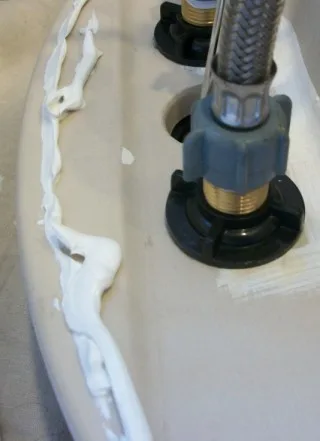
Bathroom joint decision table
Read this table from left to right: identify the location, judge whether the seam moves, then match the water exposure to the material. The fix time assumes a normal DIY patch or replacement, not a full remodel.
| Location | Movement risk | Water exposure | Correct material | Common failure sign | DIY fix time |
|---|---|---|---|---|---|
| Tub-to-tile seam | High | High | Silicone caulk | Cracked bead or a gap at the tub edge | 30 to 60 minutes |
| Shower inside corner | High | High | Silicone caulk | Split line or mildew in the corner | 30 to 45 minutes |
| Shower wall to floor joint | High | High | Silicone caulk | Grout crack or separation along the floor line | 45 to 60 minutes |
| Shower pan perimeter | High | High | Silicone caulk | Opening at the perimeter or moisture at the edge | 45 to 60 minutes |
| Shower curb top and side edge | Medium to high | High | Silicone caulk | Hairline crack where the curb meets tile | 45 minutes |
| Wall tile field | Low | Low to medium | Grout | Missing or pitted joint between tiles | 20 to 40 minutes |
| Floor tile field | Low | Low to medium | Grout | Loose powder, chips, or open joints | 30 to 60 minutes |
| Vanity-to-wall seam | Medium | Low | Acrylic/latex caulk if paintable finish is needed | Cracking where wood or drywall meets tile | 15 to 30 minutes |
| Backsplash edge | Medium | Low | Caulk | Visible gap or cracked edge line | 15 to 30 minutes |
| Tile-to-tile seam on a flat wall | Low | Low to medium | Grout | Missing joint fill or surface powdering | 20 to 40 minutes |
| Threshold between tile and another floor | Medium | Low | Caulk or flexible transition sealant | Edge separation or cracking at the junction | 30 to 45 minutes |
How to read the table
A flat tiled field usually points to grout. A corner, edge, or transition usually points to caulk. When a seam sits near water and still needs movement control, silicone caulk is the default choice because it is flexible and waterproof.
Seam-by-seam material picks
Say your tub surround has a 2-foot vertical corner that opens a thin gap after seasonal changes in the house. That is a movement joint, so the correct fix is silicone caulk, not grout. If the center of a wall field loses filler between two tiles, grout is the right repair.
Typical DIY repair time
Most caulk repairs take less time than grout repairs because the bead only needs removal, cleaning, and replacement. Grout patches can take longer when the old material is loose or powdery, since the joint has to be cleaned out before new grout can bond. Full joint replacement takes longer than a surface touch-up for either material.
Where do you use grout and caulk in a bathroom?
Use grout on tile fields where the tiles meet each other on a stable plane. Use caulk at corners, edges, and transitions, especially in places where one surface can move a little against another. Joint width matters too: sanded grout is used for wider joints, while unsanded grout can fill narrow joints as small as 1/16 inch.
Tile fields and flat runs
Tile-to-tile joints in the middle of a wall or floor belong to grout. Cement-based grout is common there, and epoxy grout is a good option when the joint is in a wetter area and you want greater stain resistance. That said, epoxy does not replace the need for caulk at moving seams.
Corners, edges, and transitions
Inside corners are changes of plane, so they should be caulked, not grouted. The same rule applies where a tiled shower wall meets the floor, where tile meets the tub, and where tile meets a vanity, trim, or another finish. These are the seams most likely to split if they are filled rigidly.
Joint width rules that change the answer
Joint width affects grout choice, not the basic caulk-versus-grout rule. Sanded grout is used for joints wider than about 1/8 inch. Unsanded grout can fill joints as narrow as 1/16 inch. If the seam moves, width does not make grout the right answer.
Should you use grout or caulk between the tub and tile?
Use caulk between the tub and tile. This is a high-movement bathroom seam, and grout can crack there as the tub flexes, the wall shifts, or the house settles. Silicone caulk is the standard choice because it is waterproof and flexible.
Tub-to-tile joint
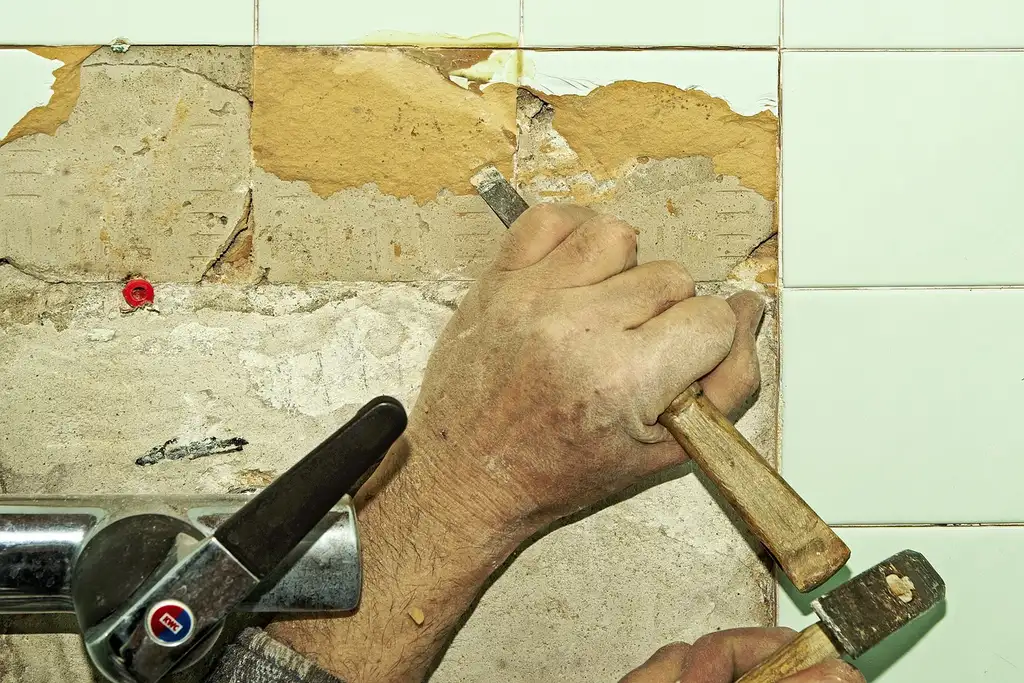
The tub-to-tile joint is one of the most common failure points in a bathroom. Water can work behind a cracked seam and reach the backer board or framing. If the old joint has cracked grout, remove it and replace it with silicone caulk.
Shower corners and wall-to-floor joints
Shower corners are changes of plane, so they should be caulked, not grouted. The same logic applies where shower walls meet the floor. Grouting these joints often leads to cracking and leaks because the surfaces do not move as one piece.
Shower pan perimeter and curb edges
The perimeter of a shower pan and the edge of a curb are also movement areas. They see water and small shifts, so silicone caulk is the safer fit. If the bead has torn away, do not just add a second layer over the top; remove the failed material first.
Choose grout if… / Choose caulk if…
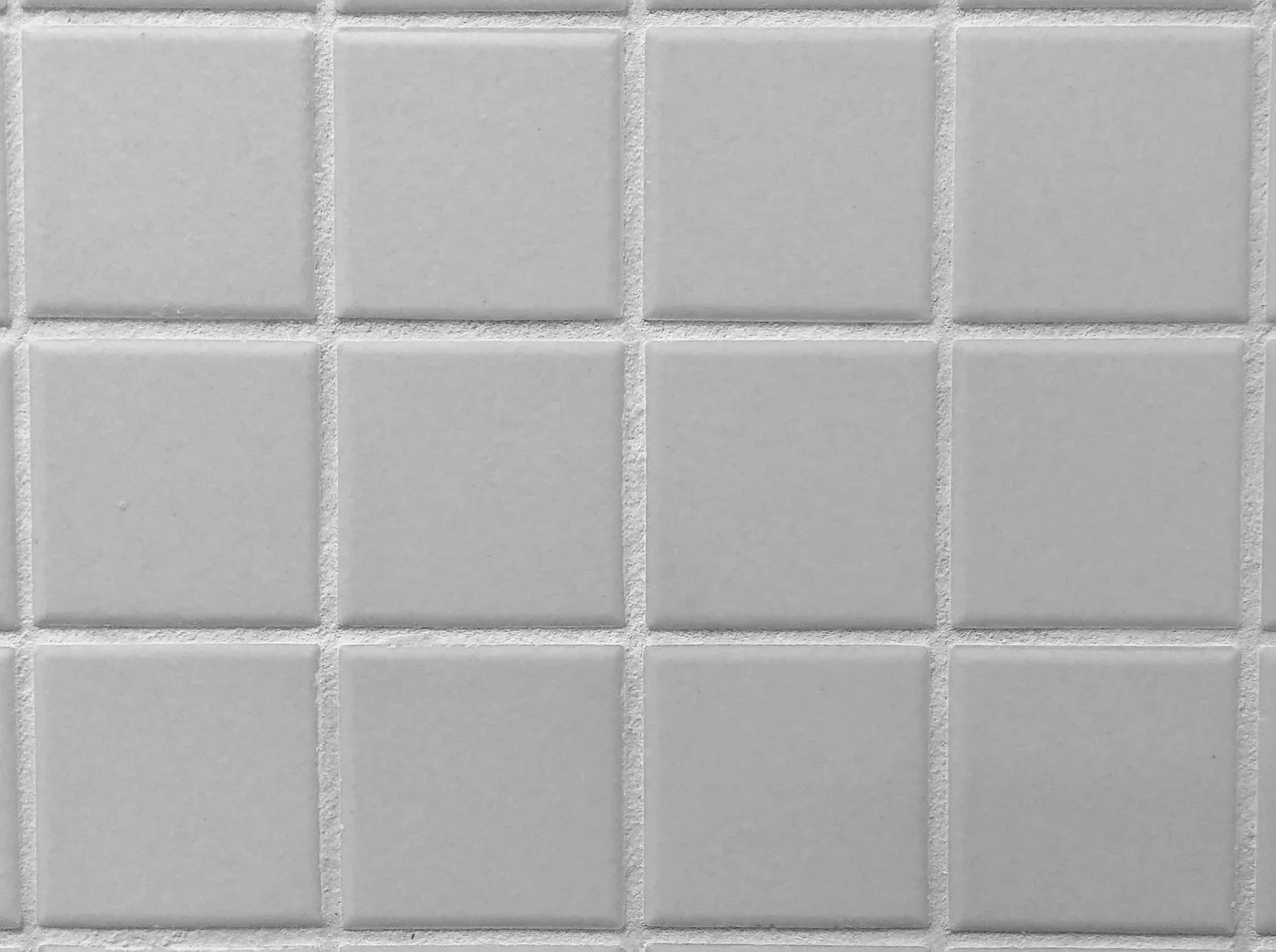
Use grout when the joint is fixed, flat, and between tiles. Use caulk when the seam changes plane, touches a tub or pan, or bridges materials that move differently. Epoxy grout is the better grout option for wet zones when you still need a grout joint, but silicone caulk still wins any movement seam.
Choose grout if…
- The joint is tile-to-tile on a flat wall or floor.
- The gap is part of the tiled field, not a corner or transition.
- You need a grout line that matches surrounding tile joints.
- The surface is stable and the joint is not expected to move.
Choose caulk if…
- The seam is an inside corner or other change of plane.
- The joint meets a tub, shower pan, curb, vanity, or trim.
- You see cracking at a line that opens and closes with movement.
- You need a flexible, waterproof seal in a wet bathroom area.
When epoxy grout is the better grout option
Epoxy grout is ideal for showers, pools, and other wet areas when the joint itself belongs in the grout category. It offers better water and stain resistance than traditional cement grout, but it is harder to apply and more expensive. It is a better grout, not a replacement for caulk at movement joints.

How do you tell whether to re-caulk or re-grout?
Look at the crack pattern and the location. A crack at a corner, tub edge, or wall-to-floor seam usually means re-caulking. A missing or crumbling joint between two stable tiles usually means re-grouting. Mold, repeated separation, or widespread failure can mean full joint replacement instead of a surface patch.
Crack pattern and what it means
A straight split along a corner line usually points to movement. A shallow, powdery surface crack in a grout field can be shrinkage or wear. If the joint is loose at the edges but sound in the middle, poor prep or weak adhesion may be the cause.
Shrinkage, adhesion failure, and mold signs
Shrinkage usually leaves a narrow gap after the material cures. Adhesion failure leaves a bead that pulls free from one side of the joint. Mold or dark staining inside a damaged caulk line often means the bead has held moisture long enough that a full removal and replacement is the safer repair.
Spot repair versus full removal
Spot re-grouting works when one small section of a grout joint is missing but the surrounding material is firm. Re-caulking works when the old bead has failed along a seam, but the joint itself is still intact. If the material is loose through most of the run, full removal is usually the better fix.
- Check whether the seam is a corner, edge, or flat tile field.
- Press gently on both sides of the joint and watch for movement.
- Look for cracks, gaps, powdering, tears, or dark staining.
- Match the seam type to caulk or grout using the table above.
- Remove only the failed material before installing the replacement.
Frequently asked questions
What is the difference between caulk and grout in a bathroom?
Caulk is for movement joints, corners, edges, and transitions. Grout is for filling the spaces between tiles on stable, flat surfaces. If the seam can move, use caulk. If it is a fixed tile-to-tile joint, use grout.
Where do you use caulk instead of grout in shower corners?
Use caulk in every inside shower corner and at wall-to-floor changes of plane. These seams move as the house shifts and as the materials expand and contract. Grout in those spots is more likely to crack and leak.
Is silicone caulk better than grout in wet bathroom areas?
In wet movement joints, yes. Silicone caulk is flexible and waterproof, so it suits showers and tubs. Epoxy grout is the better grout for wet tile fields, but it does not replace caulk at corners or other moving seams.
How do I know if a bathroom joint needs re-caulking or re-grouting?
If the failure is at a corner, tub edge, curb, or other transition, re-caulk it. If the failure is between tiles on a flat field, re-grout it. Cracks that open and close with movement usually point to caulk failure, while crumbling fill points to grout failure.
How long does bathroom caulk last before replacing?
There is no single replacement interval that fits every bathroom. Replace caulk when it cracks, shrinks, pulls away, or shows mold that does not clean off. Wet shower seams usually need closer attention than dry trim joints because they see more moisture and movement.
Do I need both grout and caulk in a bathroom remodel?
Yes, most bathroom tile jobs need both. Grout fills the tile field, and caulk seals the movement joints, corners, and edges. A good remodel uses the right material in the right place instead of trying to make one product do both jobs.
Products related to this article
Sponsored / affiliate links. As an Amazon Associate I earn from qualifying purchases. I may earn additional commission from eligible campaigns.