How to Fix a Loose Toilet Paper Holder
Tighten the screws if the holder wobbles but stays in the wall. Replace the anchors if the screws spin, and patch the drywall if the hole crumbles. Ignoring the cause can strip the wall further and make the holder pull out again. This guide shows how to diagnose each symptom and reattach the holder with the right repair.
What you’ll need


Quick answer: Start with the fasteners, then match the repair to the wall material. A loose set screw or wall screw can be tightened in minutes, but spinning anchors, crumbled drywall, and failing adhesive mounts usually need a material-specific fix rather than more force.
- Measuring tape
- Level
- Screwdriver or hex key that fits the holder
- Replacement screws
- Wall anchors or wall plugs matched to drywall, plaster, tile, or masonry
- Patch kit or repair compound for damaged drywall
- Putty knife
- Drill and bits, if you need new holes
- Cleaner and dry cloth for adhesive or suction mounts
- Adhesive toilet paper holder, suction holder, or over-cabinet holder if wall mounting is not suitable
Loose toilet paper holder fixes
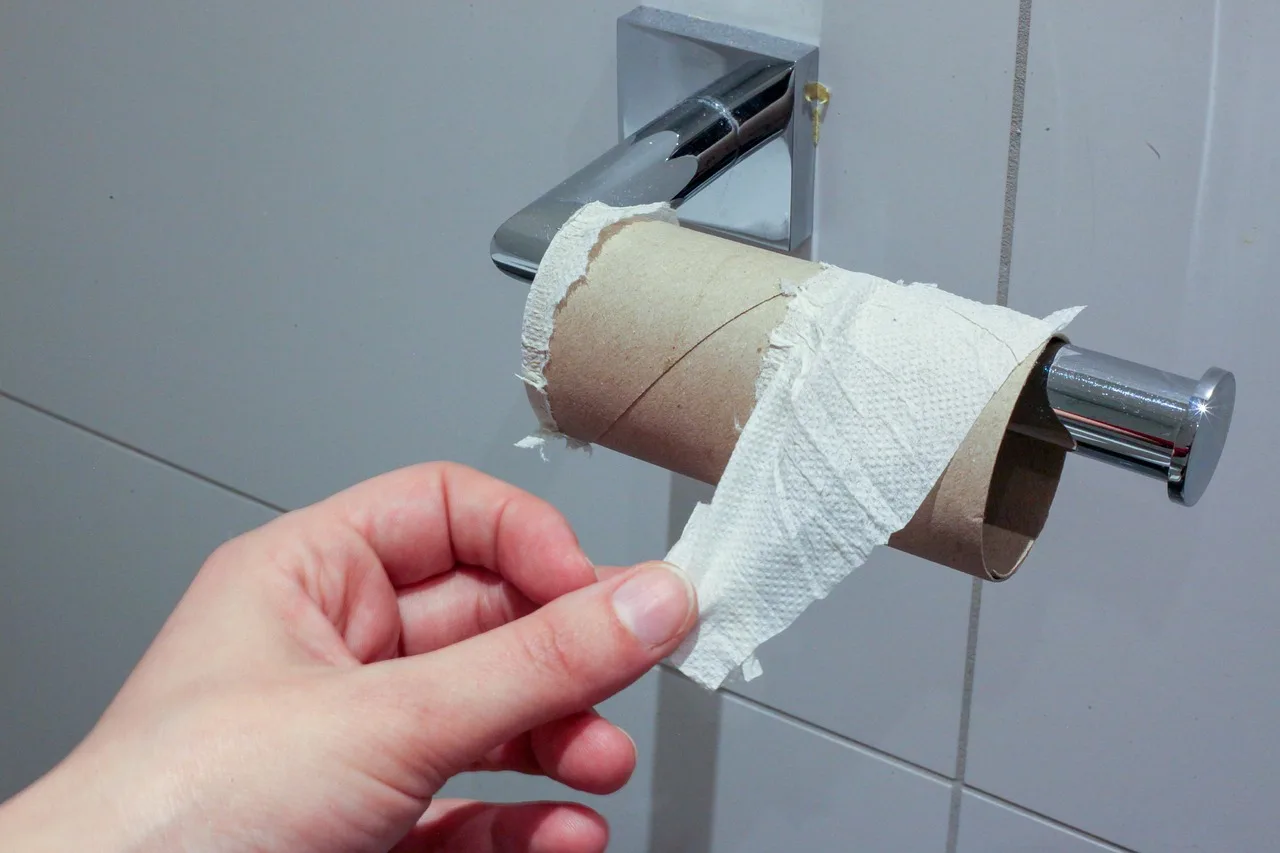
A wall-mounted toilet paper holder usually fails at one of four points: a loose set screw, a spinning anchor, enlarged drywall, or a mount that no longer grips the surface. Start with the hardware you can tighten. Move to anchors and wall repair only if the holder still moves after that.
Use this troubleshooting table
| Symptom | Likely cause | Safest fix | When to replace the holder |
|---|---|---|---|
| Loose set screw | The holder slipped on its bracket or the set screw backed out | Tighten the set screw, then check the bracket and wall plate | Replace if the screw threads are stripped or the arm still pivots loosely |
| Spinning wall anchor | The wall plug no longer grips the hole | Remove the screw, replace the anchor with one that matches the wall material, and remount | Replace if the anchor hole is too large, cracked, or keeps spinning after reinstallation |
| Enlarged drywall hole | Drywall has crumbled around the anchor | Patch the hole, let it cure, then drill and install new hardware | Replace if the mounting plate will not cover the patched area or the wall section is too damaged |
| Failing adhesive mount | Surface prep was poor or the wall is damp, textured, or damaged | Remove the mount, clean and dry the surface, then reinstall only on a smooth, sound area | Replace if the adhesive base no longer bonds or the wall finish is too weak for no-drill mounting |
| Wall type | Best anchor or mount choice | What to avoid |
|---|---|---|
| Drywall | Use a drywall anchor sized to the screw and load; patch damaged holes before remounting | Do not reuse a loose plug or drive a larger screw into a blown-out hole |
| Plaster | Use an anchor made for brittle wall surfaces and drill carefully without over-torquing | Avoid forcing drywall anchors into cracked plaster |
| Tile | Use a tile-safe anchor or a no-drill mount on a smooth, fully cleaned area | Do not mount over cracked tile or chipped grout |
| Masonry | Use a masonry anchor or plug rated for the base material | Avoid plastic plugs that are meant only for hollow wallboard |
- Inspect the holder at the wall plate, arm pivot, and set screw, then tighten each fastener before drilling anything new.
- Use a level and measuring tape to check whether the holder has shifted; if it has, mark the correct position before you touch the wall.
- Remove the holder and test the screw hole by hand; if the screw turns without biting, the anchor or drywall has failed.
- For drywall, pull the anchor, patch crumbled material with repair compound, and let it fully cure before remounting.
- For plaster, tile, or masonry, match the new anchor to the wall material instead of reusing a plug that fits only drywall.
- Re-drill only after the patch is hard, then install the correct wall plug and tighten the screw until the holder sits flat.
- For adhesive or suction mounts, remove the holder, clean the surface, dry it completely, and reinstall only on a smooth, sound area.
- If the holder still moves after repair, replace the bracket, anchor, or entire holder before the wall hole gets larger.
When to stop tightening
- Stop as soon as the plate sits flush and does not shift side to side.
- Stop if the screw head begins to round out or the driver slips.
- Stop if the wall compresses, crumbles, or the anchor starts turning with the screw.
- Stop if the holder still wobbles after the fasteners are snug; that means the wall or hardware needs repair, not more torque.
How do you fix a loose wall-mounted holder?
Tighten the set screw and mounting screws first, then check whether the bracket sits level and flush against the wall. If the holder is a one-arm style, inspect the hidden pivot or internal fastener too, because that single joint can loosen even when the wall plate looks fine.
Check the bracket and fasteners
- Remove the paper roll so you can reach the hardware without strain.
- Turn the set screw clockwise until the arm no longer twists on the mount.
- Tighten the wall screws until the plate sits flat, but stop if the screw heads start to strip.
- Reinstall the arm, then nudge it side to side to confirm the wobble is gone.
Confirm the holder is level
- Hold a level across the bracket or shelf edge.
- Adjust the plate before fully tightening the screws.
- Recheck reach after setting the height; a common placement reference is about 26 inches from the floor, but exact height should also account for roll size, user reach, and nearby fixtures.
Placement guidance varies by bathroom layout and fixture size. Industry installation guides commonly place wall-mounted toilet paper holders around 26 inches above the floor and keep clearances generous enough for large rolls and easy access, but the final height should still follow the product instructions and local conditions. Sources: NKBA planning guidance and manufacturer installation sheets for bathroom accessories.
How do you fix a wobbly holder in drywall?
If the holder is loose in drywall, the wall usually needs repair, not just tighter screws. Remove the holder, inspect the hole, and patch any crumbling material before you choose a new anchor. A plug that fit once may no longer hold if the opening has enlarged.
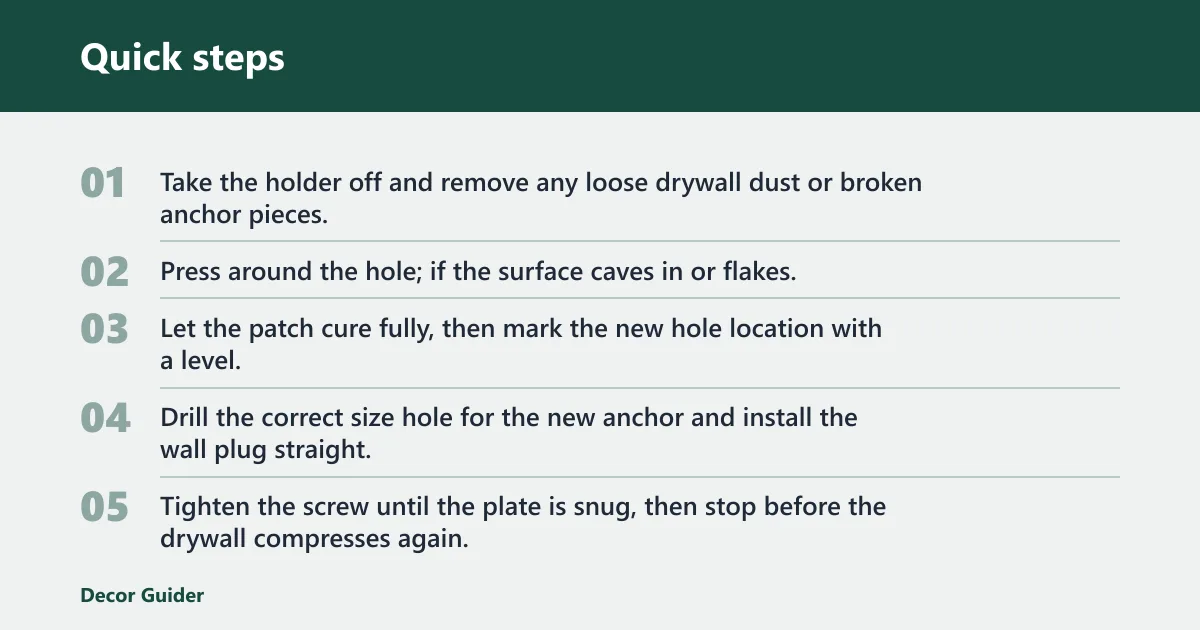
Repair the wall before remounting
- Take the holder off and remove any loose drywall dust or broken anchor pieces.
- Press around the hole; if the surface caves in or flakes, use patching compound before reinstalling hardware.
- Let the patch cure fully, then mark the new hole location with a level.
- Drill the correct size hole for the new anchor and install the wall plug straight.
- Tighten the screw until the plate is snug, then stop before the drywall compresses again.
Say your holder has one screw on each end and the right-side hole is now a slot. That is a sign the drywall edge has broken down, so a larger anchor alone may still fail. Patch first, then remount on sound material.
Anchor choice by wall type
- Use a plastic expansion anchor or toggle-style anchor in drywall when the original hole is no longer sound.
- Use a plaster-rated anchor in older brittle walls so the fastener does not fracture the surface as it tightens.
- Use a tile-safe fastener only in sound tile and grout; cracked glaze and loose grout need repair first.
- Use a masonry plug or sleeve anchor in brick, block, or concrete when the holder is mounted on a solid base wall.
Anchor selection should match the base material because holding power depends on how the fastener expands, grips, or locks into the wall. Manufacturers of common wall anchors also note that cure time for adhesive or epoxy-based products depends on temperature, humidity, and substrate porosity, so follow the package directions rather than guessing when to load the mount.
How do you fix a loose holder without screws?
For adhesive or suction holders, the fix starts with the surface, not the mount. Clean and dry the wall fully, then check whether the finish is smooth, flat, and sound. If the bathroom is humid, textured, cracked, or dirty, no-drill hardware is less reliable and may need replacement instead.
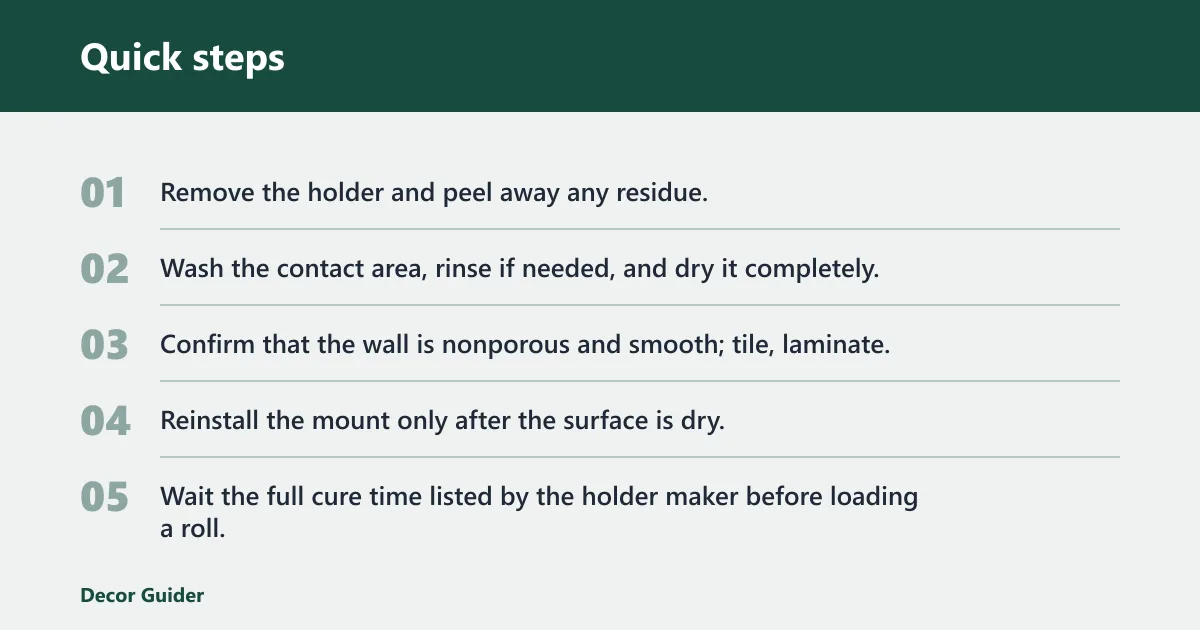
Test the mount and surface
- Remove the holder and peel away any residue.
- Wash the contact area, rinse if needed, and dry it completely.
- Confirm that the wall is nonporous and smooth; tile, laminate, and glass are generally better than peeling paint or damaged grout.
- Reinstall the mount only after the surface is dry.
- Wait the full cure time listed by the holder maker before loading a roll.
Adhesive performance depends on the wall surface, temperature, humidity, and full cure time. Smooth, nonporous surfaces generally bond better than dusty paint, textured tile, or porous grout lines, and load should wait until the adhesive reaches its rated cure. Manufacturer instructions and adhesive-product data sheets are the best reference for the exact wait time.
Know when to replace the mount
- Replace suction hardware if it slips on flat tile or loses grip in humid conditions.
- Replace adhesive hardware if the pad will not bond after proper cleaning and drying.
- Choose an over-cabinet holder when wall mounting is not suitable, but check that it does not block doors, drawers, or plumbing.
Common mistakes
Over-tightening can strip screws and split the mount. Reusing a loose wall plug can make the hole larger. Mounting on cracked tile, flaking paint, peeling wallpaper, or damp grout gives adhesive and suction less to grip.
- Over-tightening stripped hardware: Stop as soon as the plate sits flat. If the screw still spins, replace it.
- Using the wrong anchor: Match the plug to drywall, plaster, tile, or masonry, and do not reuse one that has already failed.
- Remounting on damaged surfaces: Patch crumbling drywall before reinstalling the holder.
- Skipping cure time: Do not load adhesive holders until the bond has fully set.
- Ignoring one-arm pivot wear: Check the hidden set screw or pivot, not only the wall plate.
A common first-timer mistake is to keep tightening a screw that no longer bites. That usually makes the hole worse. If the holder still moves after the fastener is snug, switch to wall repair or a new anchor instead of forcing it.
Frequently asked questions
How do I fix a loose toilet paper holder on the wall?
Start by tightening the set screw and wall screws, then check whether the plate still moves. If it does, remove the holder and test the hole. If a screw spins without biting, the anchor or drywall may have failed, so a new plug or a patch may be needed before remounting.
How do I fix a wobbly toilet paper holder in drywall?
Take the holder off, clear the hole, and look for crumbling edges. If the drywall is damaged, patch it and let it cure before drilling again. Use a wall anchor that matches the finished hole size and avoid reusing a loose plug.
How do I fix a loose toilet paper holder without screws?
That usually means an adhesive or suction mount has lost grip. Clean the surface, dry it fully, and reinstall only on smooth, flat, nonporous material. If the bathroom is damp or the surface is textured or cracked, replace the mount with a different format.
How do I tighten a loose toilet paper holder?
Use the correct screwdriver or hex key on the set screw and the wall fasteners. Tighten until the holder sits flush, then stop. If the screw turns without resistance, the threads or anchor are worn and need replacement instead of more force.
How do I fix a loose one arm toilet paper holder?
Check the hidden pivot first, because one-arm holders often loosen at that joint before the wall plate fails. Tighten the pivot screw, then check the wall mount. If the arm still sags or twists, replace the worn hardware rather than over-tightening it.
How do I repair a loose toilet roll holder?
Remove the holder, inspect the wall material, and decide whether the issue is fasteners, anchor failure, or drywall damage. Tighten what is still sound, patch any crumbled area, and remount with the right anchor. If the mount or wall section is too damaged, replace the hardware.
Products related to this article
Sponsored / affiliate links. As an Amazon Associate I earn from qualifying purchases. I may earn additional commission from eligible campaigns.